Key takeaways
- Snap Specs launched for $2,195 at AWE 2026, delivering standalone spatial computing without phone dependency.
- Dual Qualcomm processors separate visual processing and graphics rendering, lowering latency to 7 milliseconds.
- Display features LCoS waveguides with a 51-degree field of view and electrochromic outdoor shading.
- Proprietary Snap OS enables fully hands-free interaction using built-in camera-based hand tracking and voice control.
On June 16, 2026, Snap Inc. made a historic push into the spatial computing market by announcing the consumer-ready version of its Snap Specs AR glasses at the Augmented World Expo (AWE) 2026. Priced at $2,195, this consumer iteration marks a major paradigm shift for the technology company. Moving away from the developer-only, subscription-based model of its fifth-generation predecessor, which cost developers $99 per month, Snap is now targeting the open market. This launch represents a direct challenge to major competitors, particularly Meta, in the race to define the next generation of face-worn computing hardware. By offering a fully standalone device, Snap has successfully decoupled the AR experience from companion smartphones, delivering a premium product designed to blend physical environments with advanced digital layers.
The Architectural Reality of Snap Specs AR Glasses
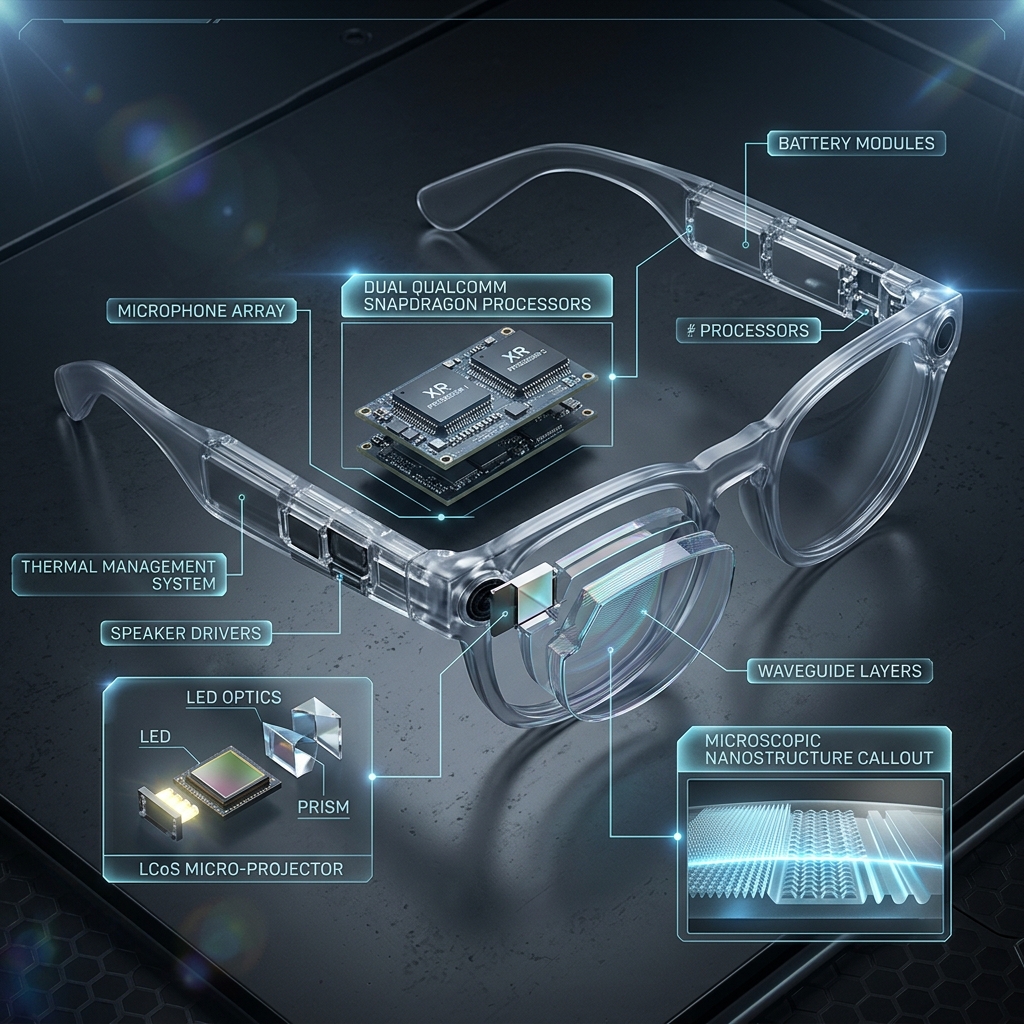
The engineering foundation of the consumer-ready Snap Specs is defined by its standalone computational architecture. Under the hood, the device is powered by dual Qualcomm Snapdragon processors. This dual-processor configuration is designed to split critical workloads, minimizing thermal buildup and maximizing battery performance. One dedicated processor handles spatial awareness and computer vision, constantly mapping the external environment and tracking the wearer’s hands via four built-in cameras. The second processor is dedicated to system operations and rendering augmented reality (AR) Lenses. This division of labor allows the system to achieve an astonishing 7-millisecond photon latency. This latency figure is faster than the 12-millisecond latency of Apple’s premium Vision Pro headset, ensuring that virtual objects remain anchored in physical space without noticeable drift or delay during head movements.
For the display system, Snap has utilized Liquid Crystal on Silicon (LCoS) micro-projectors. The displays are paired with highly advanced waveguides, which are optical components designed to guide light from projectors directly to the wearer’s eyes. Snap’s proprietary waveguides feature billions of microscopic nanostructures—so tiny that over 10,000 can fit on the tip of a single human hair. This technology allows the displays to output 16 million colors and projects a digital canvas with a 51-degree diagonal field of view (FOV). Snap compares this visual scale to viewing a 24-inch desktop monitor or a 115-inch home cinema screen from ten feet away. To resolve the contrast challenges commonly associated with outdoor AR usage, Snap has integrated electrochromic transition lenses. These lenses can shift from clear to darkly tinted in just 10 seconds under sunlight, allowing the wearer to use the device in bright outdoor environments.
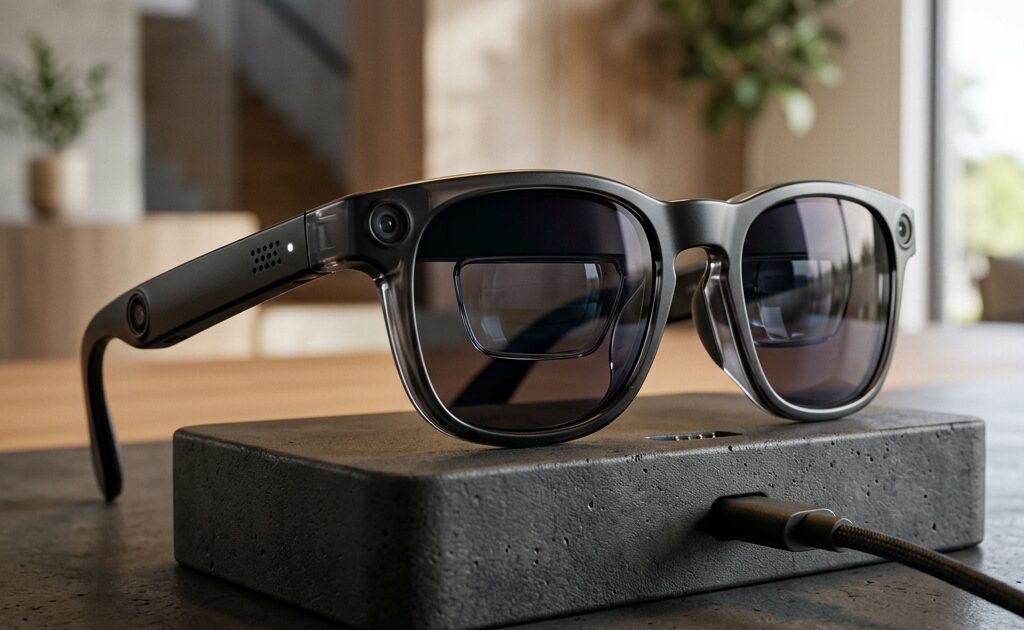
The entire system is housed in a frame crafted from Swiss TR90 polymer, a high-performance material valued for its strength, flexibility, and lightweight properties. The device is offered in two sizes, 47mm and 52mm, ensuring proper alignment with varying interpupillary distances (IPD). The weight of the device has been reduced dramatically compared to developer iterations, ranging from 132 grams for the 47mm size to 136 grams for the 52mm size. This is a massive improvement over the developer-only Spectacles, which weighed 226 grams. Controlling the device relies entirely on hand tracking and voice commands, eliminating the need for a handheld controller or wristband. Operating on the proprietary Snap OS, the glasses support natural gestures such as pinch, drag, and tap to interact with digital assets in physical space.
Market Impact and Deployment

The positioning of the consumer Specs marks a clear strategic departure from competitor strategies. Today, the wearable market is split between simple smart glasses and heavy, isolating headsets. At $2,195, Snap’s Specs occupy the middle ground between lightweight smart glasses, such as Meta’s $350 Ray-Bans, and fully immersive spatial headsets like the Apple Vision Pro ($3,499). Snap’s CEO, Evan Spiegel, has publicly characterized Meta’s Ray-Ban glasses as mere “phone accessories” because they lack true AR displays and rely entirely on 2D screens and smartphone processors. Snap’s Specs bypass this limitation by housing all compute and sensing hardware within the frame itself. Furthermore, they avoid the need for separate pocket-worn computing pucks, which are used by systems like Xreal and Google’s Project Aura.
For enterprise deployment, the ROI of the Specs lies in the maturity of the software ecosystem. Snap launched Lens Studio in 2017, meaning developers have spent nearly a decade building AR experiences on the platform. Enterprises deploying the Specs can tap into a pre-existing pool of developers and a massive library of spatial assets, reducing developer hours and time-to-market. The total cost of ownership (TCO) is also reduced because there is no requirement to purchase companion smartphones or separate processing pucks. The pre-order phase is open on specs.com with a $200 refundable deposit, with shipping slated to begin in the fall of 2026 in the United States, United Kingdom, and France.
The cross-industry implications of this hardware release are substantial. In warehousing and logistics, the standalone nature of the Specs allows workers to navigate large facilities with hands-free visual routing overlays and real-time inventory picking queues. In architecture and construction, field engineers can overlay digital blueprints directly onto physical structures, using the virtual measuring tape to verify dimensions in real time. Finally, the educational sector stands to benefit from interactive spatial collaboration, enabling students and remote teams to interact with 3D models and share virtual whiteboards in real time, without the isolation of enclosed VR goggles.
The Consumer Translation
For the general public, the transition to the new Specs brings wearable computing into daily life. The design and ergonomic improvements directly address consumer complaints regarding previous wearable computers. By reducing the weight to 132–136 grams and offering two separate frame sizes (47mm and 52mm), Snap has resolved the comfort issues and eye fatigue caused by IPD misalignment. Furthermore, the inclusion of electrochromic transition lenses means the device doubles as high-performance sunglasses when worn outdoors, adjusting to high-glare environments in seconds.
Battery life has also seen a monumental leap. The previous fifth-generation Spectacles offered a meager 45 minutes of battery life on a single charge, rendering them impractical for extended use. The new Specs deliver up to 4 hours of continuous mixed-use battery life. When paired with the included charging case, users gain an additional 20 hours of mobile battery capacity, bringing the total time away from a wall outlet to 24 hours. The glasses feature four cameras that allow users to capture photos and videos, accompanied by a built-in LED indicator that lights up to warn others that recording is in progress.
Applications at launch include virtual navigation, screen casting from other devices, spatial whiteboards for remote collaboration, and a 3D virtual measuring tape. Because the device runs Snap OS, it supports spatial applications that map to the actual geometry of the wearer’s surroundings. The lack of phone dependency means consumers can navigate cities, cast screens, and stream media completely hands-free, making it a viable alternative for users looking to step away from their smartphone screens while remaining connected to digital tools.
Frequently Asked Questions
How much do the new Snap Specs cost and when will they ship?
The new Snap Specs are priced at $2,195 and require a $200 refundable deposit to pre-order on specs.com. They are scheduled to begin shipping to customers in the U.S., the U.K., and France in the fall of 2026.
What are the main hardware and processing specs of the new glasses?
The Specs are powered by dual Qualcomm Snapdragon processors: one dedicated to computer vision and another to rendering AR Lenses. They feature a waveguide display with a 51-degree field of view, 16 million colors, and electrochromic lenses that transition from clear to tinted in 10 seconds.
How long does the battery last on the new Snap Specs?
The device provides up to 4 hours of continuous mixed-use battery life on a single charge. This can be extended by an additional 20 hours of capacity using the included charging case.
Do the new Specs require a phone or separate processing puck?
No, the new Specs are a fully standalone wireless augmented reality device. They run on a proprietary spatial operating system called Snap OS and do not require a smartphone connection or a separate processing puck to function.
TechNode HQ Verdict: Pros, Cons & Usability
- Pro (Engineering): Dual-processor architecture handles spatial computer vision and graphics rendering concurrently, reducing photon latency to an industry-leading 7 milliseconds.
- Pro (Consumer): Electrochromic transition lenses shift from clear to tinted in 10 seconds, allowing seamless indoor-to-outdoor usage.
- Con: A 4-hour battery life is too short for complete enterprise work shifts, requiring frequent returns to the charging case.
- Con: The $2,195 retail price is a massive capital barrier for casual consumers compared to lightweight smart glasses.
Enterprise Usability: CTOs should evaluate Snap Specs for pilot programs in spatial modeling, remote collaboration, and hands-free logistics. The Lens Studio ecosystem provides a robust foundation for building custom internal tools without a steep learning curve.
Everyday Usability: For early adopters, the Specs offer a compelling look at standalone spatial computing. However, due to the high price tag and limited battery life, the general public may want to wait for further software development and price reductions before purchasing.