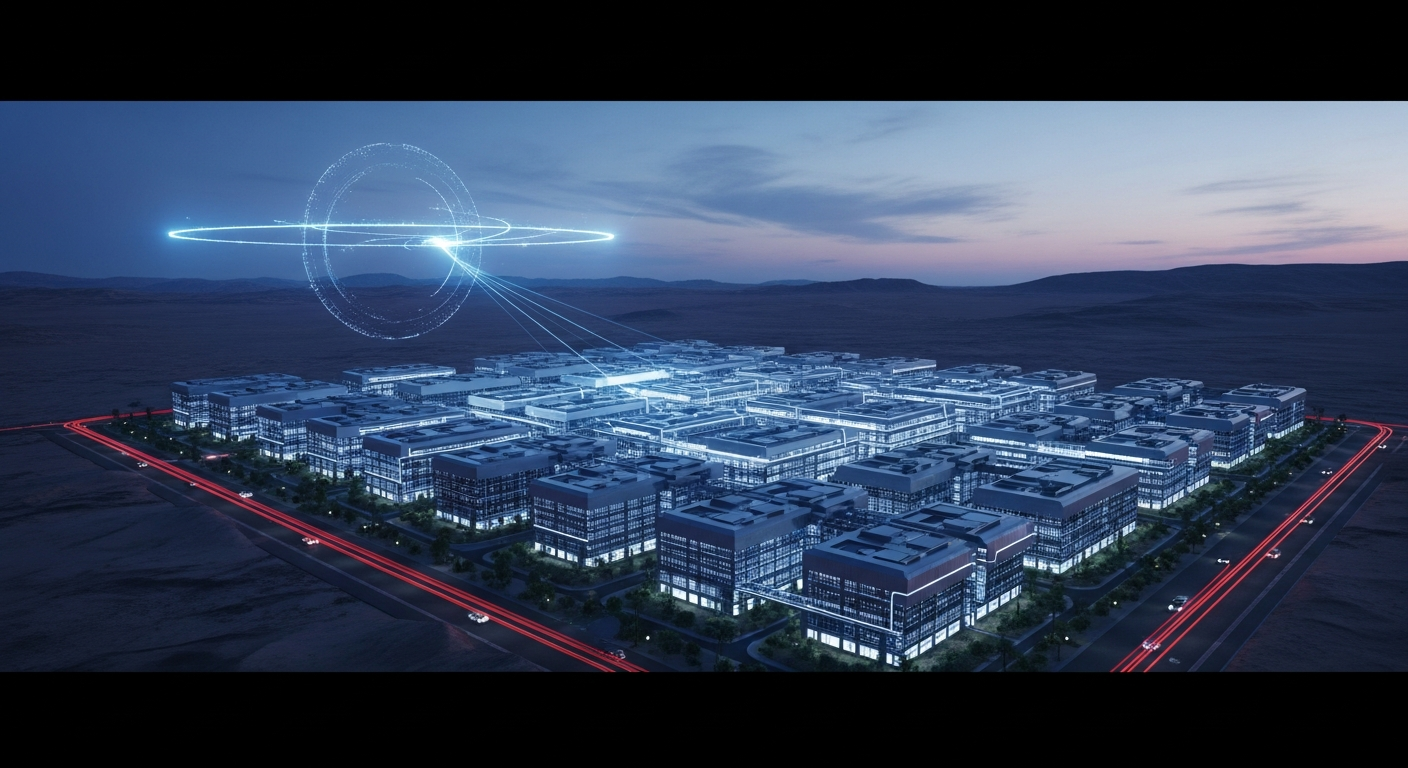
For the last two decades, the enterprise technology sector has treated “the cloud” as an ethereal, indestructible entity. Chief Technology Officers built threat models around ransomware, distributed denial-of-service (DDoS) attacks, and insider threats. But as the events of early 2026 have brutally demonstrated, the cloud is ultimately just a building full of computers. And buildings can be bombed.
The ongoing geopolitical conflict in the Middle East, which escalated sharply on February 28, 2026, has introduced a terrifying new vector to enterprise IT: kinetic warfare. With Iran’s Revolutionary Guard Corps (IRGC) explicitly targeting the digital infrastructure of US tech giants, the trillion-dollar ambition to transform the Gulf into the world’s next great artificial intelligence hub has collided with the harsh realities of modern drone warfare. The resulting damage has forced Silicon Valley to fundamentally rethink how, and where, it builds the future of computing.
The Architectural Reality: When Kinetic Strikes Bypass Logical Security

To understand the sheer scale of the disruption, one must look at the architectural foundation of modern cloud computing. Providers like Amazon Web Services (AWS) and Oracle design their regional networks using cloud availability zones (AZs). A standard region, such as AWS’s me-central-1 in the United Arab Emirates or me-south-1 in Bahrain, consists of three distinct AZs. These zones are physically separated by enough distance—typically 60 to 100 miles—to ensure that a single localized disaster, like a flood or a grid failure, cannot take down the entire region. Simultaneously, they are close enough to allow for single-digit millisecond latency, enabling synchronous data replication.
However, this geographic proximity, engineered specifically for logical redundancy, has proven to be a fatal kinetic vulnerability. A 60-mile radius is well within the operational theater of a single, coordinated drone swarm. When Iranian one-way attack drones struck two AWS data centers in the UAE and achieved a near-miss on a third in Bahrain, they effectively neutralized the region’s quorum. AWS was forced to declare a “hard down” status for multiple zones, an unprecedented event in the history of modern hyperscale computing.
The engineering post-mortem of these strikes reveals a devastating paradox in data center safety protocols: the very systems designed to protect the servers ultimately destroyed them. Data centers are equipped with Very Early Smoke Detection Apparatus (VESDA) and clean-agent gas suppression systems, backed by pre-action water sprinklers. When a kinetic strike breaches the physical hull of a facility, the explosion introduces immense heat, aviation fuel, and particulate matter. This triggers the secondary water-based suppression systems. According to internal AWS service dashboards from March 1, the structural damage and power delivery disruptions were severely compounded by massive water damage from these automated fire suppression systems. The servers that survived the blast were drowned by the building’s own defenses.
Even near-misses have proven catastrophic. On April 2, an Oracle data center in Dubai was damaged by shrapnel from an intercepted aerial attack. Similarly, Pure Data Centre Group’s 16-acre, 20-megawatt campus on Abu Dhabi’s Yas Island suffered shrapnel damage. In the realm of high-density AI workloads, a direct hit is not required to cause a total failure. Shrapnel that destroys roof-mounted HVAC chillers or cooling towers immediately halts heat dissipation. Without active cooling, densely packed AI server racks will experience thermal runaway within minutes, forcing an emergency hard shutdown to prevent the silicon from literally melting.
Market Impact & Deployment: The Financial Toll of the Kinetic Cloud

The financial ramifications of these kinetic strikes are rippling through boardrooms from Silicon Valley to London. Crucially, standard corporate insurance policies—including premium cyber and property insurance—contain strict force majeure clauses that exclude acts of war. The data center operators are eating the costs entirely.
This reality forced AWS to waive all customer charges in its Middle East cloud region for the entire month of March 2026. While Amazon’s PR apparatus framed this as a customer-centric gesture of goodwill, a Red Team audit of the situation reveals a different truth. Existing civil law frameworks in the region place the financial burden squarely on the data center operators to absorb costs and refund clients in the event of SLA (Service Level Agreement) failures, regardless of military conflicts. This legally mandated absorption cost Amazon an estimated $150 million in lost revenue, a figure that does not even begin to account for the hundreds of millions required for physical structural repairs and hardware replacement.
The crisis has also exposed the high-stakes poker game of regional infrastructure investment. Following the Yas Island strike, Pure DC CEO Gary Wojtaszek—a veteran who previously scaled CyrusOne into a $15 billion behemoth—bluntly told CNBC, “No one’s going to run into a burning building… No one’s going to put in new additional capital at scale to do anything until everything settles down.”
Yet, on April 27, Pure DC abruptly announced it had “recommitted its focus on the Middle East.” Why the sudden pivot back into the crosshairs? The answer lies in the grid. Securing utility power approvals for gigawatt-scale hyperscale infrastructure in the UAE is an incredibly competitive, multi-year bureaucratic process. If Pure DC abandoned their damaged site, they would forfeit their grid allocation to a competitor. In the AI arms race, power is the ultimate currency, and operators are willing to risk shrapnel to keep their place in line.
Moving forward, the deployment strategy for enterprise IT is undergoing a seismic shift. The era of the massive, monolithic gigawatt data center campus in geopolitically tense regions is ending. Tech companies are now pivoting toward distributed architectures—smaller, decentralized micro-data centers spread across wider geographic areas to reduce the blast radius of any single attack. Furthermore, defense contractors are seeing unprecedented interest from private tech firms looking to integrate C-RAM (Counter Rocket, Artillery, and Mortar) and anti-drone electronic warfare systems into their physical IT security budgets.
The Consumer Translation: When the Cloud Falls to Earth
For the everyday consumer and local enterprise, the abstraction of the cloud has violently collapsed into physical reality. When an AWS or Oracle region goes “hard down,” the local digital economy halts. Throughout March and April, residents in the Gulf experienced this firsthand. The Dubai-based ride-hailing app Careem suffered widespread outages, leaving passengers stranded. Banks and payment platforms relying on the Snowflake data cloud were unable to process transactions, effectively freezing local commerce.
One might ask: Why couldn’t these apps just failover to servers in Europe or the United States?
The answer is the collision of kinetic warfare and data sovereignty. Over the past five years, governments worldwide, including the UAE and Saudi Arabia, have enacted strict data localization laws. These regulations mandate that sensitive citizen data—ranging from financial records to biometric information—cannot legally leave the country’s borders. Therefore, when the local data centers were bombed, AWS and Oracle could not simply route the traffic to Frankfurt or Northern Virginia without violating federal law. Customers were legally trapped in a burning region, highlighting a massive blind spot in modern disaster recovery planning.
Ultimately, this conflict has proven that the internet is not a magical wireless web; it is a fragile network of fiber-optic cables, cooling towers, and silicon racks. As the IRGC continues to view US tech infrastructure as legitimate military targets, the cost of maintaining the cloud will inevitably rise, and those costs will be passed down to the consumer in the form of higher subscription fees and more frequent service degradations.
TechNode HQ Verdict: Pros, Cons & Usability
- Pro (Engineering): The crisis is accelerating the development of highly resilient, decentralized edge-computing architectures that can survive localized physical destruction.
- Pro (Consumer): The outages are forcing local governments to re-evaluate rigid data sovereignty laws, potentially allowing for emergency offshore failover protocols in the future.
- Con: Automated fire suppression systems (water sprinklers) act as a secondary destructive force during kinetic breaches, destroying hardware that survived the initial blast.
- Con: The integration of military-grade anti-drone defense systems into private data centers will drastically inflate the Total Cost of Ownership (TCO) for cloud providers.
Enterprise Usability: CTOs operating in geopolitically sensitive regions must immediately audit their disaster recovery protocols. You can no longer rely on a single cloud provider’s regional Availability Zones for redundancy. Enterprises must adopt a multi-cloud, multi-region architecture, and aggressively lobby local regulators for emergency data-export exemptions during acts of war.
Everyday Usability: Consumers and small businesses in the Middle East should anticipate continued volatility in cloud-dependent services. It is highly recommended to maintain localized, physical backups of critical business data and ensure alternative payment processing methods are available during prolonged regional cloud outages.
Sources & Citations:
Original Claim via: arstechnica
Official Handle: @arstechnica
Topics Explored: Cloud Infrastructure, Data Center Security, AWS Outage, Geopolitics, Edge Computing