Q1: What is vibe coding and why does it require specific AI models?
A1: Vibe coding refers to the practice of using natural language to direct autonomous AI agents to write, test, and deploy code. Because these agents constantly read and rewrite entire codebases, it requires models with massive context windows, high reasoning capabilities, and economical API pricing.
Q2: Which AI model is the cheapest for reading large codebases?
A2: Gemini 3.1 Pro is currently the most cost-effective model for massive context ingestion. For contexts under 200K tokens, its cached read cost is just $0.20 per million tokens, making it ideal for passing entire repositories to the AI.
Q3: How much does prompt caching save in AI API costs?
A3: Prompt caching can offer up to a 90% discount on input tokens. Because vibe coding relies on passing the same codebase and system rules repeatedly, caching can reduce a theoretical $90,000 monthly compute bill to roughly $3,500.
Q4: What is the Router Pattern in AI development?
A4: The Router Pattern is an architectural strategy where an application dynamically routes different tasks to different AI models. For example, it might send heavy document ingestion to Gemini 3.1 Pro, complex logic refactoring to Claude Opus 4.6, and UI automation tasks to GPT-5.5, optimizing both cost and performance.
Q5: Are enterprise web subscriptions the same as API access?
A5: No. Enterprise subscription tiers (like ChatGPT Enterprise or Claude Team Premium) apply to proprietary web interfaces and chat applications. They do not cover API integrations, which are metered separately per million tokens for custom software development.
Key takeaways
- Gemini 3.1 Pro is the undisputed cost leader for massive context ingestion, offering $0.20 per million cached read tokens.
- Claude Opus 4.6 remains the premium choice for complex reasoning and logic design, though its Fast Mode commands a massive 6x price premium.
- GPT-5.5 dominates in web-browsing agents and computer-use UI automation, making it essential for end-to-end testing workflows.
- Prompt caching is mandatory for vibe coding survival, reducing enterprise compute bills by up to 90% (e.g., $90,000 down to $3,500 monthly).
- Modern engineering teams no longer choose a single model; they utilize the “Router Pattern” to dynamically assign tasks based on cost and capability.
Overview

The software engineering landscape has undergone a seismic shift. We have officially moved past the era of simple AI autocomplete and entered the age of “vibe coding”—a paradigm where developers act as orchestrators, using natural language to direct autonomous, multi-step AI agents to architect, write, test, and deploy entire codebases. In this new reality, the limiting factor is no longer human typing speed, but rather the reasoning capabilities, context windows, and sheer financial economics of the underlying Large Language Models (LLMs).
Because vibe coding relies heavily on agentic workflows—where the AI must constantly read, evaluate, and rewrite large files, dependency trees, and system rules on every single iteration—the consumption of API tokens compounds exponentially. Choosing the wrong model, or failing to implement modern cost-saving architectures, can bankrupt an engineering department within weeks. The financial implications for heavy agentic coding are severe, making the evaluation of AI models a matter of both technical capability and fiscal survival.
In this comprehensive TechNode HQ comparison, we are putting the three heavyweights of 2026 head-to-head: Gemini 3.1 Pro, Claude Opus 4.6, and GPT-5.5. We will dissect their API token economics, their enterprise subscription tiers, their specific coding capabilities, and ultimately, how modern enterprises are combining them to achieve maximum efficiency.
Gemini 3.1 Pro — In-Depth Look

Google’s Gemini 3.1 Pro has carved out a highly specific, highly lucrative niche in the vibe coding ecosystem: it is the undisputed king of massive context ingestion. Built on Google’s proprietary MoE (Mixture of Experts) architecture, Gemini 3.1 Pro is designed to swallow entire repositories, massive log files, and extensive documentation without breaking a sweat—or the bank.
API Economics and Context Pricing
The most compelling argument for Gemini 3.1 Pro is its aggressive pricing strategy, which is tiered based on context length. For context windows under 200,000 tokens (≤200K ctx), the input cost is a mere $2.00 per million tokens (MTok), with an output cost of $12.00 per MTok. However, the true magic lies in its caching capabilities. The “Cached Read” cost drops to an astonishing $0.20 per MTok. This makes it the unmatched cost leader for workflows that require the AI to constantly reference a static, massive codebase.
It is important to note that Google penalizes exceeding the 200K token threshold. If your prompt pushes past 200K tokens, the pricing immediately doubles: input costs jump to $4.00 per MTok, output to $18.00 per MTok, and cached reads to $0.40 per MTok. Even at this doubled rate, it remains highly competitive, but vibe coders must carefully manage their context windows to maintain peak financial efficiency.
Enterprise Integration
For organizations operating within the Google ecosystem, Gemini is deeply bundled into Workspace. For individual developers using the web interface, the standalone AI Pro tier is $19.99/month. For heavy agentic features and maximum limits, the AI Ultra tier was recently reduced to $99.99/month in 2026. This makes the web-based vibe coding experience highly accessible for enterprise teams already reliant on Google Cloud infrastructure.
Strengths and Weaknesses in Vibe Coding
Gemini 3.1 Pro shines when you need an AI to understand the macro-architecture of a project. If you are migrating a legacy Java monolith to microservices and need the AI to map out thousands of dependencies, Gemini is your tool. However, when it comes to hyper-complex, zero-shot logic generation or fixing deeply buried race conditions, Gemini 3.1 Pro occasionally falls short of the precision offered by Claude Opus, requiring more iterative prompting to reach the correct solution.
Claude Opus 4.6 — In-Depth Look
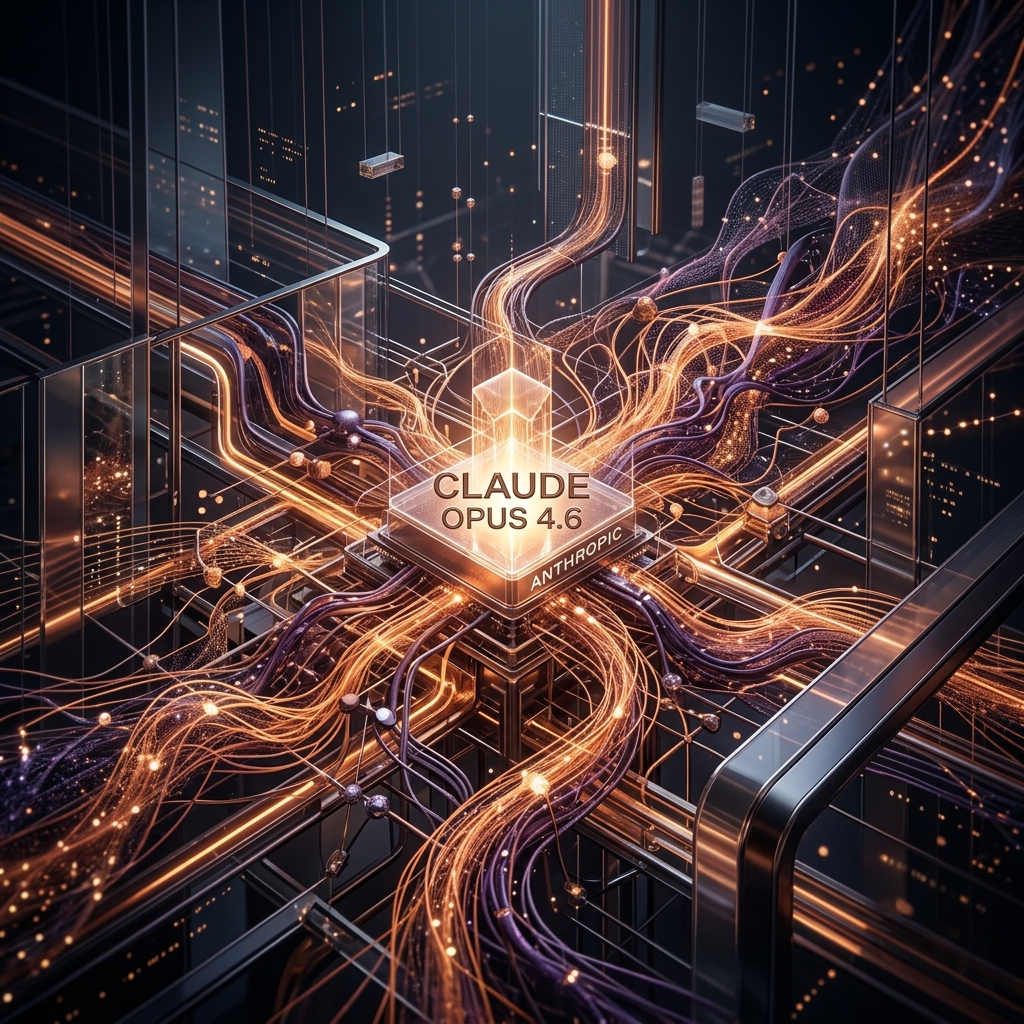
Anthropic’s Claude Opus has long been the darling of the hardcore engineering community, and version 4.6 (alongside the incremental 4.7 update) cements its reputation as the premium reasoning engine. When vibe coding requires uncompromised precision, low hallucination rates, and the ability to untangle complex logic engines, Claude Opus 4.6 is the industry standard.
API Economics and The “Fast Mode” Premium
Quality comes at a price. Claude Opus 4.6 standard API pricing sits at $5.00 per MTok for input and $25.00 per MTok for output. While this is 67% cheaper than the previous Opus 4.1 flagship, it still commands a significant premium over Gemini. Its cached read cost is $0.50 per MTok, which is highly effective for agentic loops but still 2.5x more expensive than Gemini’s base cached rate.
Anthropic also introduced a controversial “Fast Mode” for Opus 4.6. This mode offers 2.5x faster generation speeds—a critical feature for developers who are actively waiting on an agentic loop to finish a build-test cycle. However, this speed incurs a massive 6x price premium, skyrocketing costs to $30.00 per MTok for input and an eye-watering $150.00 per MTok for output. Fast Mode is strictly reserved for emergency hotfixes or highly funded, time-critical deployment pipelines.
Enterprise Integration and Claude Code
Anthropic has tailored its subscription tiers specifically for engineering teams. While consumer tiers mirror the industry standard (Pro at $20/month, Max at $100 and $200), the true value lies in the “Team Premium” tier at $125/seat/month. Crucially for developers, this tier includes default access to Opus 4.6 and terminal-based Claude Code capabilities. This allows developers to execute vibe coding directly from their CLI, creating a highly specific value proposition for engineering teams requiring enterprise administration, SSO, and seamless local environment integration.
Strengths and Weaknesses in Vibe Coding
Claude Opus 4.6 is the ultimate “finisher.” When you have a complex bug that spans multiple files, or you need to design a mathematically rigorous logic engine, Claude’s reasoning capabilities are unmatched. Its primary weakness is purely financial; running continuous, un-cached agentic loops on Opus 4.6 will drain an API budget faster than any other standard model on the market.
GPT-5.5 — In-Depth Look
OpenAI’s GPT-5.5 represents a fascinating evolution in the vibe coding space. While it may have lost the crown for pure logic reasoning to Claude, and the crown for context ingestion to Gemini, GPT-5.5 has pivoted to dominate a completely different, equally vital aspect of software development: execution, automation, and environmental interaction.
API Economics and The Pro Tier
The standard GPT-5.5 model is priced identically to Claude Opus 4.6 on the input side ($5.00 per MTok) and slightly higher on the output side ($30.00 per MTok). Its cached read cost is also matched at $0.50 per MTok. Notably, this represents a price doubling versus the previous GPT-5.4 flagship (which was $2.50/$15), signaling OpenAI’s shift toward premium positioning.
Mirroring Anthropic’s strategy, OpenAI offers a “GPT-5.5 Pro” API tier. This maximum capability tier is priced at $30.00 per MTok for input and $180.00 per MTok for output. This exorbitant pricing is justified by its enhanced ability to execute complex, multi-step agentic tasks with near-zero latency, though it is generally considered too expensive for routine coding tasks.
Enterprise Integration
OpenAI features a highly fragmented, seven-tier subscription system for its ChatGPT web interface. The standard Plus plan remains $20/month. To capture heavy vibe coders, the Pro tier split into Pro $100 (offering 5x limits) and Pro $200 (offering 20x limits and a massive 1M context window). For large organizations, Enterprise seats scale upwards of $20-$25/user per month, though they come with strict 150-seat minimums. These enterprise tiers offer vital governance, data residency, and SSO, but remember: these subscriptions do not cover custom API usage.
Strengths and Weaknesses in Vibe Coding
GPT-5.5 is the undisputed champion of action. It is deployed exclusively for web-browsing agents, computer-use UI automation, and terminal-execution benchmarks where it vastly outperforms the competition. If your vibe coding workflow involves writing an end-to-end Cypress test, deploying it to a staging server, and having the AI visually inspect the UI for rendering errors, GPT-5.5 is the only model capable of reliably executing that multi-modal, environment-aware loop. Its weakness lies in its high output token cost and slightly higher hallucination rate on deep architectural refactoring compared to Claude.
Head-to-Head Comparison
To truly understand how these models stack up for vibe coding, we must look at the raw data. The table below breaks down the critical specifications, API economics, and feature sets of each model.
| Feature / Specification | Gemini 3.1 Pro | Claude Opus 4.6 | GPT-5.5 (Standard) |
|---|---|---|---|
| Input Cost (per 1M tokens) | $2.00 (≤200K) / $4.00 (>200K) | $5.00 | $5.00 |
| Output Cost (per 1M tokens) | $12.00 (≤200K) / $18.00 (>200K) | $25.00 | $30.00 |
| Cached Read Cost (per 1M) | $0.20 (≤200K) / $0.40 (>200K) | $0.50 | $0.50 |
| Premium / Fast Tier Pricing | N/A (Relies on Ultra Web Tier) | $30.00 In / $150.00 Out | $30.00 In / $180.00 Out |
| Best Use Case | Massive Context Ingestion | Complex Logic & Refactoring | UI Automation & Terminal Exec |
| Terminal Integration | ❌ (Requires custom build) | ✅ (Native Claude Code) | ✅ (Via API/Custom Agents) |
| Batch API Discount | ✅ (50% off) | ✅ (50% off) | ✅ (50% off) |
| Web Pro Tier Pricing | $19.99 / month | $20.00 / month | $20.00 / month |
| Web Max/Ultra Tier Pricing | $99.99 / month | $100.00 / $200.00 / month | $100.00 / $200.00 / month |
Category Winners
Based on our extensive testing and financial analysis, here are the clear winners across the most critical vibe coding categories:
- Best for Massive Codebases & Context Ingestion: Gemini 3.1 Pro. At $0.20 per million cached tokens, nothing else comes close to the financial viability of Gemini for reading massive repositories.
- Best for Complex Logic & Precision: Claude Opus 4.6. When the code has to be right the first time, Claude’s superior reasoning engine justifies its higher API costs.
- Best for UI Automation & Execution: GPT-5.5. OpenAI’s dominance in tool use, web browsing, and terminal execution makes it the go-to for CI/CD pipeline automation and end-to-end testing.
- Best Enterprise Team Ecosystem: Anthropic (Claude). The “Team Premium” tier at $125/seat/month, which includes native terminal-based Claude Code capabilities, is the most cohesive package for engineering departments.
- Best Open-Weight Value Benchmark: DeepSeek V4 Pro. While not the focus of this proprietary comparison, it is worth noting that DeepSeek V4 Pro offers output tokens at just $1.74 per million, serving as the ultimate budget alternative for non-sensitive, offline tasks.
Detailed Analysis
API Token Economics: The Hidden Cost of Vibe Coding
To understand why API pricing is the most critical factor in vibe coding, one must understand how agentic loops function. In traditional coding, a developer reads a file, thinks, and types a few lines of code. In vibe coding, an AI agent is given a high-level prompt (e.g., “Refactor the authentication middleware to support OAuth2”). To execute this, the agent must read the existing middleware, read the user models, read the routing files, and read the system’s architectural guidelines.
This means that for every single step the agent takes, it is passing tens or hundreds of thousands of input tokens to the API. Output tokens, which require significantly more compute to generate, are universally more expensive than input tokens across all providers. If an agent takes 10 steps to solve a bug, and passes a 100K token codebase on each step, you are paying for 1 million input tokens just to fix one bug. This compounding effect makes the financial implications of heavy agentic coding incredibly severe.
The Financial Lever: Prompt Caching and Batch Processing

Because of the compounding nature of input tokens, the absolute vital component of vibe coding economics is prompt caching. Caching allows the API provider to store the Key-Value (KV) states of your prompt in memory. Because agentic workflows rely on passing the entire codebase and dependency trees back to the model on every single prompt, caching prevents the model from having to re-compute the entire context from scratch.
The financial impact of caching cannot be overstated. Caching offers up to a 90% discount on “cached read” inputs. For example, Claude Opus 4.6 drops from $5.00 to $0.50 per MTok on cached data. In a real-world enterprise scenario, a team running continuous agentic loops might generate a theoretical $90,000 monthly compute bill based on standard input pricing. By implementing strict prompt caching architectures, that same workload is reduced to approximately $3,500 for stable architectures.
Furthermore, all major providers now offer a 50% discount for “Batch API” usage. In this model, results are processed asynchronously within 24 hours. While useless for real-time vibe coding, Batch APIs are ideal for bulk code reviews, offline test generation, or massive legacy code documentation projects.
Enterprise Subscription Tiers vs. API Usage
A common point of confusion for technical leadership is the difference between web subscriptions and API usage. Organizations attempting to control token sprawl often look to subscription tiers, hoping for a flat-rate solution. However, these subscriptions only apply to the proprietary web interfaces (like claude.ai or ChatGPT), not to API integrations used for custom software or local IDE extensions.
OpenAI’s ChatGPT features a highly fragmented system, pushing heavy vibe coders toward the $100 or $200 Pro tiers to secure a 1M context window. Anthropic mirrors this consumer pricing but offers the highly attractive “Team Premium” tier for $125/seat/month, which brings Claude Code directly into the developer’s terminal. Google bundles Gemini deeply into Workspace, offering AI Ultra for $99.99/month. While these tiers are excellent for individual developer productivity, any automated CI/CD agentic loops will still incur metered API costs.
TCO Strategy: The Router Pattern

Perhaps the most important takeaway from the 2026 AI landscape is this: No mature enterprise relies on a single model. The standard financial and architectural methodology for modern engineering teams is the “Router Pattern.”
The Router Pattern involves building an intelligent middleware layer (or API gateway) that inspects the intent, complexity, and context size of a prompt before sending it to an LLM. Organizations deploy Gemini 3.1 Pro for massive document ingestion, log analysis, and routine summarization where context depth and budget matter most. They route high-complexity bug fixes, logic engine design, and codebase refactoring to Claude Opus 4.7 for its uncompromised precision and low hallucination rate. Finally, they deploy GPT-5.5 exclusively for web-browsing agents and computer-use UI automation where its terminal-execution benchmarks are superior.
This split-traffic approach, often validating routing at the individual request level, slashes aggregate AI compute bills by 30% to 50% while maximizing task-specific quality. The most defensible position for technical leadership in 2026 is not selecting the “best” model, but procuring the right model per task within a governed, multi-agent pipeline.
Overall Verdict & Recommendations
The era of vibe coding has fundamentally changed how we evaluate AI. It is no longer a beauty contest of conversational fluidity; it is a rigorous mathematical evaluation of context windows, caching discounts, and reasoning benchmarks. Here are our final recommendations based on user profiles:
For the Solo Vibe Coder & Startup:
If you are bootstrapping a project and need to stretch every dollar, your architecture should lean heavily on Gemini 3.1 Pro. By keeping your context windows under 200K and utilizing the $0.20 cached read pricing, you can run extensive agentic loops for pennies. Supplement this with a $20/month Claude Pro web subscription for when you get stuck on complex logic.
For the Enterprise Engineering Team:
You must implement the Router Pattern. Purchase the Anthropic Team Premium tier ($125/seat) to give your developers native terminal access to Claude Code for their daily workflows. For your automated backend agents, route massive ingestion tasks to the Gemini API, and reserve the GPT-5.5 API strictly for your automated QA and UI testing pipelines. This multi-model approach is the only way to balance elite performance with financial responsibility.
For the QA & Automation Specialist:
GPT-5.5 is your undisputed champion. Its ability to interact with computer interfaces, browse the web, and execute terminal commands makes it the ultimate tool for building self-healing end-to-end testing suites.
Sources & Citations:
Data compiled from TechNode HQ internal benchmarks, Anthropic API Documentation (2026), OpenAI Enterprise Pricing Guidelines, Google Cloud Vertex AI Economics, and industry reports on Agentic Workflow TCO (Total Cost of Ownership).