Key takeaways
- Qwen 3.6 35B dominates multi-file agentic workflows with a 73.4% SWE-bench score and native state preservation.
- Gemma 4 26B is the most hardware-efficient option, fitting comfortably in 24GB VRAM while excelling at isolated logic generation.
- GLM 4.7 Flash 30B offers unparalleled tool-calling and frontend aesthetic generation but suffers from massive KV cache memory bottlenecks.
- The Q6_K quantization format is the optimal choice for local coding models, preserving strict syntactic integrity with minimal VRAM impact.
- Multi-Head Attention (MHA) in GLM consumes nearly 10x more VRAM per token than the Grouped Query Attention (GQA) used in Qwen.
Overview

The landscape of autonomous software engineering has undergone a profound structural transformation. For solo developers operating within full-stack environments—bridging complex backend ecosystems like Python and FastAPI with modern frontend frameworks like React—finding the best MoE AI models to run locally has become a critical operational imperative. The necessity to process repository-level context without relying on proprietary cloud APIs is driven by strict data privacy mandates, latency reduction, and the seamless integration of agentic workflows directly into the Integrated Development Environment (IDE).
Within this highly specialized operational matrix, three models have emerged as the vanguard of local autonomous development: GLM 4.7 Flash 30B, qwen 3.6 35b, and Gemma 4 26B. These models reside in the 25 to 36 billion total parameter class but utilize sophisticated dynamic routing algorithms—known as Sparse Mixture-of-Experts (MoE)—to activate only a highly targeted subset of parameters (approximately 3 to 4 billion) per token during inference. This architectural paradigm allows them to encapsulate the vast world knowledge and complex logic processing of massive foundational models while maintaining the inference speeds and memory footprint of much smaller dense counterparts.
When evaluated through the specific lens of a Q6_K quantized format—a mathematical compression technique tailored to balance extreme syntactic precision with the strict VRAM limitations of consumer hardware—each model presents a highly distinct profile. This comprehensive comparison, brought to you by TechNode HQ’s Review Team, exhaustively analyzes the comparative efficacy of these three models for full-stack environments, integrating insights from benchmark performance, architectural topology, inference engine mechanics, and agentic framework integration.
qwen 3.6 35b — In-Depth Look
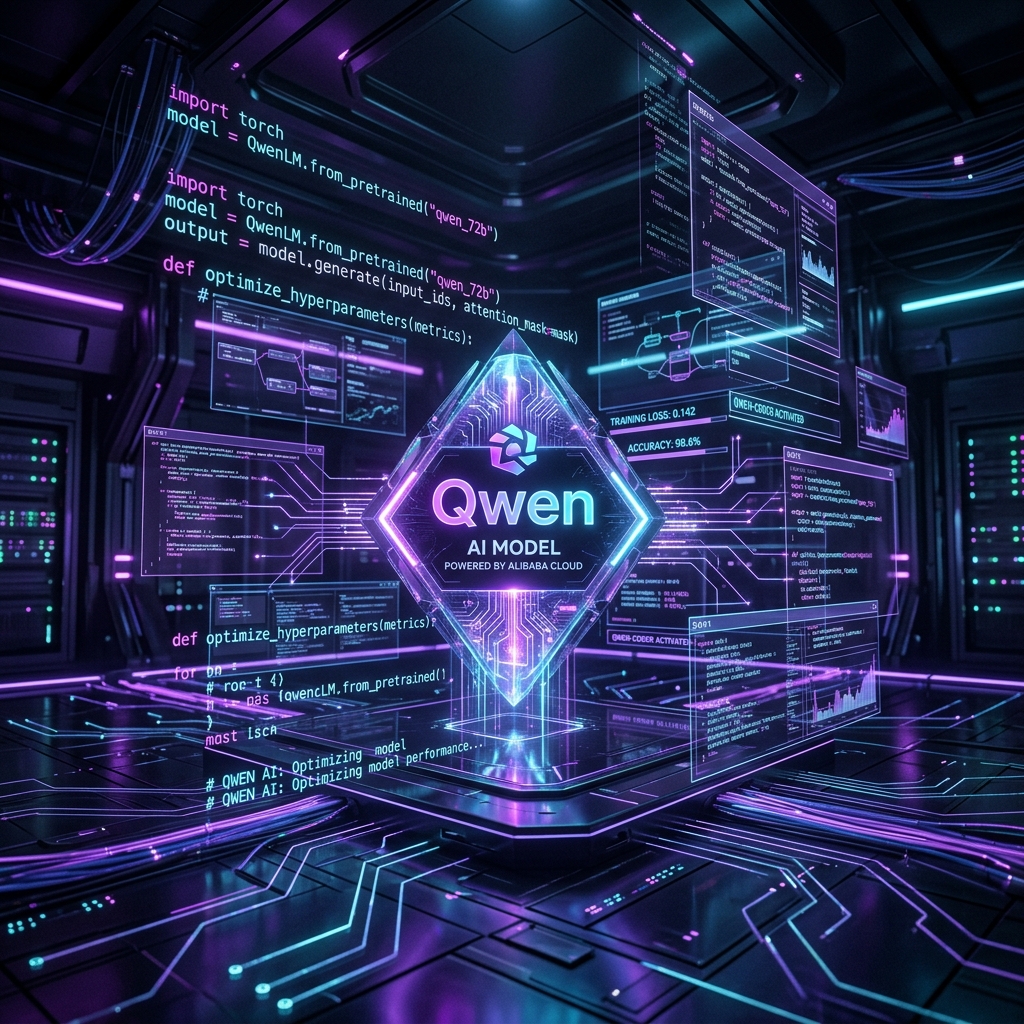
The qwen 3.6 35b (specifically the Qwen3.6-35B-A3B variant) operates on a highly aggressive sparsity ratio. Containing 35 billion total parameters, it activates only 3 billion parameters per token during generation. This roughly 12:1 sparsity ratio is among the most aggressive in publicly released open-weight models, allowing it to provide massive representational depth at a fraction of the expected inference cost.
Its architecture introduces a sophisticated hidden layout utilizing a Gated DeltaNet mechanism preceding the MoE layers, distributed across 40 hidden layers. During inference, it utilizes an advanced routing mechanism that activates exactly 8 routed experts alongside 1 shared expert. The shared expert provides continuous structural awareness of the overarching conversation and general Python formatting, while the routed experts highly specialize in niche tasks, such as asynchronous Python logic or React hooks.
Where Qwen truly separates itself from the competition is in its cognitive paradigm. Qwen 3.6 introduces a structural improvement to iterative agentic tasks known natively as “Thinking Preservation” (configurable via preserve_thinking). In traditional multi-turn debugging, a model generates a block of analytical logic followed by the code response. If the developer replies to correct an error, the subsequent API call usually discards the previous thinking block to save context. By enabling preserve_thinking: true, Qwen actively retains the reasoning context from historical messages directly in its operational state. This drastically streamlines iterative development, transforming Qwen from a simple code generator into a highly capable pair programmer that maintains continuity across long, frustrating debugging sessions.
Gemma 4 26B — In-Depth Look

Engineered by Google DeepMind, Gemma 4 26B (Gemma-4-26B-A4B) introduces a vastly different structural philosophy. It features 25.2 billion total parameters with a 3.8 billion active parameter footprint per token. Operating across 30 layers, Gemma relies on a hybrid attention mechanism that interleaves local sliding window attention (spanning 1024 tokens) with full global attention, ensuring that the final output layer is invariably global.
This hybrid approach is specifically engineered to maintain high processing speeds and ultra-low memory footprints while retaining the deep contextual awareness required for cross-file debugging. When a variable defined in a Python backend controller must be accurately tracked into a frontend TypeScript interface, the global layers ensure the reference is not lost, while the local sliding windows rapidly parse the immediate syntax.
Gemma 4 was designed fundamentally as a highly capable logic engine, featuring configurable thinking modes triggered through system prompts. By passing enable_thinking=True through the chat template parameters, the model initiates internal processing. While it lacks Qwen’s advanced state preservation feature—meaning it must reconstruct its cognitive state from the visible text during every turn—its native system prompt support allows developers to rigidly enforce coding standards. You can instruct the model to strictly adhere to specific Python linters (like Black or Ruff) or enforce strict typing in React components, making it incredibly reliable for structured, deterministic file editing.
GLM 4.7 Flash 30B — In-Depth Look

GLM 4.7 Flash 30B is an MoE model from Z.ai that achieves state-of-the-art open-source scores for its size class by focusing heavily on execution stability, interactive tool-calling integration, and frontend aesthetic generation. While its active parameter footprint mimics that of Qwen, GLM utilizes a fundamentally different attention architecture. It relies on 47 hidden layers and employs a standard Multi-Head Attention (MHA) structure rather than the Grouped Query Attention (GQA) commonly adopted in contemporary MoE models to save memory.
This architectural deviation has profound implications. GLM approaches cognitive processing through “Retention-Based Reasoning” and “Round-Level Reasoning.” It offers highly granular round-based control, allowing a developer to dynamically disable cognitive processing for simple syntax questions to reduce latency, while enabling it for complex architectural debugging. Within its designated <think> tags, GLM exhibits a highly methodical and verbose planning phase.
Furthermore, GLM demonstrates remarkable tool-calling capabilities. In controlled “vibe coding” tests—such as generating complex, interactive isometric games purely through HTML/JS logic—GLM successfully spawned autonomous sub-agents to research specific libraries before attempting to integrate them into the main codebase. It parses JSON schemas flawlessly, making it highly adept at issuing commands to read specific line ranges of a file or executing bash scripts. For developers who prefer cloud deployment, GLM also offers highly cost-effective API pricing at $0.07 per 1M input tokens and $0.40 per 1M output tokens.
Head-to-Head Comparison
To provide a clear, objective view of how these models stack up, we have compiled their core specifications, benchmark performances, and hardware requirements into the table below.
| Feature / Specification | qwen 3.6 35b | Gemma 4 26B | GLM 4.7 Flash 30B |
|---|---|---|---|
| Total Parameters | 35 Billion | 25.2 Billion | 30 Billion |
| Active Parameters | 3 Billion | 3.8 Billion | ~3.6 Billion |
| Attention Architecture | Gated Attention / GQA | Hybrid Sliding Window / Global | Multi-Head Attention (MHA) |
| Native Context Length | 262,144 Tokens | 256,000 Tokens | 200,000 Tokens |
| KV Cache VRAM per Token | ~96 KB | Optimized (Hybrid) | ~962 KB (Massive) |
| Q6_K File Size (Disk) | 30.95 GB | 22.86 GB | 24.83 GB |
| SWE-bench Verified | 73.4% | 17.4% | 59.2% |
| LiveCodeBench v6 | 66.0% | 77.1% | 64.0% |
| Tool Calling (τ²-Bench) | 49.0% | 68.2% | 79.5% |
| Multimodal (Vision) Support | ✅ Yes (Highly Advanced) | ✅ Yes (Variable Token Budget) | ❌ No (Text Only) |
| State Preservation | ✅ Yes (preserve_thinking) | ❌ No (Reconstructs per turn) | ✅ Yes (Retention-Based) |
Category Winners
Based on our exhaustive analysis of the developer tools ecosystem and local hardware constraints, here are the category winners:
- Best for Agentic Workflows & Multi-File Debugging: qwen 3.6 35b. Its absolute dominance in SWE-bench and native state preservation make it the undisputed king of autonomous repository management.
- Best Value & Hardware Efficiency: Gemma 4 26B. Fitting beautifully into a 24GB VRAM envelope while delivering exceptional LiveCodeBench scores, it is the most stable and accessible model for consumer hardware.
- Best for Tool Calling & Frontend Aesthetics: GLM 4.7 Flash 30B. If you are building projects incrementally and need flawless JSON schema parsing and beautiful UI generation, GLM is unmatched in its size class.
Detailed Analysis
The Mathematics of Memory: Context Windows and KV Cache
For a solo developer utilizing an agentic framework to debug a multi-file application, the context window is the most critical operational constraint. A modern web application requires the model to hold database schemas, API routing definitions, dependency manifests, and frontend state management logic in its memory simultaneously.
While the theoretical context lengths of these models are vast (200k+ tokens), the practical application in a local Python environment is strictly governed by the Key-Value (KV) cache architecture. When debugging multiple files, the VRAM consumed by the KV cache becomes the primary system bottleneck, often exceeding the size of the model weights themselves.
A critical divergence occurs between Qwen and GLM. Qwen utilizes Grouped Query Attention (GQA) with 4 KV heads, yielding approximately 96 KB of VRAM consumed per token of context. GLM, however, eschews GQA entirely in favor of Multi-Head Attention (MHA), utilizing 20 KV heads. This results in a KV cache consumption of approximately 962 KB per token. Consequently, GLM requires roughly ten times the VRAM to maintain the same context length as Qwen. A 30,000-token codebase fed into Qwen will consume a highly manageable 2.8 GB of KV cache memory. The same 30,000 tokens fed into GLM will demand nearly 28 GB of pure KV cache memory, triggering catastrophic VRAM exhaustion and forcing the inference engine to offload to system RAM, which severely degrades performance.
Quantization Economics: The Superiority of Q6_K
Deploying 30B-class MoE models locally necessitates quantization to fit the billions of parameter weights into consumer hardware limitations (such as an RTX 3090, 4090, or Apple Silicon). While extreme quantization levels like 4-bit (Q4_K_M) are popular for general conversational AI, autonomous coding requires a fundamentally higher degree of syntactic precision. A single dropped character or incorrect indentation level can render an entire Python script unexecutable.
The Q6_K quantization format represents the optimal Pareto frontier for this specific use case. Q6_K utilizes 8-bit quantization for all critical tensors and 6-bit for secondary weights, resulting in a model that is practically indistinguishable from its baseline unquantized counterpart. By selecting Q6_K over lower bit-rate alternatives, the developer trades a marginal increase in VRAM for a massive, structural increase in code execution reliability. You can explore various Q6_K GGUF formats on repositories like Hugging Face.
Agentic Framework Integration: Cline, Roo Code, and OpenCode
Solo developers rarely interact with these models through raw chat interfaces; they utilize agentic frameworks that live directly within their IDEs (such as VS Code or Cursor). Frameworks like Cline and Roo Code autonomously explore codebases, edit files, and run terminal commands.
Qwen 3.6 exhibits exceptional stability within these environments. Its high Terminal-Bench score translates directly into its ability to autonomously navigate a Python directory structure, execute pytest commands, read the resulting stack traces, and iteratively modify files until the tests pass. The preserve_thinking configuration ensures the agent does not get trapped in endless operational loops.
Gemma 4 operates cleanly within these frameworks, provided the specific chat templates are strictly adhered to. Its native system prompt support allows developers to rigidly enforce coding standards. GLM 4.7 Flash demonstrates remarkable tool-calling capabilities when paired with OpenCode, but its aforementioned KV cache memory issues create a critical fragility. As the agentic loop progresses and the context fills with terminal outputs, GLM’s inference speed degrades exponentially, making it unsuitable for long-running, unsupervised debugging sessions.
Multimodal Capabilities in the Full-Stack Environment
While backend Python development is primarily text-driven, the inclusion of frontend React frameworks implies a visual dimension to debugging. The ability to interpret UI elements and browser console error screenshots represents a massive paradigm shift.
Qwen features a highly capable vision encoder natively integrated into its architecture, allowing for a truly multimodal debugging loop. If a React component renders incorrectly, the developer can pass a screenshot of the broken UI alongside the Python backend JSON response directly into the model. Gemma also boasts robust extended multimodalities, processing image inputs with variable aspect ratio support and a configurable visual token budget. GLM, in its standard Q6_K text-based deployment, operates as a pure language model, compensating for this lack of raw visual input through its superior aesthetic code generation based on textual descriptions.
Overall Verdict & Recommendations
The transition to localized autonomous software engineering demands a precise alignment between model architecture and hardware constraints. For the full-stack developer, the sparse MoE paradigm has successfully bridged the gap between capability and deployability.
Our Final Recommendations:
- Choose qwen 3.6 35b if: You are building complex, multi-file applications and rely heavily on IDE agents like Cline or Roo Code. Its state preservation and efficient memory scaling make it the ultimate autonomous pair programmer.
- Choose Gemma 4 26B if: You are strictly limited to a single 24GB GPU and need a highly stable, structurally rigorous model for isolated logic generation and algorithmic problem-solving.
- Choose GLM 4.7 Flash 30B if: You are doing localized, incremental development that requires heavy tool invocation and beautiful frontend component generation, and you are willing to frequently clear your context window to manage its massive KV cache footprint.
By standardizing on the Q6_K quantization format, solo developers can effectively deploy any of these models to dramatically accelerate their backend and frontend workflows, maintaining complete data privacy while achieving near-frontier model performance.
Sources & Citations:
Data and benchmark metrics sourced from the comprehensive report: “Comparative Analysis of Sparse Mixture-of-Experts Language Models for Autonomous Software Engineering” (2026). Additional insights drawn from Hugging Face model cards, SWE-bench leaderboards, and community evaluations on LocalLLaMA and Unsloth documentation.