Key takeaways
- Galaxy Z Fold 8 Ultra introduces a 5,000 mAh silicon-carbon battery.
- Inner 8-inch display reaches 3,000 nits with a new anti-reflective coating.
- Flex Titanium technology significantly reduces the visibility of the screen crease.
- Priced at $2,099.99, targeting enterprise executives and premium consumers.
- Early agentic AI features remain unreliable despite software updates.
The Architectural Reality of the Galaxy Z Fold 8 Ultra

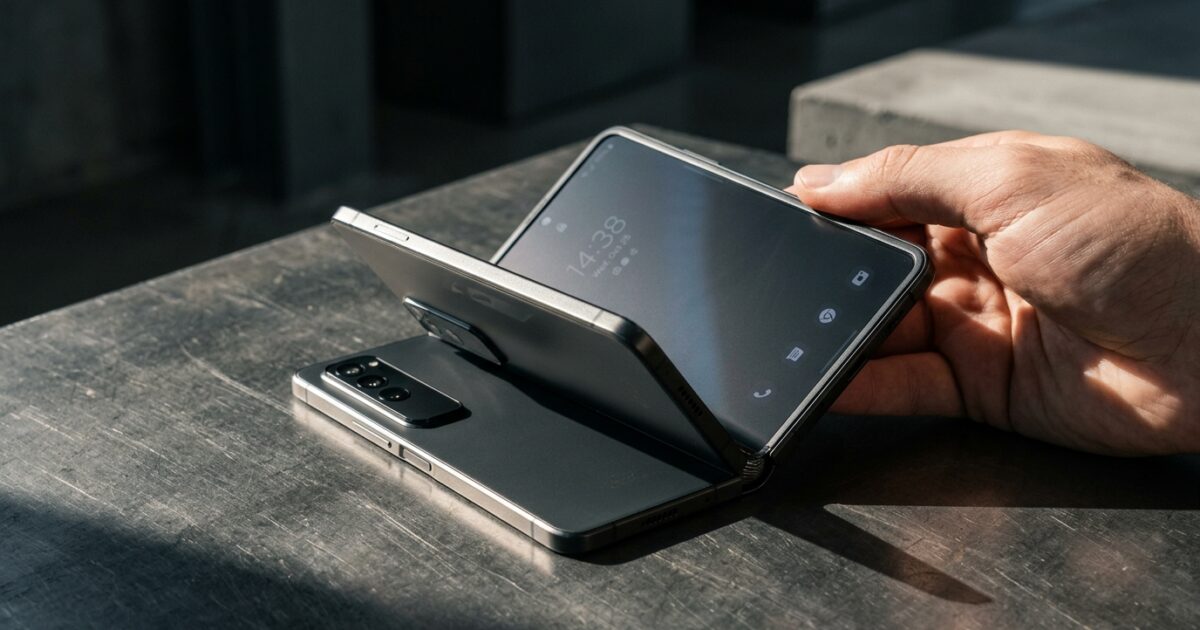
The Galaxy Z Fold 8 Ultra represents a pivotal shift in Samsung’s approach to foldable architecture. Released in July 2026, it serves as the premium successor to the Galaxy Z Fold 7, which was announced a year prior on July 9, 2025. While the Snapdragon 8 Elite Gen 5 for Galaxy processor provides an expected generational performance bump over the Fold 7’s Snapdragon 8 Elite, the true architectural marvel lies in power density. For the first time, Samsung has adopted a silicon-carbon anode technology. This high-density material science allows Samsung to cram a 5,000 mAh battery into the Fold 8 Ultra, a significant upgrade over the 4,400 mAh (typical) dual battery system found in the Fold 7, without increasing the device’s footprint.
To put this in perspective: the transition to silicon-carbon anodes is like shifting from standard diesel to high-density jet fuel in the exact same sized tank—delivering vastly more operational range without expanding the vehicle’s footprint. The device measures a remarkably thin 4.1 mm when unfolded, shaving a millimeter off its predecessor, while retaining the classic, tall, and narrow legacy dimensions that power users prefer, contrasting with the standard Z Fold 8’s new wider, passport-like shape.
Samsung also addressed the most persistent foldable complaint: the crease. The new Flex Titanium technology balances hinge mechanics, display tension, and magnetic force to make the unfolding action smoother while rendering the crease practically invisible. The 8-inch main Dynamic AMOLED display now hits a blistering 3,000 nits of peak brightness—15% brighter than the Fold 7’s 2,600 nits—and operates at a 120Hz variable refresh rate. Crucially, an anti-reflective coating has been added, solving the glare issues that plagued previous generations in harsh outdoor lighting.
Market Impact & Enterprise Deployment

From an enterprise IT perspective, the Galaxy Z Fold 8 Ultra is a formidable piece of hardware. However, it carries a steep starting price of $2,099.99 in the United States, cementing its status as an ultra-premium device. For comparison, the Galaxy Z Fold 7 remains available in retail channels, often with heavy discounts, having launched at Rs 1,74,999 in India. When calculating Total Cost of Ownership (TCO), IT departments must weigh the upfront cost of the Ultra against its longevity and utility.
The combination of a 5,000 mAh battery and improved dual-path 45W fast charging means field workers and executives experience less downtime. The 3,000-nit, anti-reflective display ensures that data dashboards and spreadsheets remain legible under direct sunlight on construction sites or during transit. Furthermore, the promise of seven years of software updates (Android 17 with One UI 9 out of the box) extends the hardware lifecycle, potentially justifying the $2,100 capital expenditure per unit over a longer depreciation schedule.
Despite these hardware wins, a red team audit reveals some marketing fluff. The device carries an IP48 rating. While it can survive being dunked in water for 30 minutes (the “8”), it is not truly dust-tight. The “4” rating means it won’t protect against dust particles smaller than 1mm, unlike competitors such as the Google Pixel 10 Pro Fold. Additionally, while 5,000 mAh is a massive improvement for Samsung, Chinese rivals like Honor and Oppo are pushing past 6,000 mAh in their foldables.
Cross-Industry Disruption
The Fold 8 Ultra’s specific upgrades ripple into adjacent industries. In Media & Entertainment, the device retains a high-end 200-megapixel main sensor and upgrades to a 50-megapixel ultrawide. However, the inclusion of the APV codec and Cine LUT for cinematic color and tone control directly in 8K 30fps video recording turns the foldable into a legitimate on-the-go production monitor and editing suite for professional creators.
In logistics and field service, the anti-reflective screen and robust Flex Titanium frame mean technicians no longer need to seek shade to view schematics, fundamentally accelerating field diagnostics.
The Consumer Translation
For everyday users, the Galaxy Z Fold 8 Ultra translates highly technical specs into tangible battery life improvements. The silicon-carbon battery simply means the phone won’t die before you get home from work. The anti-reflective screen means you can actually read your Kindle app at the beach. Support for wireless charging and reverse wireless charging remains standard, though you’ll need a separate magnetic case for Qi2 accessory compatibility.
However, the software experience is a mixed bag. While features like “Now Nudge”—which intelligently extracts calendar invites from text messages to display a split-screen prompt—are genuinely useful, Samsung’s push into “agentic AI” with Gemini integration remains half-baked. Demonstrations of the AI attempting to book a hotel simply by analyzing an on-screen photo of a landmark were unreliable in practice. Consumers shouldn’t buy this phone for the AI; they should buy it for the hardware.
Frequently Asked Questions
Q1: What is the main battery difference between the Fold 8 Ultra and Fold 7?
A1: The Fold 8 Ultra upgrades to a 5,000 mAh silicon-carbon anode battery and supports 45W dual-path fast charging. In contrast, the Fold 7 uses a 4,400 mAh dual battery with 25W charging.
Q2: Does the Galaxy Z Fold 8 Ultra fix the screen crease?
A2: Yes, it utilizes Flex Titanium technology that balances hinge mechanics and display tension, making the crease virtually invisible compared to previous models.
Q3: How much does the Galaxy Z Fold 8 Ultra cost?
A3: The starting price of the Galaxy Z Fold 8 Ultra is $2,099.99 in the United States, placing it firmly in the ultra-premium pricing tier.
TechNode HQ Verdict: Pros, Cons & Usability
- Pro (Engineering): The shift to a silicon-carbon anode allows a 5,000 mAh battery capacity inside a remarkably thin 4.1 mm chassis.
- Pro (Consumer): The 3,000-nit display with anti-reflective coating makes outdoor usability flawless.
- Con: The IP48 rating still leaves the device vulnerable to fine dust and sand.
- Con: New agentic AI features are currently unreliable and feel like beta software.
Enterprise Usability: A highly recommended upgrade for C-suite executives and field leaders. The extended battery life and 7-year support window help offset the massive $2,100 unit cost.
Everyday Usability: Unless you desperately need outdoor visibility and multi-day battery, average consumers are better off securing the still-excellent Galaxy Z Fold 7 at a steep discount.