Key takeaways
- The Apple Watch Series 12 maintains a $399 starting price, while the Apple Watch SE 3 starts at an accessible $249.
- Powered by the Apple S11 chip, the Series 12 supports 5-second heart rate tracking and on-device Audio Intelligence transcription.
- The Apple Watch SE 3 utilizes the previous-generation S10 SiP, providing reliable 18-hour battery life with 15-minute quick charging.
- Health hardware separates the devices: Series 12 includes ECG, AFib alerts, water temperature sensing, and a 6-meter depth gauge.
- Series 12 introduces ceramic and titanium finishes alongside Ceramic Shield 2, while SE 3 features 100% recycled aluminum.
Apple Watch Series 12 vs. SE 3: Hardware Overview and Core Positioning
When selecting a contemporary smartwatch, the Apple Watch Series 12 represents Apple’s flagship consumer wearable, while the Apple Watch SE 3 serves as the brand’s high-value, lower-cost alternative. With the Series 12 maintaining an introductory price of $399 and the SE 3 entering the lineup at $249, prospective buyers face a distinct $150 pricing divide at the baseline tier. While both wearables provide foundational fitness tracking, watchOS integration, emergency SOS features, and everyday notification management, they diverge sharply in structural materials, display capabilities, onboard processing silicon, and advanced biometric sensing suites.
According to CNET’s detailed comparative evaluation, the Apple Watch Series 12 retains the physical silhouette established by its predecessor while introducing refined internal architecture, brighter wide-angle optics, and a return to premium ceramic chassis options. Conversely, the Apple Watch SE 3 focuses on delivering essential health tracking and robust performance without the cost premium associated with specialized health sensors, depth gauges, or luxury casing options. For shoppers evaluating modern consumer technology ecosystems, determining whether to invest the additional $150 depends entirely on individual priorities regarding biometric precision, display fidelity, and aquatic durability.
The broader wearable landscape demonstrates that consumer requirements differ significantly between casual everyday users and dedicated performance athletes. While mainstream smartwatch owners require reliable message delivery, step counting, and basic sleep tracking, fitness enthusiasts and health-conscious individuals frequently rely on continuous physiological monitoring, such as electrocardiogram readings and peripheral temperature tracking. By establishing clear hardware boundaries between its flagship Series models and budget SE hardware, Apple segments its catalog to address both pragmatic entry-level needs and demanding biometric monitoring use cases without compromising core operating system fluidity.
Design, Materials, and Display Specifications
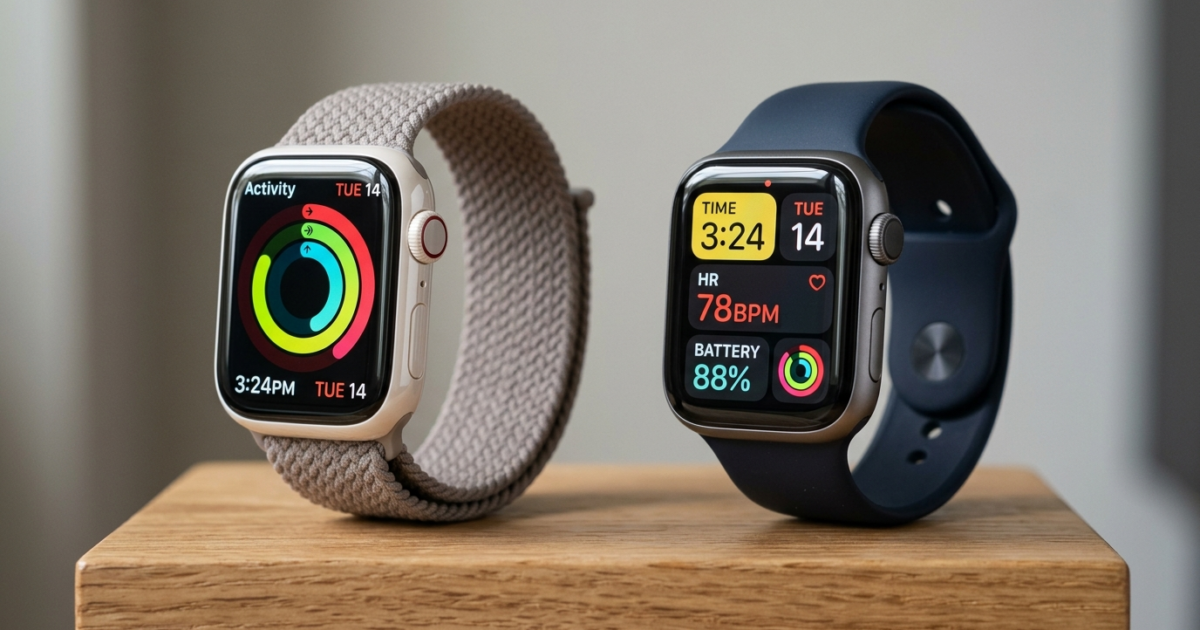
The physical construction of the two smartwatches illustrates Apple’s tiered product philosophy. The Apple Watch Series 12 is offered in expanded 42mm and 46mm case sizes, featuring a streamlined 9.7mm profile in aluminum and titanium iterations, or a slightly thicker 9.85mm profile in its ceramic edition. For the first time since 2019, Apple has reintroduced ceramic enclosures, offering Pearl White and Night Blue finishes alongside traditional aluminum (Dark Bronze, Light Gold, Black, Space Gray) and titanium (Radiant Gold, Natural). This material diversity offers distinct aesthetic profiles and varying weights, ranging from 31.5 grams for the 42mm aluminum cellular model up to 52.9 grams for the 46mm Night Blue ceramic edition.
In contrast, the Apple Watch SE 3 adopts a more compact, utilitarian footprint with 40mm and 44mm dimensions and a uniform 10.7mm chassis depth. Built exclusively from 100% recycled aluminum in Midnight and Starlight colorways, the SE 3 is substantially lighter on the wrist, weighing 26.4 grams in the 40mm size and 33.0 grams in the 44mm configuration. For daily wear, sleep tracking, and casual running, the reduced mass of the SE 3 provides an unencumbered wrist feel, whereas the Series 12 emphasizes structural density, premium tactile finishes, and advanced scratch resistance via its upgraded Ceramic Shield 2 front glass.
| Specification / Feature | Apple Watch Series 12 | Apple Watch SE 3 |
|---|---|---|
| Starting Price (US) | $399 (Ranges to $949) | $249 (Ranges to $329) |
| Case Dimensions | 42mm and 46mm | 40mm and 44mm |
| Case Materials | Aluminum, Titanium, Ceramic | 100% Recycled Aluminum |
| Display Technology | LTPO3 OLED Retina (Wide-Angle) | Always-On Retina LTPO OLED |
| Display Brightness | 1 to 2,000 nits | Up to 1,000 nits |
| Cover Glass | Ceramic Shield 2 | Ion-X Glass (4x crack resistance vs SE 2) |
| Chassis Thickness | 9.7mm (Alum/Ti), 9.85mm (Ceramic) | 10.7mm |
| Silicon / Processor | Apple S11 SiP (64-bit dual-core) | Apple S10 SiP (64-bit dual-core) |
| Storage Capacity | 64GB | 64GB |
| Heart Rate Sensing | Electrical (ECG) & Optical (2nd Gen) | Optical Heart Sensor (2nd Gen) |
| Environmental Sensors | Water Temperature, Depth Gauge to 6m | Compass, Noise Monitoring |
| Battery & Charging | 24 Hours; 0% to 80% in 30 Mins | 18 Hours; 8 Hours charge in 15 Mins |
| Wireless & Location | 2nd-Gen Ultra Wideband (UWB), Wi-Fi | W3 Wireless Chip, Standard Find My |
Display performance marks another fundamental division. The Series 12 incorporates an LTPO3 wide-angle OLED Retina panel capable of modulating brightness between a minimum of 1 nit and a peak of 2,000 nits. The wide-angle viewing characteristics ensure legibility even when viewing the watch face from off-axis angles during athletic training. The SE 3 utilizes an always-on LTPO OLED screen that caps out at 1,000 nits. While 1,000 nits remains adequate for indoor environments and shaded outdoor conditions, the Series 12’s 2,000-nit ceiling ensures crisp visibility under direct midday sunlight. Furthermore, the SE 3 display operates with a lower refresh rate profile, whereas the Series 12 refreshes display elements more rapidly for smoother complications and animation rendering.
Health Sensors and Biometric Tracking Capabilities
Biometric instrumentation represents the most significant functional divergence between the flagship Series 12 and the economical SE 3. The Apple Watch Series 12 is equipped with an extensive medical-grade sensing suite, headlined by a second-generation electrical heart sensor integrated into the Digital Crown and back crystal. This hardware component enables users to take on-demand electrocardiograms (ECGs) through the native ECG application and receive alerts for irregular heart rhythms, including suspected atrial fibrillation (AFib). For individuals monitoring cardiovascular anomalies or managing physician-directed wellness programs, this electrical sensor provides actionable diagnostic data.
The Apple Watch SE 3 deliberately omits the electrical heart sensor, relying exclusively on a second-generation optical heart sensor. While this optical sensor tracks continuous heart rate metrics during workouts, daily routines, and sleep cycles, it cannot produce an ECG waveform or screen for atrial fibrillation. For mainstream buyers seeking to track cardiovascular zones during interval training or monitor resting heart rate trends over time, the optical sensor on the SE 3 provides dependable utility without the added hardware cost.
Beyond cardiac monitoring, the Series 12 features a dedicated body temperature sensor capable of tracking wrist temperature fluctuations during sleep. In addition, the device can analyze longitudinal biometric data patterns to identify indicators associated with hypertension, providing useful diagnostic context that users can share with clinical healthcare providers. The SE 3 includes wrist temperature tracking for sleep metrics and ambient noise monitoring to alert users to damaging acoustic environments, but it lacks the advanced hypertension analytical models present on the flagship platform.
Aquatic and outdoor telemetry further separates the two devices. While both smartwatches carry an IP6X dust resistance rating and 50-meter water resistance, the Series 12 incorporates an integrated water temperature sensor and an active depth gauge supported by a dedicated Depth app operational to 6 meters. These sensors provide vital real-time data for recreational snorkeling, shallow free-diving, and competitive pool workouts. The SE 3 completely omits both the depth sensor and the water thermometer, limiting its aquatic tracking to standard surface swim stroke analytics.
Silicon Performance, Intelligence Features, and Battery Endurance
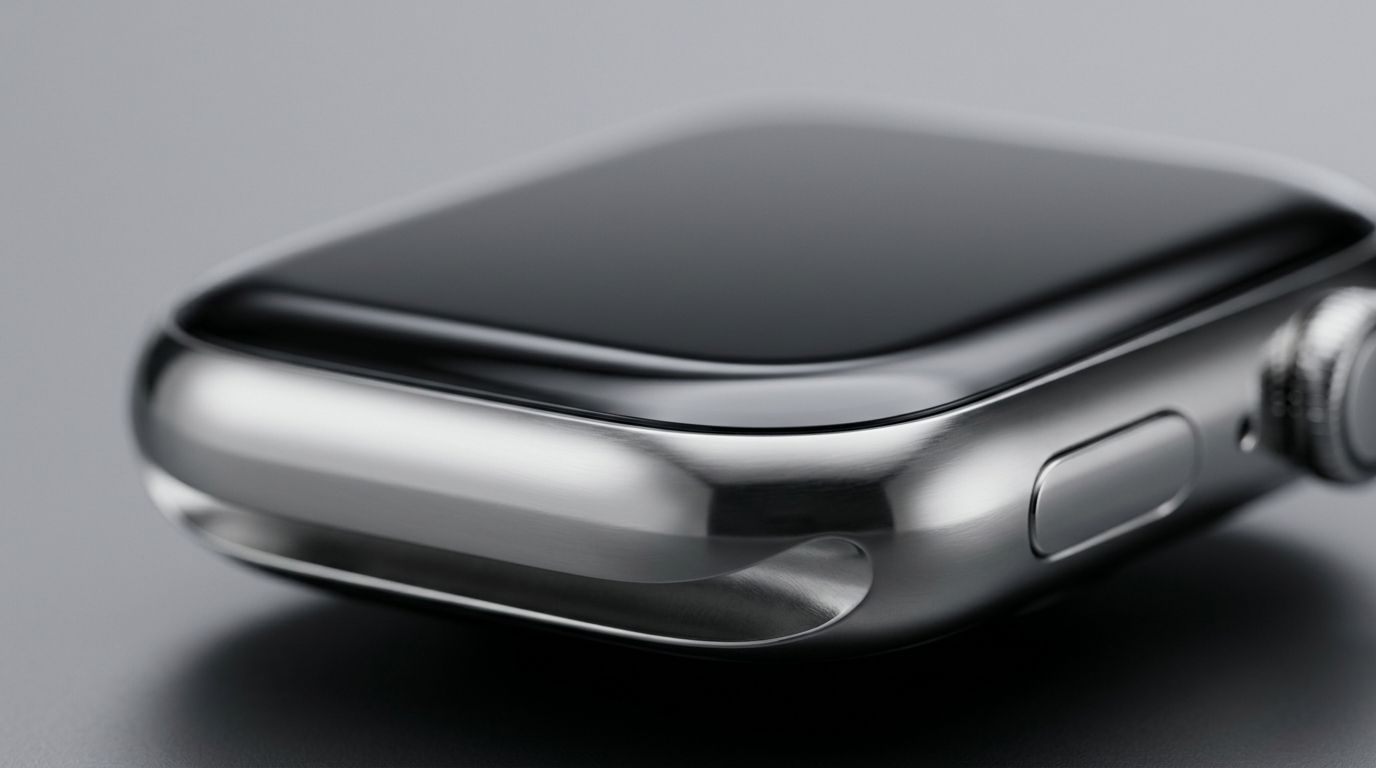
Under the hood, internal computing silicon dictates how each wearable handles algorithmic processing and battery longevity. As highlighted in CNET’s initial hardware assessment, the Series 12 is powered by the new Apple S11 processor, featuring a 64-bit dual-core architecture. This custom silicon provides sufficient throughput to support high-frequency biometric sampling, enabling the watch to register active heart rate readings every 5 seconds. Additionally, the S11 powers on-device Audio Intelligence, facilitating rapid conversation transcription and real-time audio isolation directly through the watch’s integrated microphone and speaker setup.
The Apple Watch SE 3 is powered by the previous-generation Apple S10 System in Package (SiP), paired with Apple’s W3 wireless chip. While the S10 is a capable dual-core processor that delivers responsive app launches, fluid watchOS menu navigation, and dependable voice interactions via Siri, it does not support 5-second optical sampling or advanced Audio Intelligence transcription features. Both models come equipped with 64GB of internal storage, providing ample room for offline music, podcasts, audiobooks, and localized application binaries. This consistent storage allocation ensures that budget-conscious users are not penalized with restrictive local memory limits, a topic of growing relevance in discussions surrounding Apple memory shortage dynamics across consumer hardware.
Spatial awareness and location tracking represent another silicon differentiation. The Series 12 incorporates Apple’s second-generation Ultra Wideband (UWB) chip, which enables Precision Finding for nearby paired iPhones and ecosystem accessories. Users can follow directional visual cues and distance indicators on their watch screen to locate misplaced hardware. The SE 3 omits the second-generation UWB module, relying instead on standard Find My network proximity alerts. While the SE 3 can confirm that a misplaced device is nearby and trigger an audible chime, it cannot provide directional arrows or centimeter-accurate proximity guidance.
Battery endurance and charging infrastructure also present notable trade-offs. The Apple Watch Series 12 delivers an extended 24-hour battery life rating, supporting full overnight sleep tracking following an active day without requiring a midday recharge. When battery depletion occurs, the Series 12 utilizes enhanced fast-charging circuitry capable of replenishing the battery from 0% to 80% in approximately 30 minutes. The Apple Watch SE 3 provides an 18-hour all-day battery lifespan. While shorter than the flagship’s run-time, the SE 3 features a highly practical quick-charge curve that delivers 8 hours of normal operational battery life from just 15 minutes connected to the magnetic puck charger.
Pricing Tiers and Value Trade-Offs
Evaluating the commercial value proposition of the Series 12 versus the SE 3 requires balancing upfront capital expenditure against required feature sets. Starting at $249 for the 40mm GPS model and scaling to $329 for the 44mm GPS and Cellular variant, the Apple Watch SE 3 delivers exceptional cost efficiency. For this accessible price, consumers receive an all-aluminum casing constructed from 100% recycled materials, a resilient Ion-X cover glass that offers four times the crack resistance of the SE 2, complete watchOS compatibility, Apple Pay integration, and life-saving safety features including Fall Detection, Crash Detection, Emergency SOS, and Check-In.
On the other hand, the Apple Watch Series 12 starts at $399 for the 42mm aluminum GPS configuration and scales up to $949 for luxury ceramic cellular models. The $150 premium at the base tier finances tangible hardware enhancements: an always-on display that is twice as bright, expansive screen real estate with reduced bezels, an electrical heart sensor for ECG and AFib alerts, a water temperature sensor, a 6-meter depth gauge, the faster S11 silicon, second-generation Ultra Wideband precision tracking, and an additional 6 hours of rated battery endurance.
For buyers considering long-term ownership, the Series 12’s Ceramic Shield 2 glass and scratch-resistant titanium or ceramic case options provide superior structural durability against abrasive outdoor environments. However, for mainstream users whose daily physical activities center on neighborhood walking, gym cardio, and office productivity, the functional gap between the two models may not warrant the 60% price increase required to step up to the flagship baseline. The SE 3 provides approximately 80% of the core smartwatch experience at less than two-thirds of the price.
Best fit by use case
To assist technical buyers and consumers close to a purchasing decision, the practical recommendations below outline which smartwatch aligns best with specific user profiles, athletic requirements, and budgetary constraints:
- Athletes, Swimmers, and Water Sports Enthusiasts: The Apple Watch Series 12 is the recommended choice. The inclusion of a 6-meter depth gauge, real-time water temperature monitoring, and a 2,000-nit display ensure optimal visibility and performance tracking during ocean swims, pool sessions, and outdoor trail workouts.
- Health-Conscious Users and Clinical Monitoring: The Apple Watch Series 12 remains indispensable for individuals requiring proactive cardiac monitoring. The second-generation electrical heart sensor enables immediate ECG recordings and AFib screening, while advanced analytics provide actionable hypertension indicators for clinical discussion.
- Budget-Focused Consumers and Students: The Apple Watch SE 3 is the definitive recommendation. At $249, it delivers responsive dual-core S10 processing, 64GB of local storage, Apple Pay convenience, and vital emergency crash detection without straining personal budgets.
- Sleep Tracking and Casual Fitness Enthusiasts: The Apple Watch SE 3 offers distinct ergonomic advantages. Its lightweight 26.4-gram aluminum chassis causes minimal wrist fatigue during overnight sleep monitoring, while 15-minute quick charging provides 8 hours of battery life during morning grooming routines.
- Family Setup and Enterprise Wellness Programs: Organizations deploying corporate wellness wearables or parents outfitting children via Family Setup should prioritize the Apple Watch SE 3. The substantially lower per-unit cost enables cost-effective volume procurement while delivering robust safety protections, including Check-In and Fall Detection.
TechNode HQ Verdict: Pros, Cons & Usability
- Pro (Series 12): Comprehensive health tracking featuring ECG readings, AFib alerts, water temperature sensing, and a 6-meter depth gauge.
- Pro (SE 3): Accessible $249 starting price while retaining core optical heart monitoring, crash detection, and S10 dual-core performance.
- Con (Series 12): Premium ceramic and titanium materials drive pricing up to $949 with marginal battery longevity gains over predecessor generations.
- Con (SE 3): Omits electrical heart sensors, second-generation Ultra Wideband precision finding, and high-brightness 2,000-nit wide-angle optics.
Everyday Usability: For fitness enthusiasts and swimmers needing active biometric alerts, ECG readings, and outdoor visibility, the Series 12 justifies its premium. For budget-conscious users seeking core notifications, activity tracking, and emergency safety features, the SE 3 delivers exceptional everyday value.