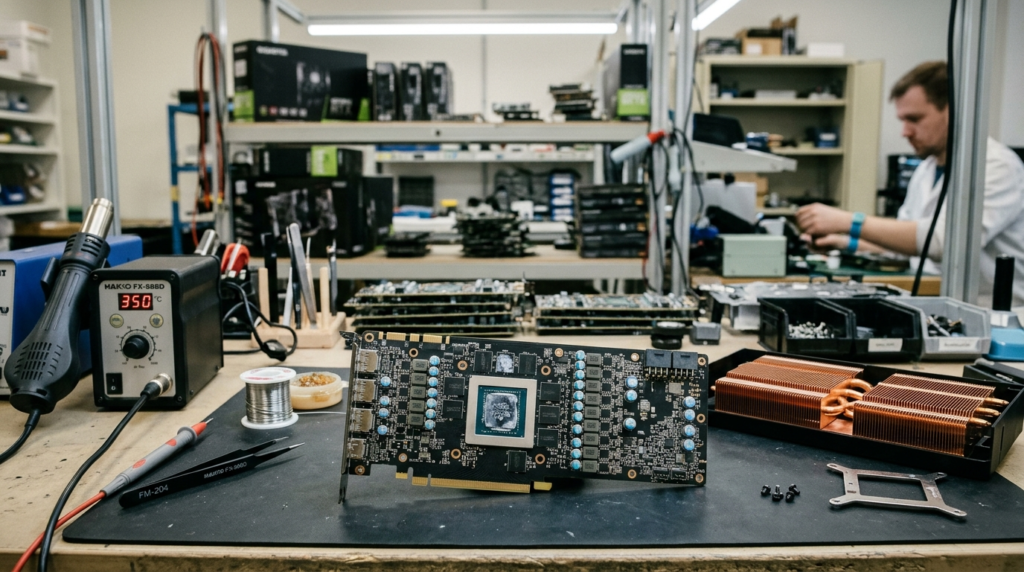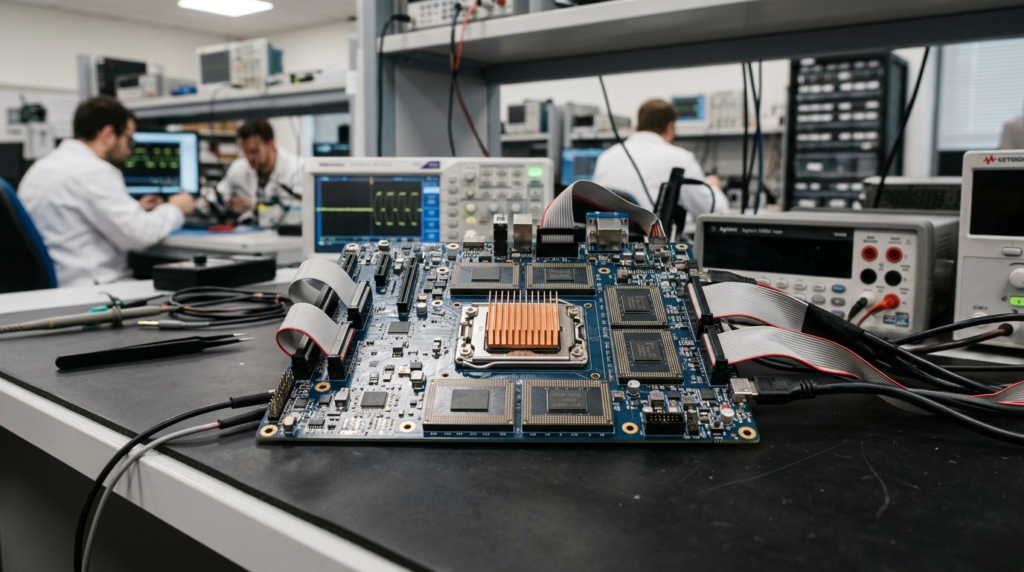
The Dawn of a New Benchmarking Era
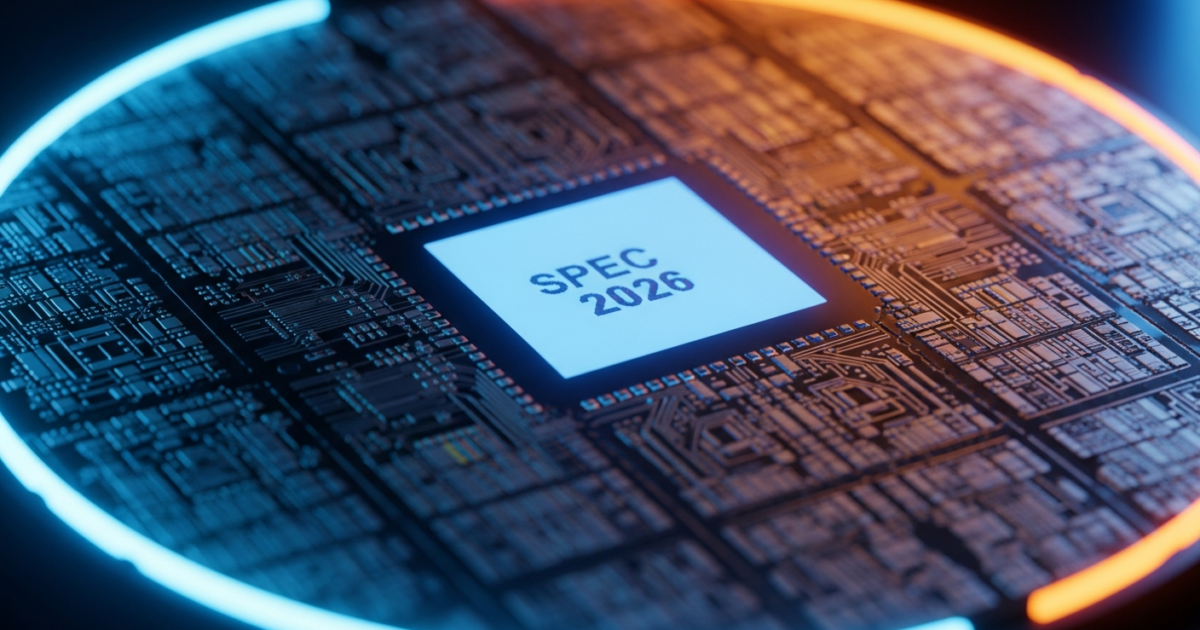
For the first time in nearly a decade, the foundational metric by which the global technology industry measures compute performance has been rewritten. On May 5, 2026, the Standard Performance Evaluation Corporation (SPEC) officially released the SPEC CPU 2026 benchmark suite. Replacing the venerable SPEC CPU 2017, this new suite is not merely an iterative update; it is a comprehensive modernization designed to reflect the radical architectural shifts that have occurred since the era of Intel’s Skylake, AMD’s Zen 1, and Arm’s Cortex-A75.
The release of a new SPEC CPU suite is a seismic event in the world of enterprise infrastructure and silicon engineering. Because of its intense technical rigor and unparalleled vendor buy-in—developed collaboratively by a consortium that includes AMD, Intel, Arm, Nvidia, and SiFive—SPEC CPU 2026 will serve as the definitive measuring stick for the next ten years of processor design. It will dictate how hyperscalers provision their data centers, how OEMs market their hardware, and ultimately, how silicon architects prioritize their transistor budgets.
Priced at $3,000 for new commercial licenses (with a $2,000 upgrade path for existing 2017 licensees until November 2026), the suite is already triggering a massive wave of re-evaluations across the industry. But beneath the surface-level scores and marketing materials lies a deeply complex, highly synthetic ecosystem that tests compilers just as rigorously as it tests silicon.
The Architectural Reality: Under the Hood of SPEC CPU 2026
To understand why SPEC CPU 2026 matters, one must understand what it actually measures. Unlike consumer-grade benchmarks that are distributed as pre-compiled binaries, SPEC CPU is distributed entirely as source code—primarily C, C++, and Fortran. This fundamental design choice ensures architectural portability, allowing the suite to run on everything from a 5-watt Raspberry Pi 5 to a massive, multi-socket EPYC Venice server deployment.
The 2026 suite expands the testing parameters significantly, featuring 52 distinct benchmarks—nine more than its predecessor—and more than doubling the total lines of code. These workloads span a vast array of modern computing tasks, including programming and compiling, media processing, electronic design automation (EDA), networking, databases, and computational science.
Crucially, SPEC CPU is designed to be an isolated test of the processor and memory subsystem. To achieve this, the consortium meticulously strips away external bottlenecks. File I/O is minimized to prevent storage speeds from skewing results, and the code is engineered to ensure that at least 95% of execution time is spent in user-land, effectively cutting the operating system out of the loop. Furthermore, sources of non-determinism are ruthlessly purged; for example, standard C++ sorting functions like std::sort have been replaced with std::stable_sort to guarantee reproducible, deterministic outcomes across different runs.
Recent architectural characterizations of the suite reveal that SPEC CPU 2026 drastically increases instruction volume and memory footprint compared to 2017. It shifts pressure toward emerging silicon bottlenecks, most notably inducing significantly higher instruction-cache stress. Furthermore, the suite introduces a new “round-robin stagger mode” that generates proxy workloads to approximate the behavior of DCPerf, bridging the gap between traditional SPEC workloads and modern hyperscaler demands.
The Compiler Conundrum: Software as Hardware
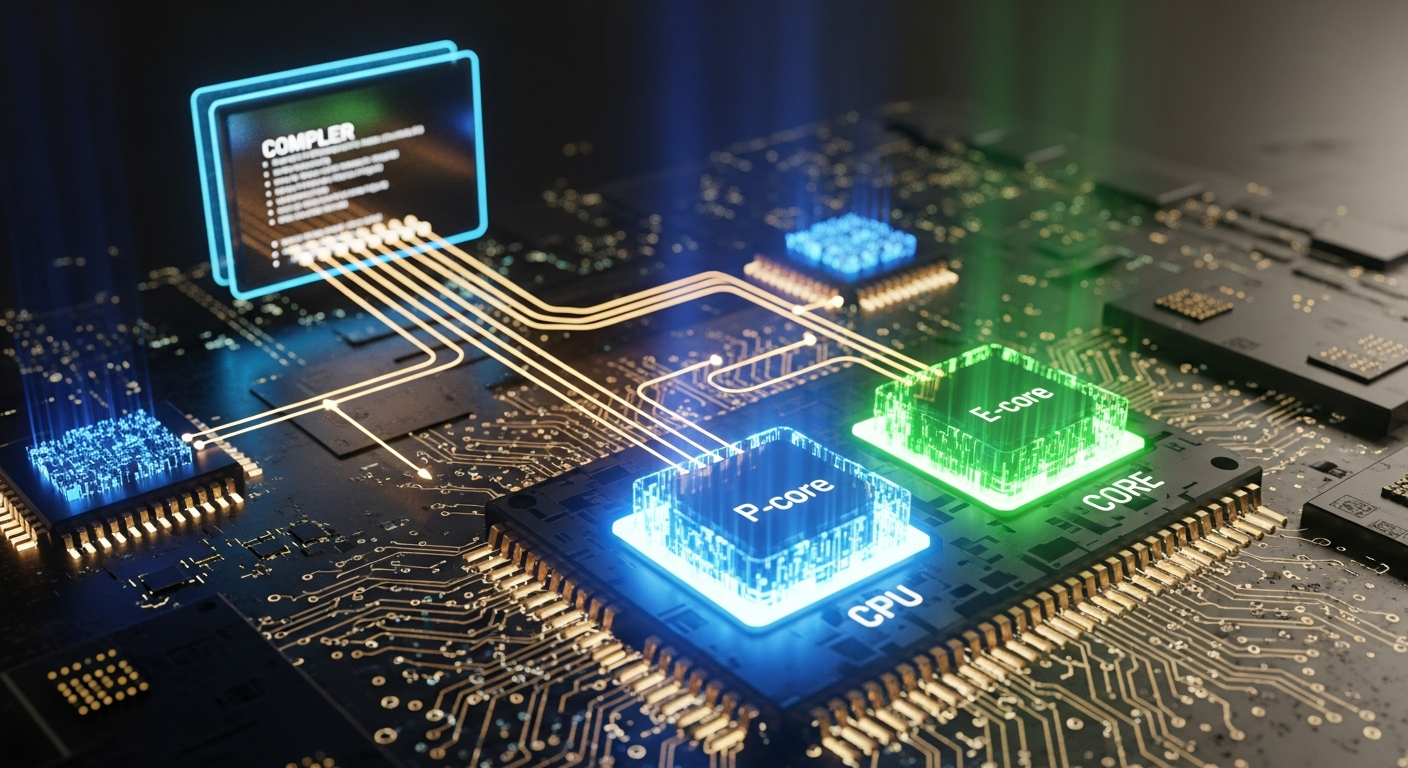
Because SPEC CPU 2026 is distributed as source code, it is inherently a benchmark of compiler toolchains as much as it is a benchmark of physical hardware. A processor is only as fast as the machine code it is fed, and the responsibility of translating SPEC’s high-level algorithms into efficient, architecture-specific instructions falls entirely on compilers like LLVM and GCC.
This dynamic creates a fascinating sub-narrative in the benchmarking world. Hardware vendors invest millions into optimizing their proprietary compilers (or contributing to open-source ones) specifically to yield higher SPEC scores. The rules dictate that these optimizations cannot be hardcoded “cheats” for SPEC alone; they must be generalized improvements that benefit a wider class of software.
Early deep-dives into SPEC CPU 2026 have already exposed the massive impact of compiler selection. When testing the suite using the bleeding-edge LLVM 22 compiler versus the older, stable LLVM 20.1.8, analysts discovered profound performance deltas. While most integer workloads saw trivial changes, specific benchmarks experienced explosive gains. The most notable outlier is sealcrypto, a new security benchmark focused on executing queries on homomorphically encrypted data. On certain architectures, compiling sealcrypto with LLVM 22 resulted in a staggering 129% performance increase over LLVM 20.
This anomaly highlights a critical reality for enterprise IT buyers: when evaluating Total Cost of Ownership and performance metrics, the software environment is just as vital as the silicon. A hardware platform’s perceived dominance can evaporate if it is paired with an unoptimized toolchain.
Market Impact & Deployment: The Heterogeneous Scaling Debate
As the industry transitions to SPEC CPU 2026—with SPEC CPU 2017 slated for full retirement and deprecation by November 3, 2026—a fierce debate is emerging regarding how to interpret the results, particularly concerning modern heterogeneous architectures.
Today’s processors frequently mix Performance cores (P-cores) and Efficiency cores (E-cores), alongside Simultaneous Multithreading (SMT). When analyzing SPECrate (which measures throughput across multiple cores), calculating “ideal scaling” becomes a mathematical minefield. If a system features 8 P-cores and 16 E-cores, simply summing their aggregate performance yields a total system score, but it obscures the per-core efficiency.
Industry analysts and engineers are currently clashing over the baseline metrics. Is the baseline a single thread on a P-core? How do you weight an SMT thread, which historically offers only a fraction of the performance of a physical core? Furthermore, SPEC CPU tests are often run on thermally constrained systems, meaning the benchmark is inadvertently testing the efficacy of the OEM’s cooling solution and power delivery just as much as the silicon architecture itself. If efficiency (performance-per-watt) is removed from the scope of the scaling charts, the raw performance numbers lose critical context for data center operators who are strictly bound by power and cooling limits.
Additionally, while SPEC CPU 2026 includes workloads that are foundational to AI—such as data processing, compiling, and analysis—it is vital to recognize its boundaries. It is not an end-to-end benchmark for complex agentic AI workflows. It measures the general-purpose compute foundation that orchestrates AI accelerators, but it should not be conflated with dedicated AI benchmarks like MLPerf.
The Consumer Translation: Why This Matters to You
At first glance, a $3,000 enterprise benchmark suite running headless C++ code seems entirely disconnected from the average consumer. However, SPEC CPU 2026 is the invisible hand that will guide the design of the devices you buy tomorrow.
Because AMD, Intel, Apple, and Qualcomm design their microarchitectures years in advance, and because enterprise server contracts are the most lucrative segment of the silicon market, core architectures are heavily optimized to score well on SPEC. The P-cores inside a future consumer laptop or gaming desktop are direct descendants of the architectures refined to crush SPEC CPU 2026’s instruction-cache stress tests.
When SPEC introduces a heavy homomorphic encryption workload like sealcrypto, it signals to silicon designers that advanced, privacy-preserving cryptography is a priority. Consequently, future consumer chips will feature enhanced execution units and branch predictors tailored for these exact mathematical operations. The trickle-down effect is absolute: the compiler optimizations and hardware tweaks driven by SPEC CPU 2026 will result in faster web browsers, more efficient video rendering, and snappier operating systems for everyday users.
TechNode HQ Verdict: Pros, Cons & Usability
- Pro (Engineering): The shift to 52 modernized workloads, including the new round-robin stagger mode, accurately reflects the increased instruction volume and cache pressure of modern hyperscale applications.
- Pro (Consumer): The intense focus on compiler optimization (e.g., LLVM 22 advancements) forces software-level improvements that will passively accelerate everyday applications across all device tiers.
- Con: The benchmark’s deliberate isolation from the OS and file I/O creates a highly synthetic environment that fails to expose the storage and networking bottlenecks inherent in real-world server deployments.
- Con: Interpreting SPECrate scaling on modern heterogeneous processors (P-core/E-core/SMT) remains highly ambiguous, making direct architectural efficiency comparisons difficult without deep, manual data parsing.
Enterprise Usability: For CTOs and infrastructure architects, SPEC CPU 2026 is an immediate, mandatory adoption. With the 2017 suite retiring in November 2026, all future hardware procurement, cloud instance evaluations, and SLA negotiations must pivot to the 2026 metrics. However, buyers must demand transparency regarding the compiler toolchains (e.g., LLVM version) used to generate vendor-supplied scores, as software discrepancies can artificially inflate hardware capabilities.
Everyday Usability: The general public does not need to purchase or run this suite. However, tech enthusiasts and PC builders should closely monitor SPEC CPU 2026 single-thread and integer results in upcoming hardware reviews, as these metrics remain the gold standard for predicting raw architectural IPC (Instructions Per Clock) improvements in consumer desktop processors.