Key takeaways
- Smart dorm devices must bypass congested campus Wi-Fi using localized Matter, Zigbee, or Bluetooth protocols.
- High-wattage GaN chargers and smart surge protectors are critical for optimizing limited dorm electrical outlets.
- Biometric security and contact sensors provide enterprise-grade protection for personal valuables in shared campus environments.
- Space optimization relies on laptop stands, monitor light bars, and vertical rolling utility carts to maximize utility.
- Ambient tech like memory foam toppers, air purifiers, and AI lighting drastically improves student sleep quality.
Smart Dorm Devices: The Architectural Reality
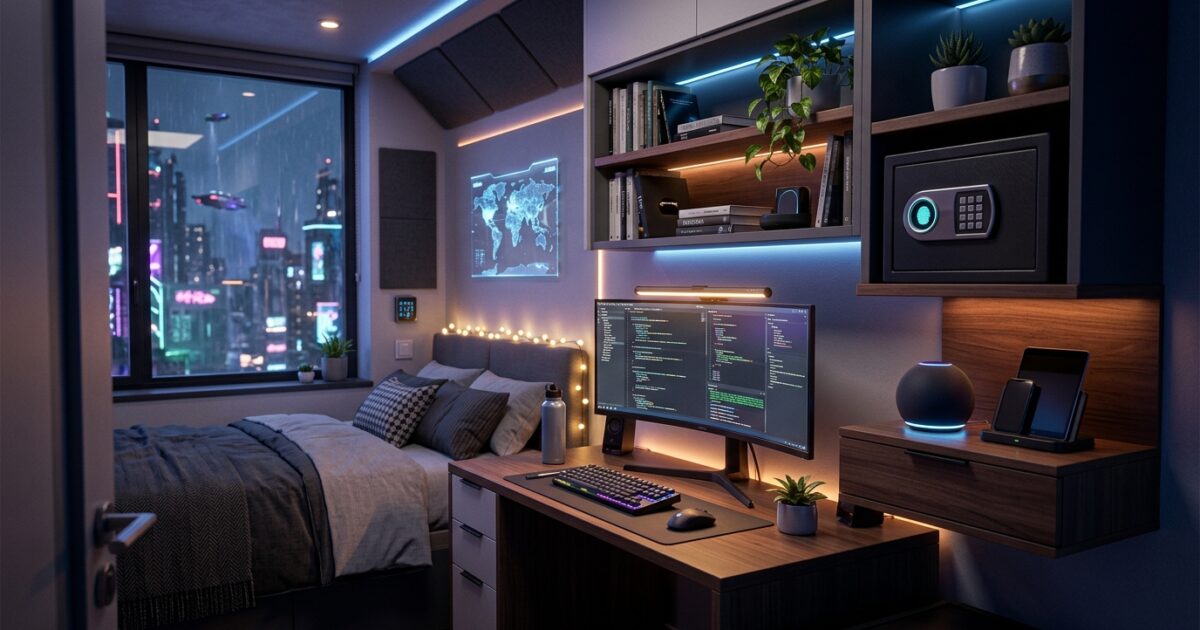
The transformation of the modern college living space represents a fascinating microcosm of edge computing and spatial optimization. For incoming students and the IT departments that support them, deploying smart dorm devices is no longer a gimmick—it is a fundamental restructuring of ambient productivity. When we examine the constraints of a standard university residence hall, we find a rigid set of parameters: extreme space limitations, shared acoustic environments, constrained thermal envelopes, and heavily monitored local area networks. Navigating this environment requires precision hardware. The deployment of consumer IoT in these spaces mirrors enterprise remote-office provisioning, where every square inch and every watt of power must justify its presence. This guide serves as the definitive engineering and usability analysis of the top-tier technology designed to thrive within these specific constraints, translating enterprise-grade connectivity and automation into an everyday student lifestyle.
Bypassing Network Congestion with Edge Protocols
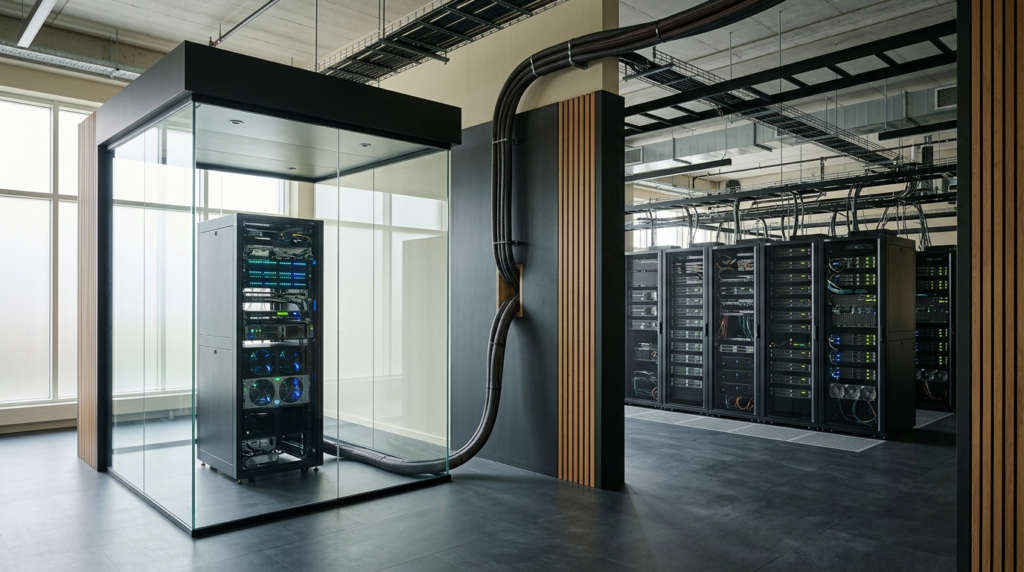
From an infrastructure perspective, dormitories present a uniquely hostile networking challenge. Most campus IT departments implement strict Acceptable Use Policies (AUP) that explicitly prohibit the deployment of personal Wi-Fi routers or unauthorized wireless access points. These policies exist to prevent radio frequency spectrum congestion and the proliferation of rogue subnets that could compromise enterprise security. Consequently, students attempting to deploy robust IoT ecosystems must navigate these restrictions carefully. Devices that rely entirely on cloud-based execution often falter under the heavy packet loss and latency spikes typical of shared campus bandwidth. Instead, the architectural mandate has shifted toward devices that utilize local connectivity. By leveraging local mesh networking protocols like Matter, Zigbee, or Bluetooth Low Energy, smart home infrastructure can execute automation routines locally. This ensures that when the campus Wi-Fi inevitably suffers from peak-load bottlenecks during finals week, local automations—such as smart lighting triggers or sensor alerts—continue to function seamlessly. We are witnessing a paradigm shift where edge execution takes precedence over centralized cloud dependency.
High-Density Compute and Power Delivery
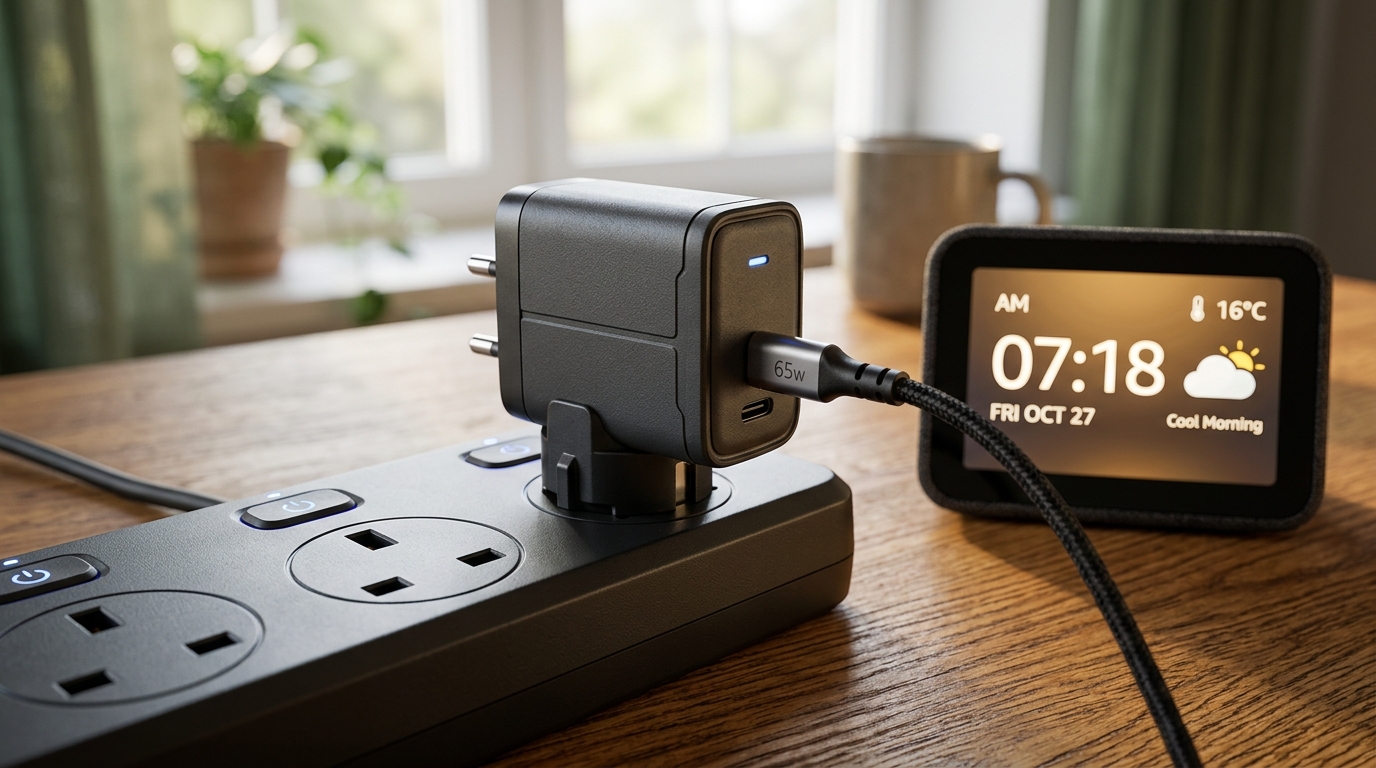
Power delivery in these micro-apartments acts as another critical bottleneck. Traditional bulky power strips and standard chargers consume far too much of the limited wall outlet real estate. The shift toward high-wattage Gallium Nitride (GaN) chargers addresses this engineering challenge effectively, enabling students to power laptops, tablets, and smartphones simultaneously from a single, compact thermal brick. Paired with devices like the Tapo smart surge protector, which allows for individual plug and USB port control via a centralized application or voice command, the power infrastructure becomes an intelligent node. Users can program the surge protector to cut phantom power to idle devices, optimizing energy consumption while protecting expensive computing hardware from the voltage grid fluctuations common in aging university buildings. Furthermore, smart plugs act as essential gateways, allowing legacy appliances like coffee makers or basic desk lamps to be integrated into the overarching digital ecosystem without requiring expensive native smart capabilities.
Market Impact & Deployment
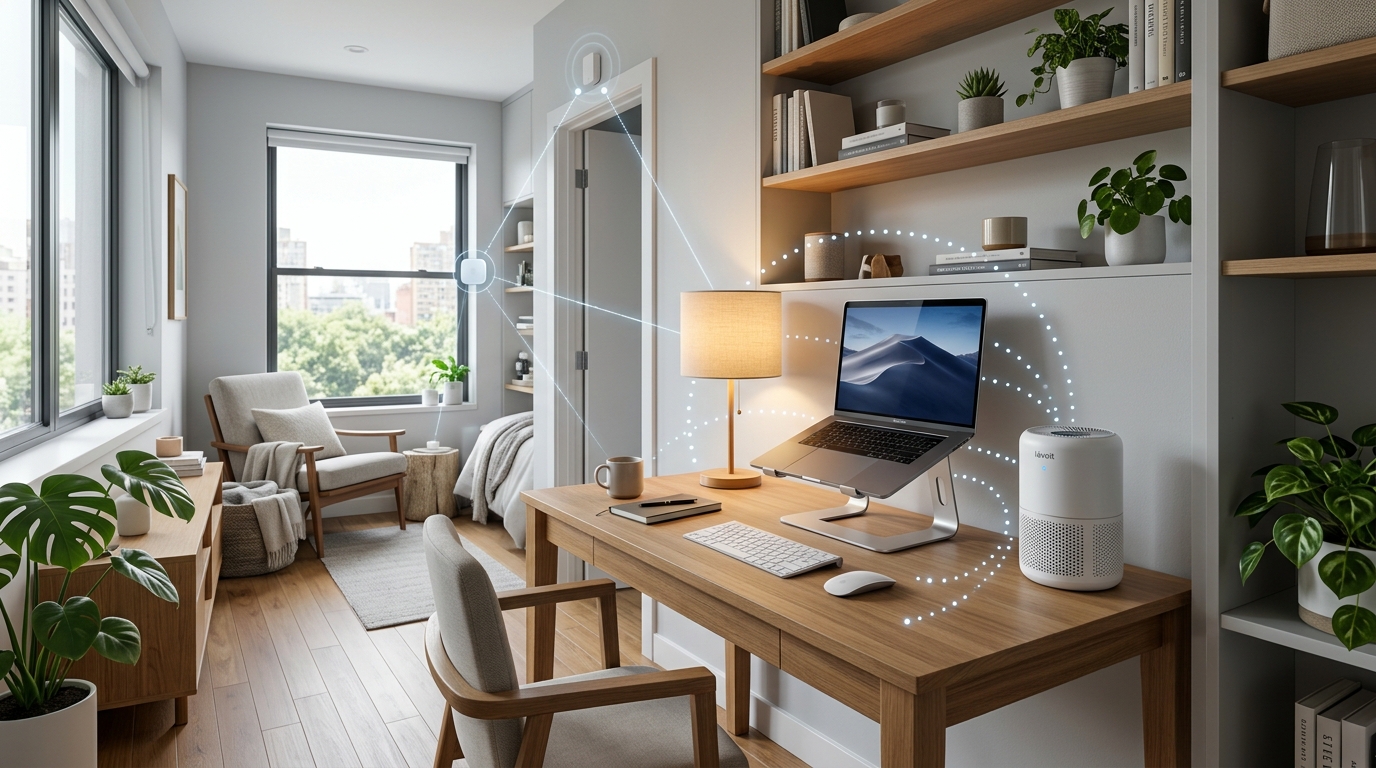
The deployment of consumer-grade IoT within higher education environments is driving a massive market impact, fundamentally altering how hardware manufacturers approach compact design. The market for micro-smart home devices is currently experiencing unprecedented growth, as vendors recognize the massive Total Cost of Ownership (TCO) benefits associated with high-density living. For the modern student, the ROI is measured in time saved, focus retained, and physical space optimized. Devices that require permanent installation or structural modification are immediately disqualified, as dorms heavily restrict any form of permanent alteration. Therefore, portable devices that are easy to install without tools—utilizing industrial-strength adhesive strips or clamp mounts—have become the gold standard. This shift forces hardware designers to prioritize modularity, portability, and non-destructive mounting solutions, creating a booming sub-sector of the consumer electronics market focused exclusively on transient, high-turnover residential spaces.
Security and Zero Trust in Shared Quarters
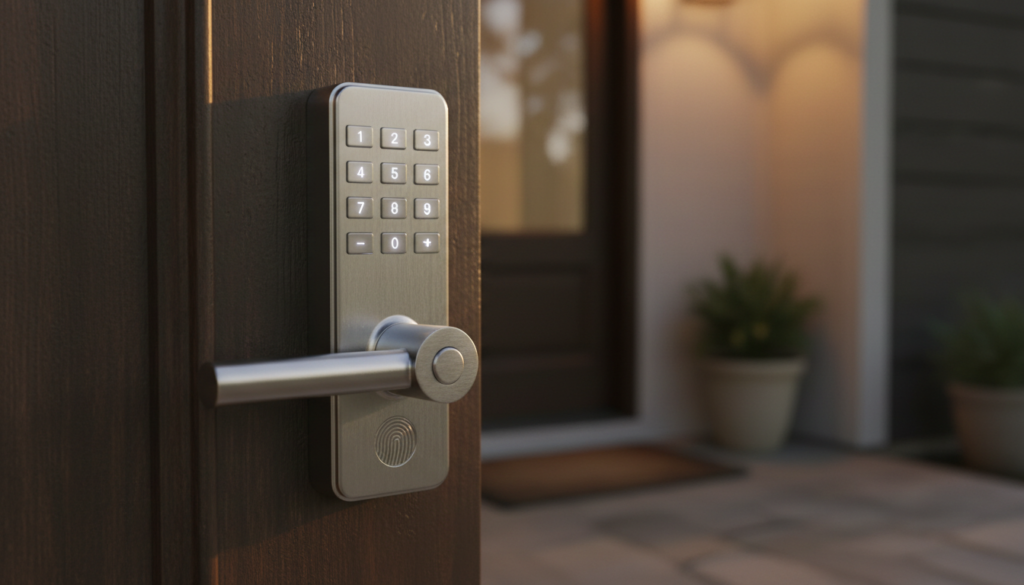
Security in a shared dormitory necessitates a Zero Trust approach translated for the physical realm. Shared living spaces, constant foot traffic, and open doors create inherent vulnerabilities for expensive electronics and sensitive personal data. Most traditional home safes are far too large, heavy, and cumbersome to transport into a dorm room. Enter devices like the Lockly Wi-Fi smart safe. This compact biometric vault is small enough to fit discreetly inside a drawer, under a bed, or on a closet shelf, yet it offers enterprise-grade biometric thumbprint authentication. The physical security is complemented by digital surveillance via compact contact sensors. For instance, the Aqara P100 multipurpose sensor can be attached to drawers, closets, or even mini-fridges using simple adhesive strips. These tiny edge devices send immediate push notifications whenever an asset is opened or closed, effectively creating a localized security perimeter. When paired with an optional local hub, these sensors can even detect subtle tampering, vibration, and tilting, offering students a sophisticated layer of telemetry over their physical belongings.
Maximizing the Physical Footprint
Space optimization is perhaps the most visible metric of success for dorm technology. Every square centimeter of desk and floor space is fiercely contested. To maximize vertical storage, over-the-door organizers and rolling utility carts provide flexible, movable storage solutions that can be easily tucked away when not in use. On the desk itself, smart charging desk hutches offer extra shelving while integrating essential USB and AC charging ports directly into the furniture framework. A laptop stand paired with a wireless keyboard frees up valuable surface area, allowing a single small desk to serve as both a digital workstation and a physical writing space. By elevating the primary compute hardware, students improve thermal dissipation for their laptops while simultaneously reclaiming the desk space directly beneath the screen. This physical organization strategy directly correlates to cognitive clarity, reducing visual clutter and streamlining the academic workflow.
The Consumer Translation
Translating these highly technical architectural shifts into the consumer reality reveals a profound impact on the everyday lifestyle and biological health of the student population. The contemporary university experience is notoriously detrimental to circadian rhythms and sleep hygiene. However, ambient intelligence is stepping in to correct these environmental deficits. A memory foam mattress topper is frequently cited as the number one essential upgrade to make aging, institutional dorm mattresses habitable. But the physical comfort is only the baseline. Integrating a mini air purifier, such as those manufactured by Levoit, helps manage dust and indoor air quality in older, poorly ventilated shared spaces. When combined with advanced acoustic management—specifically the deployment of active noise-cancelling headphones—students can effectively build an isolated sensory bubble. These headphones have evolved from a luxury item into a non-negotiable essential for creating a dedicated focus zone amidst the chaotic, unpredictable noise profile of a bustling residence hall.
Ambient Intelligence for Circadian Health
Lighting plays an equally critical role in consumer well-being. Standard fluorescent dorm lighting is notoriously harsh and completely detached from natural circadian cycles. The introduction of affordable, tunable lighting solutions, such as the Wiz Connected Color smart bulbs, allows students to retrofit standard light sockets with customized color temperatures. For less than ten dollars, a student can shift from intense, cool white light for late-night study sessions to warm, amber hues for evening relaxation. Taking this a step further, the Lepro A1 table lamp utilizes artificial intelligence prompts to generate dynamic light schemes. By typing or speaking commands like ‘study mode’ or ‘cozy vibes’, the local AI generates color cycles and patterns that actively influence mood and concentration. The Amazon Echo Spot complements this by functioning as a smart alarm clock, utilizing gradual light transitions and escalating audio to wake the user gently. This biomimetic approach to waking up drastically reduces sleep inertia, proving that smart technology can directly enhance physiological health.
The Audio and Acoustic Engineering Factor
Acoustic engineering in a micro-apartment requires a delicate balance between fidelity and spatial economy. Large, multi-channel sound systems are entirely impractical. Instead, smart speakers have evolved to deliver astonishingly high-quality audio from microscopic form factors. The latest iteration of the Google Home Speaker, for example, represents a pinnacle in smart acoustic environments. Offering some of the best sound reproduction in the sub-$100 category, it features a surprisingly robust bass response capable of filling a dorm room without taking up more than a few inches of desk space. These compact hubs do far more than stream Spotify or Apple Music; they act as the voice-activated brain of the entire room. Through the integration of Gemini for Home, the speaker allows for seamless calendar management, timer setting, and the execution of complex smart home routines. Devices like the Amazon Echo Dot and Google Nest Mini take up minimal space while offering maximum utility, acting as the centralized command node for everything from the surge protectors to the biometric safes.
Hardware & Ecosystem Integration
The true power of smart dorm devices lies not in their individual capabilities, but in their seamless integration into a cohesive, automated ecosystem. The modern student’s digital life is heavily fragmented, and the goal of these interconnected devices is to reduce the cognitive load required to manage the physical environment. For example, reusable smart notebooks like the Rocketbook allow students to physically write notes and instantly digitize them to cloud services like Google Drive or Notion, effectively bridging the tactile and digital divide while allowing the physical pages to be wiped clean and reused. This eliminates the need for bulky filing cabinets and heavy binders. When these analog-to-digital tools are combined with automated physical appliances, the resulting workflow is highly efficient.
Automating the Student Workflow
Consider a fully integrated morning routine: An Amazon Echo Spot detects the scheduled wake-up time and initiates a gradual illumination sequence. Simultaneously, it triggers a Tapo smart plug connected to a K-Mini Mate Coffee Maker. This tiny, four-inch-wide Keurig appliance, renowned for brewing a 12-ounce cup in mere minutes, begins operation before the student has even left the bed. The Wiz smart bulbs slowly shift to a cool daylight temperature, while the Google Home Speaker reads out the day’s calendar events and current weather conditions. This level of orchestration requires reliable interplay between various proprietary platforms, underscoring the importance of standardized protocols like Matter. By automating these low-level physical tasks, the student preserves their mental bandwidth for complex academic problem-solving.
The Ergonomic Command Center
Finally, the visual interface of the study space must be optimized. Monitor light bars have emerged as a superior alternative to traditional desk lamps. By resting directly on top of the computer monitor and projecting light downwards at an asymmetrical angle, they illuminate the physical workspace without casting glare onto the screen. This drastically reduces ocular fatigue and eye strain during marathon study sessions, all while consuming precisely zero square inches of desk space. When an ecosystem is built using a monitor light bar, a laptop stand, a high-wattage GaN charger, and a smart surge protector, the result is an ergonomic, high-efficiency command center. Every device serves a dual purpose, every wire is managed, and every component communicates seamlessly, demonstrating that with careful curation, even the smallest dorm room can be transformed into a state-of-the-art computational hub.
Frequently Asked Questions
Q1: Why shouldn’t I bring a personal Wi-Fi router to my dorm?
A1: Most universities explicitly ban personal routers in their Acceptable Use Policy because they create network interference and security vulnerabilities. Instead, opt for smart devices that communicate locally via Matter, Zigbee, or Bluetooth to bypass spotty campus networks.
Q2: How can I optimize desk space when using multiple devices?
A2: Utilize vertical space with smart charging desk hutches, laptop stands with wireless keyboards, and monitor light bars. These devices reduce clutter, prevent screen glare, and free up the physical surface area for focused studying.
Q3: Are biometric safes secure enough for a college environment?
A3: Yes, compact biometric safes like the Lockly Wi-Fi smart safe provide enterprise-grade thumbprint authentication. They are small enough to be hidden in drawers while effectively securing valuables from opportunistic theft in shared spaces.
Q4: What is the most effective way to improve air quality and sleep in a shared room?
A4: Combining a Levoit mini air purifier for dust management with a memory foam mattress topper creates an optimal rest environment. Integrating an Amazon Echo Spot for gradual light and audio wake-ups further enhances circadian rhythm alignment.
Q5: How can I automate my morning routine in a dorm?
A5: You can use smart plugs linked to routines on your Google Home or Amazon Echo to automatically trigger a K-Mini Mate Coffee Maker and adjust your Wiz Connected Color smart bulbs as soon as your alarm goes off.
TechNode HQ Verdict: Pros, Cons & Usability
- Pro (Engineering): Localized Matter and Zigbee protocols ensure devices operate smoothly even when campus Wi-Fi infrastructure fails under heavy load.
- Pro (Consumer): Automated circadian lighting and acoustic isolation drastically improve sleep quality and cognitive focus.
- Con: Integrating devices across different brand ecosystems (Google, Amazon, Aqara) can still present frustrating interoperability challenges.
- Con: Strict university Acceptable Use Policies may throttle the functionality of advanced cloud-dependent IoT hubs.
Enterprise Usability: For university IT administrators, encouraging the use of local-mesh IoT devices prevents spectrum congestion and reduces help-desk tickets related to rogue access points.
Everyday Usability: Absolutely essential for incoming students; these compact, tool-free installations provide a massive quality-of-life upgrade, maximizing space and enhancing physical security.