The Architectural Shift
For the better part of a decade, the concept of the “smart kitchen” has been plagued by solutions in search of a problem. We have witnessed refrigerators with integrated social media feeds, Bluetooth-enabled toasters, and voice-activated microwaves—all of which failed to address the fundamental bottleneck of human sustenance: the friction of preparation. Enter Tovala, a company that has effectively bypassed the superficial gimmicks of the smart home industry to engineer a closed-loop, hardware-accelerated culinary ecosystem. By merging an Internet of Things (IoT) edge device with a highly optimized cold-chain logistics network, Tovala is not merely selling an appliance; they are pioneering Sustenance-as-a-Service (SaaS).
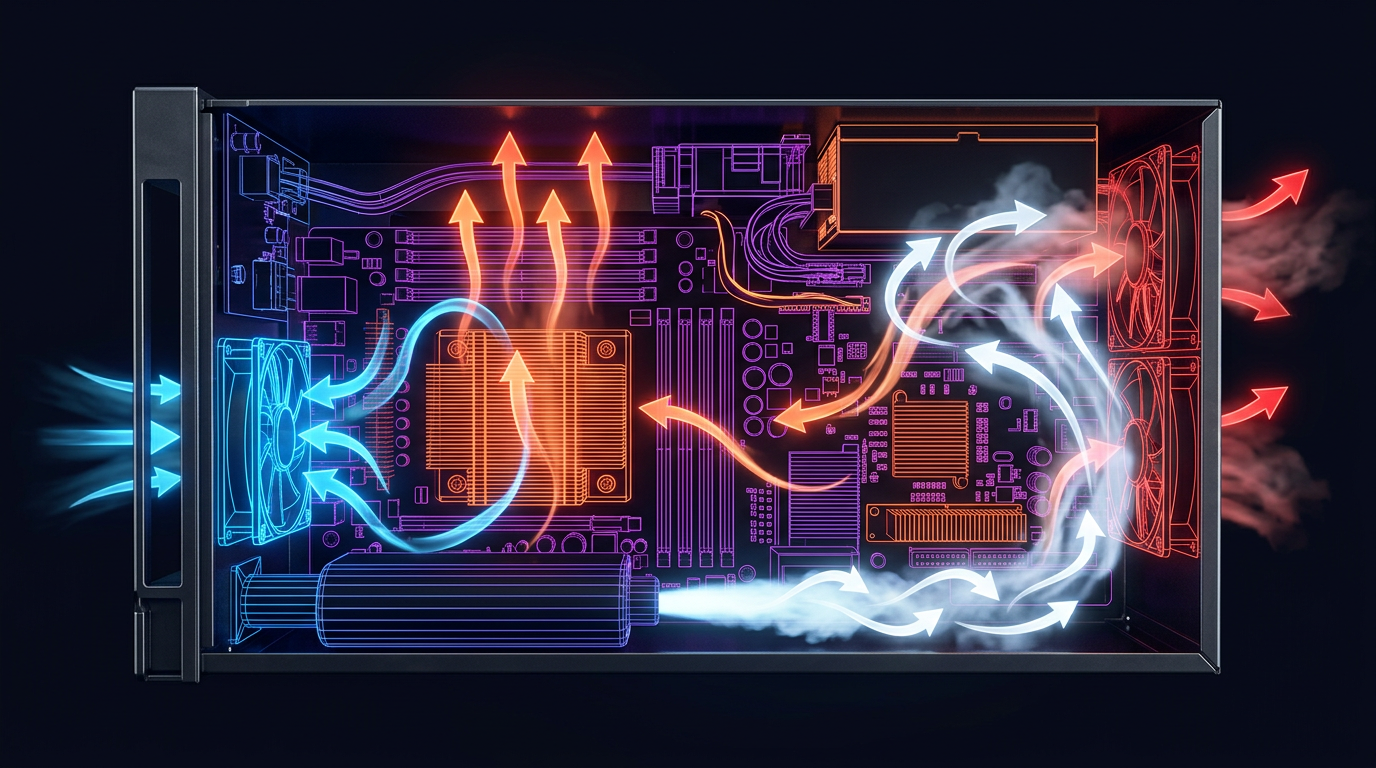
At the core of this architectural shift is the Tovala Smart Oven—specifically, the upgraded Smart Oven Pro, which retails at $349. To the untrained eye, it resembles a standard countertop toaster oven. However, from an infrastructure perspective, it is a highly calibrated, multi-modal thermal execution environment. The oven is equipped with a combination of radiant broiling elements, forced-air convection fans, and, crucially in the Pro model, a steam injection system. This combination of dry-bulb and wet-bulb temperature control is typically reserved for commercial combi-ovens found in Michelin-starred kitchens, allowing for the rapid transfer of thermal energy without the catastrophic moisture loss that plagues traditional microwave or standard oven reheating.
The true ingenuity of the Tovala architecture, however, lies in its user interface—or rather, its deliberate lack thereof. The primary input mechanism is an optical laser scanner designed to read proprietary QR codes printed on Tovala’s meal kit packaging. In enterprise IT terms, this QR code acts as a physical API trigger. When scanned, the edge device pings Tovala’s cloud infrastructure, authenticates the payload, and downloads a highly specific, multi-stage execution script. The oven then autonomously cycles through a pre-programmed sequence—perhaps three minutes of steam to hydrate a protein, followed by twelve minutes of high-velocity convection to ensure internal temperature compliance, culminating in a two-minute high-heat broil to trigger the Maillard reaction for textural crunch. The human operator is entirely abstracted from the computational and thermal logic; their only required tool is a pair of scissors to open the vacuum-sealed packaging.
Recently, Tovala pushed a significant update to its operational capabilities by introducing “Family Meals.” Previously, the hardware was constrained by a single-threaded execution model, capable of processing only one or two single-serve meals simultaneously. This severely limited their Total Addressable Market (TAM) to solo diners or asynchronous couples. The engineering challenge of scaling to four servings within the same compact chassis volume is non-trivial. It requires maximizing the internal spatial geometry without disrupting the thermodynamic airflow necessary for even cooking. Tovala achieved this by utilizing a dual-zone deployment strategy: tiling aluminum baking trays across both the bottom rack and an air-frying basket simultaneously. While this dense packing of thermal mass risks creating cold spots due to restricted convection currents, our analysis indicates that Tovala’s algorithmic calibration is remarkably robust, delivering consistent internal temperatures across the expanded payload.
Enterprise Market Impact & TCO

To understand Tovala’s market positioning, one must look past the culinary facade and analyze the underlying economics, which are lifted directly from the enterprise hardware playbook. Tovala operates on a classic Razor-and-Blades business model, heavily subsidizing the initial hardware acquisition cost to lock consumers into a high-margin, recurring revenue stream. While the Smart Oven Pro retails for $349, consumers can acquire the hardware for a mere $119—provided they commit to a six-week Service Level Agreement (SLA) in the form of a meal plan subscription. The base model oven drops to an astonishing $69 under the same terms.
This aggressive Customer Acquisition Cost (CAC) strategy is brilliant in its execution. Let us calculate the Total Cost of Ownership (TCO) for the minimum required deployment. The baseline subscription requires the purchase of four single-serving meals per week. At an average cost of $9 to $13 per serving, plus a mandatory $11 shipping tariff per box, the absolute minimum weekly operational expenditure is $63. Over the mandatory six-week lock-in period, the consumer will spend a minimum of $378 on consumables. When combined with the $119 subsidized hardware cost, Tovala guarantees a minimum initial revenue capture of nearly $500 per user, while simultaneously establishing a behavioral habit that encourages long-term retention.
This model fundamentally disrupts the traditional meal kit industry, which has historically been dominated by players like Blue Apron and HelloFresh. Those legacy services suffer from notoriously high churn rates because they only solve the supply chain problem (delivering ingredients) while leaving the labor-intensive execution (chopping, cooking, cleaning) to the end-user. Tovala solves both the supply chain and the execution bottlenecks. By introducing proprietary hardware into the home, Tovala creates a physical anchor—a sunk cost that sits prominently on the kitchen counter, serving as a daily visual prompt to maintain the subscription. It is the ultimate vendor lock-in.
Furthermore, the logistics of Tovala’s supply chain represent a significant operational moat. Delivering fresh, vacuum-sealed proteins and pre-portioned sauces requires a rigorous cold-chain infrastructure. Unlike traditional meal kits that ship raw, unprocessed vegetables that can withstand minor temperature fluctuations, Tovala’s components are heavily pre-processed. The proteins are often brined and vacuum-packed, and the sauces are emulsified and sealed. This requires precise inventory management and rapid fulfillment cycles to prevent spoilage. The $11 per box shipping fee is not merely a profit center; it is a necessary expenditure to maintain the integrity of the biological payload during transit. By mastering this complex logistical dance, Tovala has created a barrier to entry that traditional appliance manufacturers (like Samsung or GE) will find incredibly difficult to cross without acquiring a logistics company.
The Consumer Reality: What This Means for You
While the engineering and economic frameworks of Tovala are undeniably impressive, the consumer reality of deploying this system in a residential environment presents a complex dichotomy. On one hand, the User Experience (UX) is virtually frictionless. For the time-starved professional, the busy parent, or the mobility-impaired retiree, Tovala offers a genuine paradigm shift. The transition from raw components to a plated, hot meal requires less than three minutes of active human input for single servings, and roughly ten minutes for the expanded family meals. The cognitive load of meal planning, grocery shopping, and recipe execution is entirely offloaded to the cloud.
However, this extreme convenience comes at a severe physiological cost. When we audit the nutritional telemetry of Tovala’s meal payloads, a concerning pattern emerges. To achieve the high palatability and “fresh-cooked” flavor profile that masks the reality of vacuum-sealed, shipped ingredients, Tovala relies heavily on the culinary trifecta of salt, fat, and sugar. The nutritional data is, quite frankly, staggering. A single serving of their Parmesan-Crusted Chicken Breast with Cheesy Stuffed Shells and Garlic Bread contains an astronomical 2,300 milligrams of sodium. To put this in perspective, this single meal exhausts the entire daily recommended sodium allowance for an adult human, as established by the American Heart Association.
This is not an isolated anomaly. The broader menu, which features roughly 45 options per week, is heavily skewed toward “large protein plus” configurations—mountainous portions of cheese-draped chicken, butter-drenched risotto, and rich, sauce-heavy pastas. The cholesterol and saturated fat levels routinely mirror those found in heavy, sit-down restaurant meals or highly processed frozen dinners like Stouffer’s lasagna, often exceeding them. While there are carb-conscious and gluten-friendly options available, the platform is notably hostile to strict vegetarians or those requiring low-sodium dietary compliance.
For the consumer, utilizing Tovala is akin to eating at a mid-tier casual dining restaurant every single night. While the food is undeniably tasty—featuring surprisingly juicy meats and robust, simple sauces—the cumulative biological impact of such a diet is a critical bottleneck. The target demographic for the new “Family Meals” includes parents feeding children and older adults seeking low-effort dining. Both of these cohorts have distinct physiological reasons to avoid stratospheric sodium and cholesterol levels. The reality is that Tovala has optimized its algorithms for flavor and convenience, but has largely deprecated nutritional sustainability. Users must treat this service not as a holistic dietary replacement, but as a tactical tool to be deployed sparingly when time constraints override health protocols.
It is also worth noting the cultural fidelity—or lack thereof—in some of their international offerings. While the Italian-American and standard American fare (steaks, chicken parm) execute flawlessly within the combi-oven environment, more complex global flavor profiles occasionally fail to compile. A tested Teriyaki Chicken dinner was described as a “cultural crime,” featuring pale, steamed chicken drenched in sweet soy, accompanied by unseasoned broccoli and thick, incongruous egg rolls. This suggests that while Tovala’s thermal engineering is top-tier, their culinary R&D still struggles to translate nuanced global cuisines into mass-market, shippable formats.
The Industry Ripple Effect
Tovala’s aggressive expansion into family-scale dining and their successful deployment of the hardware-as-a-service model is sending shockwaves through multiple industry verticals. Traditional meal kit providers are now on notice. The era of shipping a box of raw carrots and a recipe card is rapidly approaching its end-of-life (EOL) phase. Consumers have realized that the true friction in home cooking is not the procurement of ingredients, but the labor of execution. To survive, legacy companies like HelloFresh will likely need to partner with hardware manufacturers to create their own automated execution environments, or risk being relegated to a niche market of hobbyist cooks.
Simultaneously, traditional appliance manufacturers are facing an existential threat. Companies like LG, Samsung, and Whirlpool have spent billions trying to convince consumers to buy “smart” ovens featuring touchscreens and Wi-Fi connectivity. Yet, these appliances remain fundamentally dumb because they lack a proprietary, optimized consumable ecosystem. Tovala has proven that consumers do not want a smart oven; they want a smart meal. By controlling both the hardware and the biological payload, Tovala ensures a flawless execution loop that a standalone Samsung oven simply cannot guarantee when cooking random, user-supplied groceries.
We anticipate a rapid industry pivot toward closed-ecosystem culinary hardware. Expect to see major appliance brands attempting to acquire food logistics companies, or conversely, massive food conglomerates (like Nestlé or Kraft Heinz) developing proprietary countertop hardware to lock consumers into their specific packaged food ecosystems. Tovala has successfully initiated the “Keurig-ification” of the dinner plate, and the race to dominate the countertop real estate has officially begun.
TechNode HQ Verdict: Pros, Cons & Usability
- Pro (Engineering): The integration of wet-bulb (steam) and dry-bulb (convection/broil) thermal processing in a sub-$400 countertop chassis provides commercial-grade moisture retention for proteins.
- Pro (Consumer): Reduces the cognitive load and physical friction of meal preparation to near-zero, requiring only a QR scan and a pair of scissors to execute a hot, plated meal.
- Con: The nutritional payload is severely unoptimized for daily biological sustainability, featuring stratospheric sodium levels (up to 2,300mg per serving) and high saturated fats.
- Con: The aggressive hardware subsidy masks a rigid vendor lock-in, requiring a minimum weekly operational expenditure of $63, resulting in a high Total Cost of Ownership.
Enterprise Usability: For corporate environments, the Tovala system represents an excellent deployment for breakrooms or executive suites where time is at a premium and traditional cooking infrastructure is unavailable. The closed-loop system minimizes mess and requires zero culinary training, making it an ideal perk for late-night engineering sprints.
Everyday Usability: For the general public, the hardware is a phenomenal time-saving tool, but the meal plan should be treated as a tactical convenience rather than a daily dietary foundation. Consumers should leverage the subsidized hardware acquisition, utilize the meal plan during high-stress periods, and rely on the oven’s excellent standalone app-guided recipes for healthier, user-supplied groceries during standard operational weeks.
Sources & Citations:
Original Technical Breakdown via: wired
Official Handle: @wired
Topics Explored: Smart Home IoT, Hardware-as-a-Service, Automated Cooking, Tovala Review, Meal Kit Economics