The Architectural Shift: The Physics of Terrestrial Acceleration
In the relentless, hyper-competitive theater of modern technology, the line between groundbreaking engineering and audacious science fiction has become dangerously blurred. The latest entrant into this theater of the absurd is Dreame, a Chinese consumer electronics firm best known for manufacturing household vacuum cleaners. In a bid to capture the global spotlight, Dreame recently unveiled the Nebula NEXT 01 Jet Edition—a concept electric vehicle that claims to shatter the boundaries of terrestrial physics by accelerating from 0 to 60 miles per hour in a mind-bending 0.9 seconds. The proposed mechanism for this feat? A pair of “custom-built dual solid rocket boosters” allegedly capable of delivering 100 kilo-Newtons of thrust.
To understand why this claim is fundamentally flawed, we must strip away the marketing veneer and dive deep into the architectural realities of automotive physics, materials science, and drivetrain engineering. The transition from internal combustion engines (ICE) to electric vehicles (EVs) fundamentally altered the landscape of automotive performance. Electric motors, whether utilizing radial or axial flux architectures, deliver instantaneous torque. Unlike ICE vehicles, which must spool up to an optimal RPM to generate peak power, an EV delivers maximum rotational force the millisecond the inverter commands the battery to discharge. This instantaneous power delivery is what allowed early EVs to embarrass traditional supercars in drag races. However, this electric revolution quickly slammed into a hard, immovable barrier: the traction limit.
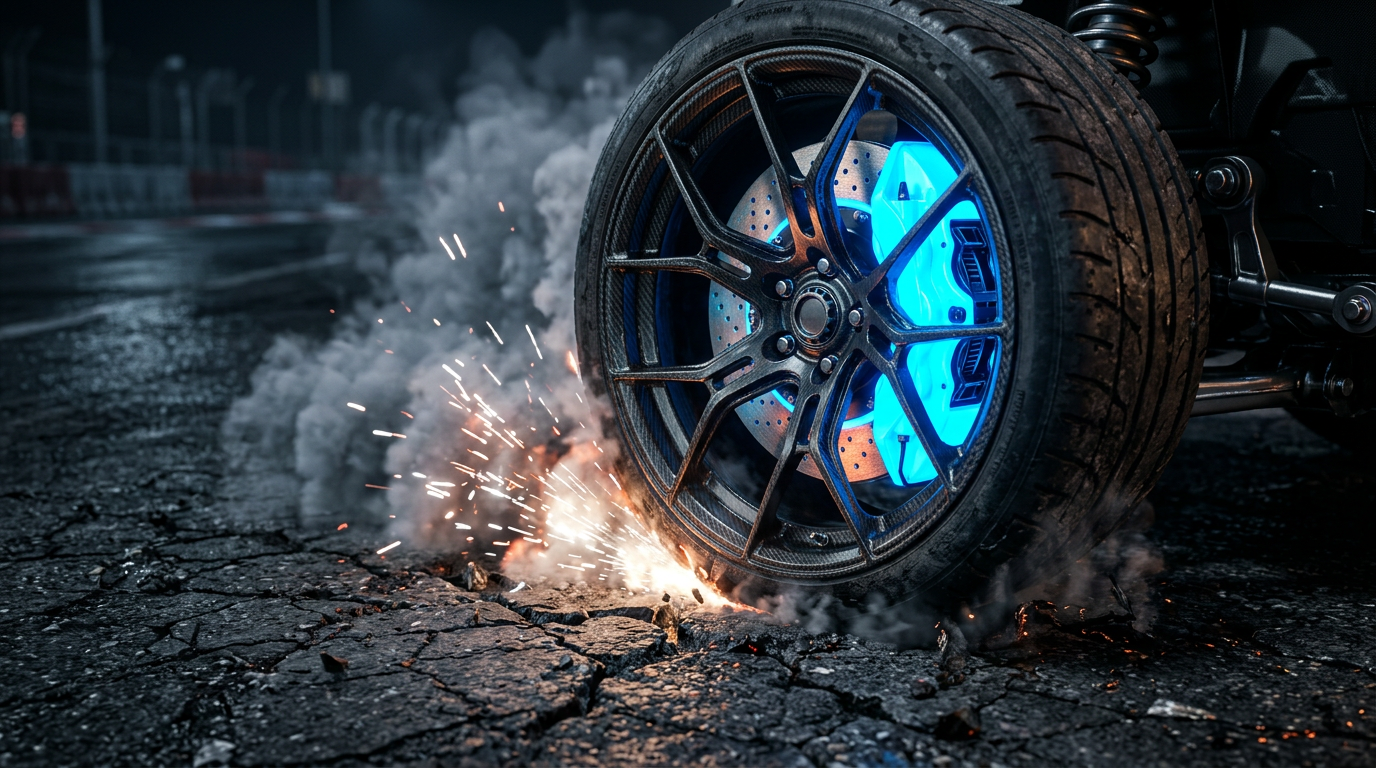
The traction limit is the absolute maximum amount of force a tire can transmit to the road surface before the coefficient of friction is overcome, resulting in wheel slip. Modern hypercars, even those equipped with sophisticated all-wheel-drive systems, torque vectoring algorithms, and bespoke, ultra-sticky Pirelli or Michelin rubber, are entirely traction-limited. They possess far more horsepower and torque than they can physically apply to the pavement. When a vehicle attempts to accelerate, the rotational force applied to the wheels must be countered by the friction between the tire’s contact patch and the asphalt. If the force exceeds the grip, the tire breaks loose, converting kinetic energy into heat and smoke rather than forward momentum.
Dreame’s proposed solution to the traction limit is to bypass the drivetrain entirely by strapping solid rocket boosters to the chassis. The company claims these boosters generate 100 kilo-Newtons (kN) of force. Mathematically, 100 kN translates to roughly 22,480 pounds of thrust. In a vacuum, or in a frictionless environment like deep space, applying 22,480 pounds of thrust to a 4,000-pound object would indeed result in catastrophic, neck-snapping acceleration that could easily eclipse the 0.9-second mark. But automobiles do not operate in a vacuum; they operate in the real world, bound by gravity, atmospheric drag, and the laws of Newtonian physics.
Even if the rocket boosters are providing pure forward thrust—meaning the wheels are not being driven by electric motors during the launch—the tires still play a critical, unavoidable role. The vehicle’s chassis is bolted to the suspension, which is bolted to the wheel hubs, which are wrapped in rubber. When 100 kN of thrust violently pushes the chassis forward, the tires must “brace” against the road to maintain directional stability. The sheer violence of that sudden forward momentum would cause a massive weight transfer to the rear of the vehicle. If the front tires lift off the ground, the car loses all steering capability. If the rear tires cannot handle the sudden, immense load, the vehicle will violently snap sideways. The earth pushes back against the tires with equal and opposite force. Without infinite grip, a street car subjected to 100 kN of sudden thrust would not gracefully glide to 60 mph; it would violently lose control, spinning or flipping as the tires fail to manage the kinetic energy.
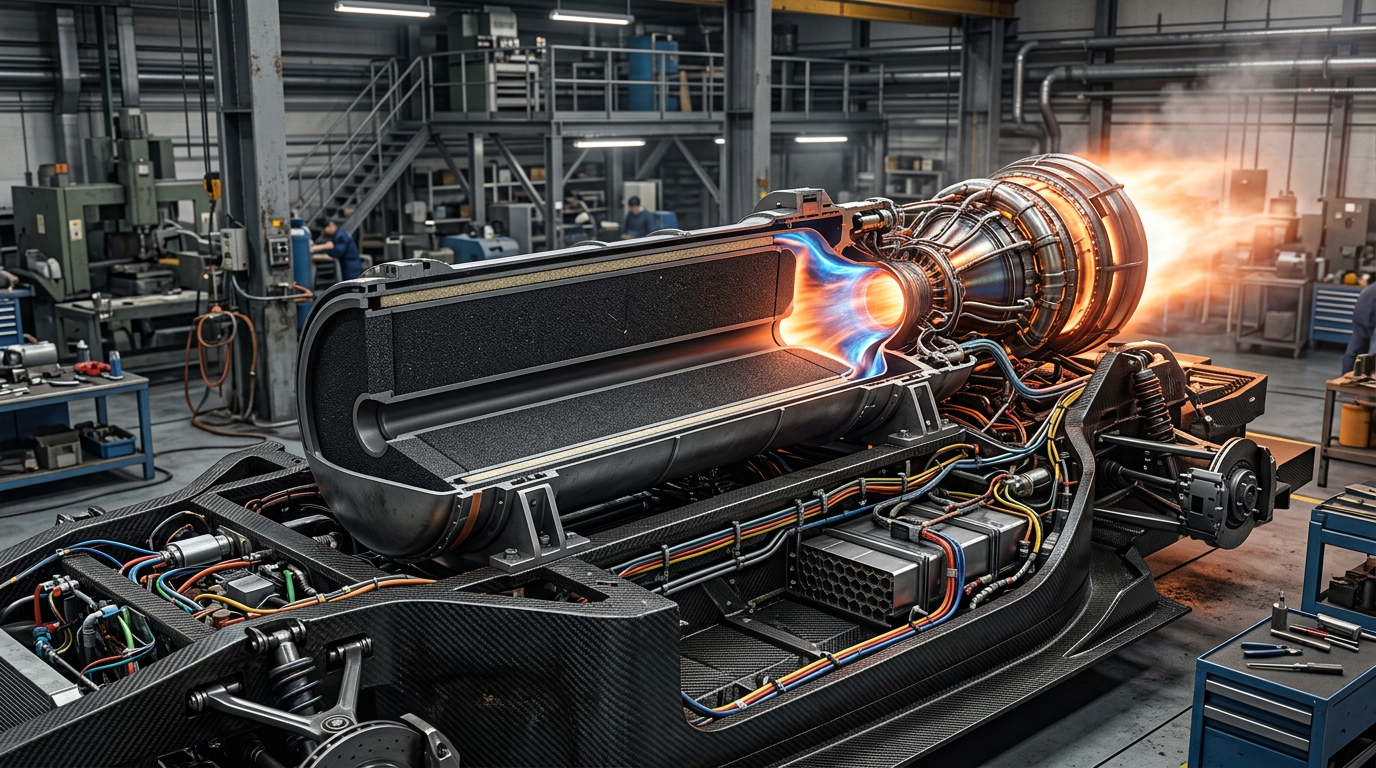
Furthermore, the engineering reality of the Nebula NEXT 01 Jet Edition display car reveals the truth behind the curtain. Automotive engineers who inspected the vehicle at Dreame’s San Francisco expo noted that the “rocket boosters” appeared to be entirely fabricated mockups. Crucially, there were no visible air inlets or exhaust outlets. Solid rocket boosters, by their very nature, require massive, unencumbered exhaust nozzles to expel superheated gases. They also generate extreme thermal loads that would instantly melt a standard carbon fiber or aluminum automotive chassis without heavy, specialized thermal shielding. The absence of these critical engineering components confirms that the vehicle is not a functional prototype, but a physical manifestation of vaporware.
Enterprise Market Impact & TCO: The Economics of Vaporware
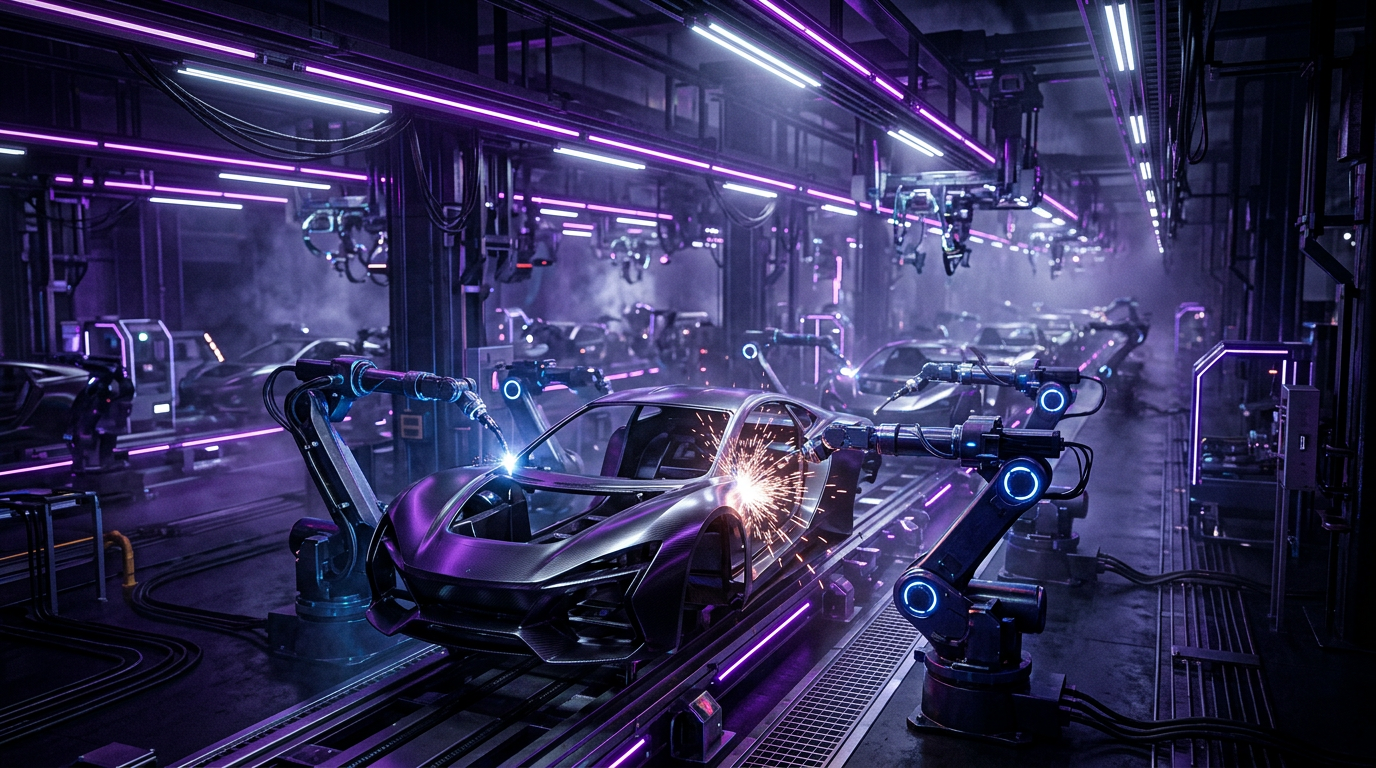
If the engineering is impossible and the prototype is a mockup, why would a successful vacuum cleaner company spend millions of dollars developing and touring a fake rocket-powered car? The answer lies not in automotive engineering, but in the brutal, high-stakes economics of the global technology sector and the rapidly contracting Chinese EV market. To understand Dreame’s strategy, enterprise leaders and investors must analyze the Total Cost of Ownership (TCO) of marketing, brand acquisition, and the concept of the “Halo Product.”
The Chinese electric vehicle market is currently experiencing a vicious, unprecedented price war. Giants like BYD, NIO, and XPeng are slashing margins to the bone to maintain market share, driving smaller, niche manufacturers into bankruptcy. The barrier to entry for a new automaker is astronomically high. Developing a functional, homologated, mass-market EV requires billions of dollars in capital expenditure (CapEx) for battery sourcing, software development, crash testing, and assembly line construction. James Dyson, the billionaire founder of the eponymous vacuum company, famously attempted to build an EV. After spending over $600 million of his own money, he scrapped the project, realizing that the unit economics of manufacturing a car from scratch were fundamentally unviable for a newcomer.
Dreame is acutely aware of this reality. Their goal with the Nebula NEXT 01 Jet Edition is likely not to become a mass-market automaker, but to execute a highly calculated enterprise marketing maneuver. In the modern attention economy, traditional advertising yields diminishing returns. Consumers and tech media are saturated with incremental updates to smartphones, laptops, and smart home appliances. To break through the noise, a company must manufacture a spectacle. By claiming a 0.9-second 0-60 mph time via rocket boosters, Dreame guaranteed themselves global headlines across Tier-1 technology and automotive publications.
From an enterprise TCO perspective, the return on investment (ROI) for this stunt is massive. The cost of designing a sleek fiberglass shell, bolting it to a generic skateboard EV chassis, and renting out the Palace of Fine Arts in San Francisco is perhaps a few million dollars. In exchange, Dreame receives tens of millions of dollars in earned media, brand impressions, and global name recognition. When consumers read about the “crazy rocket car from Dreame,” they are simultaneously introduced to the brand’s core ecosystem of robotic vacuums and smart home devices. The car is a loss-leader for brand equity.
However, this strategy carries significant risks for enterprise credibility. When a technology company routinely makes physically impossible claims, it erodes trust with institutional investors, supply chain partners, and enterprise clients. If a Chief Technology Officer (CTO) cannot trust a company’s spec sheet regarding a flagship halo product, they will inevitably question the reliability, data security, and longevity of the company’s core enterprise offerings. Vaporware is a potent short-term stimulant for stock prices and media attention, but it is a toxic foundation for long-term enterprise growth. The market eventually demands execution, and when the rocket car fails to materialize, the resulting brand damage can be severe.
The Consumer Reality: What This Means for You
For the everyday consumer, the escalating arms race of EV acceleration metrics has crossed the threshold from thrilling to absurd. The pursuit of the sub-1-second 0-60 mph time is a glaring example of how the automotive industry has lost touch with consumer reality. To understand why, we must translate the sterile numbers on a spec sheet into the visceral, physical reality of human biology and daily infrastructure.
Accelerating from 0 to 60 mph in 0.9 seconds is not a luxury experience; it is a violent assault on the human body. Achieving this speed in that timeframe subjects the driver and passengers to roughly 3 Gs (three times the force of gravity) of sustained horizontal acceleration. To put this into perspective, astronauts aboard the Space Shuttle experienced about 3 Gs during launch. Fighter pilots wear specialized G-suits and undergo rigorous physical training to prevent blood from pooling in their extremities, which can lead to G-LOC (G-induced loss of consciousness).
If an untrained civilian in a passenger vehicle is suddenly subjected to 3 Gs of force, the physiological effects are immediate and severe. The brain is slammed against the back of the skull, potentially causing mild concussions or severe whiplash. Vision tunneling occurs as blood struggles to reach the optic nerves. If the driver’s head is not perfectly pinned against a specialized racing headrest, the sheer force will snap their neck backward, leading to catastrophic spinal injuries. This is not a feature you want to activate while merging onto a highway or leaving a grocery store parking lot.
Beyond the biological limitations, the consumer reality of a rocket-powered vehicle involves insurmountable logistical and safety nightmares. Solid rocket boosters operate by igniting a highly volatile chemical propellant. Once ignited, a solid rocket cannot be throttled down or turned off; it burns until the fuel is exhausted. Firing a 100 kN rocket booster in a suburban environment would be an act of domestic terrorism. The acoustic shockwave would shatter the windows of nearby homes and permanently damage the hearing of pedestrians. The superheated exhaust plume, reaching temperatures of several thousand degrees, would instantly melt the asphalt beneath the car, incinerate any vehicles behind it, and likely set fire to surrounding foliage or structures.
Consequently, the insurance implications for such a vehicle are comical. No underwriter on earth would issue a policy for a consumer vehicle equipped with live explosives. The liability risk is infinite. Therefore, the consumer takeaway from Dreame’s announcement is simple: the 0-60 mph metric is officially dead. It has ceased to be a useful measurement of a vehicle’s drivability, safety, or engineering quality. It has devolved into a meaningless marketing buzzword used to sell vaporware. Consumers should ignore these hyperbolic acceleration claims and instead focus on metrics that actually impact their daily lives: battery efficiency (miles per kWh), charging curve speeds, software reliability, and interior ergonomics.
The Industry Ripple Effect: Forcing the Hand of Competitors
While Dreame’s rocket car may be a physical impossibility, the psychological impact of its announcement sends undeniable ripples throughout the automotive and technology industries. By pushing the boundaries of absurdity, Dreame forces legacy automakers and rival EV startups to react, accelerating a dangerous trend of over-promising and under-delivering in the mobility sector.
Dreame is not the first company to leverage the allure of rocket technology to sell cars. Elon Musk famously promised that the next-generation Tesla Roadster would feature an optional “SpaceX package,” utilizing cold-gas thrusters hidden behind the license plate to enable sub-1-second 0-60 mph acceleration and even allow the car to briefly hover. Musk promised the new Roadster would be revealed in April 2026. That deadline came and went with no vehicle in sight. By announcing the Nebula NEXT 01, Dreame is directly trolling Tesla, attempting to beat the world’s richest man to the punchline of his own joke.
This dynamic creates a toxic feedback loop in the industry. Legitimate hypercar manufacturers like Rimac, whose Nevera EV holds actual, verified world records for acceleration (0-60 in roughly 1.74 seconds), are forced to compete for headlines against companies selling CGI renders and fiberglass mockups. When a vacuum company claims a 0.9-second time, Rimac’s genuine, multi-million-dollar engineering achievements are unfairly diminished in the eyes of the casual public.
Furthermore, this vaporware arms race will inevitably trigger a severe regulatory backlash. Agencies like the National Highway Traffic Safety Administration (NHTSA) in the United States and the European New Car Assessment Programme (Euro NCAP) are already grappling with the safety implications of heavy, 1,000-horsepower EVs sharing the road with lightweight legacy vehicles. As companies begin openly discussing strapping thrusters and rockets to consumer cars, regulatory bodies will be forced to step in. We can expect sweeping legislation in the coming years that strictly caps the acceleration rates of street-legal vehicles, effectively outlawing the very technology these companies are pretending to develop. The industry is begging for regulation through its own hubris.
TechNode HQ Verdict: Pros, Cons & Usability
- Pro (Engineering): Pushes the theoretical boundaries of chassis design, forcing the industry to explore advanced aerodynamic downforce and novel torque management systems to handle extreme kinetic energy.
- Pro (Consumer): Acts as a highly entertaining, futuristic concept that drives public interest in electric vehicle technology and the broader transition away from fossil fuels.
- Con: The core technology is physically impossible for a street-legal vehicle, relying on fabricated mockups and ignoring the fundamental laws of tire friction and traction limits.
- Con: Introduces catastrophic safety, thermal, and acoustic liabilities that make regulatory homologation and consumer insurance completely unattainable.
Enterprise Usability: For a CTO or enterprise fleet manager, this vehicle and the technology it claims to possess should be entirely disregarded. It is a marketing exercise, not a deployable asset. However, enterprise leaders should study Dreame’s strategy as a masterclass in the “attention economy”—understanding how audacious claims can manipulate media cycles, while remaining cautious of the long-term brand damage associated with vaporware.
Everyday Usability: The public cannot, and should not, attempt to buy this vehicle. It does not exist in a functional state, and even if it did, it would be illegal to operate on public roads. Consumers should view this as a piece of performance art rather than a mode of transportation, and redirect their purchasing power toward EVs that offer genuine advancements in range, charging infrastructure, and daily reliability.
Sources & Citations:
Original Technical Breakdown via: theverge
Official Handle: @theverge
Topics Explored: EV Engineering, Automotive Physics, Vaporware, Chinese EV Market, Solid Rocket Boosters