Key takeaways
- Indoor smart gardens decentralize food production, bypassing mass supply chain contamination risks.
- The $579 Gardyn Studio leverages AI automation for hands-off hydroponic yields.
- While mitigating recalls, high upfront costs and pump failures remain key hardware bottlenecks.
The Architectural Reality of the Indoor Smart Garden
The centralized agricultural supply chain is currently facing a structural security crisis. With the 2026 cyclospora outbreak linked to Taylor Farms de Mexico sickening over 1,600 people across five states—including Indiana, Kentucky, Michigan, Ohio, and West Virginia—consumers and industry analysts alike are questioning the reliability of our food networks. This represents a staggering logistical failure compared to the 249 cases reported during the same period last year. In response, a technological alternative has emerged: the indoor smart garden. By functioning as micro-agricultural appliances, these systems are effectively bypassing mass distribution networks entirely, bringing food production directly to the network edge—your kitchen. This decentralization eliminates both the latency of shipping and the massive security breaches inherent in centralized, industrial agriculture.
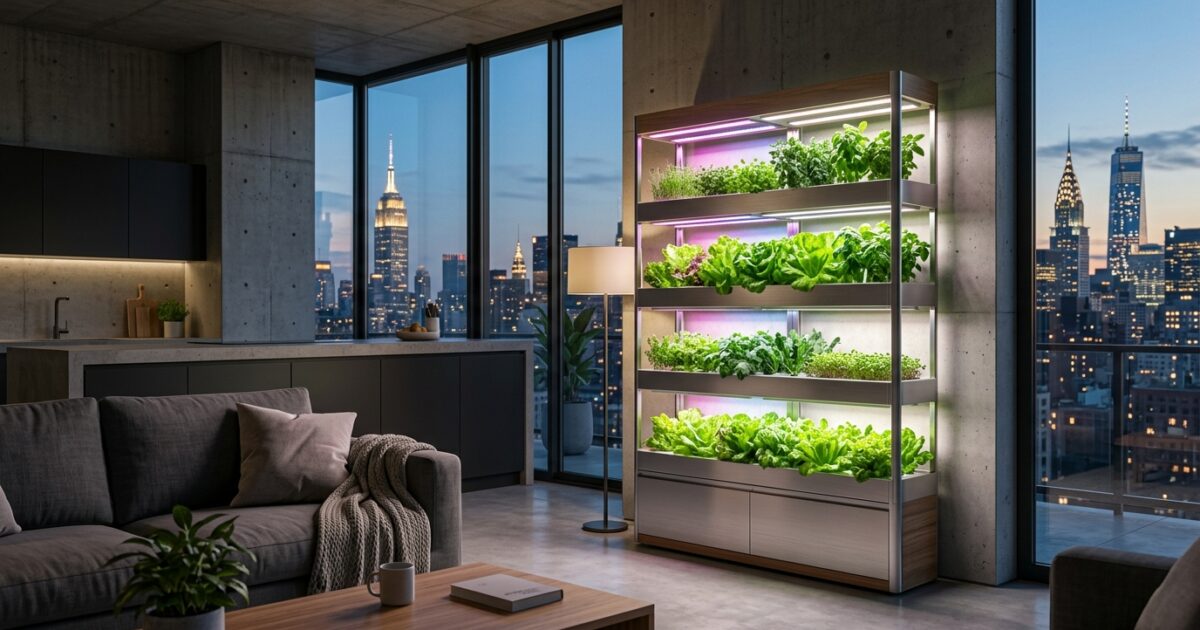
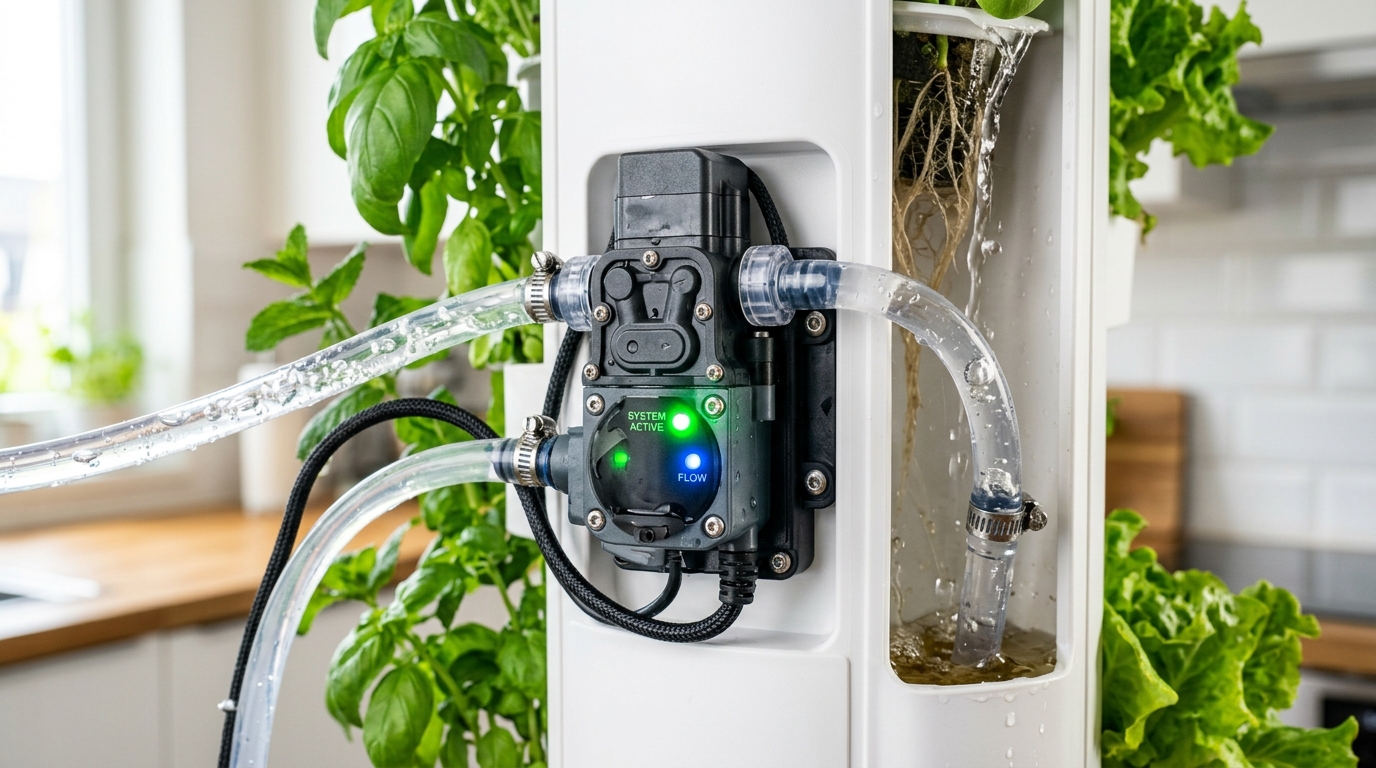
At its core, transitioning to an indoor smart garden is a profound hardware & silicon deployment. Systems like the Gardyn Studio represent the pinnacle of this miniaturized infrastructure. Designed to fit within a remarkably compact 1.4 square feet of floor space, the 4.5-foot vertical hydroponic tower is engineered to accommodate 16 plant pods simultaneously. It eschews traditional soil entirely, relying instead on an automated nutrient delivery pump system and a highly optimized array of LED grow lights. The engineering physics behind these lights allows for spectrum tuning that maximizes photosynthetic efficiency without demanding the high electrical loads of older halogen systems. For users, the hardware setup acts similarly to deploying a hyper-local edge server, where the “data” is organic produce grown continuously regardless of the external winter weather.
The AI Software Layer: Kelby and Automation
While the hardware forms the chassis, the true operational value of the modern indoor smart garden is driven by its software stack. Gardyn has engineered an AI assistant named ‘Kelby’ to manage the micro-environment. Kelby operates through a companion mobile application, acting as the autonomous control plane for the hydroponic system. By leveraging machine learning algorithms and environmental sensors, the system can automatically adjust lighting schedules and watering cycles based on the specific life stages of the plants and the ambient local environment.
This level of automation translates to a “set it and forget it” user experience for tech-savvy consumers seeking hands-off agriculture. The system pushes real-time notifications directly to the user’s smartphone, alerting them precisely when to add water, replenish plant food, prune overgrown leaves, or harvest mature greens like arugula and kale. However, accessing this sophisticated software layer requires an ongoing financial commitment. Gardyn enforces a subscription model—ranging from $25 to $39 a month, or $259 annually—which grants access to Kelby’s advanced features alongside monthly pod credits. This represents a clear shift toward a Software-as-a-Service (SaaS) model applied directly to household food generation.
Market Impact & Deployment
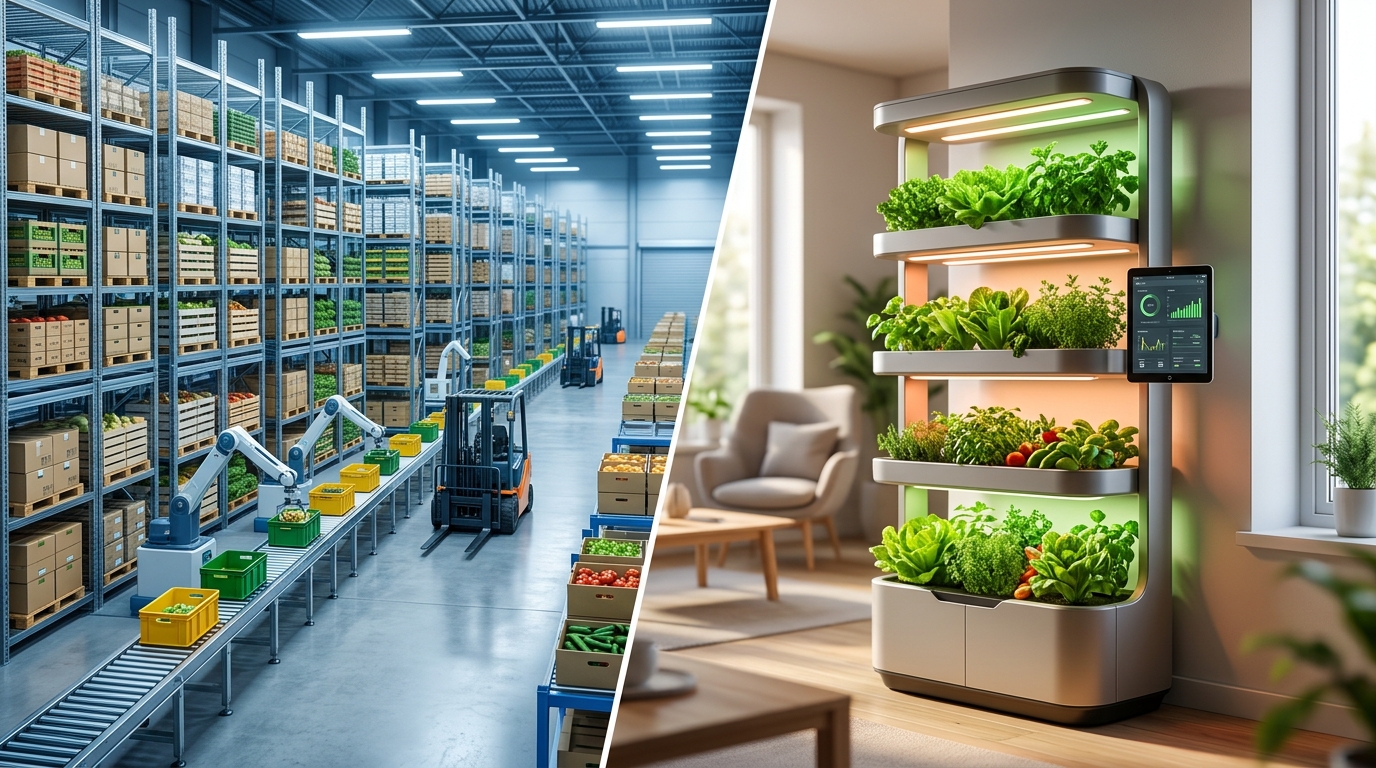
From an enterprise and economic perspective, the shift toward hyper-local food production represents a fascinating disruption. According to a recent survey, U.S. adults who shop for groceries waste an average of $125 a month on food that wilts or goes uneaten. That translates to $1,500 a year in sheer waste. By harvesting produce on demand from an indoor smart garden, users effectively zero out this inefficiency, drastically shifting the Total Cost of Ownership (TCO) over a multi-year horizon. The harvest from the system can undeniably offset some of its operational costs over time if used daily, proving its viability not just as a novelty, but as a strategic appliance.
However, the deployment of this consumer tech comes with a steep initial Capital Expenditure (CapEx). The Gardyn Studio hardware retails at $579, placing it squarely in the category of premium, high-end kitchen appliances like automated espresso machines or smart refrigerators. For those with larger spatial capacity, the Gardyn Home model scales up to 30 growing slots for $899. Beyond the hardware, users must factor in the ongoing consumable costs. Plant pods range from $1.99 to $4.99 for members, with premium pods costing up to $9.98. Non-members face a flat $4.99 fee per standard pod. While the electricity cost remains minimal—comparable to running a standard smart bulb—the combined hardware and subscription fees require a dedicated commitment to realize a true return on investment.
The Consumer Translation
For the everyday user, this highly technical shift translates directly into peace of mind and physical health autonomy. Growing greens like arugula, lettuce, cucumbers, cherry tomatoes, herbs, and edible flowers in a dense urban environment completely eliminates exposure to mass-scale pesticides and widespread pathogens. The symptoms of cyclospora infection—including explosive diarrhea, bloating, unintentional weight loss, and extreme fatigue—are severe enough to prompt many to take their food supply chain into their own hands. By doing so, families are not only securing their nutrition but also creating an engaging, educational gateway for children to understand where their food originates.
Nevertheless, a rigorous red-team audit of the technology reveals that the reality is not entirely frictionless. Operating an indoor hydroponic tower requires significant physical maintenance. Cleaning the intricate water reservoirs and internal plumbing can be much more difficult and time-consuming than advertised, often requiring users to combat biofilm and algae buildup. Furthermore, some users have reported critical hardware issues such as primary water pump failures, which can devastate a crop if not addressed immediately. From an agricultural standpoint, managing indoor pests without natural predators can become a frustrating challenge if an infestation occurs. Additionally, while the system excels at leafy greens, it is fundamentally less effective for larger fruiting plants like tomatoes, which frequently produce smaller yields due to the constrained physical space.
Frequently Asked Questions
Q1: Do indoor smart gardens completely eliminate food safety risks?
A1: While they drastically reduce exposure to industrial contamination like cyclospora and mass-sprayed pesticides, they do not completely eliminate risks; rigorous system cleaning and indoor pest management are still required.
Q2: What is the financial ROI on a system like the Gardyn Studio?
A2: By eliminating an average of $125 a month in food waste, frequent users can offset the $579 hardware and monthly subscription costs over time, though it requires consistent harvesting.
Q3: How much space does a vertical hydroponic system require?
A3: Compact models like the Gardyn Studio require only about 1.4 square feet of floor space, making them highly viable for small urban apartments and corporate breakrooms.
TechNode HQ Verdict: Pros, Cons & Usability
- Pro (Engineering): Automated AI-driven nutrient and light cycling significantly reduces active daily maintenance and optimizes plant yields.
- Pro (Consumer): Direct mitigation of mass-scale foodborne illness and pesticide exposure, while eliminating costly grocery waste.
- Con: High upfront hardware cost ($579) and recurring subscription fees make the Total Cost of Ownership relatively high.
- Con: Hardware vulnerabilities like pump failures, combined with intensive, time-consuming deep cleaning requirements.
Enterprise Usability: For forward-thinking corporate campuses and enterprise IT departments, deploying these systems in breakrooms offers a novel, high-visibility wellness perk and a tangible demonstration of sustainable, decentralized infrastructure in action.
Everyday Usability: Highly recommended for tech-literate urban consumers seeking to bypass industrial grocery supply chains and secure their food supply, provided they are prepared to perform diligent monthly system maintenance and absorb the subscription costs.