Key takeaways
- 99 entry pendants up to $299 smart rings, with recurring cloud AI subscriptions running from free baseline tiers up to $29 per month.
- Microphone actuation is the primary privacy and battery differentiator, separating continuous background listeners from physical push-to-talk sensors.
- Current commercial devices require host iOS or Android smartphones over Bluetooth for model processing, transcription storage, and cellular connectivity.
Personal AI wearables are compact, body-worn hardware devices—including pendants, smart rings, wristbands, and magnetic smartphone attachments—engineered to capture audio, summarize real-time conversations, and deliver conversational AI assistance. Ranging in price from $49.99 entry-level recorders to $299 smart rings, these devices fall into two primary functional categories: productivity-driven transcription tools for meetings and lectures, and conversational companions designed for ambient interaction and personal journaling. Nearly all current models rely on Bluetooth connections to a host smartphone and cloud processing rather than on-device neural processing, and several require monthly software subscriptions between $8.33 and $29 to unlock full transcription and summary features.
According to an industry overview compiled by TechCrunch, consumer hardware manufacturers are navigating a fundamental product divide. On one side are task-focused voice recorders designed to produce structured meeting notes, action items, and searchable transcripts. On the other are companion gadgets that continuously monitor speech to track emotional states, provide conversational companionship, or offer behavioral feedback. Choosing an appropriate device requires evaluating physical form factors, recurring service charges, microphone activation models, and platform dependencies.
Evaluating personal AI wearables across hardware form factors
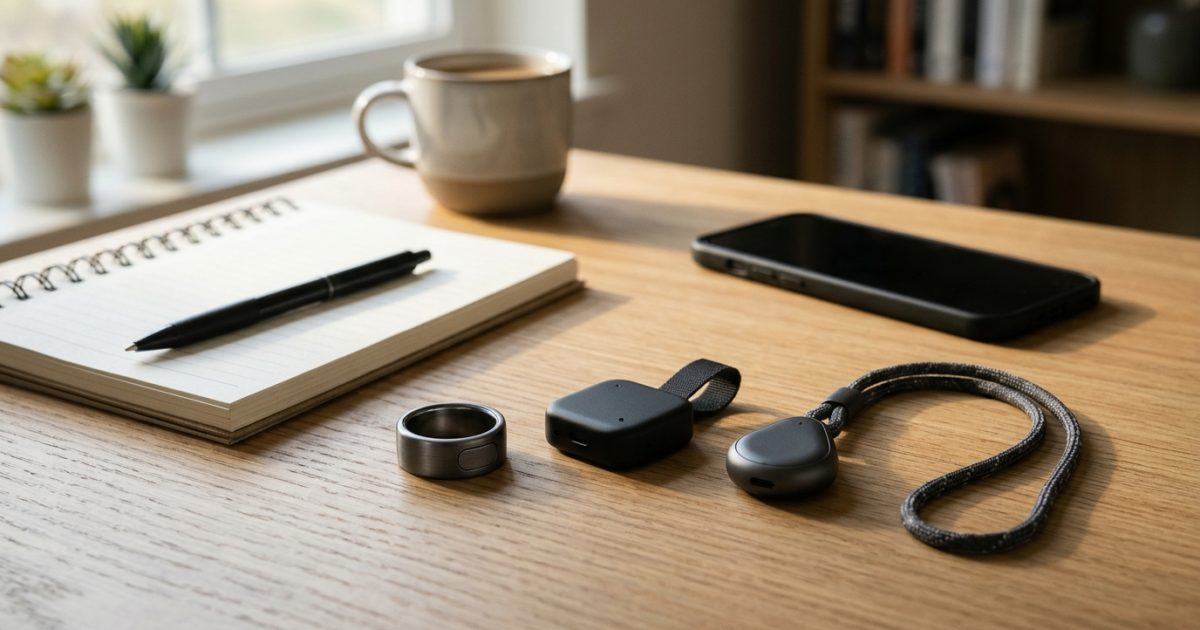
The market for personal AI hardware has expanded across multiple form factors, each presenting specific ergonomic and operational compromises:
- Pendants and neckpieces: Pendants remain the most common form factor, utilized by devices such as the original Bee, Friend 2.0, Limitless, and Nirva. Hanging around the neck positions the microphone centrally to record the wearer and nearby interlocutors, but it also makes the device visually prominent in social settings.
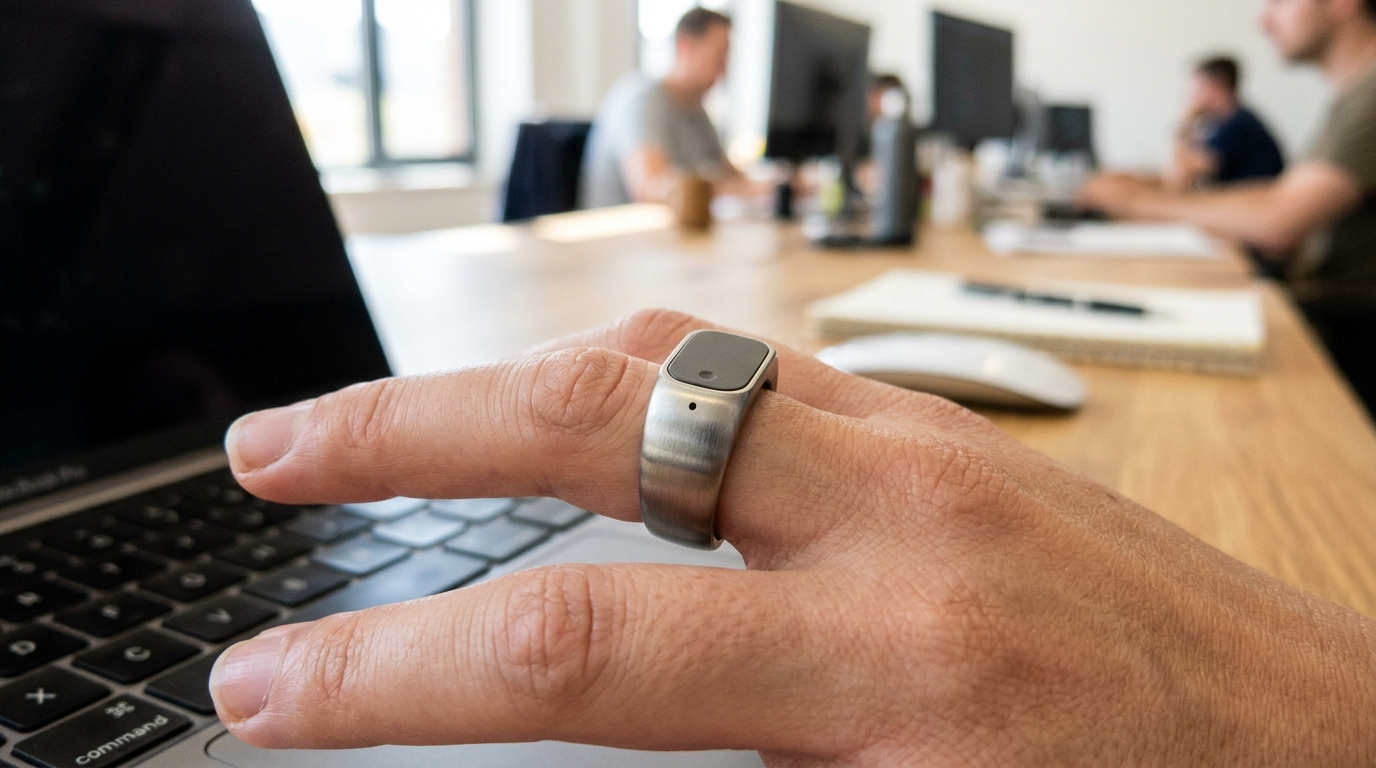
- Smart rings: Sandbar’s Stream ring represents the finger-worn category. Rings offer maximum discretion and continuous physical contact with the body, but internal space constraints limit battery capacity, acoustic chamber size, and sensor arrays.
- Magnetic smartphone cards: Form factors like the Bee Eclipse and Plaud Note snap directly to the rear glass of a smartphone. This approach stabilizes battery life and aligns audio capture with phone calls, but restricts utility when the phone is left in a bag or pocket.
- Wristbands and clothing clips: Hybrid devices like the Bee Frontier, Plaud NotePin, and Nirva can clip to lapels or strap to the wrist. Clips deliver flexible placement for directional voice pickup during interviews and lectures.
- Handheld peripherals: Standalone handheld units like the Rabbit R1 retain physical displays and camera modules, operating as auxiliary mobile controllers rather than passive wearables.
Hardware specifications and pricing comparison
Personal AI devices differ widely in hardware pricing, input mechanisms, companion app requirements, and ongoing software costs. The following table compares documented specifications across prominent commercial models:
| Device | Form Factor | Base Price | Subscription Cost | Audio Input Architecture | Primary Target Function |
|---|---|---|---|---|---|
| Bee Frontier | Wristband / Clothing Clip | $74.99 | $19.00 / month | Continuous ambient; physical mute button | Daily conversation summaries and Alexa tasks |
| Bee Eclipse | Magnetic Phone Card | $99.99 | $19.00 / month | Continuous ambient; physical mute button | Phone call and meeting transcription |
| Friend 2.0 | Neck Pendant | $129.00 | Free baseline access | Continuous listening; onboard speaker | Emotional support and proactive companionship |
| Limitless Pendant | Magnetic Pendant / Clip | $99.00 | Free (10 hrs/mo); $29.00/mo unlimited | Continuous ambient with consent verbal cues | Professional meeting transcription and memory |
| Meta Muse Charm | Keychain / Pocket Charm | Unannounced | Meta AI account integration | Voice commands; digital display for avatar | Conversational assistance via Jolly avatar |
| Nirva | Pendant or Bracelet | $249.00 | Companion app included | Wearer speech isolation; filters background | Emotional journaling and habit reflection |
| Omi | Necklace / Temple Clip | $89.00 | ChatGPT API integration | Continuous listening; head-tap detection | Conversation summaries and personalized advice |
| Plaud NotePin | Wristband / Lapel Clip | $159.00 | Free (300 min/mo); $8.33/mo Pro | Dual-mode recording with manual activation | Structured transcription for legal/academic notes |
| Rabbit R1 | Handheld Peripheral | $199.00 | Cloud compute included | Push-to-talk scroll wheel; rotating camera | Phone-adjacent app automation and tool creation |
| Sandbar Stream | Smart Ring | $299.00 | Companion app included | Touch-sensitive press-and-hold panel | Discreet voice memos and media control |
Microphone architecture and privacy controls
The core technical dividing line across AI wearables centers on microphone actuation: passive ambient monitoring versus explicit, physical user actuation.
Continuous ambient devices—such as Friend 2.0 and Based Hardware’s Omi—remain in a persistent listening state. They stream acoustic data over Bluetooth to the paired smartphone, where language models parse dialog, identify speakers, and extract reminders. This setup eliminates manual interaction but introduces severe social friction. Friend encountered intense public criticism during its New York City transit ad campaign, where promotional displays were defaced with slogans citing surveillance concerns. To counter privacy objections, some ambient models integrate mitigation features: the Amazon-backed Bee line incorporates a physical mute toggle, while Limitless applies software-level consent protocols to prompt before recording unfamiliar voices.
In contrast, targeted recording hardware isolates capture to intentional interactions. The Sandbar Stream ring leaves its microphone turned off by default. Recording activates only when the user presses and holds the capacitive sensor on top of the ring, transmitting the memo directly to the mobile app for processing. Meanwhile, Nirva takes an algorithmic approach: the company, founded by former Meta Reality Labs engineers, raised $33 million to develop acoustic filtering models that isolate the wearer’s vocal tract while suppressing background voices, preventing accidental third-party surveillance.
Subscription economics and companion app requirements
Buyers evaluating personal AI hardware must calculate total cost of ownership beyond retail sticker prices. Cloud inference, speech-to-text processing, and vector database retrieval impose continuous hosting costs on hardware makers, leading to divergent monetization strategies:
- Hardware plus mandatory subscription: Amazon’s Bee devices offer accessible entry prices ($74.99 for the Frontier and $99.99 for the Eclipse), but require an ongoing $19 monthly subscription for the companion app. Over a two-year operational window, the total expenditure reaches $530 to $555. Furthermore, the companion app remains restricted to iOS, locking out Android users entirely.
- Tiered freemium allowances: Plaud and Limitless provide free baseline quotas suited for intermittent usage. Plaud provides 300 free transcription minutes monthly with NotePin, offering an optional Pro tier at $8.33 per month for 1,200 minutes. Limitless bundles 10 hours of monthly transcription before requiring a $29 monthly unlimited plan.
- Bundled software pricing: Startups like Sandbar ($299) and Nirva ($249) demand higher upfront hardware payments while bundling core app features without recurring monthly fees at launch, shifting maintenance liabilities back onto startup capital reserves.
Every audio-based wearable in this group requires a tethered smartphone. None of the dedicated pendants or rings contain independent LTE modems or local multi-billion parameter neural weights. Audio capture occurs locally, but tokenization, context matching, and synthesis require the phone’s wireless data connection.
Productivity transcription versus emotional companionship
Beyond hardware mechanics, software workflows divide these gadgets into two distinct functional categories:
Professional productivity tools: Devices such as Plaud’s NotePin, Limitless, and the Bee Eclipse are tuned for structured data retrieval. They generate chronological meeting logs, timestamped speaker attributions, and markdown-formatted action lists. Lawyers, journalists, students, and project managers benefit from reliable audio capture that eliminates manual note-taking during interviews and conference calls. Plaud is also preparing the Plaud Note Pro, a $179 ultra-thin model designed specifically for card-style recording workflows.
Emotional and social companions: Devices such as Friend 2.0, Nirva, and the Meta Muse Charm prioritize relational interaction over document output. Friend 2.0 incorporates an onboard speaker that vocalizes responses directly to the user, simulating casual banter and sending encouraging messages before stressful events. Meta’s Muse Charm, introduced in September 2026, packages an interactive digital avatar named Jolly into a keychain form factor with an integrated miniature screen. Nirva targets personal wellness, analyzing vocal tone and conversation cadence over months to chart emotional patterns, personal habits, and communication tendencies.
Best fit by use case
Determining the right personal AI device depends on specific workflow needs, privacy tolerances, and mobile ecosystem choices:
- For corporate professionals and journalists: The Plaud NotePin ($159) or Limitless Pendant ($99) offer the most practical value. Their software stacks are calibrated specifically for structured meeting minutes, speaker differentiation, and searchable knowledge archives. Users with variable monthly meeting loads benefit from generous free tiers before committing to paid software upgrades.
- For iPhone users seeking ambient task automation: The Bee Frontier ($74.99) and Bee Eclipse ($99.99) provide clean integration with Alexa and iOS workflows, provided buyers are comfortable with a mandatory $19 monthly service fee and passive listening defaults.
- For privacy-conscious voice note-takers: The Sandbar Stream ring ($299) avoids public recording concerns through its physical push-to-talk capacitive surface, making it suitable for capturing rapid thoughts without broadcasting active microphones to companions.
- For personal reflection and habit tracking: Nirva ($249) addresses emotional wellness and behavioral logging with specialized acoustic isolation algorithms designed to ignore non-wearer speech, scheduled for release at the end of 2026.
- For interactive AI companion testing: Friend 2.0 ($129) and the upcoming Meta Muse Charm serve early adopters curious about conversational artificial personalities, though their open microphones and ambient social presence demand caution in professional or shared office spaces.
General consumers who do not require daily transcription or immediate conversational support should wait. With rapid iterations across microphone hardware, companion apps, and platform integrations, second-generation devices are establishing more sustainable pricing structures and clearer privacy boundaries.
Sources
- The hottest AI wearables and gadgets you should know about | TechCrunch
- Amazon’s Bee launches two new personal AI devices, starting at $75 | TechCrunch
- Meta made a Tamagotchi-like wearable for its Muse AI agent | TechCrunch
- Nirva raises $33M for a pendant that only listens to you | TechCrunch
- Friend, the lonely AI wearable, returns with a new voice and a much bigger price tag | TechCrunch
- Sandbar secures $23M Series A for its AI note-taking ring | TechCrunch
- Omi, a competitor to Friend, wants to boost your productivity using AI and a ‘brain interface’ | TechCrunch