Key takeaways
- The exclusive footage reveals Robert Downey Jr.’s Doctor Doom wielding immense, physics-defying power against Thor.
- Marvel is executing a strategic rollback, leveraging proven legacy actors to stabilize their franchise architecture.
- Deadpool’s SDCC stage cameo lacked actual footage integration, highlighting a calculated marketing engagement tactic.
- The inclusion of Fox-era mutants signals complex IP data orchestration and unified ecosystem interoperability.
- Victor Von Doom’s ability to resurrect Sentinels introduces a highly scalable antagonist threat model.
The Architectural Reality
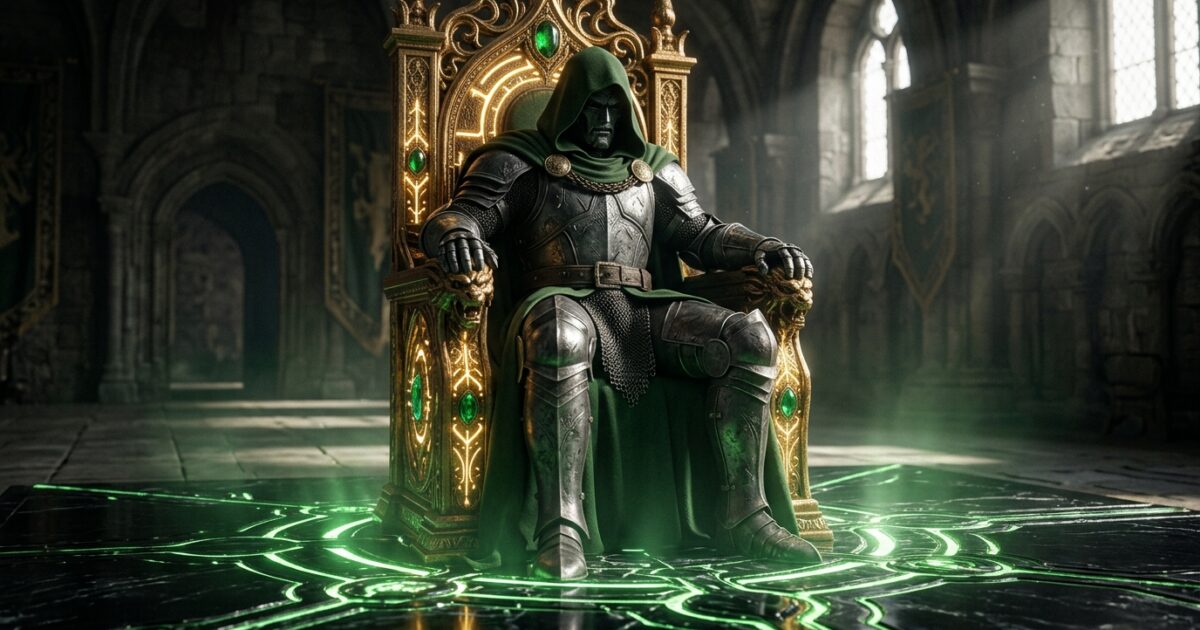
The release of the exclusive Avengers Doomsday footage at San Diego Comic-Con 2026 represents a critical inflection point for Disney’s underlying cinematic infrastructure. When analyzing the raw data stream originating from the closed-door Hall H presentation, it becomes evident that Marvel Studios is executing a calculated pivot in its overarching franchise architecture. The exclusive footage of Avengers: Doomsday showcased a highly sophisticated visual rendering pipeline, beginning with a lingering, meticulously framed shot of Doctor Doom—played by the returning foundational pillar Robert Downey Jr.—sitting on an ornate golden throne. This imagery is not merely stylistic; it signals a heavy investment in establishing a new core processing unit for the narrative’s next massive computing cycle.
Beneath this golden throne, the ground pulses with glowing green energy, signaling a massive leap in particle effect simulation and volumetric lighting capabilities within Marvel’s primary VFX engines. As Vanessa Kirby’s character, Sue Storm, provides a vital voiceover reflecting on Victor’s past, we are given a masterclass in narrative data orchestration. Her narration describes Victor as having once been the “smartest guy in every room,” characterizing him as “kind” and “caring” before losing everything he loved. She notes that while she knew Victor was “lost,” she did not realize he was fundamentally “broken.” This exposition functions as the essential metadata for the new phase of the MCU, delivered efficiently to a room filled with various Marvel heroes and mutants, including legacy nodes such as Thor, Shang-Chi, Gambit, Magneto, and Professor X.
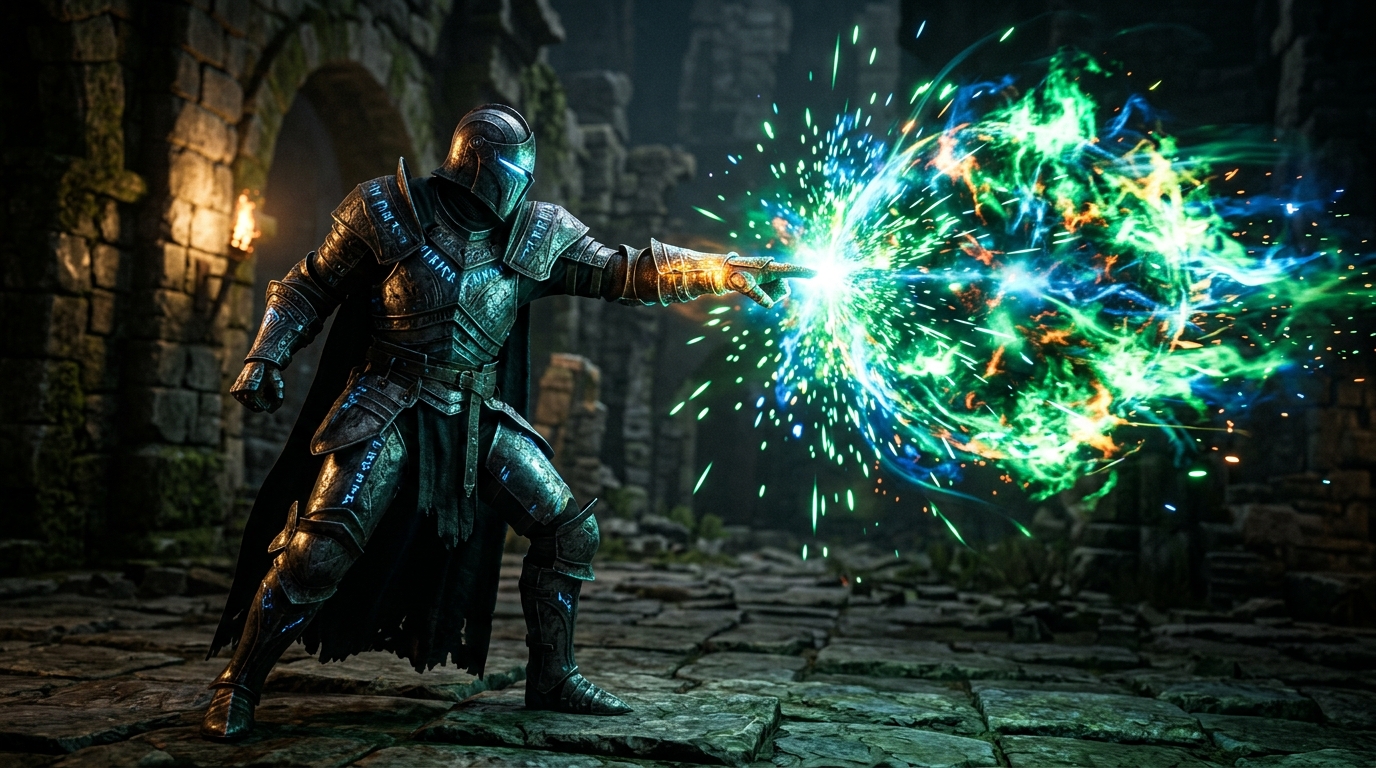
The technical complexity reaches its absolute zenith as the footage pans over a completely destroyed city, a sequence requiring astronomical compute power to render complex destruction physics and high-fidelity environmental textures at unprecedented scale. When a visibly distressed Reed Richards, played by Pedro Pascal, asks Doom in a horrified tone, “Victor. Did you do this?” the response establishes the core directive of the new system architecture. Victor responds with chilling authority, “All of you have lived storied lives. And now you must give them back.” This is followed by a megalomaniacal proclamation that “Hell answers to me. For I am Doom.” From a pure Enterprise IT operational perspective, the action sequences demonstrate a robust, highly optimized rendering framework capable of handling unprecedented character interactions. The sequence features Doctor Doom jumping from a building and landing with a devastating impact. When Thor attempts a brute-force attack with Stormbreaker, Doctor Doom blocks the weapon with just his fingers, effectively neutralizing a massive kinetic workload with minimal processing effort. After blocking the attack, Doom effortlessly blasts Thor away with magic, concluding the footage by placing his hand on the ground to resurrect a number of broken Sentinels. This resurrection sequence is a prime example of reusing legacy assets within a modernized engine, creating a hybrid environment that maximizes nostalgia while pushing extreme technical boundaries.
Rendering the Multiversal Infrastructure
Think of the Marvel Cinematic Universe’s current transition as a massive enterprise-wide cloud migration. The previous phases were a monolithic application that performed exceptionally well for a decade but eventually became too bloated, fragmented, and exceedingly difficult to maintain across varied platforms. By introducing Doctor Doom—portrayed by the historically reliable foundational node, Robert Downey Jr.—Disney is executing a strategic rollback to a more stable, proven architecture. This rollback ensures high availability and minimizes latency in consumer engagement by relying on known quantities. The integration of characters like Magneto and Professor X into this central hub demonstrates a complex API gateway bridging formerly siloed intellectual properties from the Fox acquisition seamlessly into the central mainframe.
Market Impact & Deployment
In assessing the Total Cost of Ownership (TCO) for this new phase, the financial and strategic stakes are virtually unparalleled in modern entertainment history. By casting Robert Downey Jr. as the primary antagonist, Disney is actively mitigating risk by leveraging a known entity with a highly predictable, mathematically proven conversion rate. This is the precise equivalent of a Chief Technology Officer choosing a premium, enterprise-grade server solution over a cheaper, untested startup alternative. The upfront contractual cost is immense, but the guaranteed uptime, global scaling capabilities, and reduction in brand degradation justify the astronomical expenditure.
However, a strict red team audit of the Avengers Doomsday footage and the surrounding SDCC presentation reveals significant marketing fluff and classic vaporware tactics. During the Hall H panel, Ryan Reynolds made a highly publicized surprise appearance dressed as Deadpool. Wearing a grey, denim-styled suit that he jokingly referred to as a “Canadian tuxedo,” Reynolds engaged in a scripted bit where he asked directors Joe and Anthony Russo about the status of filming and if there was room for his character to join the deployment. The Russo brothers mentioned that Avengers: Doomsday had already been shot, but strategically left the door open by stating they are open to additional photography, boldly adding they will “keep making the movie until they pry it out of our hands.” Despite this highly engaging interaction, it has not been officially confirmed that Deadpool is actually appearing in Avengers: Doomsday, and crucially, Deadpool did not appear in the exclusive footage shown to the audience. This strategic ambiguity is a calculated mechanism designed to inflate engagement metrics and dominate social media algorithms without committing hard, verifiable resources to actual product integration.
Total Cost of Ownership in IP Management
The deployment strategy surrounding the Avengers Doomsday footage signifies a broader, structural shift in how media conglomerates handle massive intellectual property portfolios. Rather than continuously iterating on new, untested characters—which requires massive R&D budgets and carries high failure rates at the box office—Marvel is optimizing its existing database of successful, high-yield models. The inclusion of the Sentinels, Gambit, and classic Fantastic Four characters acts as a diversified portfolio approach, balancing the high risk of volatile multiverse storytelling with the blue-chip stability of fan-favorite legacy characters. For analysts evaluating Reviews & Comparisons of studio performance and stock viability, this strategy indicates a newly achieved maturity in Marvel’s operational pipeline, prioritizing sustainable revenue scaling over rapid, unstable expansion.
The Consumer Translation
For the global public, the implications of this highly technical shift in studio infrastructure are profound. The average consumer is not analyzing the backend rendering pipelines, the complex IP data orchestration, or the contractual TCO of securing Robert Downey Jr. and Pedro Pascal. Instead, they are experiencing a streamlined, high-fidelity user interface that promises maximum entertainment value. The Avengers Doomsday footage acts as a major system update, effectively patching the narrative bugs, continuity errors, and “superhero fatigue” that have plagued recent phase releases. By showcasing a commanding, utterly dominant villain who effortlessly blocks Thor’s Stormbreaker with a mere finger and commands an army of resurrected Sentinels, the product offers an immediate, tangible upgrade in stakes, dramatic tension, and overall cinematic quality.
The cultural adoption of this new phase relies heavily on ecosystem interoperability. Just as modern consumers expect their smart home devices to communicate seamlessly across brands, audiences now demand that disparate superhero franchises integrate flawlessly without friction. The visual of Magneto, Professor X, Shang-Chi, and Reed Richards sharing the exact same physical space is the narrative equivalent of a perfectly unified digital ecosystem. It drastically lowers the barrier to entry by rewarding long-time users with deeply interconnected payoffs while simultaneously providing a visually spectacular, easy-to-understand entry point for new users.
Cultural Adoption and Retention Metrics
When evaluating the Consumer Tech aspects of modern cinema, the theatrical experience is ultimately a hardware interface designed for optimal software delivery. The pacing of the footage—from the quiet, menacing intensity of Doom resting on his glowing golden throne to the kinetic explosion of the Sentinel resurrection—is meticulously engineered for maximum audience retention. Disney is effectively gamifying the viewing experience, dropping strategic breadcrumbs like Reynolds’ “Canadian tuxedo” cameo to stimulate ongoing user engagement across secondary platforms like Reddit, Discord, and X (formerly Twitter). The cross-industry impact here is substantial; this level of coordinated, transmedia storytelling disrupts traditional merchandising, theme park attraction design, and global logistics, forcing competitors to drastically rethink their own overarching ecosystem strategies.
Frequently Asked Questions
Q1: Did Deadpool actually appear in the newly revealed Avengers Doomsday footage?
A1: No, Deadpool did not appear in the exclusive Avengers: Doomsday footage shown to the SDCC Hall H audience. While Ryan Reynolds made a surprise appearance on stage in a grey, denim-styled suit, his inclusion in the actual film has not been officially confirmed.
Q2: Who is playing Doctor Doom in the upcoming Avengers movie?
A2: Robert Downey Jr. is portraying Doctor Doom. The footage shows him sitting on a golden throne with green energy pulsing from the ground, fully embracing the role of the iconic villain.
Q3: Have the Russo brothers finished filming Avengers: Doomsday?
A3: The Russo brothers mentioned at SDCC that the film has already been shot. However, they explicitly stated they are open to additional photography, noting they will “keep making the movie until they pry it out of our hands.”
Q4: Which Marvel characters were seen in the exclusive footage?
A4: The footage featured a wide array of characters in a room listening to Sue Storm, including Thor, Shang-Chi, Gambit, Magneto, and Professor X, as well as Reed Richards confronting Doom in a destroyed city.
Q5: How powerful is Doctor Doom shown to be in this new footage?
A5: The footage establishes Doom as incredibly powerful; when Thor attacks him with Stormbreaker, Doctor Doom effortlessly blocks the weapon with just his fingers before blasting Thor away with magic and resurrecting broken Sentinels.
TechNode HQ Verdict: Pros, Cons & Usability
- Pro (Engineering): The seamless integration of legacy computational assets (Sentinels, Fox-era mutants) into a unified, high-fidelity rendering pipeline maximizes ROI and ensures a highly stable narrative infrastructure.
- Pro (Consumer): The return of foundational talent (Robert Downey Jr.) and the promise of massive, high-stakes cinematic crossovers provide a premium, deeply satisfying end-user experience with unparalleled production values.
- Con: The reliance on surprise stage cameos (Ryan Reynolds) without actual in-footage confirmation is a manipulative vaporware tactic designed strictly to inflate social engagement metrics without delivering concrete product features.
- Con: Managing the infinitely complex licensing and continuity API across so many characters (Gambit, Magneto, Shang-Chi) introduces a high risk of system bloat, narrative latency, and ultimate franchise instability.
Enterprise Usability: For studio executives and IP managers, the Disney/Marvel approach demonstrates a masterclass in extreme risk mitigation. By reverting to proven “legacy nodes” rather than continuing to scale unstable, unproven new characters, CTOs and franchise architects in the entertainment space should view this as a blueprint for stabilizing a turbulent product line through strategic, high-value consolidation.
Everyday Usability: For the general public, this structural pivot represents a massive upgrade to the cinematic ecosystem. Consumers should feel highly confident investing their time and ticket prices into a platform that has aggressively re-centered its focus on high-quality, interoperable storytelling backed by premium, hardware-level visual effects.