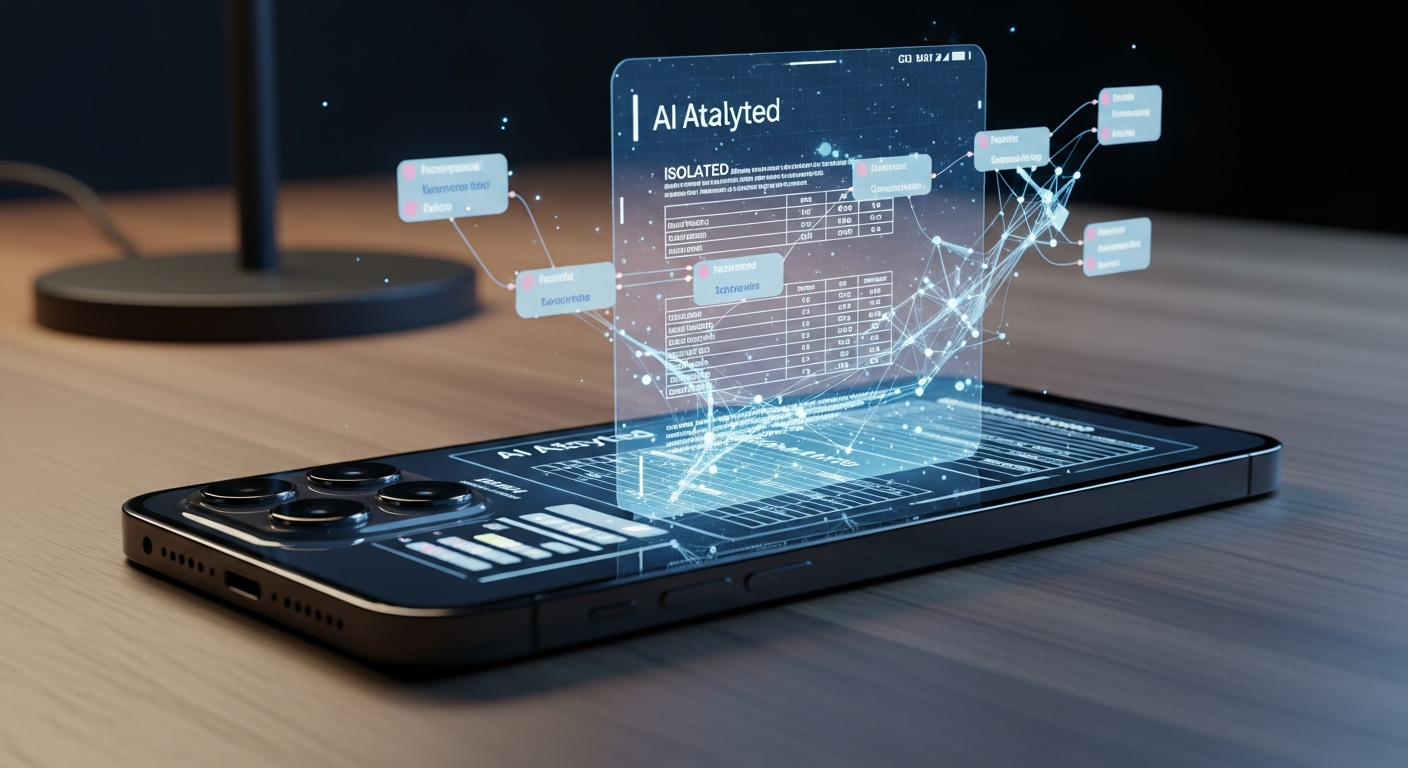
On May 19, 2026, just hours ahead of Google’s highly anticipated annual developer conference, Apple executed a calculated and highly technical preemptive strike in the artificial intelligence sector. Rather than focusing on consumer-grade chatbots or generative art, Cupertino unveiled a sweeping, system-wide overhaul of its accessibility suite, deeply integrated with Apple Intelligence. Slated for the upcoming iOS 27 release later this year, these updates represent a fundamental paradigm shift in how operating systems interface with users who have visual, auditory, or motor disabilities. By deprecating legacy, rule-based accessibility frameworks in favor of generative, on-device AI, Apple is transforming its entire hardware ecosystem—from the iPhone and Mac to the Vision Pro—into a network of autonomous assistive devices. This is not merely a software update; it is a redefinition of human-computer interaction for marginalized user bases, heavily reliant on edge computing and advanced neural architectures.
The Architectural Reality
To understand the magnitude of Apple’s iOS 27 accessibility rollout, one must look past the consumer-friendly marketing and examine the underlying silicon and software architecture. For decades, accessibility features like screen readers relied on heuristic, developer-coded accessibility trees. If an app developer failed to properly tag an image with alt-text or label a button, the screen reader would fail, leaving the user blind to the interface. Apple Intelligence eradicates this dependency by deploying an on-device Multimodal LLM that visually and semantically parses the screen and the physical world in real-time.
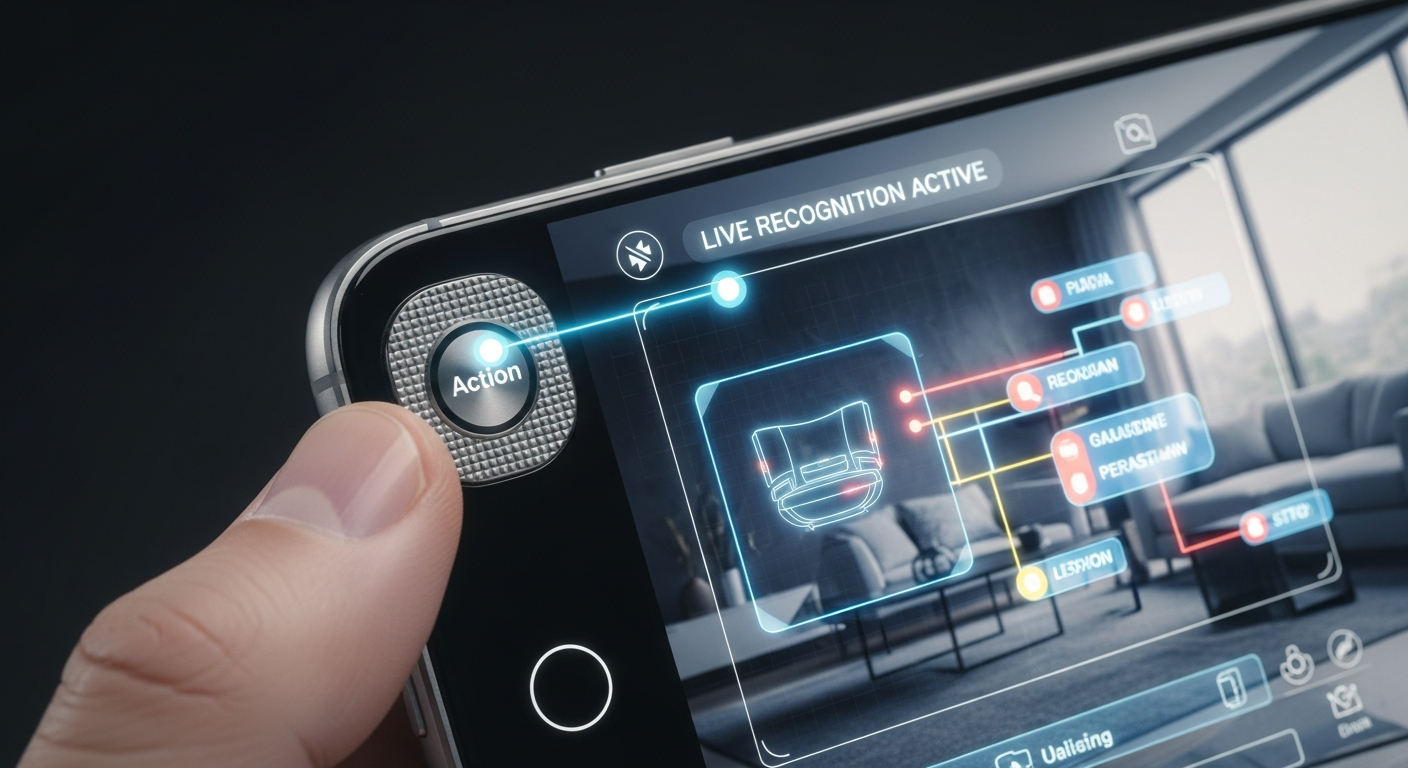
The updated VoiceOver and Live Recognition features are the most aggressive implementations of this technology. By utilizing the iPhone’s camera, Live Recognition allows users to point their device at their surroundings and receive dynamic, context-aware descriptions. The system can now look at a complex physical document—such as a utility bill—and instantly extract the total amount due and the payment deadline. Crucially, users can ask follow-up questions in natural language. This requires a continuous, real-time video feed to be processed by the iPhone’s Neural Engine. By keeping inference strictly on-device, Apple bypasses the latency of cloud round-trips, ensuring that visually impaired users receive immediate feedback while maintaining absolute cryptographic privacy over sensitive personal records.
This semantic understanding extends deeply into the operating system via the new Voice Control updates. Users are no longer forced to memorize rigid command syntaxes or rely on numbered grid overlays to navigate their devices. Because the on-device AI understands the visual layout of the screen, a user can simply issue natural language commands such as, “tap the guide about best restaurants” in Apple Maps, or “tap the purple folder” in Files. The AI bridges the gap between the user’s semantic intent and the OS’s execution layer, effectively turning the entire graphical user interface into a conversational prompt.
Furthermore, the engineering behind the updated Reader app showcases a massive leap in Document Layout Analysis (DLA). Historically, parsing scientific papers with multiple columns, embedded images, and complex data tables has been a nightmare for standard Optical Character Recognition (OCR) software. The iOS 27 Reader utilizes Apple Intelligence to semantically understand the reading order of complex layouts. It can generate on-the-fly AI summaries, translate text into native languages, and reformat the output with custom fonts and colors specifically catered to users with dyslexia or low vision. This is edge-computing at its most practical, transforming dense academic PDFs into highly accessible, personalized data streams.
Market Impact & Deployment
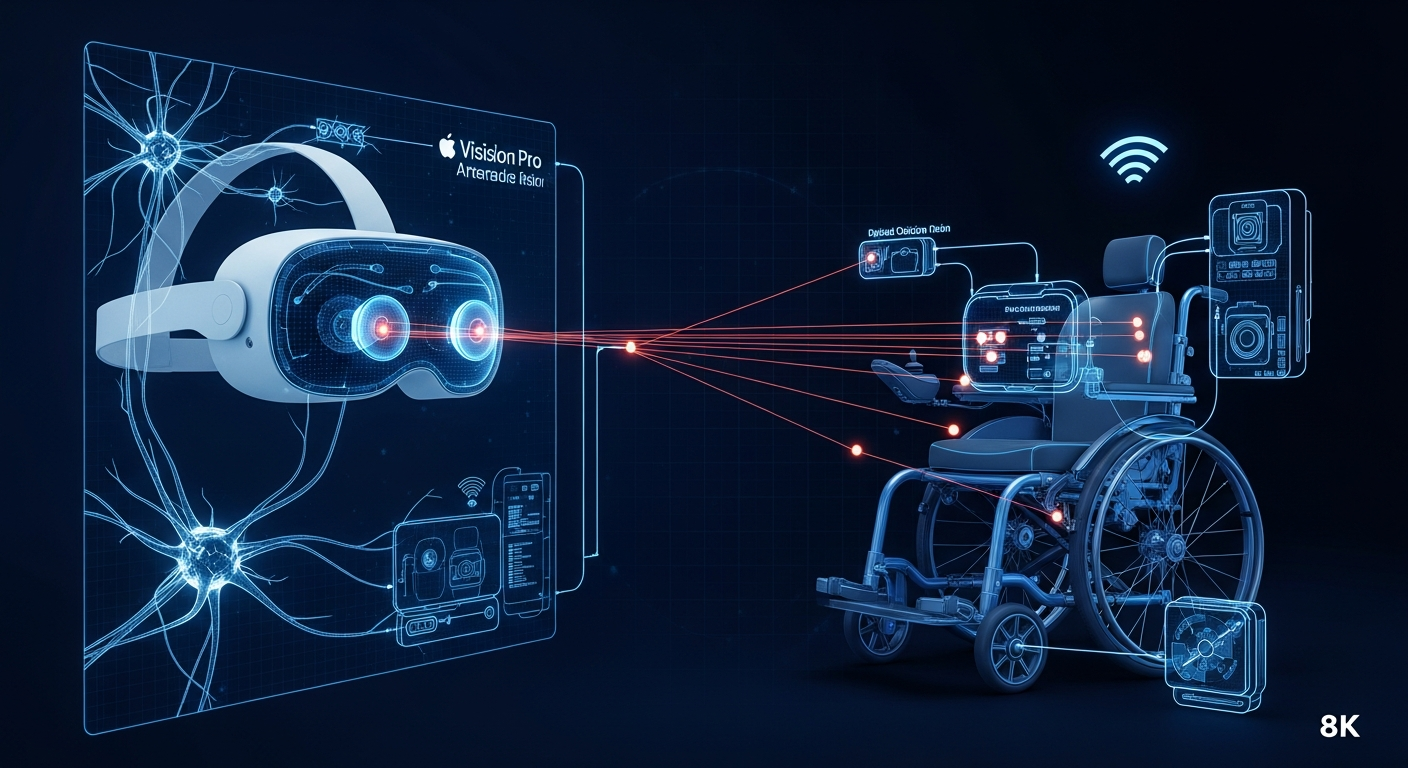
While the iPhone updates are computationally impressive, the most disruptive announcement from a hardware and market perspective is the integration of Apple Vision Pro with motorized wheelchairs. Apple is pushing the boundaries of Spatial Computing by allowing users with severe motor impairments—such as those living with ALS—to drive their wheelchairs using only their eyes. This is achieved through the Vision Pro’s advanced infrared eye-tracking telemetry, which translates micro-gaze vectors into actionable API commands.
From a deployment standpoint, this feature is launching exclusively with Tolt and LUCI alternative drive systems (ADS) in the United States, supporting both Bluetooth and wired connections. The engineering triumph here is Apple’s claim that the system works under varying lighting conditions without the need for constant recalibration—a notorious bottleneck in traditional optical tracking systems. However, an enterprise audit reveals a steep barrier to entry. The Total Cost of Ownership (TCO) for a Vision Pro headset ($3,500+) combined with a LUCI-equipped smart wheelchair represents a massive financial investment. Initially, this will likely be positioned as a premium medical-tier deployment, heavily reliant on insurance subsidies and specialized enterprise healthcare rollouts rather than immediate mass-market consumer adoption.
Strategically, Apple’s timing—announcing this just before Google’s developer conference—is a calculated flex of its ecosystem lock-in. By introducing AI-generated subtitles for uncaptioned personal videos across the iPhone, iPad, Mac, Apple TV, and Vision Pro, alongside 50-language Name Recognition and improved handoff for “Made for iPhone” hearing aids, Apple is building an impenetrable walled garden of accessibility. Competitors relying on fragmented Android hardware ecosystems will struggle to match the seamless, cross-device continuity that Apple’s vertically integrated silicon allows. Google’s TalkBack and Android accessibility suites now face the daunting task of matching Apple’s on-device generative capabilities without compromising on latency or battery life across thousands of different OEM devices.
The Consumer Translation
For the everyday consumer and marginalized user bases, the highly technical architecture of iOS 27 translates into a profound restoration of digital and physical independence. The abstraction of complex AI into simple, everyday tools is where Apple historically excels, and this update is no exception.
Consider the integration of the Magnifier app with the iPhone’s Action button. For a user with low vision, the Action button transforms the smartphone from a passive slab of glass into an active, high-contrast environmental scanner. With a single press, the user can summon the AI to analyze their surroundings, and use voice commands like “zoom in” or “turn on flashlight” without ever needing to navigate a touchscreen menu. This frictionless interaction model removes the cognitive and physical load of operating a smart device, making the technology practically invisible.
For the deaf and hard-of-hearing community, the introduction of universal AI-generated subtitles for personal media is a quiet revolution. While platforms like YouTube have offered auto-captions for years, personal videos recorded on an iPhone or clips received from family members in iMessage have remained inaccessible black boxes. By generating these subtitles locally on the device, users can finally participate in the sharing of personal, uncaptioned family moments without sacrificing privacy to a cloud server. Coupled with the expansion of Name Recognition to 50 languages—which alerts users via haptics or visual cues when someone calls their name in a crowded room—Apple is fundamentally altering how users interact with their physical and social environments.
TechNode HQ Verdict: Pros, Cons & Usability
- Pro (Engineering): The utilization of on-device Multimodal LLMs eliminates cloud latency, ensuring real-time, privacy-first processing for critical tasks like Live Recognition and financial document parsing.
- Pro (Consumer): Natural language Voice Control and the Action button Magnifier integration drastically lower the barrier to entry, offering unprecedented independence for users with visual and motor disabilities.
- Con: The Vision Pro wheelchair integration is severely bottlenecked by its exclusivity to Tolt and LUCI systems in the U.S., alienating a massive global market of wheelchair users.
- Con: Continuous background use of the camera and Neural Engine for Live Recognition will likely result in aggressive battery drain and thermal throttling, potentially restricting these features to the newest flagship hardware.
Enterprise Usability: For CTOs in the healthcare, accessibility, and inclusive workplace sectors, iOS 27 represents a mandatory upgrade path. The ability to deploy iPhones as secure, offline assistive devices for employees with disabilities simplifies compliance and enhances productivity. However, the Vision Pro wheelchair integration should be treated as an experimental, high-cost pilot program until broader alternative drive system (ADS) compatibility is achieved.
Everyday Usability: For consumers within the Apple ecosystem, this is a monumental quality-of-life upgrade that justifies the transition to newer hardware. Users with disabilities should absolutely leverage these tools upon the release of iOS 27, as the shift from rule-based accessibility to generative AI assistance will fundamentally improve daily digital navigation and physical world interaction.
Sources & Citations:
Original Claim via: techcrunch
Official Handle: @TechCrunch
Topics Explored: Apple Intelligence, iOS 27, Vision Pro, Accessibility Tech, On-Device AI