The Architectural Reality: Inside Omni Flash and Flow

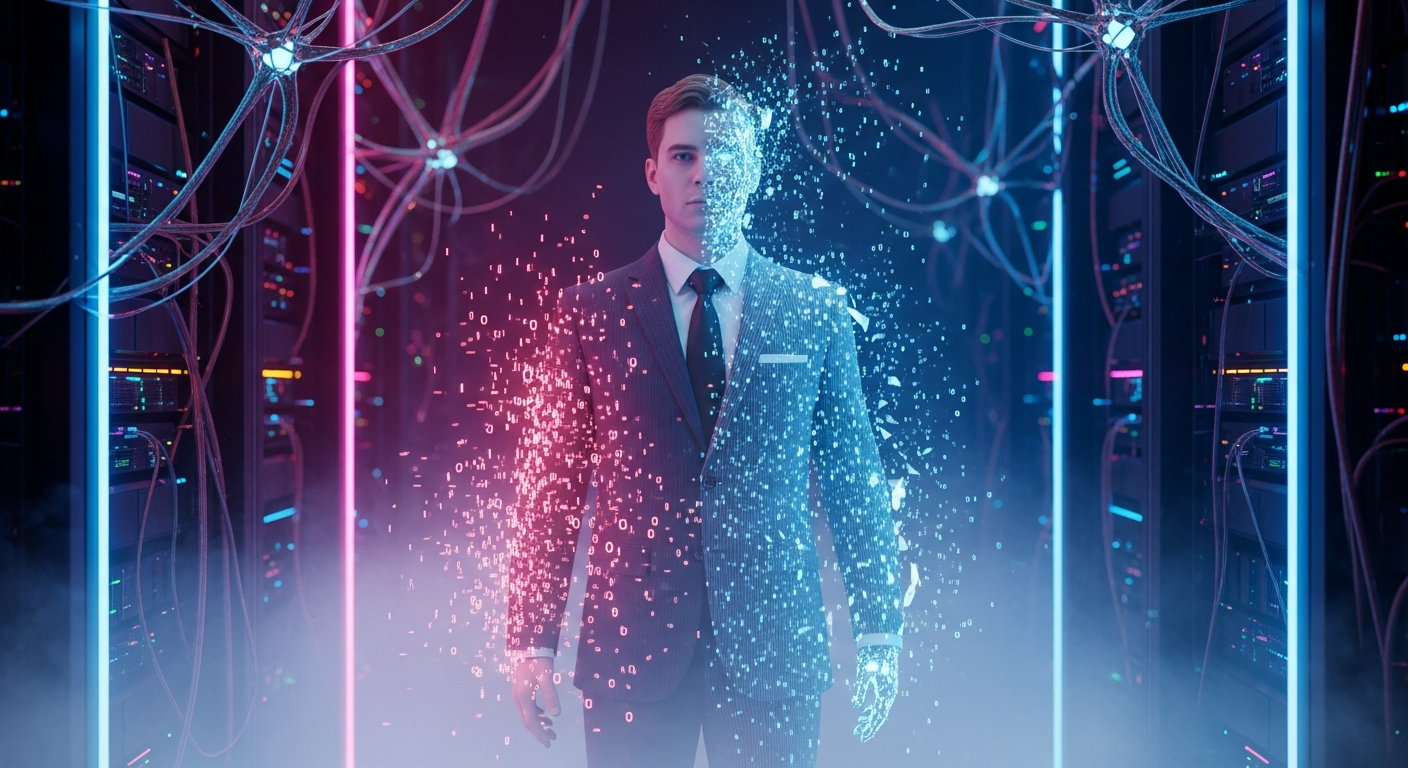
A wave of undeniable déjà vu washed over the audience at Google I/O 2026 in Mountain View, California, as Elias Roman, Vice President of Product Management at Google Labs, stepped onto the stage. The demonstration was brief but paradigm-shifting: Roman had previously scanned his likeness to create a flawless digital clone. With a few keystrokes, he inserted this synthetic version of himself into a fully AI-generated video clip, standing in front of a dumpster fire, looking and sounding exactly like the real man on stage. The uncanny valley has not just been bridged; it has been paved over and commercialized. Google has officially domesticated the deepfake.
At the core of this breakthrough is the Gemini Omni Flash model, the highly anticipated successor to Google’s Veo video-generation architecture. For enterprise architects and machine learning engineers, the leap from Veo to Omni Flash represents a fundamental restructuring of how temporal consistency is handled in diffusion models. Previous iterations of Google Flow—the company’s experimental AI video and image generation tool—suffered from a well-documented “warping” effect. Characters would lose structural integrity across successive frames, melting into the background or mutating when the camera angle shifted. Omni Flash eradicates this bottleneck.
Drawing heavily from the spatial reasoning capabilities developed in Google’s “Nano Banana” image-creation model, Omni Flash embeds a richer, physics-aware context into the video generation pipeline. When a user creates an “avatar,” they are not merely pasting a 2D face onto a 3D wireframe. The onboarding process requires users to scan a QR code, which hands the session over to their mobile device. The user is then prompted to record themselves from multiple angles while reading a specific string of numbers aloud. This multi-modal biometric capture allows Google’s edge-to-cloud infrastructure to build a highly accurate latent representation of the user’s vocal tract, facial micro-expressions, and skeletal rigging. The result is an avatar that maintains strict character consistency, even when the user requests radical environmental changes—like swapping a background or changing the color of a shirt—via natural language prompts.
“Google has never had a product line for creative work before,” Roman noted during the keynote. “Productivity, definitely. Developers, absolutely. Video consumption, yes. Not for creative work.” Yet, beneath the veneer of a “creator tool,” Flow is rapidly evolving into a sophisticated orchestration engine. Google is introducing “vibe coding” to the platform—a framework where users can deploy automated software taskmasters, or AI agents, using plain English. Instead of manually editing timelines, a user can instruct Flow to generate a video, apply a specific visual style, and automatically sort similarly styled clips into designated folders. It is the abstraction of the entire post-production pipeline into a single chat interface.
Market Impact & Deployment: The Platform Wars and the Fall of Sora

To understand the sheer magnitude of Google’s deployment strategy, one must look at the smoldering wreckage of its competitors. Just last year, OpenAI launched its highly publicized Sora app, positioning it as an AI-first social media platform where users could generate and share synthetic clips of themselves and others. It was a technological marvel, but a product management disaster. Plagued by exorbitant compute costs, moderation nightmares, and a chaotic user experience, OpenAI quietly wound the app down after less than seven months. The wild west of synthetic media proved too volatile to sustain as a standalone social network.
Google, however, has learned from OpenAI’s hubris. Rather than building a new, unproven social network, Google is injecting Omni Flash directly into its existing, dominant ecosystems: the Gemini app, YouTube Shorts, and Google Flow. By domesticating the technology within a walled garden, Google is mitigating the friction of user adoption. Furthermore, Google has implemented a strict, hardcoded safeguard: users can only generate AI versions of themselves. The system explicitly blocks the creation of third-party deepfakes, a crucial guardrail designed to prevent the platform from devolving into an impersonation engine.
For enterprise IT leaders and Chief Technology Officers, the implications of Gemini Omni Flash extend far beyond social media influencers. The underlying Gemini 3.5 Flash architecture is designed for unprecedented scale and cost-efficiency. Google reports that high-volume enterprise clients processing trillions of tokens could see cost reductions exceeding $1 billion annually by migrating to the 3.5 Flash ecosystem. When applied to video generation, this means corporate communications, localized marketing campaigns, and personalized sales outreach can be automated at a fraction of the traditional cost. A CEO can scan their avatar once and generate weekly, multi-lingual video updates for global teams without ever stepping foot in a studio. Meta has already toyed with this concept, rolling out an AI feature for Instagram Reels that translates languages and adjusts creators’ lip movements, but Google’s Omni Flash offers a full-body, environment-agnostic solution.
Security, Provenance, and the SynthID Mandate
As synthetic media transitions from a fringe novelty to a core enterprise utility, the security and provenance of digital identity become paramount. Google’s primary defense mechanism against the weaponization of Flow is the mandatory inclusion of the SynthID watermark. Every video generated by the Omni model, including those featuring user avatars, is embedded with this cryptographic signature. SynthID operates at the pixel and audio-waveform level, making it theoretically imperceptible to the human eye and ear, yet easily detectable by algorithmic scanners.
However, from a Red Team perspective, the architecture is not without its vulnerabilities. While Google restricts avatar creation to “only yourself,” the biometric onboarding process—relying on a mobile camera and a spoken string of numbers—could potentially be spoofed by a sufficiently advanced bad actor. If an attacker holds up a high-resolution OLED screen displaying a pre-recorded, high-fidelity deepfake of a politician or a CEO reading the required numbers, will the edge-device sensors detect the spoofing? Google has undoubtedly trained its models to detect screen refresh rates and depth anomalies, but the arms race between generative spoofing and biometric liveness detection is far from over.
Furthermore, while SynthID is robust within the confines of YouTube and Google Search, the broader internet remains a fractured landscape. Open-source models and adversarial networks are constantly being developed to strip, compress, or obfuscate watermarks. If a bad actor downloads a SynthID-watermarked video from Flow, runs it through a localized noise-injection filter, and uploads it to an unmoderated platform, the provenance chain breaks. Google is attempting to solve a societal trust issue with a technical patch, and while it is the best patch currently available, it is not a silver bullet.
The Consumer Translation: Vibe Coding and the Creator Economy
For the everyday consumer and the global creator economy, the introduction of Google Flow’s avatars is nothing short of an existential shift. We are witnessing the death of the traditional “shoot.” As Elias Roman bluntly stated, “This is for creators who want to bring themselves into their content but don’t want to have to shoot themselves.” The friction of content creation—buying cameras, setting up lighting, doing makeup, and performing multiple takes—has been reduced to a single, upfront biometric scan.
A creator can now wake up, grab their phone from their nightstand, and use “vibe coding” to type: “Generate a 60-second vertical video of me standing in a neon-lit Tokyo alleyway, explaining the latest tech news in a sassy tone, wearing a cyberpunk leather jacket.” Within minutes, Omni Flash will render a hyper-realistic video that looks and sounds exactly like them. They never had to get out of bed.
While this streamlines production pipelines and democratizes high-end visual effects, it is simultaneously accelerating a profound psychological crisis among audiences. Generative AI is increasingly polarizing viewers. The “trust gap” is widening. When audiences realize that their favorite creators are no longer physically present in their own videos, the parasocial relationship fractures. Viewers are beginning to view synthetic videos as inauthentic, sterile, or misaligned with human values. The very tool designed to boost creator output may ultimately alienate the audience it was built to engage. If everything can be faked effortlessly, the premium on raw, unedited, and verifiable human reality will skyrocket.
TechNode HQ Verdict: Pros, Cons & Usability
- Pro (Engineering): The transition to the Gemini Omni Flash model eradicates the temporal warping issues of previous generations, offering unprecedented character consistency and spatial reasoning in synthetic video.
- Pro (Consumer): “Vibe coding” and AI agents democratize complex video production, allowing creators to generate high-fidelity, personalized content without the need for physical cameras, lighting, or studio time.
- Con: The biometric onboarding process, while restricted to “only yourself,” presents a potential attack vector for sophisticated spoofing if liveness detection algorithms fail against high-res digital masks.
- Con: The proliferation of effortless self-deepfakes will exacerbate audience polarization, widening the trust gap and potentially devaluing the perceived authenticity of the creator economy.
Enterprise Usability: CTOs and enterprise marketing teams should immediately begin piloting Google Flow and Gemini Omni Flash for internal communications and localized marketing. The ability to generate consistent, multi-lingual video updates from a single executive avatar offers massive TCO reductions. However, strict internal governance policies must be established regarding when and where synthetic avatars are deployed to maintain corporate trust.
Everyday Usability: For individual creators and consumers, Google Flow is a powerful, frictionless tool that will inevitably become the standard for YouTube Shorts and social media content. You should adopt it to stay competitive in output volume, but be highly transparent with your audience about your use of AI avatars to prevent backlash and maintain authenticity.
Sources & Citations:
Original Claim via: wired
Official Handle: @wired
Topics Explored: Google Flow, Gemini Omni Flash, Synthetic Media, Deepfakes, AI Agents