
Key takeaways
- Foundation Future Industries secured $24M in Pentagon contracts for testing Phantom MK-1 robots.
- The company’s CEO Sankaet Pathak indicated active exploration of lethal kinetic solutions.
- Eric Trump serves as an investor and chief strategic adviser for Foundation Future Industries.
- Phantom MK-1 robots have already been deployed for logistics in Ukraine’s combat theater.
- Over $3.2 billion in direct government business is linked to Trump family defense investments.
The Architectural Reality of Foundation Future Industries
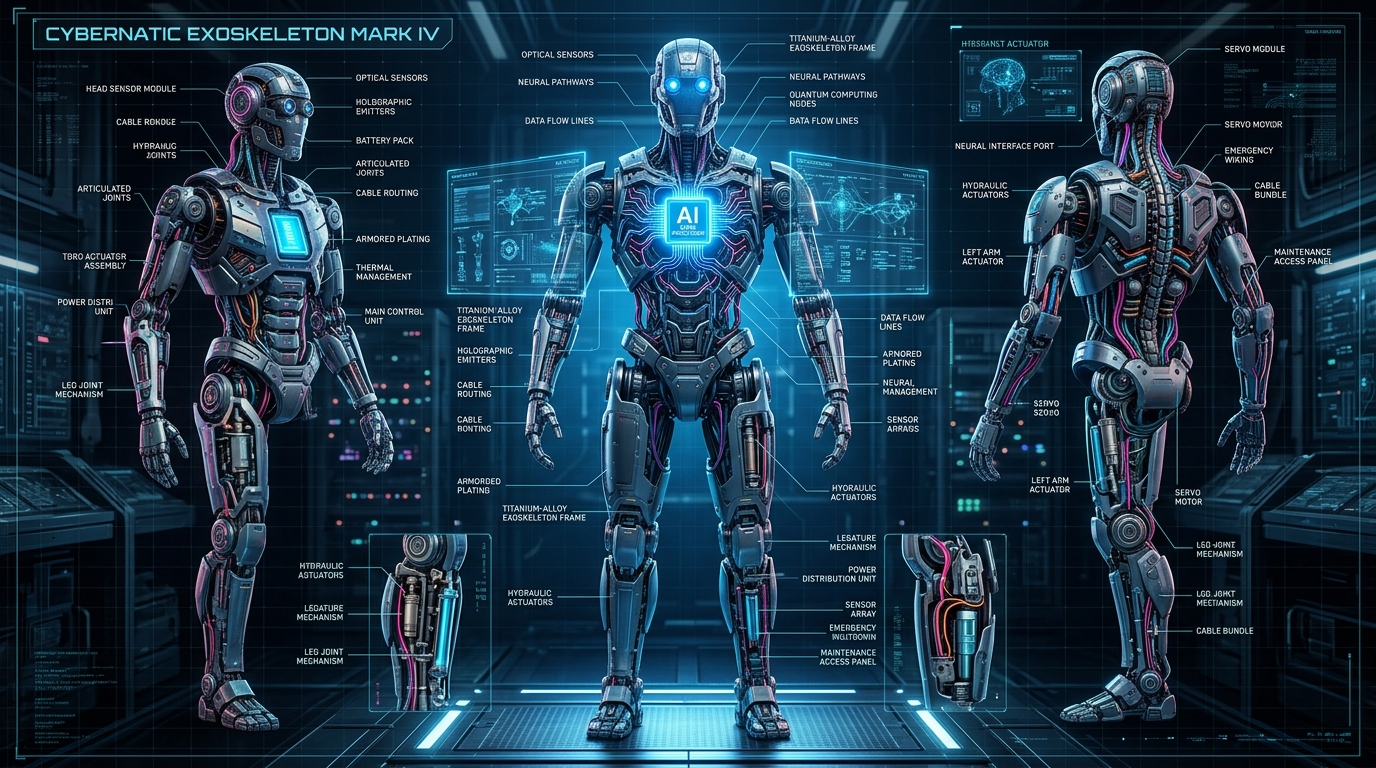
The global defense technology sector is currently experiencing a profound paradigm shift, spearheaded by heavily capitalized startups like Foundation Future Industries (FFI). At the epicenter of this transformation is the aggressive integration of advanced artificial intelligence with physical robotics, a convergence that promises to fundamentally redefine the operational capabilities, structural frameworks, and ethical boundaries of modern military forces. Foundation Future Industries, a rapidly ascendant defense contractor, is leading this charge with high-profile financial and political backing. Most notably, Eric Trump serves as an investor and the chief strategic adviser for the company. Trump has publicly expressed that the United States “better be winning” the global AI race, explicitly framing advanced robotics not as a speculative technological luxury, but as an urgent geopolitical necessity. The company’s flagship hardware platform, the Phantom MK-1 humanoid robot, represents the cutting edge of this militarized vision. By moving beyond traditional wheeled or tracked unmanned ground vehicles (UGVs), the Phantom MK-1 leverages a bipedal, humanoid architecture designed to navigate the exact same environments, stairwells, and trenches built for human soldiers. This alters how global powers perceive the future of automated warfare and the role of AI machine learning applications in modern defense infrastructure.
To fully understand the reality of what this organization is building, one must look past the superficial, media-driven comparisons to science fiction blockbusters. The Phantom MK-1 is essentially a highly complex, ruggedized network of hardware silicon and sensory arrays, governed by localized, low-latency edge computing systems. In contested battlefield environments, where secure network connectivity is often severely degraded or actively jammed by enemy electronic warfare, a robotic asset cannot rely on cloud-based processing to make split-second operational decisions. Therefore, these autonomous systems utilize localized AI decision engines that process terabytes of data from optical cameras, thermal imaging, and LiDAR sensors in absolute real-time. This onboard processing allows the Phantom MK-1 to achieve dynamic bipedal balance, complex object recognition, and precise spatial awareness entirely autonomously. To use an executive abstraction: Think of the Phantom MK-1 as a self-driving forklift equipped with a military-grade decision engine—like an automated global supply chain router, but physicalized, armed, and heavily armored for the world’s most hazardous environments.
Achieving this level of seamless hardware and software integration requires massive, sustained capital investment, which the company has effectively secured through federal channels. The firm recently landed $24 million in direct contracts with the United States Department of Defense. While these initial government deals are officially earmarked for non-lethal applications—such as infrastructure inspection, complex supply logistics, and specialized weapons handling across several military branches—they provide the critical, taxpayer-funded capital needed to mature the underlying technology. The engineering synthesis required to allow a bipedal robot to carry heavy supply crates over uneven, debris-strewn terrain is immense. It involves rapid iterative advancements in high-torque electrical actuators, localized thermal management systems to prevent overheating during sustained operations, and robust cyber-physical security protocols to prevent enemy electronic hijacking. By validating these core systems through lucrative government logistics contracts, the enterprise is quietly, yet systematically, building the foundational infrastructure necessary for far more aggressive autonomous capabilities in the near future.
Market Impact & Deployment: From Logistics to Kinetic Solutions
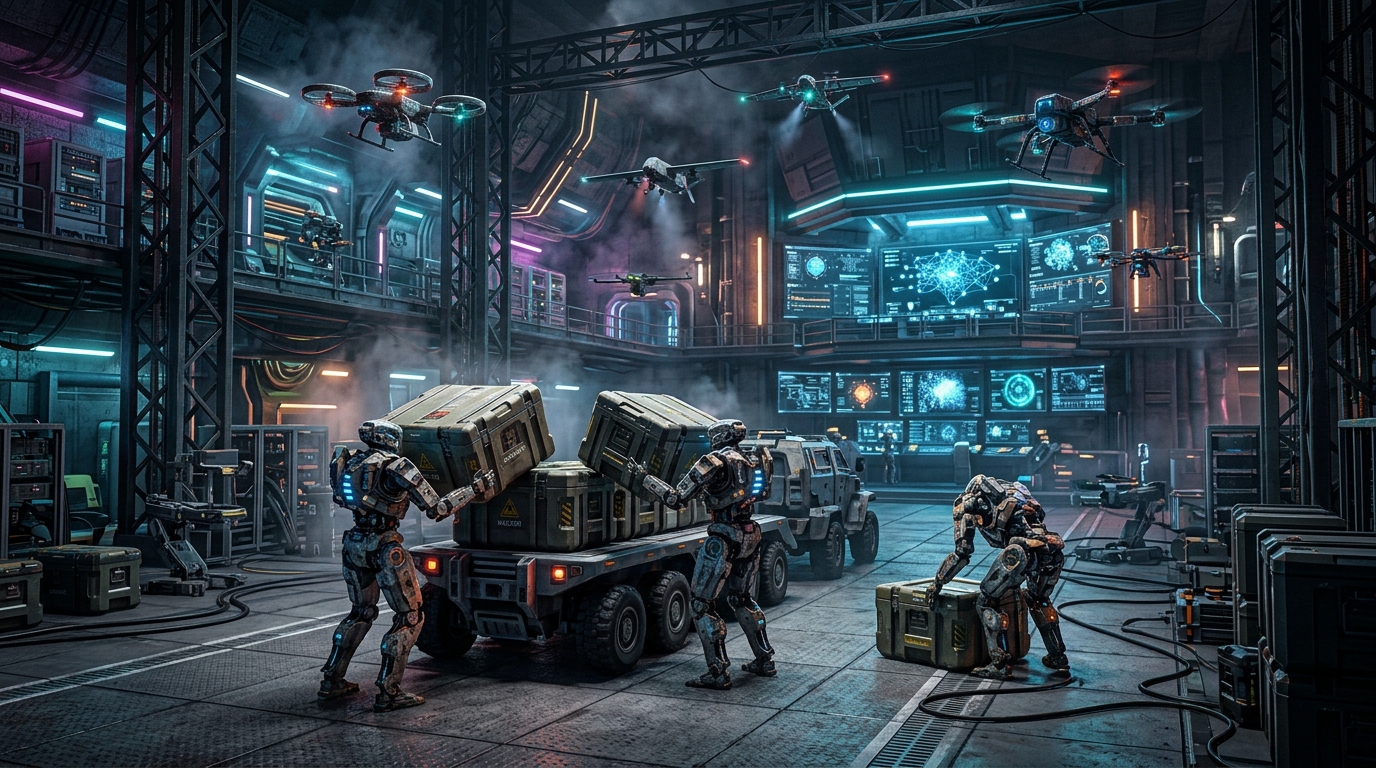
The theoretical capabilities of the Phantom MK-1 are already being aggressively tested in actual combat theaters. According to verified reports, Foundation Future Industries has deployed these humanoid robots in Ukraine, utilizing them for critical logistics tasks in highly hazardous areas. In modern warfare, the “last mile” of supply delivery—moving ammunition, medical supplies, and rations to front-line trenches—is incredibly dangerous, often resulting in heavy human casualties. Deploying autonomous humanoids to absorb this severe risk presents a compelling Total Cost of Ownership (TCO) argument for military commanders. The return on investment for the Pentagon is measured not just in allocated dollars, but in human lives saved and operational continuity maintained under heavy artillery fire. However, the scope of these deployments is rapidly expanding beyond mere logistics and backend support.
The pivot from support roles to active combat engagement is becoming increasingly explicit, shedding light on the company’s true long-term roadmap. Sankaet Pathak, CEO of Foundation Future Industries, recently indicated that the company is actively exploring “kinetic solutions”—the sanitized military terminology for lethal force. As of July 2026, the company officially announced concrete plans to equip its humanoid robots with lethal weapons systems. In numerous media interviews, Pathak has consistently defended this aggressive trajectory, arguing that a utopian society must be defended against those who wish to destroy it, and suggesting that autonomous armed robots are the most logical, efficient mechanism for that defense. This transition from backend logistics to frontline weaponization marks a significant, irreversible escalation in the commercial defense technology sector, shifting the entire market landscape toward highly autonomous, combat-ready enterprise IT and hardware platforms that drastically alter the theater of war.
The financial and political implications of this shift are staggering, particularly when viewed through the lens of capital allocation and high-level government connections. Foundation Future Industries is not operating in a vacuum; it is part of a broader trend of defense technology investments tied directly to influential political figures. Both Eric Trump and his brother Donald Trump Jr. have heavily invested in the defense and AI-for-defense sectors, including adjacent companies like the drone manufacturer Powerus. Recent oversight analysis has highlighted the breathtaking scale of this market capture, noting that the Trump sons’ investments in defense technology companies are linked to an estimated $3.2 billion in direct government business, with an additional $3.1 billion in lucrative contract options on the horizon. While White House and Pentagon officials maintain that there is nothing inappropriate about these investments, Democratic members of the U.S. House of Representatives’ Committee on Oversight and Government Reform have raised severe concerns regarding potential conflicts of interest, self-dealing, and the appearance of corruption in how these highly profitable federal contracts are awarded.
The Consumer Translation: Ethics and Automation
For the general public, the rapid advancement of humanoid robotics equipped with lethal capabilities evokes a visceral, psychological reaction. The imagery of autonomous “death machines” or “killer robots” is deeply embedded in consumer consciousness through decades of dystopian science fiction. While CEO Sankaet Pathak attempts to dismiss these “Terminator” comparisons by insisting that the Phantom MK-1 is designed strictly for precise, complex, and sensitive military missions rather than wreaking unguided havoc, the reality of deploying autonomous lethal force remains highly controversial. When a machine is granted the ultimate authority to identify, target, and eliminate a human being without a human-in-the-loop, the ethical boundary of modern society is fundamentally breached.
This unprecedented technological leap has drawn fierce criticism from a wide, bipartisan coalition of ethicists, legal scholars, and human rights experts. The core argument against companies like Foundation Future Industries is that lethal autonomous weapons systems (LAWS) cannot adequately adhere to the international laws of armed conflict, specifically the principles of distinction and proportionality. Can an edge-computed AI model, no matter how computationally advanced, reliably distinguish between an active combatant and a civilian in a chaotic, fast-moving urban environment? The red team audit of Foundation Future Industries’ public relations strategy reveals a deliberate attempt to sanitize this grim reality. By masking the development of armed humanoids behind the sterile corporate language of “kinetic solutions” and “logistics,” the company attempts to bypass the profound moral implications of its technology. The public is entirely justified in questioning the safety guardrails, legal accountability mechanisms, and transparency of a system where a privately funded startup, backed directly by the President’s son, is developing the very means for automated lethal force.
Furthermore, the societal translation of this technology extends far beyond the active battlefield. The normalization of armed, autonomous humanoids in military settings sets a deeply concerning precedent for domestic law enforcement, border security applications, and private corporate security. If the public accepts the deployment of the Phantom MK-1 in foreign combat zones as an operational necessity, the barrier to deploying similar, perhaps “less-lethal,” autonomous systems in domestic urban centers is significantly lowered. The surveillance, facial recognition, and crowd-control capabilities inherent in these mobile platforms could profoundly impact civil liberties, creating a severe chilling effect on public assembly and personal privacy across the globe.
Cross-Industry Disruption: Beyond the Battlefield
While Foundation Future Industries is currently laser-focused on securing military defense contracts, the underlying technological breakthroughs required to make the Phantom MK-1 operational will inevitably disrupt multiple civilian industries. The engineering challenges currently being solved in the combat trenches of Ukraine—such as dynamic bipedal balancing on unpredictable, uneven terrain, real-time spatial mapping without GPS reliance, and hardened edge-AI inference—are directly applicable to heavy commercial sectors.
In the critical realm of disaster recovery and search-and-rescue, humanoid robots could navigate collapsed buildings, hazardous chemical spills, or high-radiation nuclear environments where human first responders cannot safely operate. The exact same high-torque actuators and sensory fusion that allow a Phantom MK-1 to carry heavy ammunition to a front-line trench can be utilized to rapidly extract victims from concrete rubble or deliver emergency medical supplies in extreme weather conditions. Similarly, in global industrial manufacturing and complex logistics, the deployment of robust humanoids could alleviate severe labor shortages in physically demanding and dangerous roles. Tasks such as deep-sea oil rig maintenance, high-voltage electrical grid repair, or hazardous material handling in chemical processing plants could be completely automated. The dual-use nature of this technology ensures that the massive defense investments funneled into Foundation Future Industries will ultimately yield intellectual property with vast, multi-billion dollar commercial licensing potential across the civilian economy.
Frequently Asked Questions
Q1: What is Foundation Future Industries building?
A1: Foundation Future Industries is a startup developing humanoid robots, notably the Phantom MK-1, for military applications. These robots are currently focused on logistics and reconnaissance but are slated for potential weaponization.
Q2: How much government funding has Foundation Future Industries received?
A2: The company has secured $24 million in Pentagon contracts to test its humanoid robots across various military branches for inspection and logistics tasks.
Q3: Are these robots currently used in active combat?
A3: Yes, Foundation Future Industries has reportedly tested its Phantom robots in the combat theater of Ukraine, where they have been deployed for logistics in hazardous areas.
Q4: What is Eric Trump’s connection to this company?
A4: Eric Trump acts as an investor and the chief strategic adviser for the company, and has publicly advocated for the necessity of advanced robotics in the US AI race.
Q5: Will these robots be armed with lethal weapons?
A5: The company plans to equip its humanoid robots with lethal weapons systems, with CEO Sankaet Pathak confirming active exploration of “kinetic solutions”.
TechNode HQ Verdict: Pros, Cons & Usability
- Pro (Engineering): Eliminates the risk to human life in the “last mile” of highly hazardous combat logistics.
- Pro (Consumer): The underlying technology can be spun off for life-saving civilian disaster recovery and search-and-rescue.
- Con: Automating lethal force without a human-in-the-loop creates massive, unprecedented ethical and legal liabilities under international law.
- Con: Rapid domestic deployment of these platforms could severely erode civil liberties and normalize mass autonomous surveillance.
Enterprise Usability: For defense contractors and military CTOs, the Phantom MK-1 represents a high-yield investment in force multiplication. Deploying edge-AI robotics for logistics significantly lowers operational human risk, though procurement must navigate the complex optics of political oversight and self-dealing allegations.
Everyday Usability: For the general public, this technology remains entirely out of reach and strictly confined to military testing. However, consumers should remain highly vigilant regarding the inevitable domestic policy shifts required if these autonomous platforms transition from foreign battlefields to local law enforcement.