The Architectural Shift
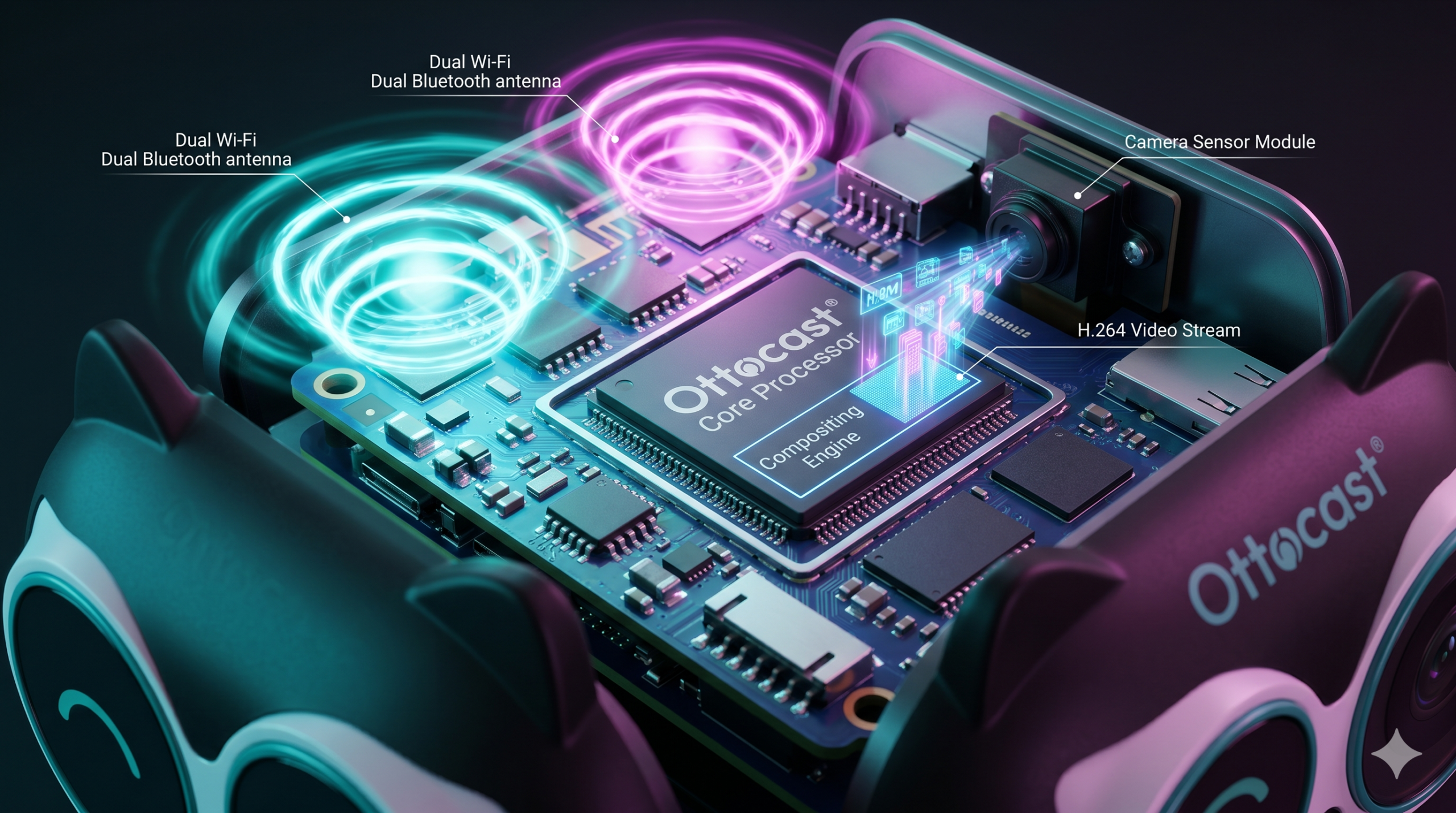
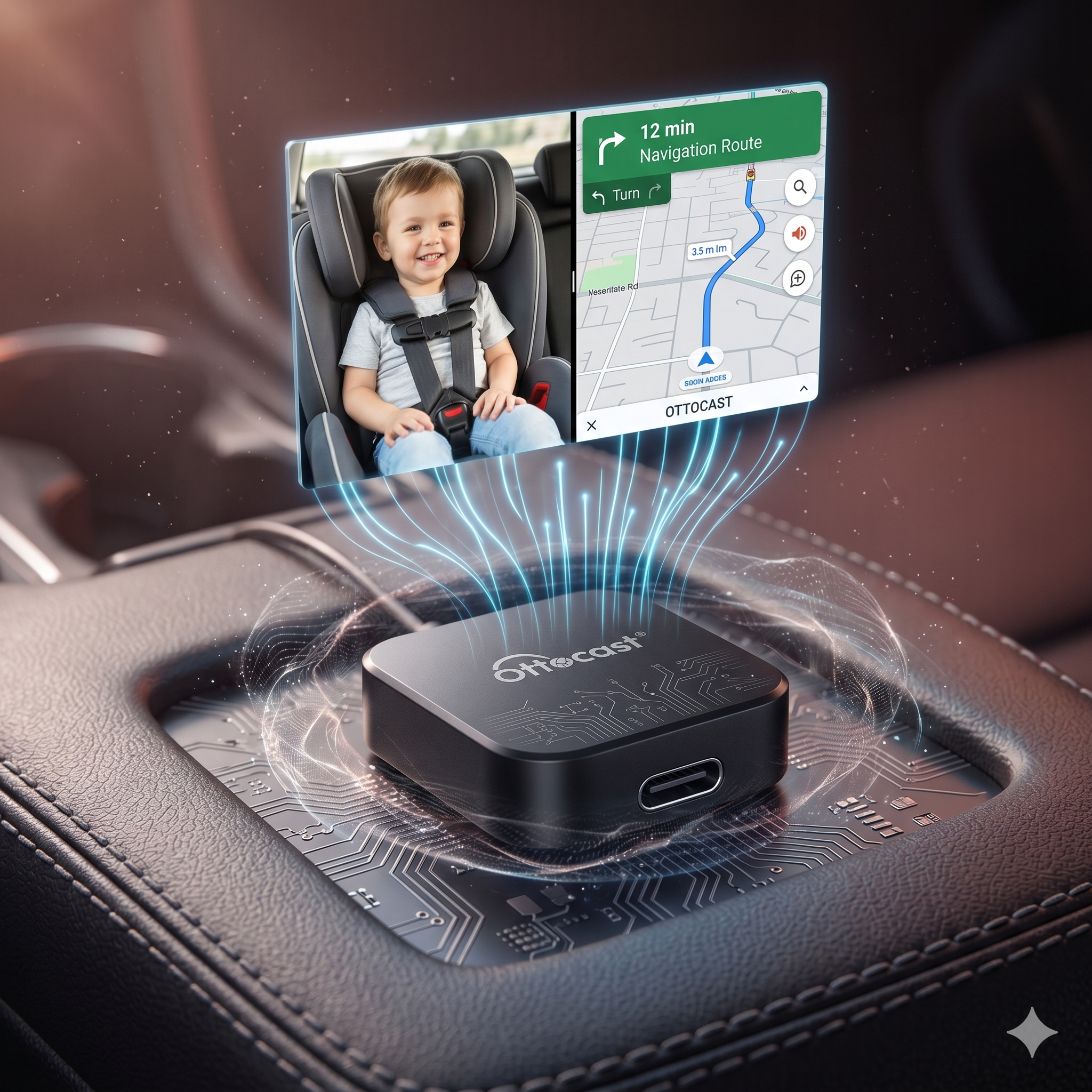
The Ottocast Cabin Care Wireless CarPlay Adapter isn’t just another plug-and-play dongle—it’s a tightly integrated, dual-purpose embedded system that redefines how aftermarket automotive tech interfaces with factory infotainment. At its core lies a system-on-chip (SoC) likely based on a MediaTek or Realtek automotive-grade platform, engineered to handle two high-bandwidth tasks simultaneously: wireless Apple CarPlay emulation and real-time video encoding. The device leverages Bluetooth Low Energy (BLE) for initial device discovery and pairing, a protocol chosen for its low power draw and fast handshake capabilities. Once paired, the system switches to a dedicated 2.4GHz Wi-Fi network—either in peer-to-peer or soft-AP mode—to stream both the CarPlay interface and the 150-degree cabin camera feed.
The camera unit itself is a marvel of miniaturized imaging tech. It houses a 1/3-inch CMOS sensor with a wide-angle lens and an IR-cut filter that automatically engages in low-light conditions. Paired with an array of infrared LEDs, it delivers functional night vision without blooming or overexposure—a persistent issue in budget cabin cams. The video is encoded in H.264, a compression standard that balances quality and bandwidth, allowing for sub-200ms latency when streamed over Wi-Fi to the adapter. This low-latency pipeline is critical; any delay greater than 250ms would make the feed feel “laggy” and unsafe for real-time monitoring.
Where the engineering gets truly intricate is in the UI compositing layer. The adapter doesn’t just stream two separate feeds—it actively merges them into a single display output that the car’s head unit interprets as a modified CarPlay session. In split-screen mode, the system resizes the CarPlay interface to approximately 60% of its native width, allocating the remaining 40% to the camera feed. This resizing is handled by a GPU-accelerated scaler on the SoC, but it introduces a critical flaw: touch input coordinates are not perfectly mapped. The native CarPlay UI assumes full-screen touch zones, but the Ottocast firmware overlays its own UI elements—a back arrow and a branded owl icon—precisely in the top-left and top-right corners, where Apple places essential controls like the back button in Spotify or the exit prompt in Google Maps. This creates a hardware-level UI conflict that no software update can fully resolve without breaking CarPlay compliance.
Further complicating the architecture is the single-phone memory limitation. The device stores only one Bluetooth and Wi-Fi profile, meaning it auto-connects exclusively to the last-paired iPhone. This design choice suggests cost-cutting at the firmware level—multi-profile storage would require additional flash memory and more complex pairing logic. From an enterprise IT perspective, this is a glaring oversight. In a shared vehicle environment, such as a family SUV or corporate fleet, the need to manually re-pair every time a new driver enters the car undermines the promise of seamless connectivity. The lack of Android Auto support also points to a narrow development focus—likely due to Apple’s more open (though still restricted) wireless CarPlay protocol compared to Google’s tightly controlled Android Auto ecosystem.
Enterprise Market Impact & TCO
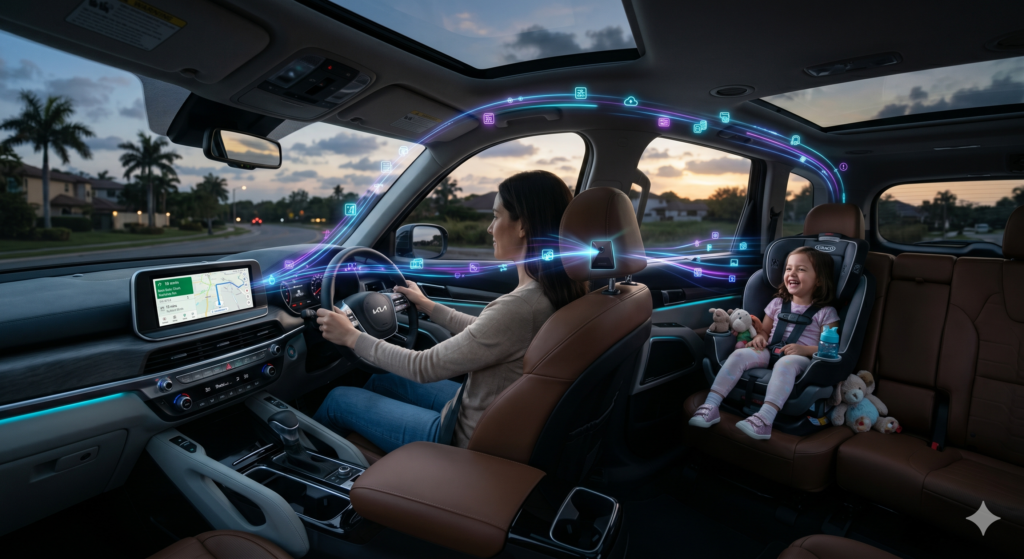
While marketed as a parenting gadget, the Ottocast Cabin Care has latent implications for enterprise mobility, fleet management, and shared transportation services. Imagine a ride-hailing platform integrating cabin monitoring for passenger safety, or a senior care service using real-time back-seat feeds to ensure clients are secure during transit. From a Total Cost of Ownership (TCO) standpoint, however, the device presents more friction than value for large-scale deployment.
At $94–$140 per unit, the upfront cost is substantial for fleet operators. A 50-vehicle fleet would face a $4,700–$7,000 capital outlay—not including labor for installation and ongoing support. More concerning is the operational overhead. The single-phone pairing limitation means each driver must manually re-pair upon shift start, a process that takes 30–60 seconds and requires accessing both Bluetooth and Wi-Fi settings. In a high-turnover environment like Uber or Lyft, this creates downtime and user frustration. There’s also no centralized management interface. Unlike enterprise-grade telematics systems that support OTA updates, remote diagnostics, and usage logging, the Ottocast operates as a siloed, consumer-grade device with zero API access or fleet monitoring capabilities.
Data privacy is another red flag. The device streams unencrypted video over a local Wi-Fi network, raising concerns about potential interception—especially in public parking areas. While the feed doesn’t leave the car, the lack of WPA3 encryption or end-to-end tunneling means a nearby attacker with a Wi-Fi sniffer could theoretically capture the stream. For enterprises handling sensitive passenger data (e.g., medical transport), this is a compliance risk under regulations like HIPAA or GDPR.
Scalability is further hampered by the absence of device health monitoring. There’s no way to remotely check if the camera is offline, the adapter has crashed, or the firmware is outdated. In contrast, enterprise telematics platforms like Samsara or Geotab offer real-time alerts, predictive maintenance, and integration with fleet management software. The Ottocast, by design, is a “set and forget” consumer product—fine for a family sedan, but inadequate for mission-critical operations.
That said, the underlying concept—integrating cabin awareness into existing infotainment systems—has merit. Automakers like GM and Ford are already experimenting with built-in rear-seat monitoring using existing ADAS cameras. For enterprises, the future lies in OEM-integrated solutions, not aftermarket adapters. The Ottocast proves the demand, but its technical limitations make it a stopgap, not a standard.
The Consumer Reality: What This Means for You
For the average parent, the Ottocast Cabin Care solves a visceral, anxiety-driven problem: the dread of a quiet back seat. No more craning your neck at 65 mph or relying on wobbly mirrors that fog up in winter. Instead, a quick glance at the center screen reveals whether your toddler is asleep, fussing, or attempting to unstrap themselves. The 150-degree lens delivers a natural, head-on view with minimal distortion—far superior to the fisheye effect of many clip-on cams. Night vision, while not Hollywood-grade, is sufficient to confirm a child’s position and breathing rhythm in total darkness.
The elimination of dangling wires is a quiet victory. Toddlers are notorious for yanking at cords, and a loose USB cable near a car seat is a safety hazard. By routing everything wirelessly, Ottocast removes that risk. Installation is genuinely simple: plug the adapter into a data-capable USB port (a critical distinction—charge-only ports won’t work), mount the camera on the headrest, and follow the on-screen pairing prompts. The entire process takes under 10 minutes, even for tech novices.
But the consumer experience quickly hits friction points. In split-screen mode, the shrunken CarPlay interface becomes a game of tap-and-miss. Icons are compressed, and the Ottocast overlay—those persistent back arrow and owl icon—constantly interferes with navigation and music controls. Try to exit Google Maps, and you might accidentally tap the Ottocast back button instead. Switch to full camera mode for a clearer view, and you lose steering wheel controls: no skipping tracks, no hanging up calls. This trade-off forces users into a constant mode-switching dance, undermining the very convenience the device promises.
The single-phone limitation is equally frustrating in multi-driver households. If Mom uses the car in the morning, Dad must re-pair his iPhone in the evening—a small annoyance that accumulates over time. And for Android users, the product is a non-starter. In a market where Android holds over 70% global smartphone share, this exclusivity feels archaic. At $140, the price is steep for a niche accessory with known flaws. Competing solutions—like the Garmin Mini 2 dashcam with cabin view or built-in systems in newer Toyotas and Hyundais—offer similar functionality at comparable or lower prices, often with better integration.
Ultimately, the Ottocast works—but just barely. It’s a testament to clever engineering constrained by cost and compatibility. For parents desperate for peace of mind, it may be worth the compromise. But for most, it’s a “wait for v2” product.
The Industry Ripple Effect
The Ottocast Cabin Care is more than a gadget—it’s a signal flare. It demonstrates that consumers are ready for in-cabin awareness as a standard feature, not a luxury add-on. Automakers have long focused on external ADAS—lane keeping, adaptive cruise, blind-spot detection—but the interior remains a blind spot. Ottocast’s success (and its flaws) will pressure OEMs to accelerate native integration of rear-seat monitoring.
We’re already seeing movement. BMW’s “My Modes” system includes a cabin view feature in select models. Tesla’s cabin camera, while primarily for Sentry Mode, can be accessed via the touchscreen. Hyundai’s “Rear Occupant Alert” uses ultrasonic sensors to detect movement, but lacks visual confirmation. Ottocast proves there’s demand for real-time video—not just alerts. Expect future infotainment systems to offer split-screen modes, AI-powered child detection, and even integration with smart home systems (e.g., “Your child is asleep—should I dim the nursery lights?”).
Competitors will respond too. Aftermarket brands like Anker, Belkin, and Nonda may release CarPlay adapters with built-in camera support, potentially with multi-user pairing and Android Auto compatibility. The race will be on for seamless, multi-device ecosystems—think “CarPlay Home,” where your car, phone, and home devices share context-aware data.
But the biggest impact may be regulatory. As cabin monitoring becomes common, questions arise: Who owns the video data? Can it be used in insurance claims? Should there be a “privacy mode” that disables recording? We may soon see legislation akin to GDPR for in-vehicle data, especially as AI begins analyzing cabin behavior for drowsiness, distraction, or medical emergencies.
Ottocast didn’t invent the idea of watching your back seat. But by packaging it into a consumer-ready product, it’s forced the industry to confront a new frontier: the ethics, economics, and engineering of in-cabin visibility.
TechNode HQ Verdict: Pros, Cons & Usability
- Pro (Engineering): Dual-radio SoC enables reliable wireless CarPlay and low-latency H.264 video streaming over a single embedded platform.
- Pro (Consumer): Eliminates dangling wires and third-party monitors, offering a clean, integrated way to monitor children in real time.
- Con: Ottocast’s UI overlay creates hardware-level touch conflicts with native CarPlay controls, degrading usability.
- Con: Single-phone auto-connect and no Android support make it impractical for shared or mixed-device households.
Enterprise Usability: Not recommended for fleet deployment due to lack of remote management, multi-user support, and data security features. Suitable only for pilot testing in controlled environments.
Everyday Usability: A functional but flawed solution for iPhone-only families. Worth considering if you prioritize cabin visibility over interface polish—otherwise, wait for OEM-integrated alternatives.
Sources & Citations:
Original Technical Breakdown via: wired
Official Handle: @wired
Topics Explored: Ottocast Cabin Care, Wireless CarPlay, Car Camera, Apple CarPlay, Parenting Tech