
Key takeaways
- Pine AI secured $25M in Series A funding to scale its autonomous customer service agents.
- The platform boasts a 93% negotiation success rate, saving users an average of 270 minutes.
- Pine AI utilizes a custom voice model and orchestration framework alongside OpenAI, Anthropic, and Google models.
- The system operates in a Trusted Execution Environment to secure sensitive personal data during transactions.
- Emerging B2B use cases include startup CEOs automating vendor invoice negotiations and deliverable tracking.
The era of chatbots merely dispensing advice is over; the age of autonomous execution has officially arrived. Pine AI, operating under the corporate umbrella of 19Pine Pte. Ltd., has launched a groundbreaking new class of consumer AI agents designed to autonomously execute complex, multi-step customer service interactions. Founded in late 2024 by Stanley Wei and Vincent Sun, the platform recently secured a $25 million Series A funding round led by Fortwest Capital to scale its operations. By targeting the friction-heavy “digital chores” that plague everyday life—such as negotiating telecom bills, canceling obscure subscriptions, and disputing insurance claims—Pine AI is shifting the paradigm from generative text to autonomous, real-world action.
For decades, the customer service industry has relied on a concept known as the “emotional tax.” Corporations intentionally design convoluted phone trees, mandate agonizingly long hold times, and deploy aggressive retention specialists to discourage consumers from canceling services or demanding rightful refunds. It is a system built on attrition. Pine AI flips this dynamic on its head. By deploying relentless, emotionless AI agents capable of waiting on hold indefinitely and navigating complex bureaucratic workflows, the startup is leveling the playing field. With over 53,000 active users and a reported 93% negotiation success rate, the platform is proving that the future of personal productivity lies in delegating our most frustrating administrative burdens to machines.
The Architectural Reality of Consumer AI Agents
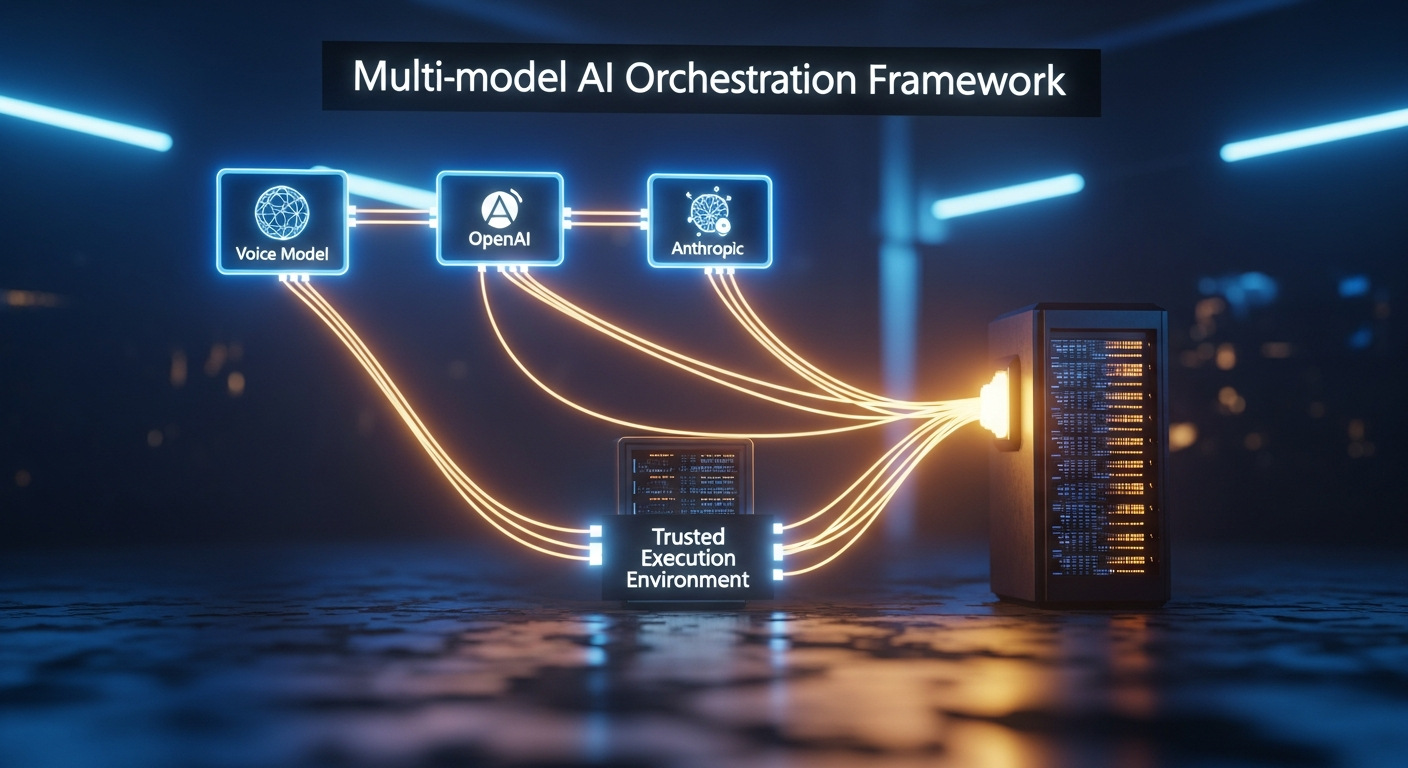
In the broader landscape of AI & Machine Learning, the transition from conversational interfaces to agentic workflows represents a fundamental architectural leap. Most mainstream AI applications, such as standard ChatGPT or Claude interfaces, are designed for information retrieval and text generation. They operate in a stateless vacuum, waiting for a user prompt, generating a response, and immediately forgetting the interaction unless explicitly reminded. Pine AI’s architecture, however, is built for long-running, stateful execution.
According to CEO Stanley Wei, Pine AI realized early on that relying on off-the-shelf conversational AI pipelines was insufficient for the chaotic reality of live customer service calls. Traditional systems utilize a disjointed pipeline: a Speech-to-Text (STT) model transcribes the user’s audio, a Large Language Model (LLM) generates a text response, and a Text-to-Speech (TTS) model vocalizes the reply. This three-step process introduces severe latency, making the AI sound robotic and incapable of handling natural human interruptions. To solve this, Pine AI developed its own proprietary voice model optimized specifically for real-time telephonic interactions. This model can detect nuances in tone, handle overlapping speech, and dynamically adjust its pacing to sound indistinguishable from a highly competent human assistant—though ethically, it is programmed to identify itself as an AI acting on behalf of the user.
Beyond voice, the true engineering marvel lies in Pine AI’s custom orchestration framework. Resolving a billing dispute is rarely a single action; it is a multi-step workflow that can span days. An agent might need to initiate a phone call, analyze the resulting transcript, extract a reference number, draft a follow-up email, log into a web portal using encrypted credentials, and submit a digital form. Every subsequent step relies entirely on the success of the previous one. Pine AI manages this through a multi-model routing system. Depending on the specific workload and availability, the orchestration engine dynamically routes tasks to the most efficient underlying model—leveraging OpenAI, Anthropic, and Google for complex reasoning, while relying on its own models for voice synthesis and task coordination.
Crucially, Pine AI has implemented a collective memory architecture. The system is designed to be resilient, meaning it can retry failed tasks, adjust its negotiation strategies on the fly, and draw upon a vast knowledge base of prior successful interactions. If an agent discovers a specific phrasing that successfully bypasses a Comcast retention script, that tactic is anonymized and integrated into the global strategy matrix, making the entire network of agents smarter with every completed chore.
Market Impact & Deployment

The financial backing behind Pine AI underscores the massive market potential of agentic workflows. In December 2025, the company closed a $25 million Series A funding round led by Fortwest Capital. This capital injection is earmarked for expanding engineering talent, scaling marketing efforts, and broadening the platform’s sales operations. But beyond the balance sheet, this funding signals a broader shift in how venture capital views the AI landscape: the hype cycle of foundational models is cooling, and the premium is now on application-layer startups that deliver measurable, hard-dollar ROI to end users.
The economic impact of Pine AI is already highly quantifiable. The company reports that its agents save users an average of 270 minutes per task and secure roughly $400 in savings through negotiated discounts, refunds, and billing adjustments. In extreme cases, the savings are staggering—Pine AI cites one customer who saved $1,900 on automobile insurance and another who reduced a fiber internet bill by $1,800. By charging a $30 monthly subscription for its professional tier (alongside a limited free tier), Pine AI has created a compelling value proposition: the software pays for itself the moment it successfully negotiates a single utility bill.
While initially targeted at individuals, the implications for Enterprise IT are profound. Wei noted that business use cases are rapidly emerging organically. Several of the platform’s most active users are startup CEOs who deploy Pine AI to manage their overflowing inboxes, prioritize daily tasks, and ruthlessly negotiate vendor invoices. Recognizing this demand, Pine AI has developed an early business-oriented offering that integrates directly with workplace communications and enterprise workflow platforms like Slack and Microsoft Teams.
In fact, Pine AI is its own best case study. The company internally runs on “V2″—a proprietary, advanced version of their platform—to monitor corporate invoices, follow up on outstanding deliverables, and negotiate compensation claims with their own cloud vendors and suppliers. This dogfooding approach ensures that the orchestration framework is battle-tested against the very same bureaucratic friction that enterprise procurement teams face daily. As these agents become more sophisticated, we are rapidly approaching an inflection point where consumer AI agents will routinely call enterprise AI agents, removing human operators from the customer service equation entirely.
Security, Ethics, and the Red Team Audit
Delegating financial and administrative autonomy to an AI agent requires an immense degree of trust. To execute a digital chore, Pine AI often requires access to highly sensitive personal data, including billing addresses, account numbers, and partial payment credentials. To mitigate the inherent cybersecurity risks, Pine AI processes all sensitive information within a Trusted Execution Environment (TEE). A TEE is a secure area of a main processor that guarantees code and data loaded inside are protected with respect to confidentiality and integrity. This “zero-knowledge” approach ensures that even if Pine AI’s broader network were compromised, the attackers could not extract actionable financial data.
However, a rigorous red team audit of the platform reveals several operational and ethical friction points. First is the issue of impersonation. While Pine AI mandates that its agents identify themselves as virtual assistants at the beginning of a phone call, the hyper-realistic nature of the voice model can still lead to confusion. Customer service representatives, trained to follow strict compliance scripts, may not legally be allowed to authorize account changes with a non-human entity, leading to potential dead-ends in the negotiation workflow.
Second is the challenge of web navigation. Modern corporate websites are heavily fortified with anti-bot measures, dynamic DOM structures, and complex CAPTCHAs designed specifically to block automated scraping and execution. While Pine AI’s agents are adept at navigating these hurdles, the constant cat-and-mouse game between AI agents and web security protocols requires continuous, resource-intensive updates to the orchestration framework.
Finally, there is the risk of automated harassment. Because AI does not experience fatigue, it can theoretically call a service provider thousands of times a day until a demand is met. Pine AI has had to proactively implement anti-abuse mechanisms to prevent this. Wei cited a specific incident where a user instructed the system to repeatedly contact law firms seeking legal representation. The system’s relentless execution prompted Pine AI to impose “soft limits” on repetitive outreach, ensuring the platform cannot be weaponized for denial-of-service attacks against small businesses or customer support centers.
The Consumer Translation
This represents a massive leap for Consumer Tech, moving beyond the novelty of generating images or writing emails, and into the realm of tangible lifestyle improvement. For the average consumer, the administrative burden of modern life is overwhelming. We are subscribed to dozens of micro-services, locked into predatory telecom contracts, and forced to navigate labyrinthine healthcare billing systems. The cognitive load required to manage these “digital chores” leads to widespread apathy; consumers simply accept price hikes and swallow unfair fees because the alternative—spending three hours on hold on a Tuesday afternoon—is unbearable.
Pine AI effectively democratizes the concept of a personal executive assistant. By offloading these tasks to an autonomous agent, consumers reclaim not just their money, but their time and mental bandwidth. The platform’s 93% success rate in negotiation workflows is a testament to the power of persistence. An AI agent does not get frustrated when transferred to a fourth department. It does not lose its temper when a representative reads from a rigid script. It simply executes its programming, leveraging data-backed negotiation tactics to secure the best possible outcome.
As Pine AI continues to scale, fueled by its $25 million Series A, the broader societal implications will become impossible to ignore. If millions of consumers arm themselves with AI agents capable of instantly canceling subscriptions and demanding refunds for service outages, corporations will be forced to fundamentally rethink their customer service models. The era of relying on consumer exhaustion as a revenue retention strategy is coming to an end. In its place, a new economy of machine-to-machine efficiency is taking root, promising a future where our technology finally works as hard for us as we do for it.
TechNode HQ Verdict: Pros, Cons & Usability
- Pro (Engineering): The proprietary voice model and multi-model orchestration framework successfully eliminate the latency and context-loss issues that plague traditional LLM pipelines during live phone calls.
- Pro (Consumer): Reclaiming an average of 270 minutes and $400 per task fundamentally shifts the power dynamic between everyday consumers and hostile corporate billing departments.
- Con: The platform’s reliance on web portal navigation makes it highly susceptible to breaking when target companies update their UI or deploy aggressive anti-bot CAPTCHA measures.
- Con: Legal and compliance friction remains high; many corporate call centers lack the protocol to legally authorize account changes requested by a self-identified AI agent.
Enterprise Usability: CTOs and startup founders should immediately explore Pine AI’s emerging B2B tier. Using the platform to automate vendor invoice disputes and track deliverables offers a high-ROI use case that can significantly reduce the administrative burden on lean procurement teams.
Everyday Usability: For the general public, the $30/month professional tier is a highly justifiable expense. If you have a backlog of subscriptions to cancel, a telecom bill to negotiate, or an insurance claim to dispute, Pine AI will likely pay for itself within the first 48 hours of deployment.