The Architectural Reality: Decoupling Insulation from the Monolith
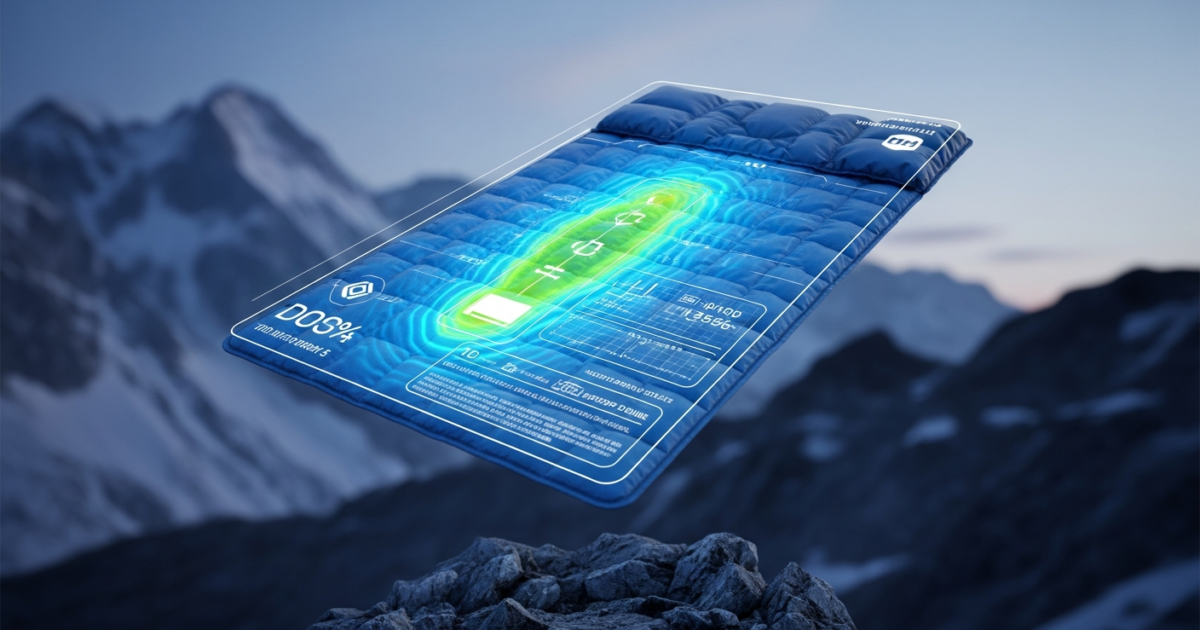
For decades, the outdoor industry has relied on a monolithic legacy system for backcountry survival: the traditional “mummy” sleeping bag. Designed to wrap the user in a continuous 360-degree envelope of insulation, the mummy bag is an institution. However, from a strict engineering and thermal architecture perspective, it is inherently flawed. When a user lies inside a sleeping bag, their body weight compresses the bottom layer of insulation against the ground. Because down feathers and synthetic fibers rely on “loft”—the ability to expand and trap dead air—to provide thermal resistance, this compressed bottom layer is rendered functionally useless [1, 18].
You are effectively carrying dead weight: yards of nylon and ounces of expensive down that provide zero insulative value. Enter the backpacking quilt. By decoupling the insulation layer from the sleep system’s foundation, quilts eliminate the bottom half of the sleeping bag entirely. They drape over the user like a traditional bed covering, relying on a specialized sleeping pad to handle ground insulation. This modular approach drastically improves the weight-to-performance ratio of a backpacker’s loadout, allowing users to move faster, carry less, and sleep with the ergonomic freedom they are accustomed to at home.
The transition from a sleeping bag to a quilt is akin to migrating from a monolithic on-premise server to a decoupled, microservices-based cloud architecture. You only deploy the resources you actually need. But as with any architectural shift, removing the built-in redundancies of a sleeping bag places immense pressure on the underlying infrastructure—in this case, the sleeping pad.
Hardware Spotlight: The Economics of Ultralight
The current market is dominated by a mix of legacy outdoor brands and agile, cottage-industry manufacturers who have open-sourced their design philosophies to cater to the ultralight community. Two of the most prominent examples of this modular revolution are the Enlightened Equipment Revelation and the REI Magma Trail Quilt.
The Enlightened Equipment Revelation 40° is widely considered the gold standard for thru-hikers. Live market data verifies that the stock Regular/Regular 40-degree model utilizes 850-fill power duck down (ethically sourced and RDS certified) and weighs an astonishingly light 15.81 ounces [1, 6]. Constructed with a hyper-thin 10-denier ripstop nylon shell treated with a Durable Water Repellent (DWR) finish, the Revelation is a masterclass in material efficiency [6]. It features a 20-inch zipper and shock cord at the footbox, allowing it to lay completely flat as a blanket on warm nights or cinch tight to trap heat when temperatures drop [1, 6]. Starting at around $350, it represents a premium investment in weight reduction.
For those seeking a more accessible entry point, the REI Co-op Magma 30 Down Trail Quilt offers roughly 90 percent of the Revelation’s performance for significantly less capital. Weighing in at 24 ounces for the long/wide version, it utilizes a similar zippered footbox design. While its pad-attachment straps are less refined than Enlightened Equipment’s proprietary clip system, the Magma frequently goes on sale for under $250, making it the most economically viable deployment for users looking to test the quilt ecosystem.
The Infrastructure Layer: Pad Dependency and R-Value Mechanics
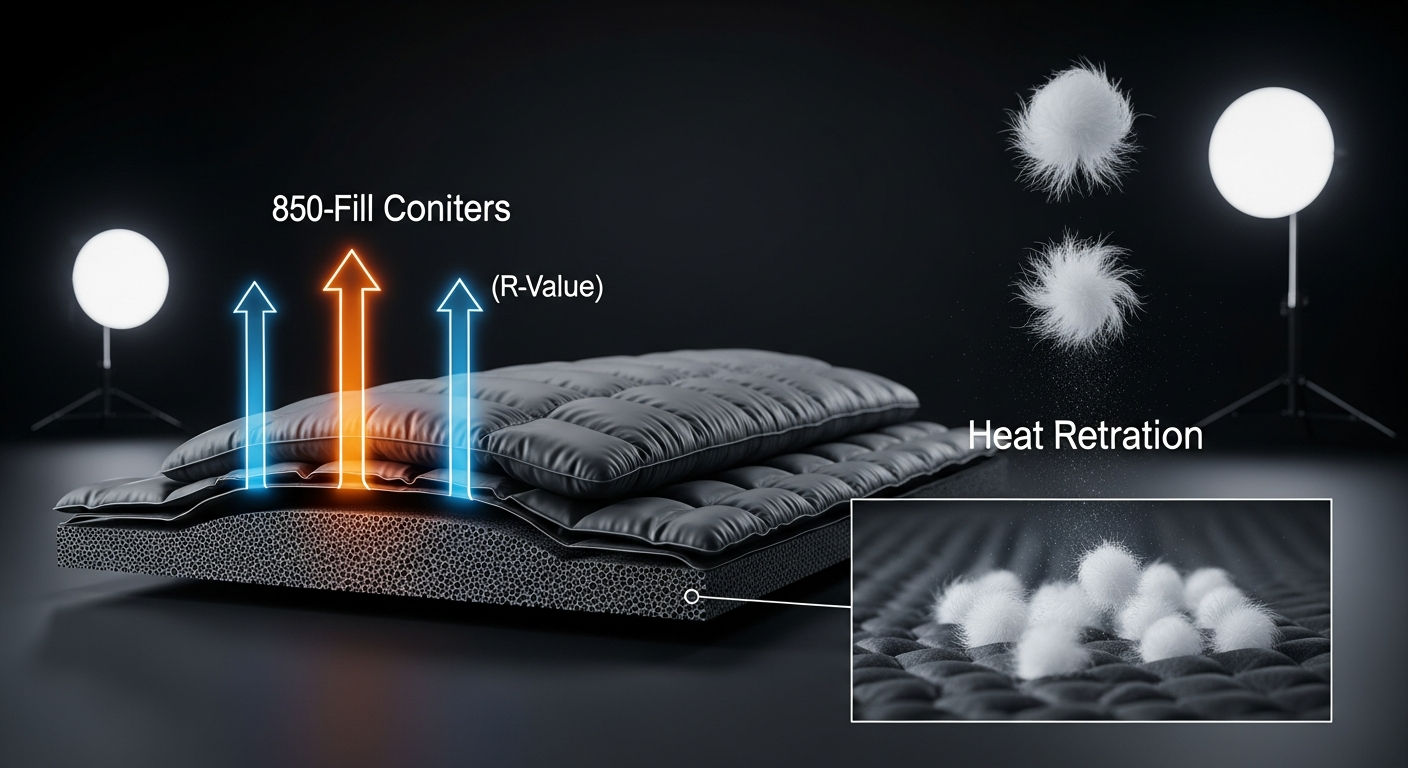
When you strip away the bottom of a sleeping bag, you introduce a single point of failure: conductive heat loss into the ground. A quilt is only as effective as the sleeping pad it rests upon. In the quilt ecosystem, the pad is the critical infrastructure layer, and its performance is measured by its R-value (thermal resistance) under the standardized ASTM F3340-18 testing protocol.
For standard three-season deployments, the Therm-a-Rest NeoAir XLite NXT is the undisputed industry standard. Recent updates to the NXT model have pushed its R-value to 4.5 while maintaining a base weight of just 13 ounces (Regular size) [3, 7]. Therm-a-Rest achieved this by utilizing a 30-denier High Tenacity Nylon and a proprietary Triangular Core Matrix that radiates body heat while reducing convective heat loss [7, 12]. Crucially, the NXT update solved the biggest complaint of previous iterations: the noise. The new internal construction makes the pad significantly quieter, eliminating the “crinkly potato chip” sound that plagued early adopters [3, 7].
For colder, shoulder-season missions, users must scale their infrastructure. The Exped Ultra 6.5R is a marvel of thermal engineering. Weighing just 15 ounces in its medium mummy configuration, it delivers a massive 6.9 R-value [2, 5]. Exped achieves this through its SynmatPlus technology, which suspends recycled synthetic microfiber insulation between layers of reflective foil inside a 20-denier ripstop polyester shell [2, 8]. Paired with a 20-degree quilt, a pad with a 6.5+ R-value creates a thermal envelope capable of comfortably sustaining a user in sub-freezing temperatures.
The Zenbivy Architecture: A Hybrid “Sleep System”
While traditional quilts excel in weight savings, they suffer from a critical security vulnerability: drafts. Because a quilt merely drapes over the user, any tossing or turning can lift the edges, allowing freezing air to breach the thermal envelope. To patch this vulnerability, a company called Zenbivy engineered a hybrid solution that bridges the gap between the monolithic sleeping bag and the decoupled quilt.
The Zenbivy Light Bed 25° is not just a quilt; it is a comprehensive sleep system. It consists of a quilt (utilizing 800-fill power HyperDRY duck down) and a separate fitted “sheet” that slides over your sleeping pad [4, 11]. The sheet features an integrated insulated hood and articulated side wings equipped with color-coded clips [4]. By clipping the quilt to the sheet’s wings, the system creates a sealed, draft-free environment that moves with the user.
This hybrid architecture provides the highest level of comfort and thermal security on the market, but it comes with a strict weight penalty. The 25-degree Light Quilt weighs roughly 20 ounces, and the accompanying sheet adds another 6 to 13 ounces depending on the size and insulation level, bringing the total system weight to approximately 33 ounces [4, 11]. For the strict ultralight purist, this is heavy. However, for users who prioritize uninterrupted sleep and draft protection over raw weight savings, the Zenbivy system justifies its payload.
Edge Deployments: Winter Constraints and the 15-Degree Threshold
Despite the overwhelming advantages of modular sleep systems, they face severe limitations in extreme edge deployments. When ambient temperatures drop below 15 degrees Fahrenheit, the quilt architecture begins to fail.
The primary point of failure in deep winter is the lack of an integrated hood and a robust draft collar. In sub-zero conditions, the human head and neck become massive vectors for heat loss. While users can supplement a quilt with a down balaclava or a heavy puffer jacket, the seamless, cinched-down thermal seal of a traditional mummy bag is functionally superior when survival is on the line.
Zenbivy has attempted to push this boundary with their -5°F Light Bed, which incorporates a heavily insulated hood into the sheet system. Field tests indicate that when paired with a high R-value pad and supplementary layers, it can survive negative temperatures. However, for the vast majority of backcountry users, the 15-degree mark remains the hard threshold. Below that, the monolithic mummy bag reclaims its throne.
The Consumer Translation: Ergonomics and End-User Experience
Beyond the raw data of fill-power and denier ratings, the true disruption of the backpacking quilt lies in its ergonomics. Traditional mummy bags force the user into a static, supine position. For the estimated 70% of the population who are side sleepers, or those who actively toss and turn, a mummy bag is a claustrophobic nightmare that actively degrades sleep quality.
Quilts restore the biomechanics of natural sleep. By allowing the user to sprawl, bend their knees, and vent heat instantly by kicking a leg out, quilts drastically improve backcountry recovery. In the context of multi-day endurance events or extended thru-hikes, sleep quality is a critical metric for physical performance and cognitive function. The psychological relief of not feeling “trapped” in a nylon tube cannot be overstated.
TechNode HQ Verdict: Pros, Cons & Usability
- Pro (Engineering): Eliminates redundant, compressed insulation, resulting in a vastly superior warmth-to-weight ratio and reduced pack volume.
- Pro (Consumer): Unrestricted ergonomic freedom mimics the at-home sleep experience, drastically improving sleep quality for side and active sleepers.
- Con: Introduces a critical dependency on the sleeping pad’s R-value; a pad failure (puncture) results in immediate, catastrophic thermal loss.
- Con: Susceptible to drafts during movement, requiring a learning curve to properly manage pad-attachment straps or necessitating heavier hybrid systems like Zenbivy.
Enterprise Usability: For expedition leaders, outdoor guides, and gear fleet managers, transitioning three-season loadouts to quilts (specifically durable models like the REI Magma) will reduce overall pack weight and improve client comfort. However, strict training on pad maintenance and draft management is required before deployment.
Everyday Usability: If you are a backpacker, bikepacker, or canoe camper operating in temperatures above 20°F, you should abandon your mummy bag immediately. The weight savings and comfort upgrades are undeniable. Start with a high-quality pad (R-value 4.0+) and a 30-degree quilt to experience the modular revolution firsthand.