The $12 Billion Hardware Ecosystem
In the unforgiving landscape of modern hardware and silicon development, serial entrepreneurship is a rarity. Founders who can successfully scale a single vertically integrated manufacturing company are celebrated; founders who attempt to scale three simultaneously are usually viewed with deep skepticism. Yet, RJ Scaringe, the mechanical engineer and CEO best known for founding Rivian, has managed to defy the gravitational pull of venture capital conservatism. Over the past decade, Scaringe has quietly orchestrated a masterclass in capital allocation, raising an astonishing $12.3 billion across three distinct, yet deeply interconnected startups: Rivian, Also, and Mind Robotics.
While mainstream tech media often fixates on Scaringe’s charismatic storytelling and his ability to separate his ego from his products—a stark contrast to the cult of personality surrounding Tesla’s Elon Musk—the real story lies in the underlying engineering. Scaringe is not merely building a car company. He is constructing a comprehensive, end-to-end hardware and software ecosystem that spans from the factory floor (Mind Robotics) to the mass-market highway (Rivian), all the way down to the last-mile urban bike lane (Also).
To understand why institutional investors like Eclipse Ventures, Andreessen Horowitz (a16z), and Accel are pouring hundreds of millions into Scaringe’s newly minted spin-offs, one must look past the consumer branding and examine the raw, structural advantages of his technology stack.
The Architectural Reality: Zonal ECUs and SDVs
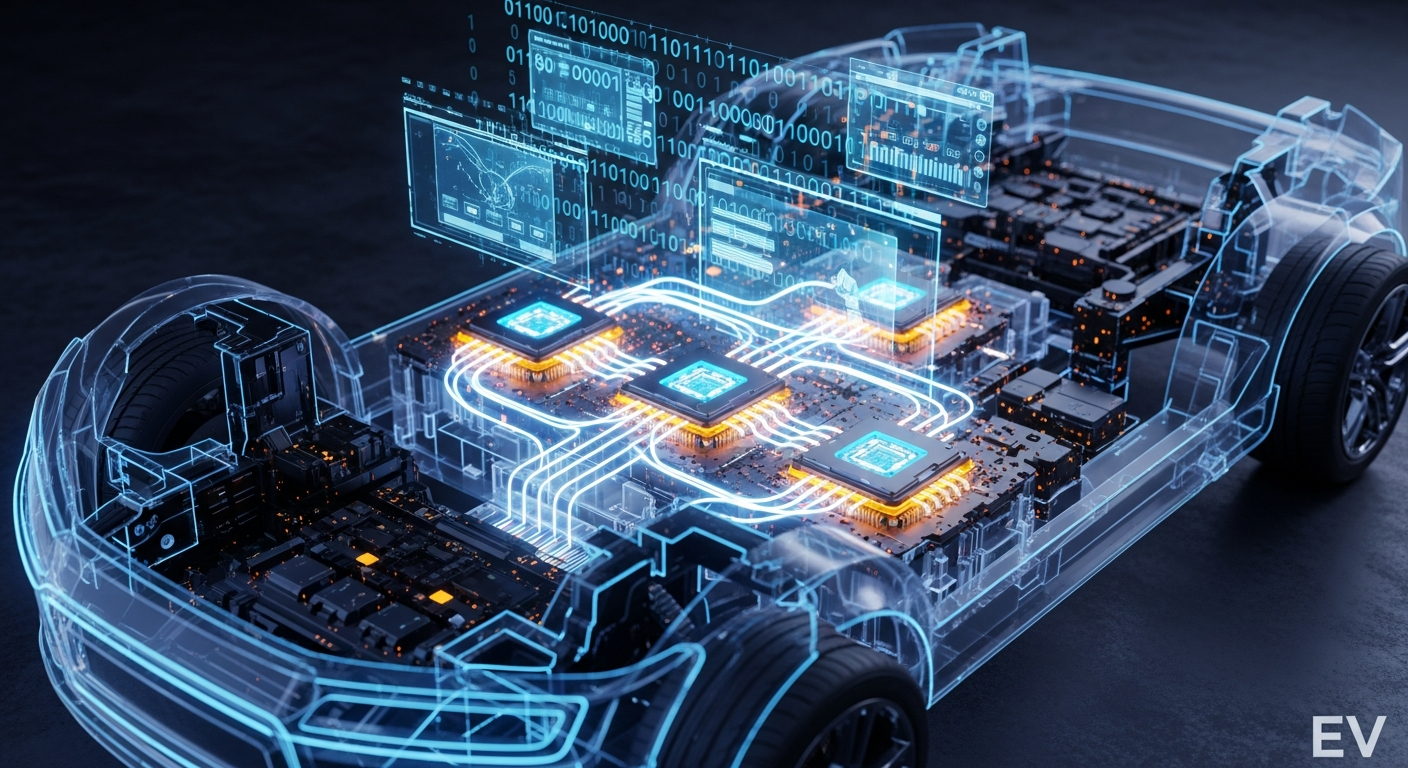
The foundation of Scaringe’s empire rests on a radical rethinking of automotive computing. For decades, legacy automakers relied on a decentralized web of Electronic Control Units (ECUs)—often numbering over a hundred per vehicle—sourced from dozens of different Tier 1 suppliers. This fragmented approach made over-the-air (OTA) updates a nightmare and severely bottlenecked the transition to Software-Defined Vehicles (SDVs).
Rivian’s true competitive moat, and the catalyst for its recent financial lifeline, is its proprietary zonal electrical architecture. By consolidating compute power, Rivian successfully reduced its core ECUs from 17 down to just 3. This structural software advantage is precisely what drove the Volkswagen Group to abandon its struggling in-house software division (CARIAD) and form a massive $5.8 billion joint venture with Rivian in late 2024. The JV, co-led by Rivian’s Wassym Bensaid and VW’s Carsten Helbing, is actively integrating Rivian’s unified software stack across all Volkswagen brands, including Audi and Porsche.
But Scaringe’s architectural vision doesn’t stop at four-wheeled passenger vehicles. In 2025, he spun out a micromobility startup named Also, backed by a $105 million seed round led by Eclipse Ventures. Also is applying Rivian’s “clean slate” EV approach to smaller form factors. Rather than slapping an electric motor onto a traditional bicycle frame, Also has developed a miniaturized “skateboard” chassis that underpins its $4,500 TM-B e-bike and its TM-Q delivery quads. Because the hardware and software are vertically integrated, these micromobility vehicles can seamlessly interface with enterprise logistics software—a feature that immediately secured a multi-year collaboration with Amazon to deploy thousands of e-cargo quads across 70+ urban hubs in the U.S. and Europe.
Mind Robotics and the Industrial AI Flywheel
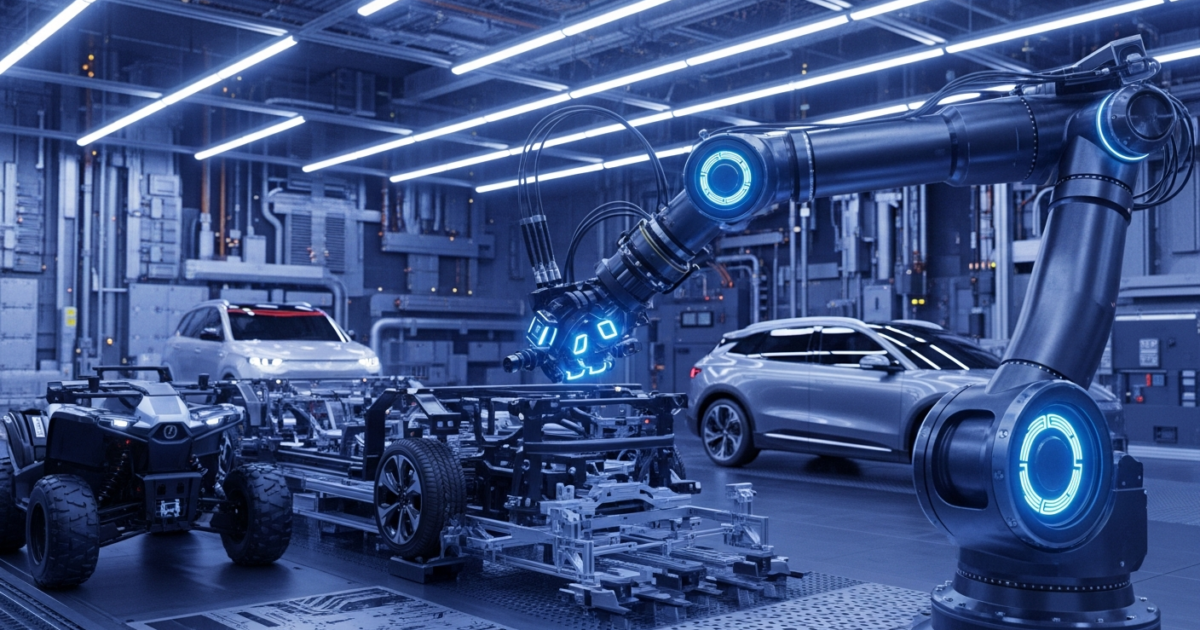
While Rivian and Also tackle the output of manufacturing, Scaringe’s third venture, Mind Robotics, is designed to revolutionize the input. Founded in late 2025, Mind Robotics has moved at a blistering pace, raising $115 million in its first year, $500 million in March 2026 (led by Accel and a16z), and another $400 million in May 2026, pushing its valuation past the $2 billion mark.
In a market obsessed with humanoid robots like Tesla’s Optimus, Mind Robotics is taking a decidedly more pragmatic, enterprise-first approach. Scaringe recognized that a large share of factory value-add work requires human-like dexterity, adaptation, and physical reasoning, but it does not require a bipedal, human-shaped chassis. Humanoids require entirely different physical environments and balance algorithms to operate safely. Instead, Mind Robotics is building AI foundation models and purpose-built hardware designed specifically for existing factory floors.
The secret weapon of Mind Robotics is its data flywheel. Most AI robotics startups struggle because they lack real-world, high-volume manufacturing environments to train their models. Mind Robotics, however, has an immediate, captive deployment environment. Scaringe has committed to deploying a massive fleet of Mind robots inside Rivian’s own manufacturing plants in Normal, Illinois, and its upcoming Georgia facility by the end of 2026. This symbiotic relationship allows Mind Robotics to train its AI on complex, real-world automotive assembly tasks, minimizing human error and accelerating production efficiency for Rivian, while simultaneously proving its enterprise viability to future third-party clients.
Market Impact & Deployment: The Autonomous Horizon
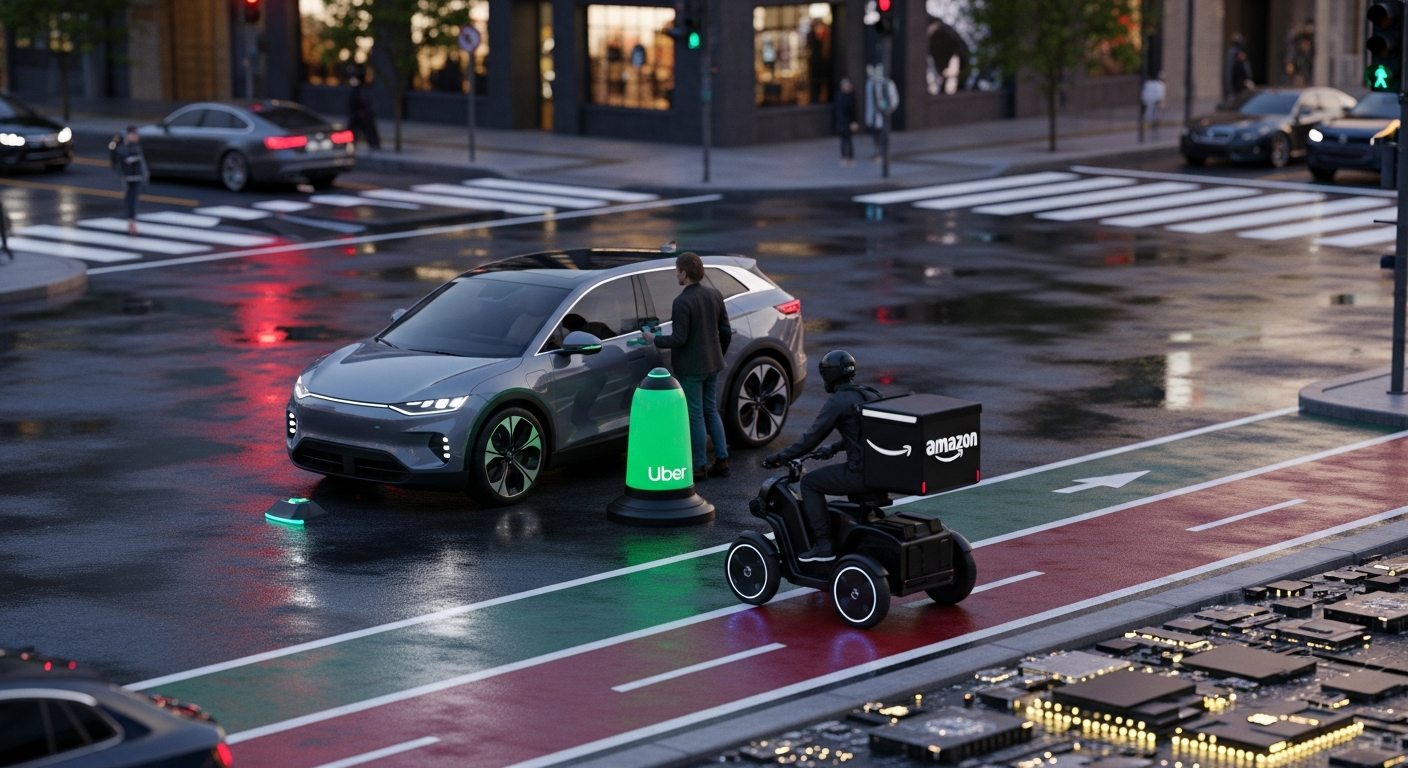
The culmination of Scaringe’s hardware and software integration is most evident in Rivian’s aggressive push into autonomous ride-hailing. In March 2026, Rivian and Uber announced a landmark partnership worth up to $1.25 billion. The agreement outlines the deployment of up to 50,000 fully autonomous Rivian R2 robotaxis exclusively on the Uber platform by 2031.
This is not a distant, theoretical roadmap. The initial phase will see 10,000 unsupervised R2 robotaxis deployed in San Francisco and Miami as early as 2028. To achieve this, Rivian is leveraging its Gen 2 autonomy compute architecture, which features dual in-house chips delivering a staggering 1600 Tera Operations Per Second (TOPS). This immense localized compute power, combined with multimodal sensors and LiDAR, is designed to push the R2 past supervised driving and directly into Level 4 autonomy.
For enterprise fleet operators and logistics giants, the Total Cost of Ownership (TCO) math is becoming undeniable. The upcoming Rivian R2 is projected to launch with a starting price of roughly $45,000, featuring a 50% cost reduction over the flagship R1 platform. When combined with the operational efficiency of Mind Robotics on the assembly line and the last-mile delivery capabilities of Also’s TM-Q quads, Scaringe is offering a full-stack, electrified, and autonomous logistics network.
The Consumer Translation
For the everyday consumer, the impact of Scaringe’s $12 billion empire will be felt in the rapid transformation of urban mobility. The era of the fragmented, clunky EV experience is ending.
In the near future, a user in a dense urban center might commute to work on an Also TM-B e-bike, enjoying a premium, software-optimized ride that feels like a natural extension of a luxury EV. For longer trips, that same user will open the Uber app and hail a fully autonomous Rivian R2, experiencing a silent, driverless journey powered by localized AI compute. Meanwhile, the packages arriving at their doorstep will be silently delivered by an Amazon-branded Also TM-Q quad, reducing the noise pollution and traffic congestion traditionally caused by massive diesel delivery step-vans.
Scaringe is betting that consumers don’t just want electric vehicles; they want a cohesive, beautifully designed ecosystem of movement. By controlling the silicon, the software, and the physical hardware across all three companies, he is uniquely positioned to deliver on that promise.
TechNode HQ Verdict: Pros, Cons & Usability
- Pro (Engineering): Rivian’s zonal electrical architecture (reducing 17 ECUs to 3) provides a massive structural advantage in OTA updates and software reliability, validating the $5.8B VW investment.
- Pro (Consumer): The vertical integration of the Also spin-off brings automotive-grade software and hardware reliability to the notoriously fragmented e-bike and micromobility market.
- Con: Severe CEO bandwidth risks. Running three capital-intensive, hardware-heavy startups simultaneously is historically unprecedented and poses a massive risk of lost focus.
- Con: Financial burn rate. Despite the $12B raised, Rivian lost $3.6 billion before taxes last year, and its market cap has plummeted from $100B at IPO to $18.2B, forcing the delay of its Georgia plant construction to preserve cash.
Enterprise Usability: For CTOs and logistics directors, the Rivian/Also ecosystem represents the future of commercial transport. The integration of Also TM-Q quads for last-mile delivery, combined with the upcoming R2 platform, offers a highly compelling, software-unified fleet solution. Furthermore, manufacturing executives should closely monitor Mind Robotics’ deployment in Rivian’s factories; if successful, it will become a mandatory upgrade for legacy assembly lines.
Everyday Usability: Consumers should view the upcoming $45,000 Rivian R2 as a highly viable alternative to the Tesla Model Y, especially given the robust software backing from the VW joint venture. However, early adopters of the $4,500 Also TM-B e-bike should be prepared to pay a steep “premium tax” for the vertically integrated ecosystem.