
The Scale of the Trapdoor Operation
The programmatic digital advertising ecosystem is a multi-billion-dollar machine built on microsecond transactions and vast oceans of telemetry data. Where there is frictionless capital, there is sophisticated fraud. Enter Trapdoor, a newly uncovered Android ad fraud and malvertising operation that has redefined the scale and stealth of mobile device hijacking.
Discovered and disrupted by HUMAN Security’s Satori Threat Intelligence and Research Team, Trapdoor is a masterclass in behavioral malware. At its peak, the operation generated a staggering 659 million fraudulent ad bid requests per day. To achieve this, threat actors deployed an infrastructure encompassing 455 malicious Android applications and 183 dedicated command-and-control (C2) domains. Before Google could intervene and scrub the ecosystem, these apps amassed over 24 million downloads directly from the Google Play Store.
What makes Trapdoor a Tier-1 enterprise threat is not just its sheer volume, but its geographic precision and self-sustaining economic model. Over 75% of the fraudulent traffic was routed through devices in the United States—a deliberate targeting strategy, as U.S. ad impressions command the highest Cost Per Mille (CPM) rates in the global market. Trapdoor represents a critical evolution in mobile cybercrime, fusing malvertising distribution with hidden ad-fraud monetization to create a pipeline where every stolen dollar funds the next infection.
The Anatomy of a Multi-Stage Fraud Pipeline
Unlike traditional malware that executes its payload immediately upon installation, Trapdoor relies on a highly disciplined, multi-stage architecture designed to bypass automated app store security scanners like Google Play Protect. The operation begins with the illusion of utility.
Users unwittingly download a “Stage 1” application—typically masquerading as a benign, everyday tool such as a PDF viewer, a file manager, or a device cleanup utility. Upon initial inspection by security algorithms, these apps appear entirely harmless. They contain no inherently malicious code, request standard permissions, and often perform the basic functions they advertise. However, their true purpose is to serve as a Trojan horse for the next phase of the attack.
Once installed, the Stage 1 app lies dormant until it receives a signal from its C2 server. It then triggers aggressive malvertising campaigns directly on the user’s device. These campaigns often manifest as urgent, system-level pop-ups warning the user that their app is “out of date” or that their device requires a critical security patch. This psychological coercion tricks the user into downloading a “Stage 2” application.
It is only within this secondary, sideloaded application that the actual fraud module resides. By separating the distribution vector (Stage 1) from the monetization vector (Stage 2), the threat actors successfully insulated their core fraud engine from Google’s primary perimeter defenses, allowing them to scale to 24 million infected devices before detection.
The Architectural Reality: Hidden WebViews and HTML5 Cashouts
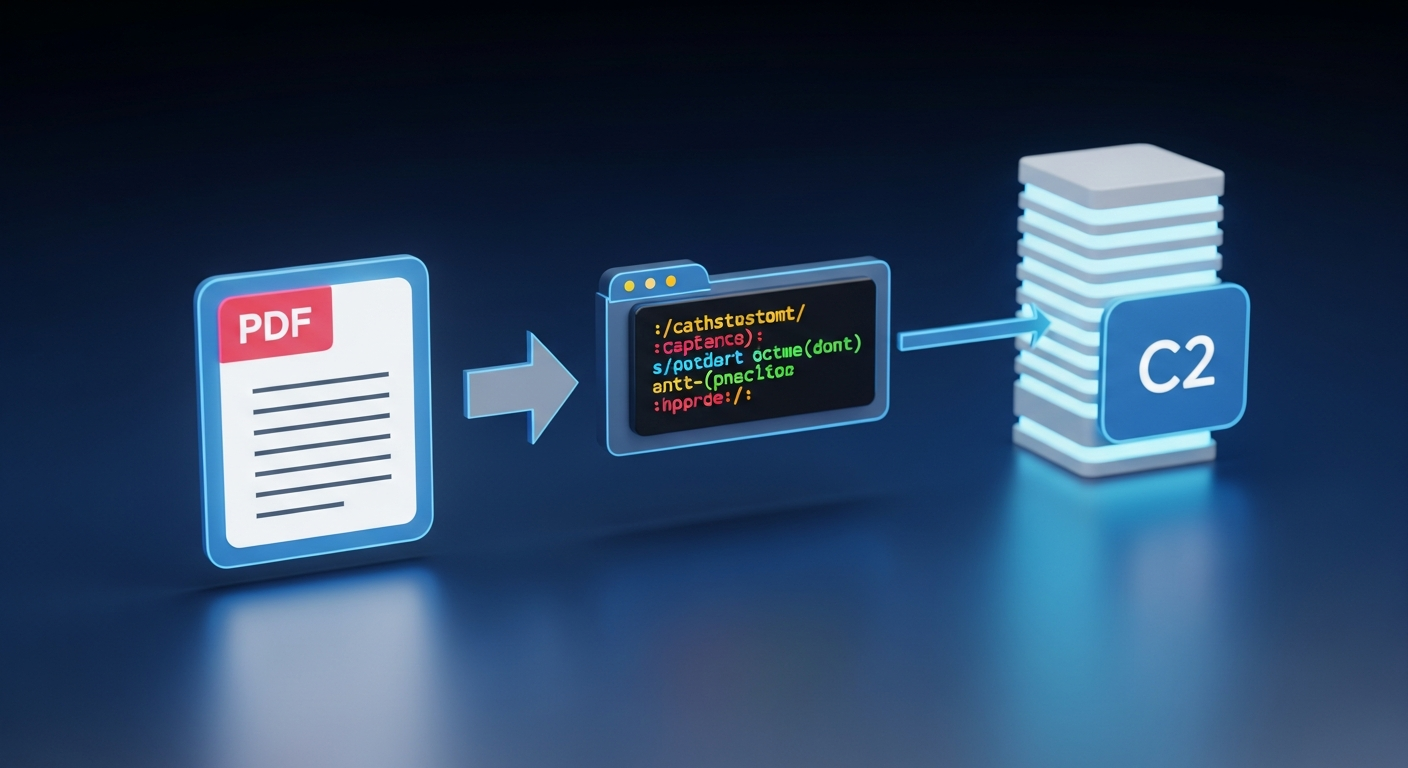
The technical execution of Trapdoor’s fraud module is a sophisticated abuse of Android’s native rendering capabilities. Once the Stage 2 app is active, it leverages hidden WebViews to execute its payload. A WebView is an embeddable browser that a native application can use to display web content. Trapdoor manipulates this feature by rendering the WebView off-screen, or with a pixel dimension of 0x0, rendering it entirely invisible to the user.
Security analysts have mapped Trapdoor’s behavior to specific Common Weakness Enumerations (CWEs). The architecture exploits CWE-1021 (Improper Restriction of Rendered UI Layers), which is clickjacking-adjacent, allowing the malware to load interactive content without user visibility. It also leverages CWE-940 (Improper Verification of Source of a Communication Channel) to receive unverified execution commands from its 183 C2 domains, and CWE-693 (Protection Mechanism Failure) to bypass standard Android sandboxing.
Inside these invisible WebViews, the malware loads threat actor-controlled HTML5 domains—specifically, lightweight gaming and news sites. These sites act as the “Shared Cashout Layer.” This is a known tactic previously observed by the Satori team in threat clusters like SlopAds, Low5, and BADBOX 2.0. Because HTML5 games and news aggregators naturally feature high ad inventory and rapid refresh rates, they are the perfect vehicle for programmatic ad fraud.
Once the HTML5 site is loaded in the hidden WebView, the malware executes pre-programmed JavaScript to simulate human touch gestures. It scrolls, pauses, and clicks on the rendered advertisements. To the ad exchanges and the brands bidding on the inventory, this telemetry looks identical to a real human interacting with an ad on a legitimate website. In reality, it is a phantom interaction occurring in the background of a compromised device.
The Evasion Engine: Weaponizing Install Attribution
The most brilliant—and alarming—aspect of the Trapdoor operation is its evasion engine. Threat actors have realized that the easiest way to get caught is to execute malware while a security researcher is watching. To solve this, Trapdoor weaponized legitimate install attribution tools.
In the legitimate marketing world, attribution Software Development Kits (SDKs) from companies like AppsFlyer, Adjust, or Branch are used to track Return on Ad Spend (ROAS). When a user clicks an ad and installs an app, the Google Play Install Referrer API tells the app exactly which ad campaign drove the installation. Trapdoor co-opted this exact mechanism for malicious selective activation.
When a Trapdoor app is installed, it immediately queries the attribution API. If the install referrer data confirms that the user arrived via the threat actor’s specific malvertising campaign, the app unpacks the fraud module and begins siphoning ad revenue. However, if the referrer data is empty—meaning the user organically searched for the app in the Play Store—or if the data indicates a sideload, the app remains completely benign.
This selective activation (mapped to MITRE ATT&CK technique T1624.001: Event-Triggered Execution) is a devastatingly effective anti-analysis technique. If a cybersecurity researcher or an automated sandbox downloads the app directly to analyze it, they will find nothing but a functional PDF viewer. The malicious payload is mathematically gated, activating exclusively for victims who have already fallen into the threat actor’s specific acquisition funnel.
Market Impact & Deployment: The Self-Funding Loop

The financial mechanics of Trapdoor highlight a severe vulnerability in Real-Time Bidding (RTB) networks. When 659 million fraudulent bid requests are injected into the ecosystem daily, the financial drain on enterprise ad budgets is catastrophic. Brands and media buyers purchasing programmatic inventory on mobile platforms were effectively buying ghost impressions.
The true danger of Trapdoor is its self-sustaining economic loop. The revenue generated from the hidden ad fraud (Stage 2) is immediately reinvested by the threat actors to purchase more legitimate ad space across the mobile web. This purchased ad space is used to distribute the malvertising that drives users to download the Stage 1 utility apps. It is a closed-loop system: fraud funds the malvertising, the malvertising acquires the users, and the users generate the fraud.
For enterprise organizations, the fallout extends beyond wasted ad spend. The injection of millions of fake installs and simulated clicks corrupts campaign performance metrics. Marketing departments relying on this data for attribution modeling, ROI analysis, and future budget allocation are basing their strategies on poisoned data. Organizations that fail to audit their mobile ad spend data against Trapdoor’s known Indicators of Compromise (IOCs) risk ongoing financial loss and permanently corrupted business intelligence.
Enterprise Defense and Zero Trust Implications
While Google has removed the 455 identified apps from the Play Store and updated Google Play Protect to safeguard against Trapdoor-associated behavior, the enterprise perimeter remains vulnerable. The fact that 24 million devices were compromised before intervention proves that reactive app store policing is insufficient.
Chief Information Security Officers (CISOs) and IT administrators must adopt a Zero Trust Architecture approach to mobile endpoints. Corporate Mobile Device Management (MDM) fleets must be immediately audited against the published list of Trapdoor applications. Because these apps masquerade as basic utilities, employees often download them on Bring Your Own Device (BYOD) hardware that connects to corporate networks.
Furthermore, network administrators must block the 183 known C2 domains at the DNS and network egress layers. Trapdoor is classified as behavioral malware; it does not rely on a discrete software vulnerability (like a zero-day exploit) but rather abuses the intended functionality of the Android operating system. Defending against it requires continuous behavioral monitoring and strict microsegmentation to ensure that even if a mobile endpoint is compromised, the malware cannot pivot to sensitive corporate data.
The Consumer Translation: Silent Device Hijacking
For the everyday consumer, the impact of Trapdoor is physical, financial, and highly deceptive. When a user downloads a Trapdoor-infected device cleaner, they believe they are optimizing their phone. Instead, they are handing over their device’s processing power to a cybercriminal syndicate.
Because the hidden WebViews are constantly loading HTML5 sites, rendering video ads, and executing JavaScript in the background, the physical toll on the smartphone is severe. Victims of Trapdoor experience rapid, unexplained battery drain. Their devices run hot to the touch as the CPU is maxed out rendering invisible graphics. Furthermore, because the malware is constantly downloading high-bandwidth video and display ads, users on metered data plans can find their monthly data allowances entirely consumed in a matter of days, leading to real-world financial overage charges.
The psychological manipulation is equally damaging. By mimicking legitimate system update alerts, Trapdoor trains users to distrust actual security patches. When a user is penalized for clicking “Update Now,” the overall security posture of the consumer ecosystem degrades, making it harder for legitimate vendors to push critical security fixes.
TechNode HQ Verdict: Pros, Cons & Usability
- Pro (Engineering): The weaponization of install attribution SDKs for selective payload activation is a highly sophisticated, mathematically sound evasion technique that successfully blinded automated sandboxes.
- Pro (Consumer): Google Play Protect has been updated to retroactively flag and disable these specific 455 applications, requiring no manual intervention from the average user.
- Con (Ecosystem Bottleneck): The fact that 24 million downloads occurred before detection highlights a massive, systemic failure in Google’s initial automated app screening processes for multi-stage behavioral payloads.
- Con (Enterprise Deployment): Marketing and ad-ops teams face a massive data remediation challenge; campaign analytics collected during the Trapdoor operational window are fundamentally corrupted and require complex auditing to untangle.
Enterprise Usability: CTOs and CISOs must immediately cross-reference their MDM application inventories against HUMAN Security’s published IOCs. Ad-ops teams must audit their programmatic supply chains and demand-side platforms (DSPs) to identify and claw back wasted ad spend routed through Trapdoor’s HTML5 cashout domains.
Everyday Usability: Consumers should immediately uninstall any unrecognized “utility” apps, PDF viewers, or device cleaners. Moving forward, users must strictly scrutinize the developer credentials of utility apps, even those hosted on the official Google Play Store, and ignore any in-app pop-ups demanding secondary software updates.