ð Key Takeaways
- ChatGPT Images 2.0 drove an 11% global download spike, but DAUs only rose 1%.
- India leads global adoption with 5 million launch-week downloads and 3.4% DAU growth.
- The new “thinking” mode integrates web search and reasoning before image generation.
- Enhanced non-Latin text rendering (Hindi, Bengali) is a major driver of South Asian growth.
- Google’s Nano Banana Pro remains a fierce competitor in the enterprise multimodal space.
The narrative surrounding the April 2026 launch of OpenAI’s latest visual model has been one of overwhelming global triumph, but a closer look at the data reveals a starkly divided reality. While ChatGPT Images 2.0 adoption has triggered a massive wave of consumer interest across emerging markets, the Western enterprise sector remains largely unmoved. According to recent data from Sensor Tower and Similarweb, global app downloads for ChatGPT surged by 11% week-over-week following the release of the gpt-image-2 model. Yet, this top-of-funnel explosion has not translated into sustained workflow integration, with global Daily Active Users (DAUs) and session lengths creeping up by a mere 1%.
The glaring exception to this global stagnation is India. Emerging as the undisputed epicenter of the model’s user base, India accounted for roughly 5 million downloads during the launch week—more than double the 2 million recorded in the United States. Furthermore, DAUs in India rose by a much healthier 3.4% week-over-week. This geographic disparity highlights a fascinating divergence in how Multimodal AI is being consumed: as a high-end novelty for digital self-expression in the East, and as an unproven, compute-heavy enterprise utility in the West.
The Architectural Reality of ChatGPT Images 2.0
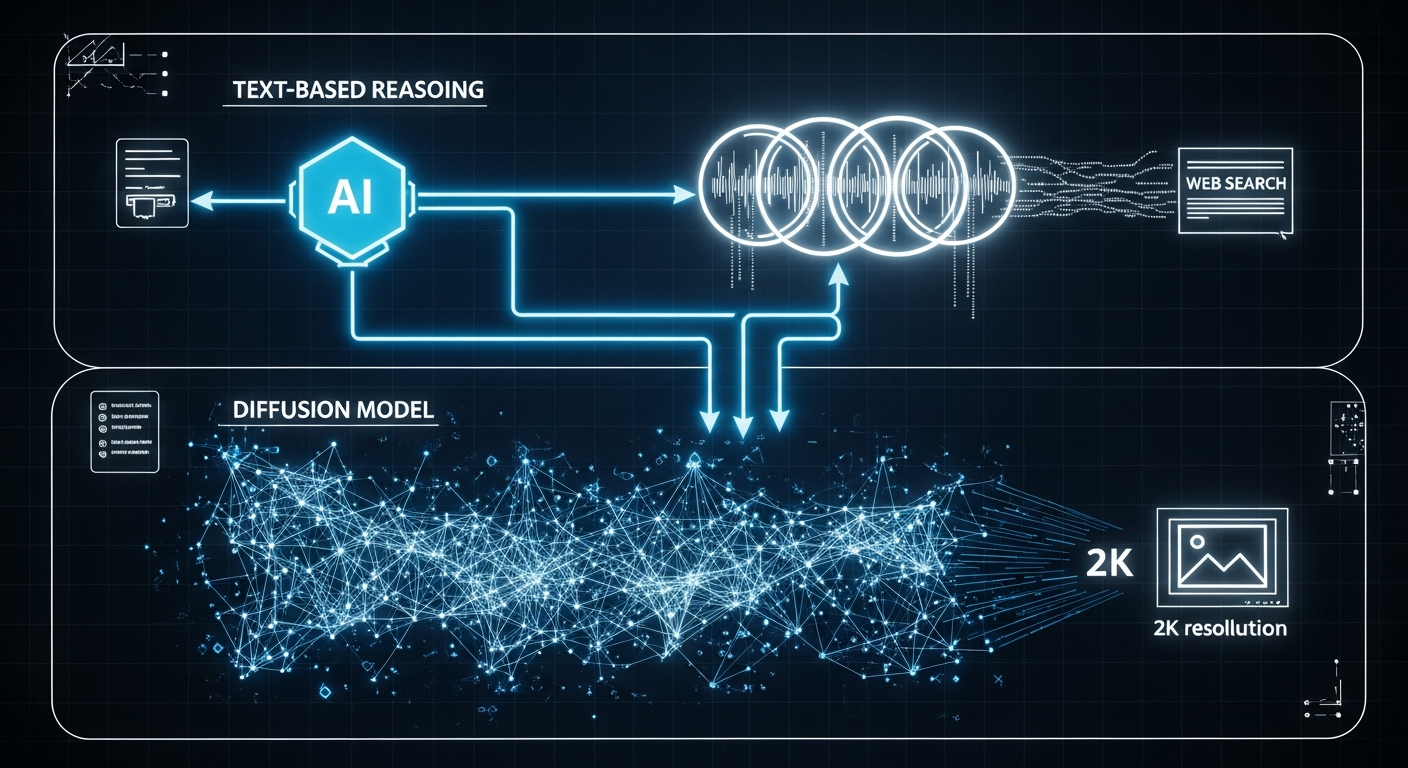
To understand why the model is succeeding in specific demographics, we must first dissect the underlying technology. ChatGPT Images 2.0 is not merely an incremental update to a standard diffusion model; it represents a fundamental shift toward Agentic AI in visual generation. OpenAI has introduced what it calls “thinking capabilities”—a reasoning-based framework that fundamentally alters the generation pipeline.
In previous iterations, a user prompt was directly encoded and fed into the diffusion model, often resulting in hallucinations, ignored constraints, or garbled text. The gpt-image-2 architecture inserts a reasoning layer between the prompt and the generation phase. When a user activates “thinking” or “pro” mode, the model pauses to analyze the request, breaks down spatial relationships, and can even execute live web searches to ground its output in real-time data (incorporating world knowledge up to December 2025 and beyond via search). It then plans the composition and verifies its own output before rendering the final image at up to 2K resolution (2560×1440).
Crucially for the Indian market, this architectural overhaul includes a vastly superior multilingual text encoder. The model can now render non-Latin scripts—specifically Hindi, Bengali, Chinese, Japanese, and Korean—with unprecedented accuracy. It handles dense paragraphs, small lettering, and text on curved surfaces without the garbled artifacts that plagued earlier AI image generators. This technical capability is the direct catalyst for the surge in South Asian adoption, allowing users to create culturally relevant, localized content without needing secondary photo editing software.
Furthermore, OpenAI has fortified the model’s safety and provenance stack. The system utilizes specialized text classifiers to block violative requests before generation, and image classifiers to filter inputs. It also natively supports C2PA metadata—an industry-standard framework for automated provenance disclosure—and embeds an imperceptible watermark to combat the rising threat of deepfakes.
Market Impact & Deployment: The TCO Dilemma
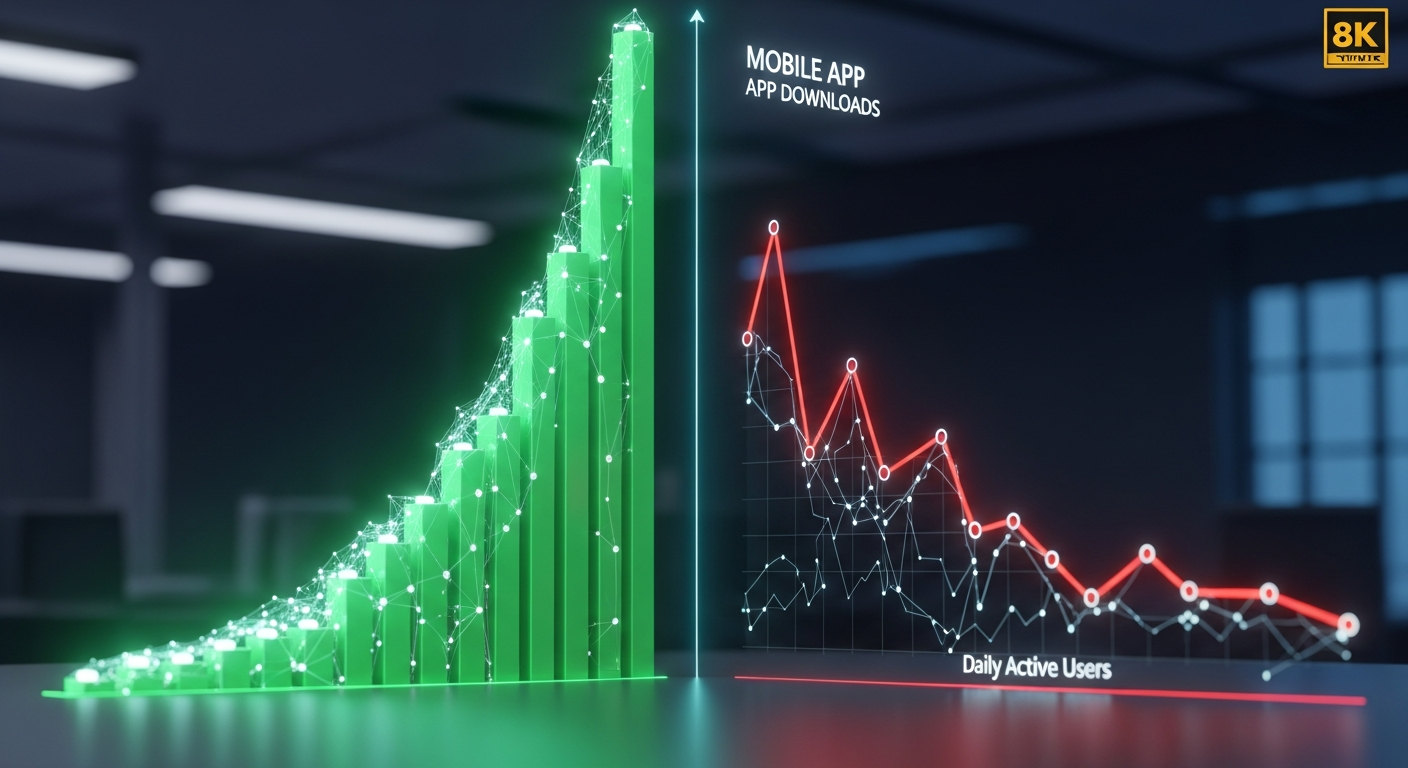
Despite the impressive technical specifications, the muted 1% global DAU growth points to a significant hurdle in enterprise deployment: Total Cost of Ownership (TCO) and workflow friction. The introduction of a reasoning layer inherently increases latency. While consumers generating fantasy avatars may tolerate a 30-second wait for a “thought-through” image, enterprise users require rapid iteration. The compute overhead required to run live web searches, generate up to eight variations simultaneously, and self-verify outputs makes gpt-image-2 an expensive API call for high-volume commercial applications.
This is where the competitive landscape becomes fierce. Google’s Gemini-backed visual ecosystem—specifically the original Nano Banana (Gemini 2.5 Flash Image) and the newly dominant Nano Banana Pro (Gemini 3 Pro Image)—remains a formidable barrier to OpenAI’s enterprise dominance. Google’s models are deeply integrated into Workspace and Vertex AI, offering seamless LLM Infrastructure for corporate clients. Nano Banana Pro also boasts advanced multimodal reasoning, supporting up to 14 input reference images for complex blending and style transfers, and is already powering industry-standard platforms like Adobe Firefly and Canva.
For a Chief Technology Officer evaluating visual AI, the choice is complex. OpenAI offers a superior conversational interface and arguably better zero-shot prompt adherence due to its new thinking mode. However, Google’s ecosystem offers lower latency options (via the Flash models), tighter enterprise security integrations, and a more established track record of copyright indemnification for commercial use.
The Consumer Translation: Digital Identity in Emerging Markets
If the enterprise sector is hesitating, the consumer sector in emerging markets is accelerating at breakneck speed. Sensor Tower data reveals that beyond India, countries like Pakistan, Vietnam, and Indonesia experienced app download spikes of up to 79% week-over-week during the rollout period. This is not a coincidence; it is a reflection of how these populations interact with the digital economy.
In India, early adoption patterns indicate that ChatGPT Images 2.0 is being utilized primarily as a sophisticated engine for self-expression. Users are bypassing traditional, expensive studio photography and complex software like Photoshop. Instead, they are leveraging the AI to create stylized portraits, social media-ready avatars, fantasy-themed newspaper covers, tarot-style visuals, and fashion moodboards. The ability to upload an everyday selfie and have the AI “think” through a cinematic portrait collage—complete with accurate Hindi typography—is a democratizing force in digital art.
This trend highlights a critical divergence in product-market fit. In the West, AI image generation is often marketed as a productivity hack—a way to generate slide deck graphics or marketing mockups faster. In emerging markets, it is being embraced as a primary tool for identity creation and cultural participation. The sheer scale of India’s user base is driving OpenAI’s top-line metrics, but it raises a vital question about monetization: Can OpenAI build a sustainable business model on the back of free-tier consumers generating personal avatars, or will the compute costs of the “thinking” mode eventually force a strict paywall?
The Future of Reasoning-Based Generation
The launch of ChatGPT Images 2.0 marks the end of the “prompt-and-pray” era of AI image generation. By integrating reasoning, web search, and self-verification, OpenAI has proven that visual models can act as intelligent agents rather than mere rendering engines. The integration of this model into third-party platforms like LTX Studio—where it can generate up to ten coherent frames for storyboarding—hints at its potential for high-end video production pipelines.
However, the stark contrast between skyrocketing downloads and flatlining daily engagement cannot be ignored. OpenAI has successfully captured the world’s attention, particularly in South Asia, but attention is not the same as retention. Until the latency of the reasoning layer is reduced and the enterprise workflow integrations match the seamlessness of Google’s ecosystem, ChatGPT Images 2.0 will remain a tale of two markets: a cultural phenomenon in the East, and a powerful, yet underutilized, tool in the West.
TechNode HQ Verdict: Pros, Cons & Usability
- Pro (Engineering): The integration of a reasoning layer and live web search drastically reduces hallucinations and improves complex spatial compositions.
- Pro (Consumer): Flawless rendering of non-Latin scripts (Hindi, Bengali, CJK) democratizes high-quality graphic design for global users.
- Con: The “thinking” mode introduces significant latency, making rapid iteration frustrating for professional designers.
- Con: A 1% global DAU growth against an 11% download spike indicates severe retention issues and a lack of sticky enterprise use cases.
Enterprise Usability: CTOs and marketing directors should pilot gpt-image-2 for complex, text-heavy localized campaigns where zero-shot accuracy is paramount. However, for high-volume, low-latency generation, Google’s Nano Banana Flash models currently offer a more cost-effective TCO.
Everyday Usability: For the general public, particularly in regions utilizing non-Latin scripts, this is the most capable free-to-use digital art and avatar creation tool currently on the market. It is highly recommended for personal branding and social media content creation.