
ð Key Takeaways
- The AI scaffolding layer, including complex retrieval pipelines and agent loops, is officially collapsing.
- LlamaIndex CEO Jerry Liu reveals that 95% of their code is now AI-generated.
- Native LLM tool-use and the Model Context Protocol (MCP) are replacing heavyweight frameworks.
- Context quality and data parsing (OCR) have become the only remaining engineering moats.
- The barrier between programmers and non-programmers is vanishing as natural language replaces code.
The Architectural Reality of the AI Scaffolding Collapse
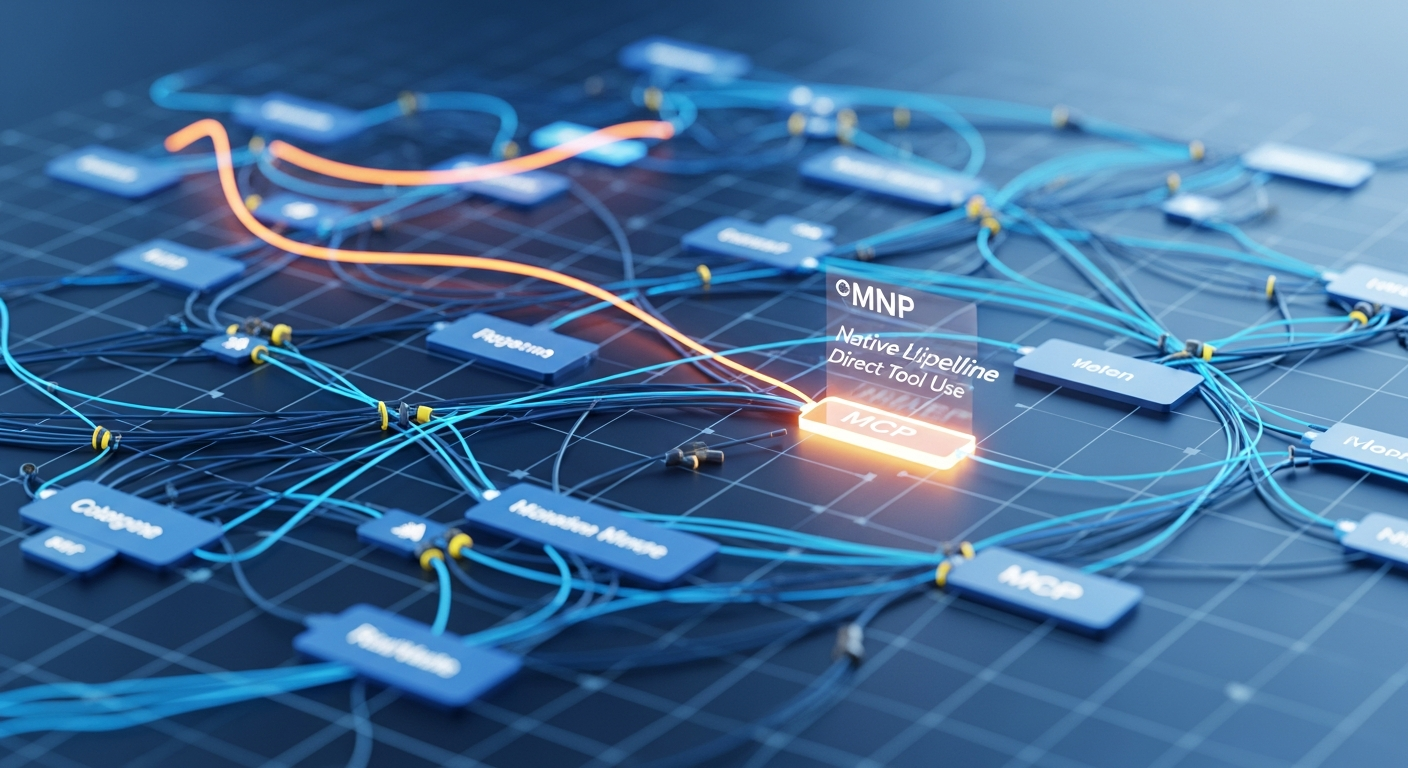
The era of complex, manual orchestration layers in generative artificial intelligence is officially over. The AI scaffolding collapse is fundamentally rewiring how developers build and deploy large language model (LLM) applications. For the past two years, the industry relied heavily on intricate frameworks—indexing layers, query engines, retrieval pipelines, and carefully orchestrated agent loops—to force early LLMs to perform reliably in production. Today, those heavyweight abstractions are rapidly becoming obsolete.
In a recent appearance on VentureBeat’s Beyond the Pilot podcast, LlamaIndex co-founder and CEO Jerry Liu confirmed what many in the trenches of agentic AI have suspected: the framework era is ending. As foundation models gain native reasoning capabilities, massive context windows, and built-in tool-use functions, the need for third-party orchestration is vanishing. According to Liu, this isn’t a failure of the ecosystem; it is the intended evolution. “There’s less of a need for frameworks to actually help users compose these deterministic workflows in a light and shallow manner,” Liu explained.
The architectural reality is stark. In early 2023, building a Retrieval-Augmented Generation (RAG) pipeline required serious boilerplate code. Developers turned to libraries like LangChain and LlamaIndex to manage conversational memory, chunk documents, and chain LLM calls together. Now, coding agents like Claude Code and GitHub Copilot can write custom, dependency-free Python pipelines tailored to exact enterprise specifications in minutes. The middleman has been cut out by the very technology it was designed to support.
The Death of Heavyweight Frameworks and the Rise of MCP
The collapse of the scaffolding layer is being accelerated by two primary forces: the exponential improvement of foundation models and the standardization of tool integration. Previously, developers spent countless hours writing bespoke API integrations to allow an LLM to interact with external databases or web services. This “glue code” was the lifeblood of early AI frameworks.
Enter the Model Context Protocol (MCP). By standardizing how AI models connect to data sources and tools, MCP has effectively commoditized the integration layer. When combined with models that possess native tool-calling capabilities, the necessity for a heavyweight framework evaporates. Developers no longer need a massive library to tell an LLM how to use a calculator or query a SQL database; the model inherently knows how to format the request, and MCP provides the standardized pipeline.
Furthermore, the sheer volume of code being written by humans is plummeting. Liu revealed a staggering statistic: approximately 95% of LlamaIndex’s code is now generated by AI. “Engineers are not actually writing real code,” Liu noted. “They’re all typing in natural language.” When AI can generate the exact custom pipeline required on demand, pre-packaged abstractions lose their appeal. They transform from helpful shortcuts into restrictive black boxes that hinder debuggability and scale.
Market Impact & Deployment: The New Context Moat
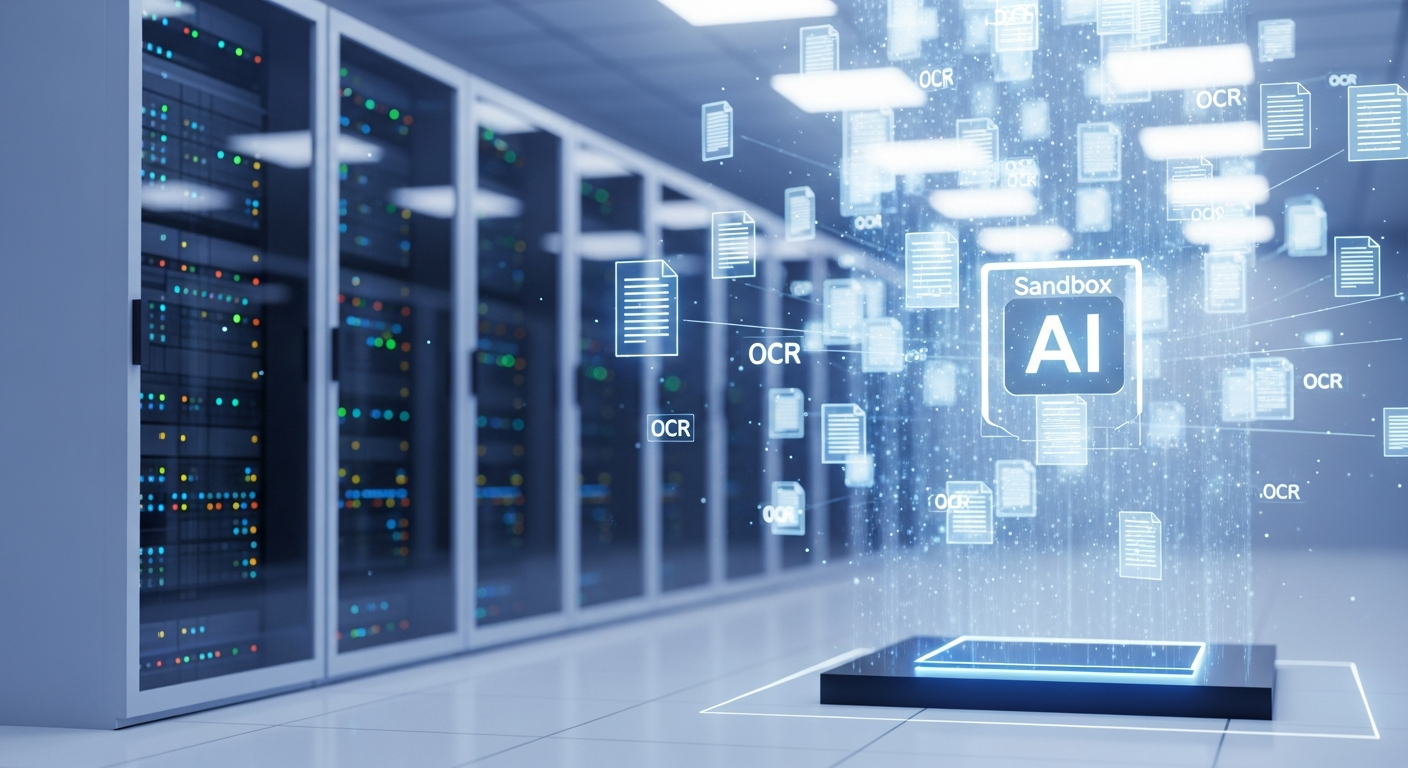
If the scaffolding is collapsing and the frameworks are dying, what survives? For enterprise IT leaders and AI startups, the answer is singular: Context. As the orchestration layer thins out, the quality, accuracy, and depth of the data fed into the model have become the ultimate competitive advantage.
Liu argues that the new engineering moat is context engineering. It no longer matters whether an enterprise uses OpenAI’s latest model or Anthropic’s Claude; the foundational intelligence is largely commoditized. The true differentiator is an organization’s ability to decipher complex file formats, extract unstructured data, and feed it cleanly into the LLM’s context window. This is why LlamaIndex is heavily pivoting toward agentic document processing and advanced Optical Character Recognition (OCR). “We’ve really identified that there’s a core set of data that has been locked up in all these file format containers,” Liu stated.
This shift forces a massive reallocation of enterprise resources. Instead of spending millions on cloud infrastructure to support convoluted RAG pipelines and vector database maintenance, CTOs must now invest in data parsing, cleaning, and governance. Retrieval has evolved into what Liu describes as an “agent-plus-sandbox” model. Enterprises must ensure their codebases are free of technical debt and flexible enough to swap out foundation models seamlessly as new “winners” emerge in the rapidly shifting AI arms race.
The Consumer Translation: English as the New Code
Beyond the enterprise server room, the AI scaffolding collapse has profound implications for the broader public and the future of software creation. The barrier to entry for building sophisticated applications is crashing to zero. Three years ago, integrating document retrieval into an app required a dedicated team of machine learning engineers. Today, a non-technical founder can simply point an AI coding agent at a problem and describe the desired outcome.
As Liu succinctly put it, “the new programming language is essentially English.” This democratization of software development means that the layers separating programmers from non-programmers are dissolving. We are entering an era where domain expertise—understanding a specific industry problem, like healthcare logistics or legal compliance—is vastly more valuable than knowing how to write Python syntax or configure an indexing layer.
However, this consumer translation also comes with a warning. While building the initial application has never been easier, maintaining it requires a deep understanding of data provenance. If the AI is writing 95% of the code and managing its own tool calls, humans must transition from being “builders” to being “editors and auditors.” Trust, security, and data accuracy will replace code compilation as the primary hurdles for everyday usability.
TechNode HQ Verdict: Pros, Cons & Usability
- Pro (Engineering): Eliminates massive amounts of boilerplate code, allowing developers to build custom, dependency-free pipelines using native LLM tool-calling and MCP.
- Pro (Consumer): Democratizes software creation by turning natural language (English) into the primary programming interface, drastically lowering the barrier to entry.
- Con: The reliance on massive context windows to replace retrieval pipelines significantly increases per-query token costs, creating a hidden financial bottleneck for scaling applications.
- Con: As frameworks collapse, enterprises face the daunting challenge of managing “shadow AI” and auditing AI-generated code that lacks traditional, human-readable structural boundaries.
Enterprise Usability: CTOs should immediately halt heavy investments in legacy RAG orchestration frameworks. Pivot engineering resources toward data parsing, OCR, and context extraction. Adopt the Model Context Protocol (MCP) to future-proof tool integrations, and ensure your architecture is modular enough to swap foundation models as they evolve.
Everyday Usability: For independent developers and non-technical founders, there has never been a better time to build. Stop trying to learn complex AI frameworks like LangChain; instead, leverage coding agents like Claude Code to generate the exact, lightweight scripts you need using plain English prompts.