Key takeaways
- Mikron is selling framed 200mm test wafers containing up to 120,000 chips for approximately $170.
- Souvenir wafers feature the domestic AMUR MIK32 RISC-V Processors developed by Syntacore.
- Vials of genuine Zelenograd cleanroom air are also available as novelty items for just $2.
- The AMUR MIK32 includes built-in cryptographic protection for critical industrial IoT applications.
- This marks a milestone in Russia’s push toward domestic, open-source hardware independence.
The Architectural Reality of MIK32 RISC-V Processors
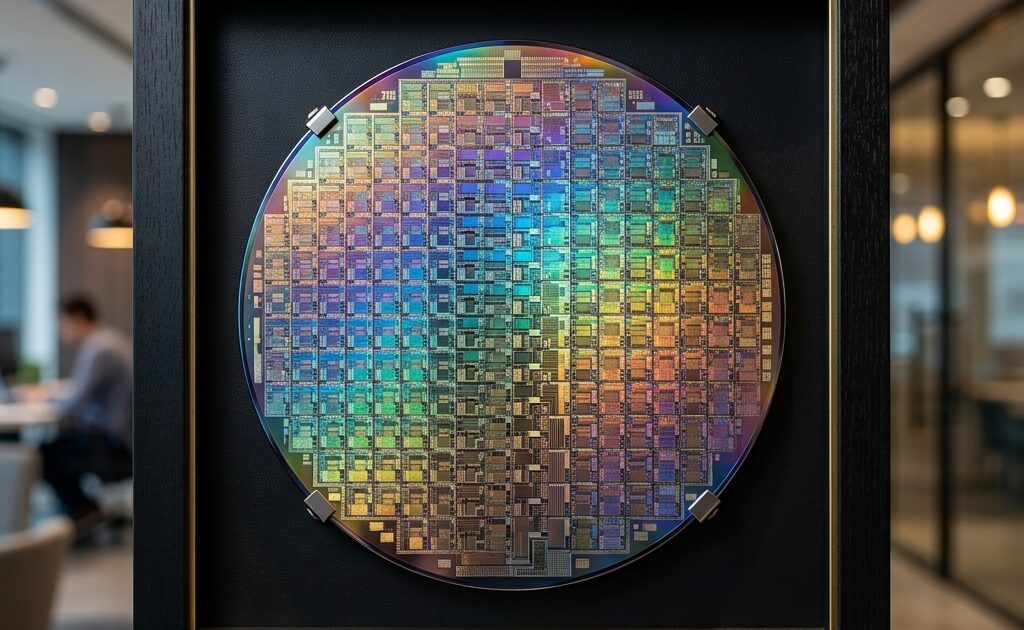
The semiconductor industry has always maintained a subtle appreciation for its own manufacturing byproducts, but Russia’s Mikron has recently formalized this by commercializing its test runs. For approximately $170 (12,500 rubles), technology enthusiasts can purchase beautifully framed 200mm silicon test wafers containing up to 120,000 MIK32 RISC-V Processors or transport card chips. These “dummy wafers,” typically utilized during pilot production phases to calibrate photolithography equipment and verify manufacturing pipelines, are now serving a dual purpose as high-end geek artifacts.
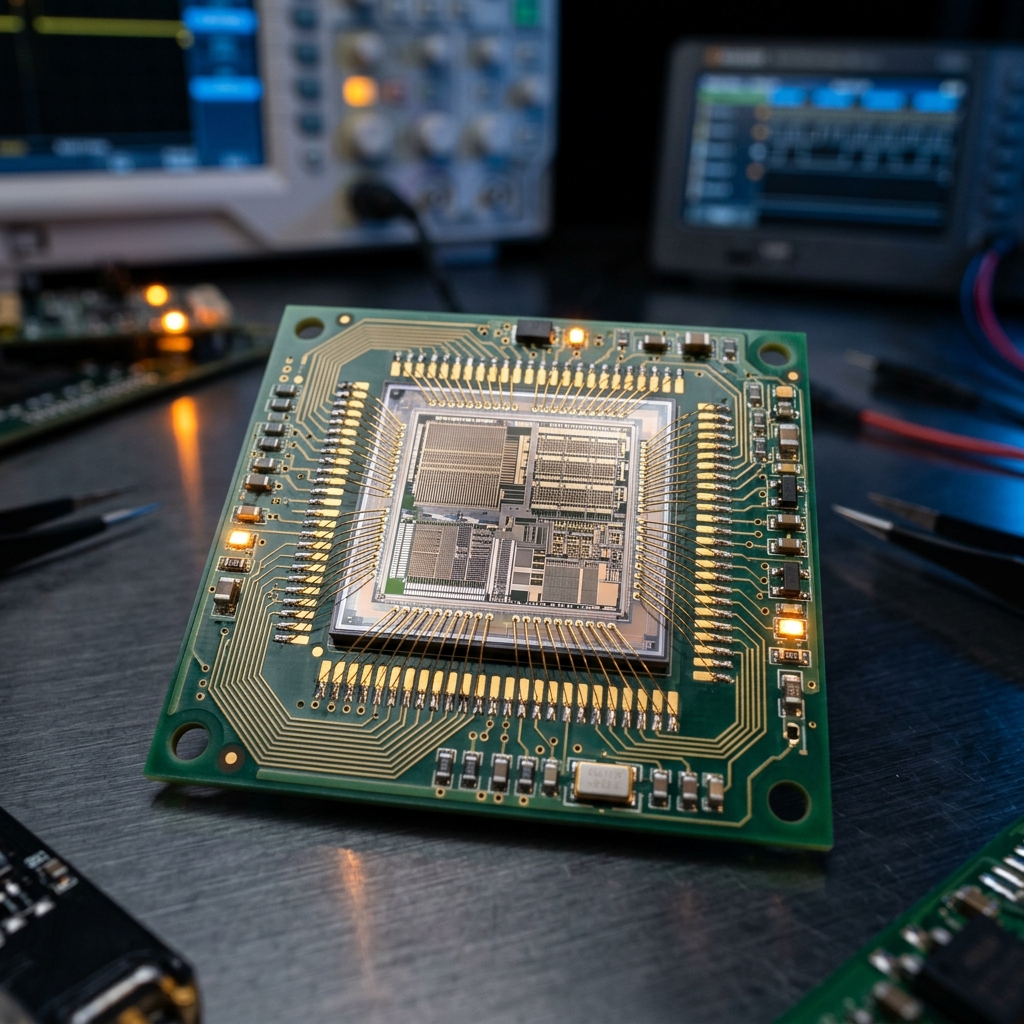
At the center of this novelty offering is the AMUR MIK32, a highly significant milestone in domestic Russian silicon engineering. Utilizing an open-source RV32IMC profile core with IP developed by St. Petersburg-based Syntacore, this 32-bit microcontroller represents a strategic pivot toward hardware independence. While global competitors continue to push the boundaries of extreme ultraviolet (EUV) lithography and advanced node scaling in the semiconductor ecosystem, Mikron’s focus on domestic RISC-V deployment underscores a pragmatic approach to securing critical infrastructure.
The technical specifications of the AMUR MIK32 reveal an architecture designed for resilience and security rather than raw consumer performance. Engineered with built-in cryptographic protection, the microcontroller is tailored for high-security applications, industrial automation, and the Internet of Things (IoT). Alongside standard peripherals such as I2C, UART, SPI, ADC, and DAC, the chip acts as the foundational compute layer for sovereign digital ecosystems.
Market Impact & Deployment

From a commercial and enterprise perspective, the availability of these test wafers highlights the successful transition of the AMUR MIK32 from prototype to pilot production. While the framed wafers serve as decorative artifacts—measuring 270 x 270 x 15mm and weighing 365g—they symbolize the completion of a complex, fully domestic development and production cycle within Russia.
For C-level executives and systems integrators operating within regional constraints, the actual deployment of these chips offers significant Total Cost of Ownership (TCO) benefits. By leveraging an open-source Instruction Set Architecture (ISA) like RISC-V, organizations bypass expensive licensing fees traditionally associated with proprietary architectures. This transition allows for deep customization of the silicon stack, enabling enterprises to deploy highly optimized logic boards without relying on foreign supply chains. The integration of cryptographic modules at the silicon level further reduces the need for expensive, third-party software security overlays in enterprise infrastructure.
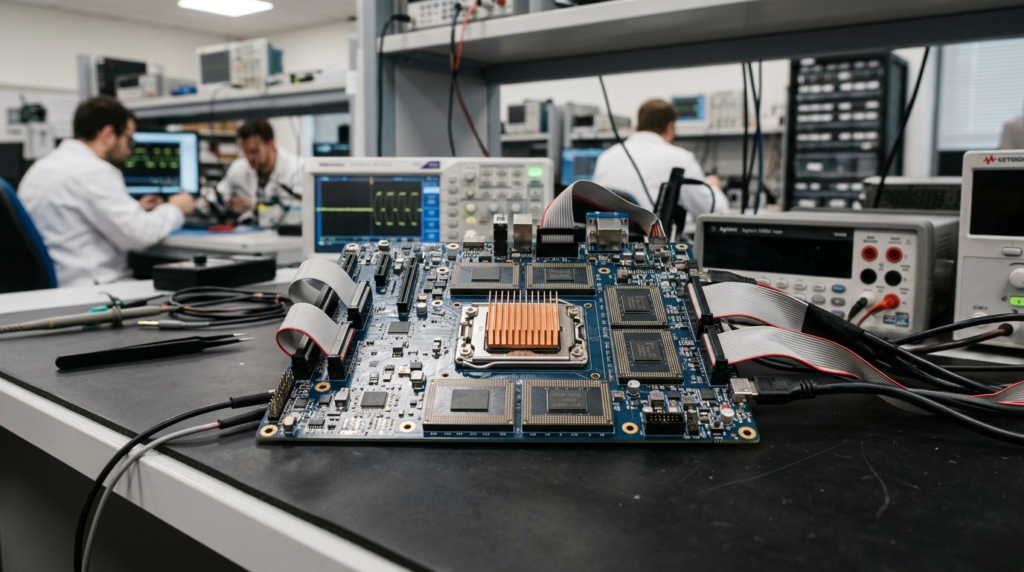
Furthermore, Mikron is not solely dealing in wall art. The practical deployment of the architecture is evidenced by the commercial availability of debugging boards, such as the Start-MIK32. These development kits provide engineers with the hands-on access required to prototype sovereign IoT and automation solutions, bridging the gap between theoretical test wafers and active industrial application.
The Consumer Translation
For the average consumer and technology enthusiast, the appeal of a framed silicon wafer goes beyond standard merchandising. Owning a 200mm wafer packed with thousands of microprocessors is akin to owning a physical snapshot of the computational revolution. It offers a tangible connection to the microscopic world that powers modern civilization. The sheer density of human ingenuity—up to 120,000 distinct processing units rendered on a single iridescent disk—makes for an unparalleled conversation piece.
In addition to the premium framed artworks—which come in various designs ranging from minimalist black and white to paisley and space themes—Mikron is offering an even more unusual souvenir: small vials of air harvested directly from the firm’s NWP cleanroom in Zelenograd. Priced at a mere $2, these vials represent the absolute pinnacle of technological novelty. A semiconductor cleanroom is thousands of times more sterile than a hospital operating theater, making this a highly unique, if somewhat whimsical, collectible.
This initiative mirrors the physical merchandising of software and consumer electronics in a way that rarely extends to the raw silicon tier. It democratizes the aesthetic of advanced manufacturing, allowing hobbyists, developers, and collectors to interact with the raw materials of the digital age long before they are obscured inside molded plastic chassis.
Frequently Asked Questions
Q1: What exactly is Mikron selling as souvenirs?
A1: Mikron is selling framed 200mm silicon test wafers containing between 30 and 120,000 chips, as well as $2 vials of air from their Zelenograd cleanroom.
Q2: What chips are featured on these wafers?
A2: Some of the wafers feature the domestic AMUR MIK32 RISC-V Processors, while others contain transport card chips used in the Moscow Metro.
Q3: Why are test wafers sold to the public?
A3: Dummy or test wafers are produced during pilot phases to calibrate equipment; selling them as souvenirs is a common semiconductor industry practice to mark manufacturing milestones.
Q4: What is the AMUR MIK32 chip?
A4: It is Russia’s first fully domestic 32-bit microcontroller based on the open-source RISC-V architecture, featuring cryptographic protection for high-security applications.
TechNode HQ Verdict: Pros, Cons & Usability
- Pro (Engineering): Open-source RISC-V architecture allows for highly customized, sovereign silicon deployment without proprietary licensing fees.
- Pro (Consumer): Provides technology enthusiasts an affordable, visually stunning piece of raw semiconductor manufacturing history.
- Con: These souvenir wafers are primarily decorative “test” units; extracting functional chips for hobbyist projects is impractical.
- Con: Availability is highly localized and limited, making international acquisition difficult amid current geopolitical supply chain constraints.
Enterprise Usability: CTOs should view the AMUR MIK32 as a viable, secure alternative for domestic industrial automation and IoT endpoints, leveraging the Start-MIK32 dev boards to begin software integration immediately.
Everyday Usability: For the general public and hardware collectors, the $170 framed wafers and $2 cleanroom air vials offer a highly unique aesthetic addition to any office or workshop wall.