Key takeaways
- Passive cooling technology can lower peak urban temperatures by a massive 4.5°C.
- Global AC units are projected to triple to 5.5 billion by 2050.
- Radiative cooling beams heat into space via the 8–13 μm atmospheric transparency window.
- Passive architectural integration can slash hot-climate cooling energy demand by up to 80%.
The Promise of Passive Cooling Technology
As carbon emissions drive global temperatures to unprecedented highs, humanity is leaning heavily on a deeply flawed lifeline: mechanical air conditioning. The engineering paradox is glaring. Air conditioning creates a dangerous feedback loop where units consume massive amounts of energy and emit significant carbon, which in turn further accelerates global warming. Passive cooling technology represents a critical paradigm shift, moving away from brute-force mechanical compressors toward intelligent thermal architecture that naturally mitigates heat.
Forecasts indicate a looming crisis. The number of air conditioning units worldwide is projected to nearly triple, surging from approximately 2 billion today to over 5.5 billion by 2050, driven largely by rising incomes and extreme temperatures in developing nations. According to a prominent review authored by Matthaios Santamouris and Konstantina Vasilakopoulou in Nature Reviews Clean Technology, cooling currently accounts for roughly 10% of global electricity consumption. If unchecked, the electricity needed to cool global infrastructure will increase 210% by 2050, with greenhouse gas emissions from AC systems tripling in tandem.
The stakes for data center infrastructure and urban environments are astronomical. Projections suggest that by the end of the century, emissions from mechanical cooling alone could contribute up to 0.5°C to global temperature rise. Passive cooling technology is not just an eco-friendly alternative; it is a mandatory architectural defense layer required to break the climate feedback loop.
The Architectural Reality and Engineering

Passive cooling is the science of non-mechanical heat reduction, achieved through advanced material science and thermodynamics. While traditional methods like cross-ventilation and basic shading have existed for centuries, modern engineering has elevated these concepts using nanomaterials and smart integration.
The most fascinating advancement is radiative cooling. This technique utilizes materials that release heat as infrared radiation directly into the sky through the atmospheric transparency window of 8–13 μm. Because this specific bandwidth of radiation is not absorbed by greenhouse gases, the heat effectively bypasses the Earth’s atmosphere and escapes into deep space. Historically limited to nighttime use, recent breakthroughs in high-performance reflective nanomaterials allow radiative cooling to operate efficiently during peak daytime sunlight.
Beyond radiative emission, the tech stack includes smart solar control—deploying electrochromic glass and reflective surfaces that dynamically block incoming solar radiation. Meanwhile, advanced ventilative cooling integrates intelligent sensors to optimize outdoor air movement, and evaporative cooling forces hot air through water-soaked pads. Because controlling indoor humidity accounts for roughly half of the energy-related emissions associated with cooling, pure evaporative systems struggle in humid tropical environments. Consequently, engineers are focusing on hybrid systems, combining radiative and evaporative mechanics to maximize performance across diverse global climates.
Market Impact & Deployment
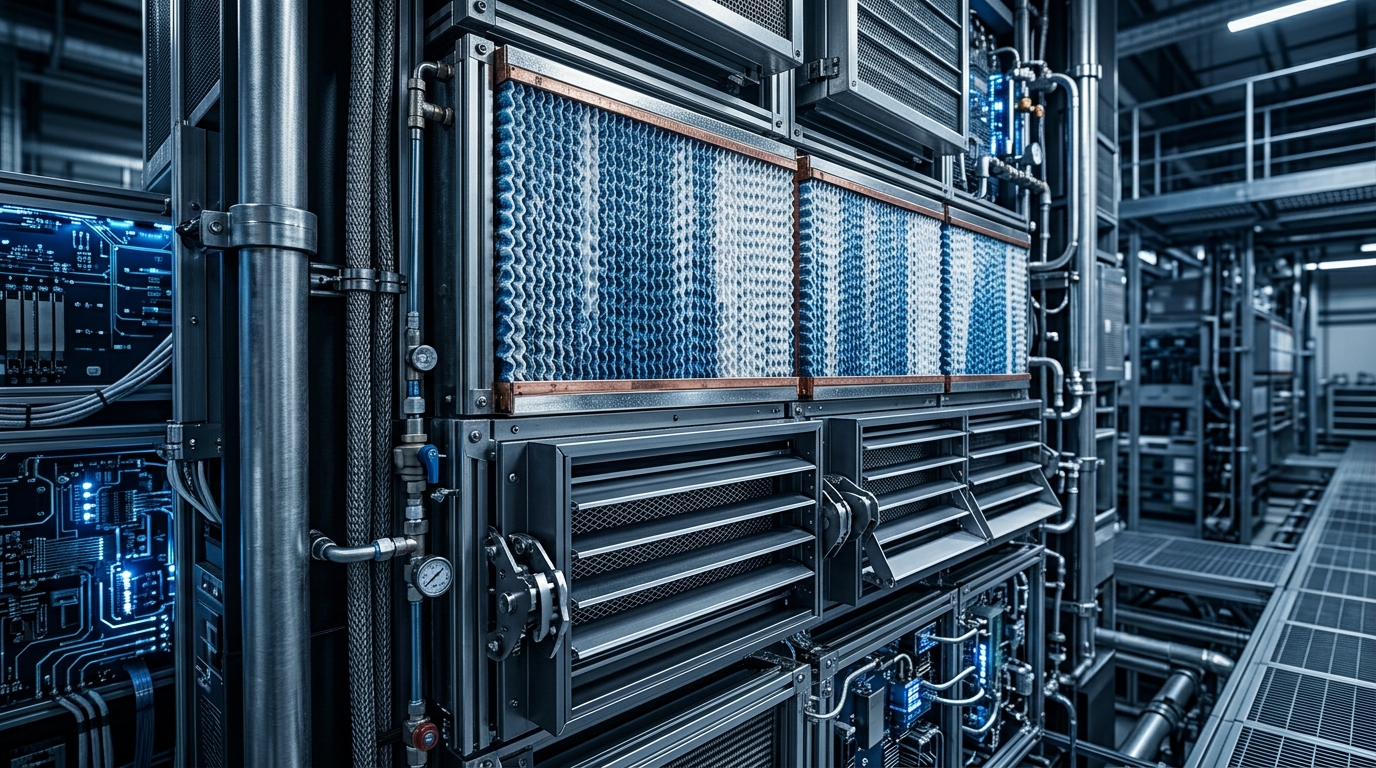
From an enterprise Total Cost of Ownership (TCO) perspective, the return on investment for passive thermal architecture is massive. Integrating passive cooling strategies with efficient building design can reduce cooling energy demand by up to 80% in hot climates. For commercial real estate and enterprise IT operators, this directly translates to lower operational expenditures (OpEx) and allows for the downsizing of mechanical HVAC capital expenditures (CapEx).
Think of mechanical air conditioning as paying for a massive fleet of courier trucks to constantly haul heat out of your building, burning expensive fuel every trip. Passive cooling is like redesigning the building with structural gravity chutes that allow the heat to simply slide out on its own, for free. You still keep a few trucks for extreme days, but your daily logistical costs plummet.
However, the rollout faces substantial friction. The primary barriers to the adoption of passive cooling strategies are not technical, but rather related to mainstream integration. Scaling requires aggressive updates to municipal building codes, favorable financing mechanisms, and specialized architectural training. Furthermore, high-performance radiative materials are not yet manufactured at the scale required for global mass adoption, and the slow renovation rate of existing legacy buildings means the most dramatic gains will be restricted to new construction in the near term.
The Consumer Translation
At the consumer level, this transition is critical for health and economic equity. As global temperatures spike, mechanical air conditioning remains a luxury that low-income populations cannot afford, leaving them highly vulnerable to deadly heatwaves. Scaling passive cooling technologies at the structural level ensures a baseline of thermal survivability in affordable housing without the recurring burden of high energy bills.
Furthermore, residential smart home ecosystems are adapting quickly. Researchers are developing intelligent applications that monitor indoor microclimates, automatically prompting users—or commanding automated smart-blinds—to shade east-facing windows in the morning and west-facing windows in the afternoon. Paired with low-tech airflow strategies, such as automated ceiling fans that accelerate sweat evaporation, consumers can drastically reduce their reliance on expensive chemical refrigerants.
Speaking of refrigerants, the environmental risk is severe. Modern AC systems rely heavily on chemical refrigerants like hydrofluorocarbons (HFCs), which have a global warming potential (GWP) thousands of times more potent than carbon dioxide. By preventing the deployment of billions of new mechanical units, passive cooling directly curbs the threat of catastrophic HFC leakage.
Frequently Asked Questions
Q1: What is passive cooling technology?
A1: Passive cooling technology utilizes advanced materials and architectural design to lower indoor temperatures without mechanical compressors. It leverages methods like radiative cooling and smart shading to drastically reduce building thermal loads.
Q2: How does radiative cooling function during the day?
A2: Radiative cooling employs specialized nanomaterials that reflect incoming solar radiation while simultaneously emitting heat through the 8–13 μm atmospheric window directly into cold, deep space.
Q3: Why is mechanical air conditioning considered a climate threat?
A3: Traditional AC relies on HFC refrigerants, which possess a global warming potential thousands of times greater than CO2. By 2050, cooling could account for up to 10% of global greenhouse gas emissions, contributing up to 0.5°C to global temperature rise.
TechNode HQ Verdict: Pros, Cons & Usability
- Pro (Engineering): Can reduce building cooling energy demand by up to 80% and lower peak urban temperatures by 4.5°C.
- Pro (Consumer): Provides equitable, passive thermal comfort without exorbitant monthly electricity costs.
- Con: Radiative nanomaterials are difficult to scale, and evaporative systems rapidly lose efficacy in high-humidity regions.
- Con: Requires systemic overhauls of urban planning policies, building codes, and legacy construction practices.
Enterprise Usability: CTOs and facility managers constructing new data centers or commercial headquarters should immediately mandate passive thermal analysis. Deploying smart solar control and radiative roof paneling will drastically slash HVAC CapEx and power consumption, optimizing PUE metrics.
Everyday Usability: Homeowners should prioritize immediate, low-barrier passive interventions like automated exterior shading, high-efficiency fans, and localized ventilation. While deep radiative cooling is highly effective, it remains primarily a structural integration for new housing developments.