Key takeaways
- Video documentation confirms Chinese conversion workshops are dismantling retail GeForce RTX 5090 graphics cards at assembly-line scale to supply domestic AI server infrastructure.
- Technicians desolder the Blackwell GB202 processor and GDDR7 memory modules to transplant them onto custom dual-slot blower boards compatible with standard 4U chassis.
- Consumer triple-fan coolers are incompatible with high-density server racks because they exhaust thermal loads into the chassis interior rather than through the rear bracket.
- Production halts on retail RTX 5090 cards and ongoing silicon reallocation to $16,000 RTX Pro 6000 enterprise accelerators have pushed grey-market consumer prices toward $8,500 to $10,000.
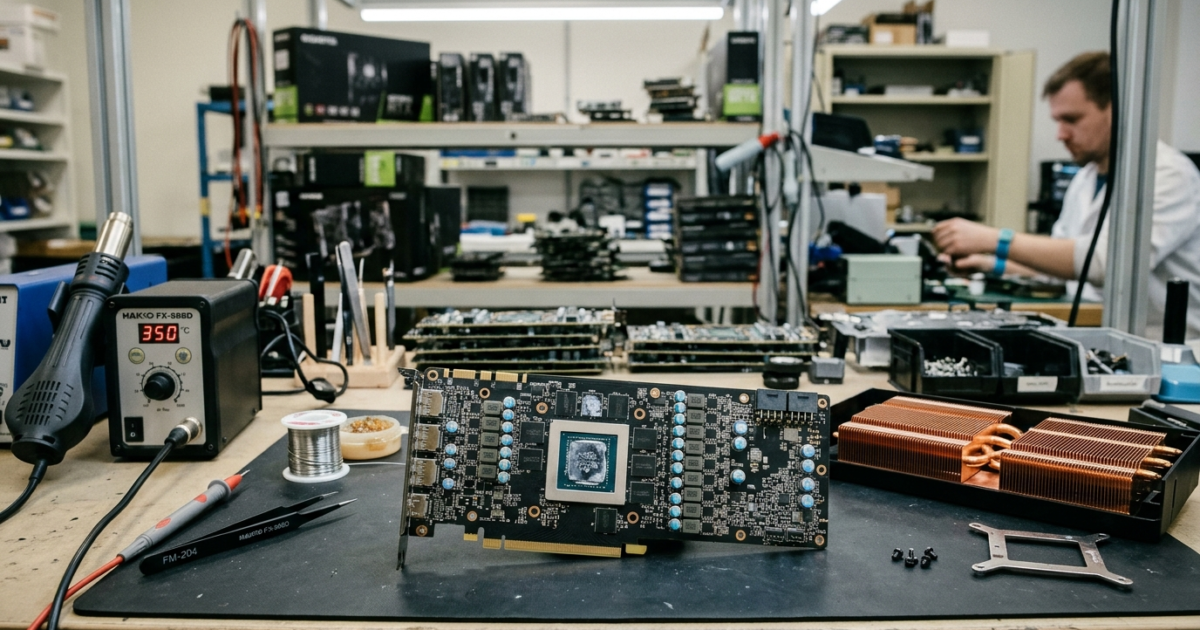
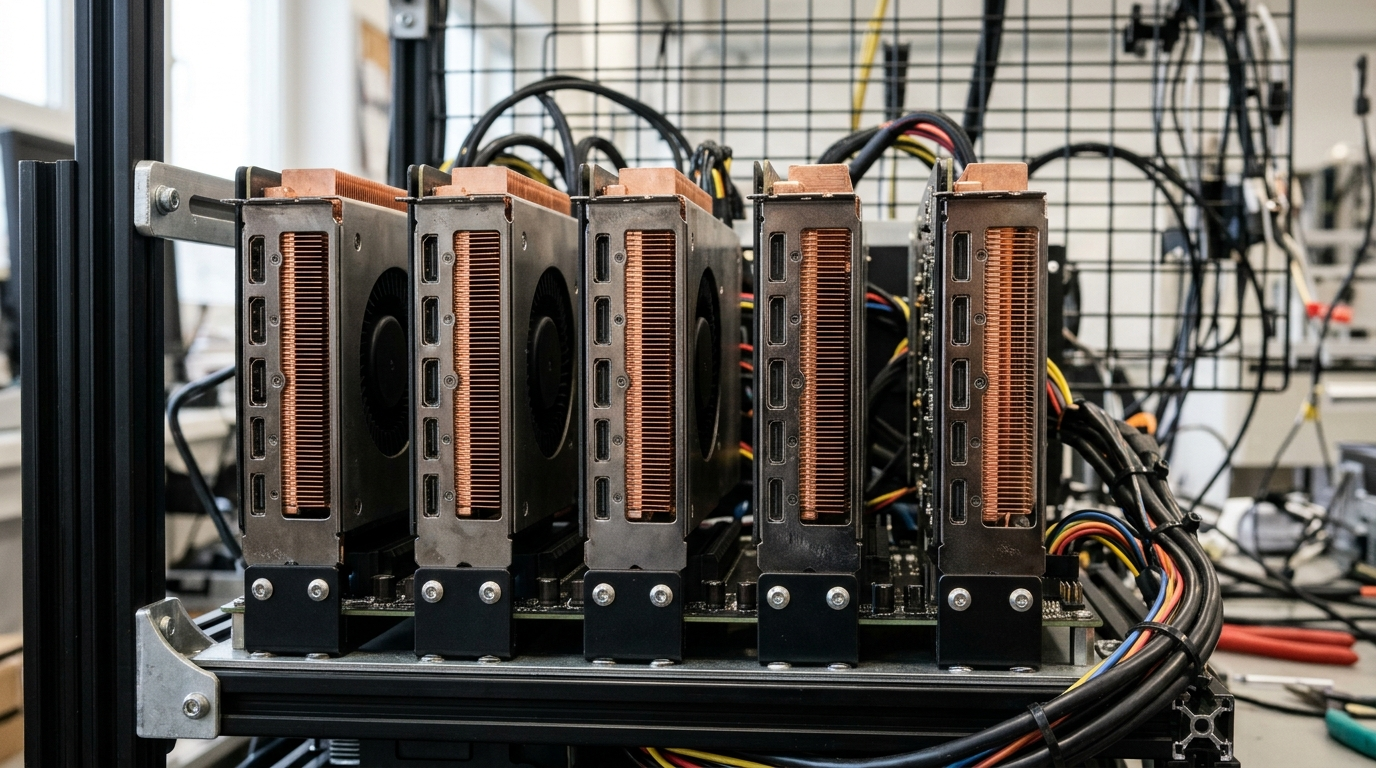
Leaked video footage from Chinese conversion facilities confirms that industrial workshops are acquiring brand-new GeForce RTX 5090 graphics cards by the thousands and stripping them down for artificial intelligence compute infrastructure. According to reporting from Tom’s Hardware, specialized technicians systematically desolder Nvidia’s flagship GB202 silicon dies and GDDR7 memory modules from original retail circuit boards, transplanting the components onto custom dual-slot printed circuit boards (PCBs) equipped with blower-style coolers. The operation converts gaming flagships into server-ready hardware, bypassing official supply limitations and escalating worldwide consumer hardware shortages.
Factory-Scale Harvesting of GB202 Silicon
The circulating workshop footage documents an assembly-line environment structured specifically for component salvaging. Workbenches are shown stacked with retail retail packaging and fresh bare cards from major board partners, alongside Nvidia’s own reference Founders Edition models. Rather than operating as informal modifications, the conversion facilities use dedicated workstations with heat guns and thermal rework stations to lift the complex ball grid array (BGA) packages intact.
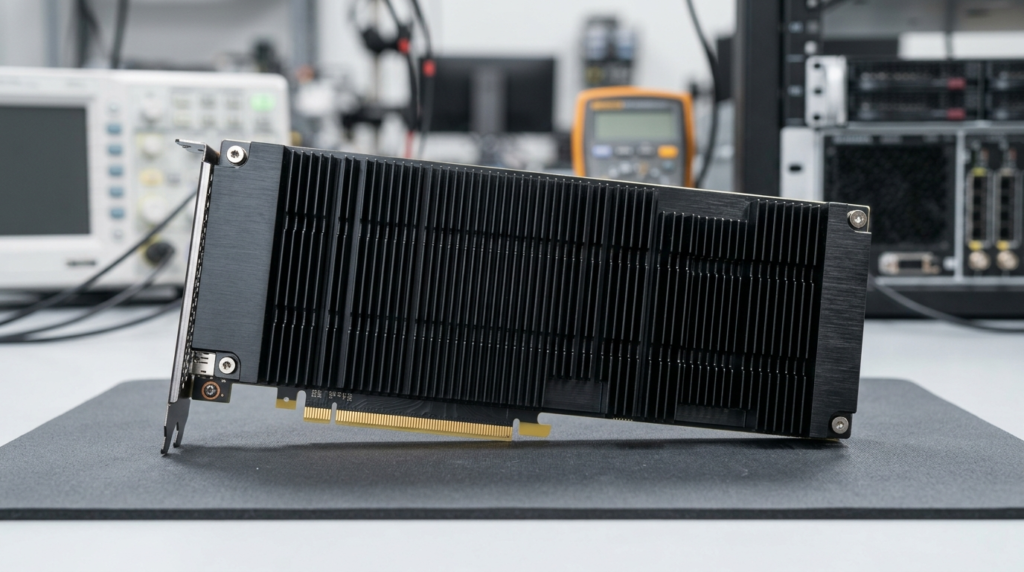
Once technicians extract the GB202 die and the surrounding GDDR7 memory chips, the silicon is cleaned, re-balled, and soldered onto a specialized PCB. Completed boards are then fitted with dual-slot cooling assemblies featuring thick copper baseplates and rear-exhaust centrifugal blowers. Following assembly, the converted accelerators move directly to continuous open-air validation benches where dozens of modified units run multi-hour compute and graphics stress tests simultaneously before being boxed for shipment to commercial data centers and private AI laboratories.
Thermal and Chassis Constraints in AI Clusters
The primary motivation behind this destructive conversion process is physical form-factor incompatibility. Retail GeForce RTX 5090 graphics cards are engineered for desktop consumer cases, featuring massive axial cooling solutions that span three to four PCIe slots. In high-density multi-GPU enterprise environments, such designs present fatal operational bottlenecks:
- Slot Spacing: Standard 4U server chassis and multi-GPU motherboards require dual-slot spacing to accommodate four to eight accelerator cards side-by-side. Thick consumer cards physically obstruct adjacent PCIe slots.
- Exhaust Direction: Axial triple-fan assemblies disperse hot air laterally into the interior of the system chassis. In high-density server enclosures lacking massive open airflow, recirculated heat causes rapid thermal throttling. Dual-slot blower coolers channel intake air across a vapor chamber and exhaust 100% of the thermal load directly through the rear I/O bracket.
- Memory Expansion: Specialized workshops have expanded beyond simple thermal conversions. Hardware modifications documented on regional marketplaces like Alibaba have produced custom RTX 5090 variants outfitted with 96GB of memory—triple the factory 32GB GDDR7 configuration—offering specialized enterprise clusters substantial memory capacity at roughly 65% of standard retail cost.
| Specification / Attribute | Standard Consumer RTX 5090 | Modified Server RTX 5090 | Nvidia RTX Pro 6000 Blackwell |
|---|---|---|---|
| Base Silicon | Nvidia GB202 Blackwell | Nvidia GB202 Blackwell (Harvested) | Nvidia GB202 Blackwell (Enterprise Tier) |
| Memory Configuration | 32GB GDDR7 | 32GB GDDR7 (Up to 96GB Modified) | Professional ECC Configuration |
| Cooler Form Factor | 3.5 to 4-Slot Axial Triple-Fan | 2-Slot Centrifugal Blower | 2-Slot Server / Blower Standard |
| Airflow Dynamics | Internal Chassis Recirculation | Rear-Bracket Exhaust Extraction | Rear-Bracket Exhaust Extraction |
| Target Deployment | High-End Consumer Desktops | High-Density 4U Compute Servers | Enterprise Workstations and AI Racks |
| Street / List Pricing | $8,500–$10,000 (Grey Market) | Sub-$4,000 (Custom 96GB Wholesale) | ~$16,000 List Price |
Retail Exhaustion and Enterprise Silicon Reallocation
The scale of these conversion lines has exacerbated an already strained international supply chain. Consumer availability has evaporated from authorized distribution channels, driving third-party marketplace pricing for custom partner cards to between $8,500 and $10,000. In domestic consumer channels, prebuilt gaming desktop configurations have occasionally emerged as an unexpected pricing hedge, frequently selling below the standalone price of a grey-market card while retaining vendor system warranties.
Compounding this shortfall, industry reports indicate that Nvidia has suspended standard GeForce RTX 5090 manufacturing lines. Production allocations of the monolithic GB202 die are reportedly shifting to higher-margin commercial products, notably the $16,000 RTX Pro 6000 Blackwell accelerator. Between corporate silicon reallocation at the foundry level and aggressive grey-market purchasing by overseas modification lines, consumer inventory for top-tier silicon faces an extended supply freeze.
What happens next
The continued operation of large-scale conversion factories highlights an enduring structural imbalance: commercial demand for generative AI training and inference silicon continues to outpace enterprise production lines, making high-end consumer GPUs lucrative targets for secondary modification. As long as the market spread between consumer retail pricing and certified enterprise accelerators remains wide, third-party workshops will retain strong financial incentives to harvest and repackage gaming dies.
For enterprise buyers and infrastructure operators, these gray-market blower conversions introduce severe reliability and support liabilities. Transplanted BGAs lose all manufacturer warranty coverage and run without official driver validation or enterprise-grade error-correcting memory guarantees. Meanwhile, consumer PC builders and workstation operators face prolonged component shortages, leaving prebuilt systems and secondary-tier cards like the RTX 5080 as the only accessible avenues for desktop Blackwell hardware in the near term.
Sources
- Leaked video exposes how industrial-scale Chinese factories are dismantling RTX 5090s by the thousands to fuel AI servers — GPU die and memory desoldered and transplanted to blower designs; custom cards to Nvidia Founders Editions on the chopping block | Tom’s Hardware
- Nvidia reportedly halts GeForce RTX 5090 production in favor of AI data center and professional GPUs — impending supply drought expected to drive up prices, RTX 5080 24GB rumored as new gaming flagship | Tom’s Hardware
- China-modified Nvidia RTX 5090 with massive 96GB of memory appears on Alibaba for less than $4,000 — 3x more VRAM at 65% the cost of the original | Tom’s Hardware