
Key takeaways
- OpenEnv is now a community-governed protocol standardizing AI agent execution environments.
- A 9-member coalition including Meta, Nvidia, and Hugging Face now leads the project.
- OpenEnv-trained 4B micro-models are outperforming 235B proprietary models on specific tool-use tasks.
- The protocol utilizes persistent WebSockets and Daytona sandboxes for massive parallel execution.
- OpenEnv relies on deterministic rewards (RLVR) rather than memory-heavy neural reward models.
The artificial intelligence landscape of 2026 is defined by a singular, high-stakes battleground: agentic capabilities. For the past two years, frontier labs have maintained a suffocating monopoly on AI agents capable of reasoning, planning, and executing complex tasks across digital environments. This dominance wasn’t merely a product of parameter count; it was a structural advantage born from proprietary training harnesses. Models like OpenAI’s GPT-5.5 and Anthropic’s Opus 4.8 were trained hand-in-glove with bespoke, closed-source execution environments like Claude Code, Codex, OpenClaw, and Hermes. But on June 8, 2026, the open-source community launched its most coordinated counter-offensive to date. Hugging Face announced that the OpenEnv Agentic RL framework is officially transitioning into a community-governed, open-source standard, backed by a massive coalition of industry heavyweights.
This is not just another repository update. OpenEnv has evolved into the foundational protocol layer for open AI development. By establishing a neutral interoperability layer between the model, the trainer, and the execution environment, OpenEnv is systematically dismantling the proprietary moats of frontier labs. The governance of this critical infrastructure has been handed over to a formidable 9-member steering committee comprising Meta-PyTorch, Hugging Face, Nvidia, Unsloth, Reflection, Modal, Prime Intellect, Mercor, and Fleet AI. Furthermore, the project has secured official adoption from over 16 leading organizations, including Scale AI, Snorkel AI, SkyRL (UCB), the Stanford Scaling Intelligence Lab, and the PyTorch Foundation.
The implications of this shift are already sending shockwaves through the enterprise sector. Early benchmarks from the coalition have demonstrated a paradigm-shifting reality: by utilizing the OpenEnv Agentic RL protocol, highly specialized 4B parameter micro-models are now outperforming massive 235B parameter proprietary models on specific tool-use tasks, all at a fraction of the compute cost. To understand how the open-source community achieved this David-versus-Goliath victory, we must look under the hood at the architectural modernization OpenEnv brings to the table.
The Architectural Reality of OpenEnv Agentic RL
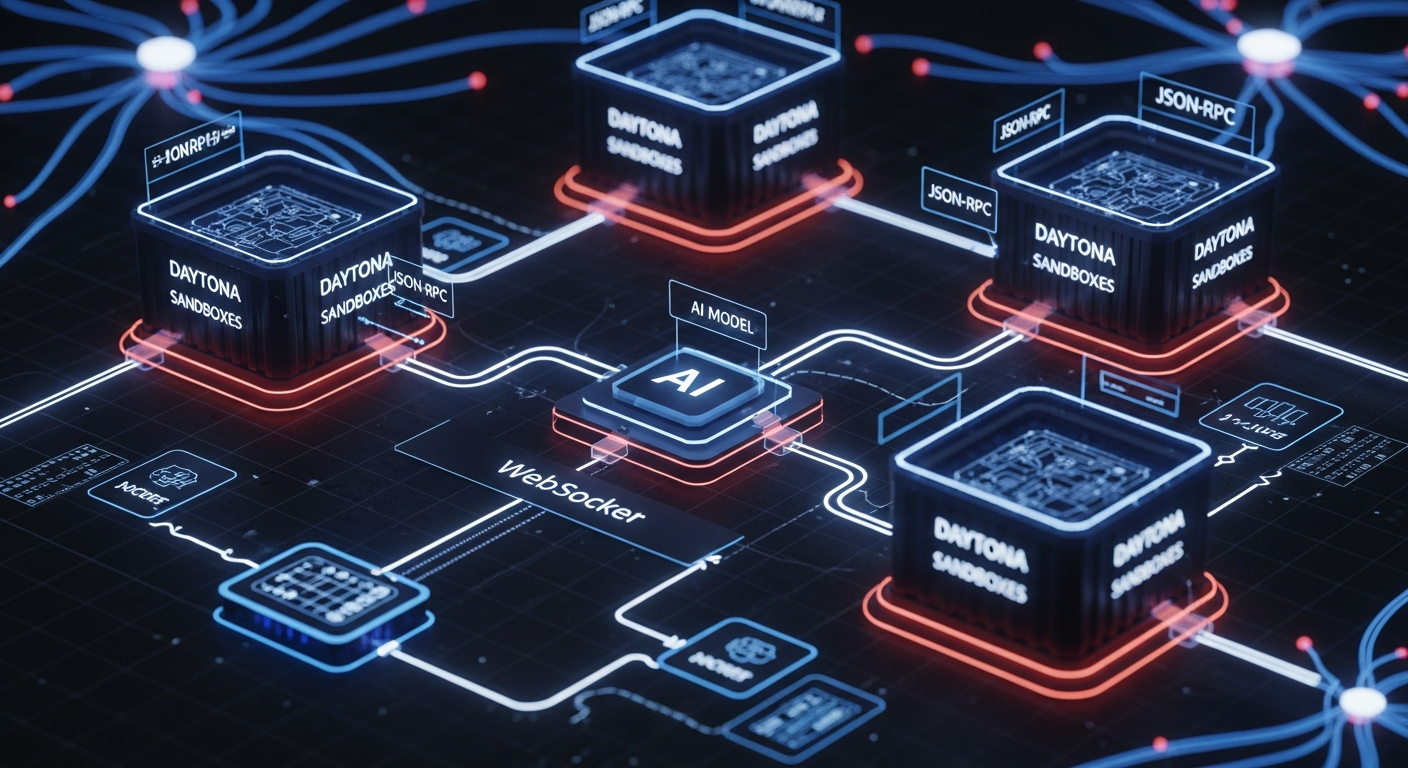
Historically, the open-source community suffered from severe fragmentation when it came to Reinforcement Learning (RL). Every research group, university, and startup built custom execution environments from scratch. If a team wanted to train an agent to navigate a Linux terminal or operate a web browser, they had to write bespoke integration code. This lack of standardization made cross-model benchmarking nearly impossible and resulted in massive wastes of compute resources. OpenEnv solves this by acting as the “common socket” that any RL trainer can plug into without custom code.
At its core, OpenEnv bridges the gap between academic research and production deployment by modernizing the traditional RL framework—reminiscent of the legacy OpenAI Gym—for the era of Large Language Models. It exposes a familiar, standardized API utilizing the classic reset(), step(), and state() functions. However, the true architectural breakthrough lies in its transport layer. OpenEnv upgrades the environment communication from stateless HTTP requests to persistent WebSocket connections. This is a critical evolution. Agentic tasks are inherently multi-turn; an agent might need to open a file, read its contents, write a script, execute it, read the error logs, and debug the code. Persistent WebSockets allow the environment to maintain complex state across these extended interactions without the latency and overhead of repeatedly re-establishing connections.
Furthermore, OpenEnv mandates containerized execution. Environments are packaged via Docker and run as strictly isolated microservices. Through a highly pluggable provider model, OpenEnv natively supports Daytona sandboxes. This integration is the linchpin for scalability, enabling the parallel execution of thousands of isolated environment instances without requiring developers to manage complex local infrastructure. When an agent executes a piece of generated code, it does so inside a secure, ephemeral Daytona sandbox, ensuring that malicious or erroneous outputs cannot compromise the host system.
Another major architectural pillar of OpenEnv is its native integration of the Model Context Protocol (MCP) over JSON-RPC, currently formalized in the community’s RFC 003. MCP elevates the framework from a simple sandbox to a dynamic tool-use ecosystem. It allows client models to dynamically discover available tools at runtime via a tools/list command and invoke them via tools/call. Because MCP is treated as a first-class citizen, OpenEnv environments are instantly compatible with existing MCP servers. This guarantees that an agent will experience the exact same environment behavior during simulated training and evaluation as it will in live production deployment.
Finally, the framework is heavily optimized for modern training paradigms, specifically Group Relative Policy Optimization (GRPO) and Reinforcement Learning with Verifiable Rewards (RLVR). Traditional RL often relies on massive, memory-hungry neural reward models to evaluate an agent’s performance. OpenEnv pivots toward deterministic reward functions. For example, instead of asking a secondary AI model to grade an agent’s code, OpenEnv simply runs the code against a suite of unit tests. If the tests pass, the agent receives a reward. This deterministic approach drastically reduces the memory overhead required for training, allowing complex agentic RL to be performed on consumer-grade hardware.
Market Impact & Deployment: Breaking the Proprietary Moat
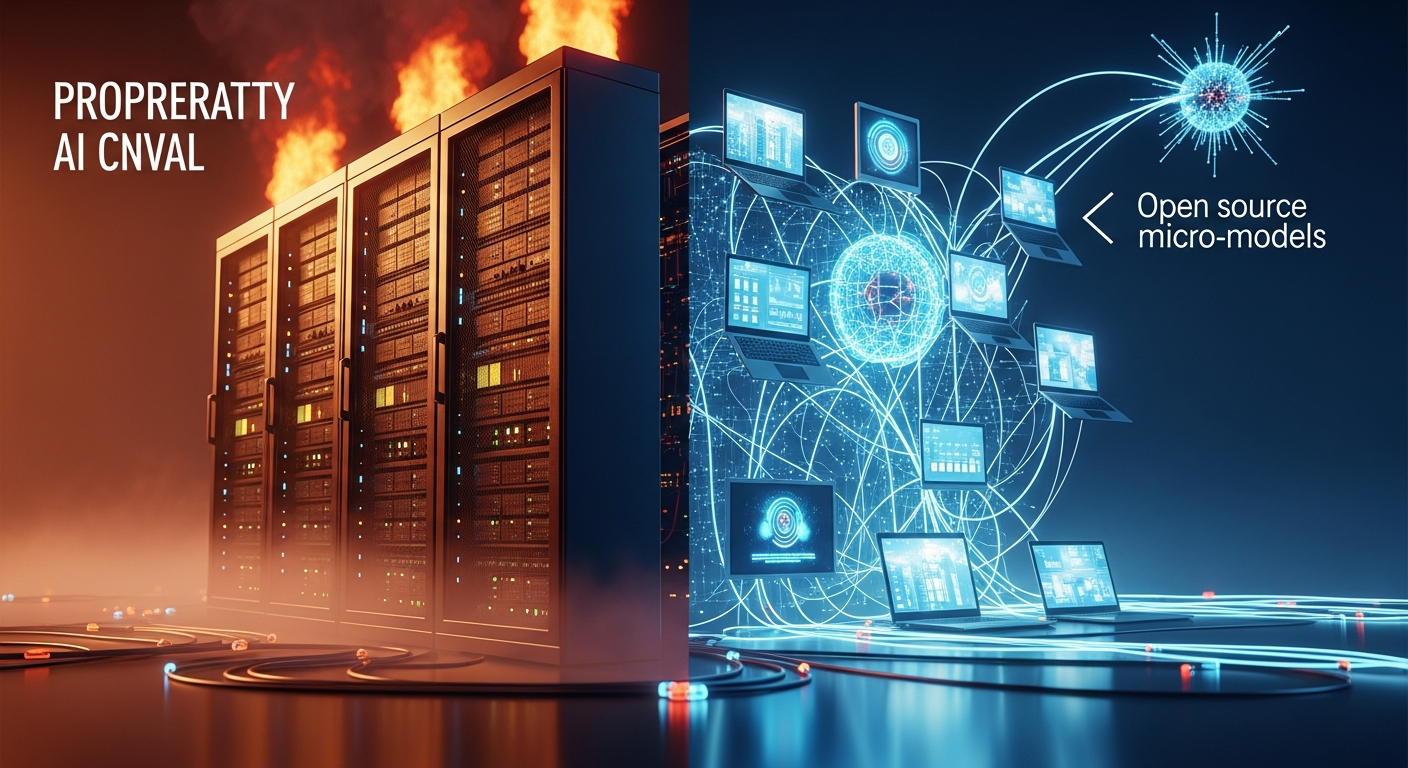
The formation of the OpenEnv coalition is a direct, calculated reaction to the closed-ecosystem strategies that have dominated the AI market since 2023. Frontier labs recognized early on that the model itself is only half the equation; the environment in which the model operates is equally critical. By tightly coupling their massive models with proprietary harnesses, companies like OpenAI and Anthropic created a massive structural advantage in tool discipline, execution efficiency, and reliability. This moat allowed them to charge premium API rates for enterprise agentic tasks.
OpenEnv shatters this moat by commoditizing the harness layer. By standardizing the environment interface, developers can now train local, open-source models to utilize tools just as effectively as the industry giants. The economic implications for enterprise IT are staggering. Instead of routing highly sensitive corporate data through a third-party cloud API to execute a multi-step data analysis task, a Chief Technology Officer can now deploy a specialized 4B parameter model internally. Because this micro-model has been rigorously trained via OpenEnv to master a specific set of internal tools, it can outperform a generalized 235B parameter model on that specific workflow.
This shift fundamentally alters the Total Cost of Ownership (TCO) for enterprise AI. The compute required to run a 4B parameter model is orders of magnitude lower than the infrastructure needed for frontier models. Enterprises can deploy these specialized agents on edge servers or even high-end local workstations, drastically reducing their reliance on expensive cloud infrastructure and mitigating data sovereignty concerns. The backing of hardware giants like Nvidia and infrastructure providers like Modal and Prime Intellect underscores the industry’s recognition of this shift. They are positioning themselves to provide the compute and orchestration layers for this new, decentralized agentic ecosystem.
However, deploying OpenEnv at an enterprise scale is not without its challenges. While the models themselves are smaller and cheaper to run in inference, the RL training phase remains computationally intensive. Simulating thousands of Daytona sandboxes simultaneously to generate the necessary trajectory data for RLVR requires robust orchestration and significant upfront compute investment. Enterprises will need to carefully balance the long-term savings of running specialized micro-models against the initial capital expenditure required to train them using the OpenEnv framework.
The Consumer Translation: AI Agents for Everyone
While the architectural mechanics of WebSockets, JSON-RPC, and GRPO are highly technical, the downstream impact of OpenEnv on the everyday consumer is profound. For the past few years, the concept of a true “AI Agent”—a digital assistant that doesn’t just chat with you, but actually *does* things for you—has been locked behind expensive subscription paywalls. If you wanted an AI to autonomously browse the web to find the best flight, cross-reference it with your calendar, and book the ticket, you were entirely reliant on the centralized servers of a few massive tech companies.
OpenEnv is the catalyst for bringing these capabilities to the edge. By enabling the open-source community to efficiently train small models for complex tool use, we are entering an era where highly capable agents can run locally on consumer hardware. Imagine a 4B parameter model running natively on your laptop’s neural processing unit (NPU). Because it was trained using OpenEnv’s standardized terminal and browser environments, it knows exactly how to navigate your local file system, organize your documents, draft emails, and interact with web applications—all without ever sending a single byte of your personal data to the cloud.
This represents a massive leap forward for digital privacy and consumer autonomy. The democratization of Agentic RL means that the power to automate complex digital workflows is no longer the exclusive domain of enterprise users with massive API budgets. Independent developers, small businesses, and everyday consumers will soon have access to a vibrant ecosystem of specialized, open-source agents that can be downloaded, customized, and run locally. OpenEnv is the invisible infrastructure making this future possible, ensuring that the agents of tomorrow are built on open standards rather than proprietary black boxes.
Governance and the Road Ahead
The transition of OpenEnv to a community-governed model is a critical step in ensuring its longevity and neutrality. By explicitly defining OpenEnv as a protocol layer rather than a reward framework, the steering committee has wisely avoided the trap of becoming overly opinionated. OpenEnv will not dictate how rewards are defined or how training loops work; those functions belong in specialized libraries like TRL or Unsloth. OpenEnv simply provides the common socket.
Looking ahead, the coalition has outlined an aggressive roadmap through a series of Request for Comments (RFCs). RFC 006 aims to wire environment tasks directly to Hugging Face datasets, allowing environments and benchmarks to compose cleanly. This will enable researchers to instantly pull down standardized tasksets for training. RFC 007 focuses on external reward routing, ensuring that developers can define rewards in whichever library they prefer, using OpenEnv strictly as the deployment layer.
Perhaps the most critical, and currently unresolved, component of the roadmap is RFC 008: Auto-validation. As OpenEnv democratizes the creation of execution environments, the community risks being flooded with low-quality, poorly defined sandboxes. If an environment is buggy or its state transitions are inconsistent, it will actively degrade the model’s learning process during RL training. RFC 008 proposes a scalable way to measure environment quality and its contribution to model learning, essentially creating a rigorous quality control mechanism for the open-source ecosystem. Until this auto-validation framework is fully realized, developers will need to exercise caution and rely on heavily vetted environments from trusted organizations.
TechNode HQ Verdict: Pros, Cons & Usability
- Pro (Engineering): The shift to persistent WebSockets and native MCP integration provides a highly stable, stateful, and standardized protocol for multi-turn agentic training, eliminating the need for bespoke integration code.
- Pro (Consumer): Enables the creation of highly capable, privacy-preserving local AI agents that can run on consumer hardware, breaking reliance on expensive cloud APIs.
- Con: The compute overhead required to orchestrate thousands of parallel Daytona sandboxes during the RL training phase remains a significant barrier to entry for smaller teams.
- Con: Without the finalization of RFC 008 (Auto-validation), the ecosystem currently lacks a robust, automated quality control mechanism for community-submitted environments.
Enterprise Usability: For CTOs and enterprise AI architects, OpenEnv is a mandatory adoption. If your organization is looking to deploy specialized internal agents for code generation, data analysis, or workflow automation, OpenEnv provides the standardized infrastructure needed to train smaller, cost-effective models that outperform generalized proprietary giants. Begin integrating OpenEnv into your RL pipelines immediately, focusing on deterministic RLVR to minimize training costs.
Everyday Usability: For the general public, OpenEnv is an invisible backend protocol, but its effects will be felt within the next 12 months. As open-source developers leverage this framework to build highly capable local agents, consumers should prepare to transition away from cloud-dependent AI subscriptions toward powerful, privacy-first models running natively on their personal devices.