
The Architectural Shift: Brute-Forcing the AI Power Grid
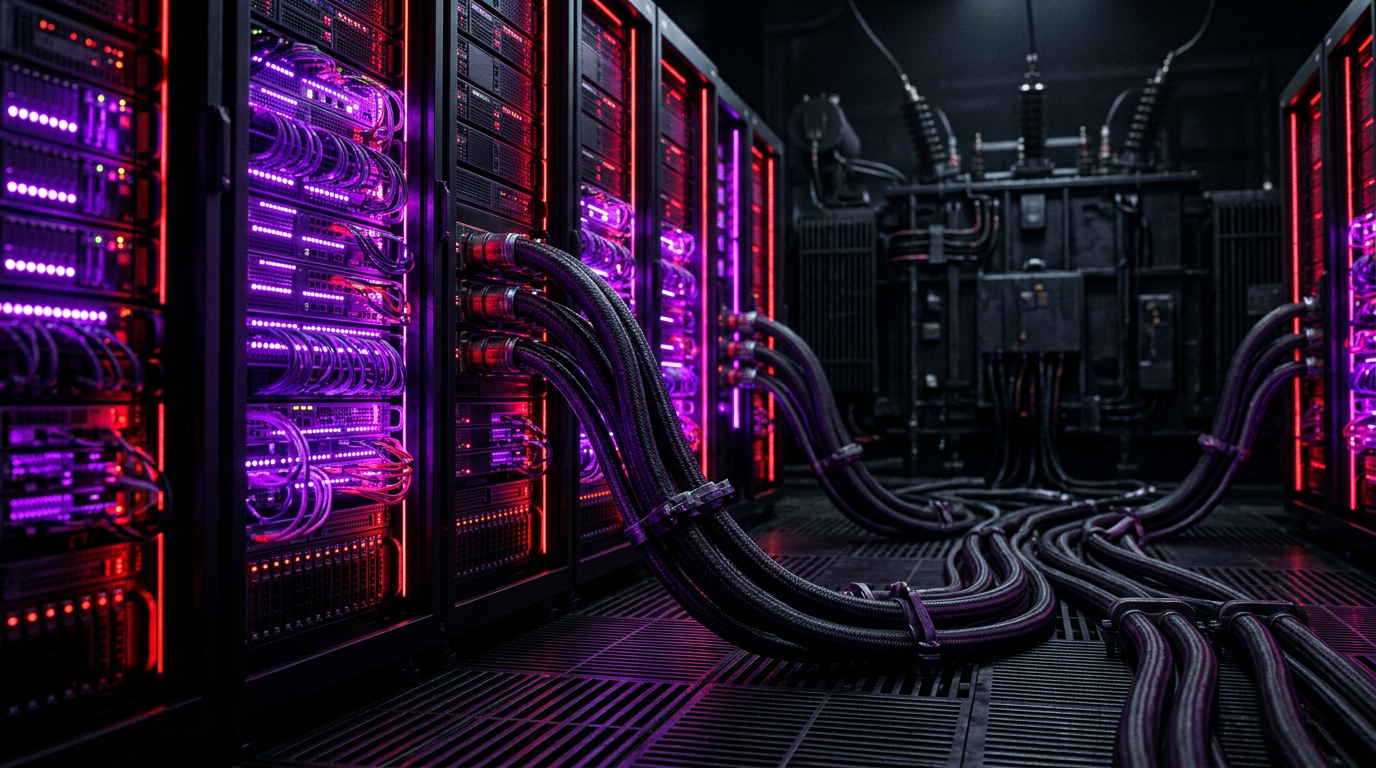
The artificial intelligence arms race has officially collided with the physical limits of the American electrical grid. In a move that perfectly encapsulates Elon Musk’s ethos of prioritizing velocity over conventional compliance, xAI has deployed an astonishing 46 natural gas turbines at its Mississippi data center. This is not a backup generator system; this is a rogue, off-grid power plant designed to feed the insatiable energy demands of next-generation large language model (LLM) training. By mounting these massive turbines on flatbed trailers, xAI has exploited a controversial “mobile” equipment loophole, effectively dodging state air pollution regulations for a full year. To understand the magnitude of this architectural shift, we must first dissect the unprecedented power density required by modern AI infrastructure.
Traditional cloud computing data centers—the ones that host your emails, stream your movies, and run standard enterprise SaaS applications—typically operate at a rack power density of 5 to 10 kilowatts (kW). The architecture is predictable, and utility companies can forecast and provision power over a standard multi-year timeline. However, the paradigm shifts violently when we enter the realm of AI training clusters. A single rack packed with NVIDIA H100 or the newer B200 Tensor Core GPUs can easily draw between 40kW and 100kW. When a company like xAI attempts to network 100,000 of these GPUs together to train a model like Grok, the facility’s power requirement skyrockets into the hundreds of megawatts—equivalent to the energy consumption of a mid-sized city.
The traditional enterprise playbook dictates that a hyperscaler (like AWS, Google, or Microsoft) works with local utilities, such as the Tennessee Valley Authority (TVA) in the Memphis region, to build dedicated substations and high-voltage transmission lines. But grid interconnection queues in the United States currently stretch anywhere from three to five years. For xAI, waiting half a decade for power is an existential threat. In the AI sector, a six-month delay can mean the difference between market dominance and obsolescence. Therefore, xAI engineered a brute-force bypass: aero-derivative gas turbines.
These turbines are essentially modified jet engines attached to electrical generators. In standard utility operations, they are utilized as “peaker plants”—turned on only during extreme grid demand (like a heatwave) because they are expensive to run and highly polluting in simple-cycle configurations. By deploying 46 of these units on flatbed trailers, xAI has created a modular, rapidly deployable microgrid. The engineering ingenuity is undeniable; they have bypassed the utility bottleneck by bringing the power plant directly to the compute. However, the regulatory arbitrage at play is staggering. By classifying these multi-ton, hardwired turbines as “mobile” simply because they sit on wheels, xAI is operating a massive fossil-fuel power station without the stringent environmental impact studies, emissions scrubbers, or community oversight required of a stationary power plant.
This architectural pivot from grid-dependency to localized, unregulated fossil-fuel generation represents a dark new chapter in enterprise IT. It proves that the bottleneck for artificial general intelligence (AGI) is no longer silicon manufacturing or algorithmic efficiency; it is raw, unadulterated thermodynamics. The sheer volume of natural gas required to keep 46 turbines spinning 24/7 is immense, requiring a complex logistical tail of fuel delivery, onsite storage, and continuous mechanical maintenance that transforms a data center from a clean, quiet server farm into a heavy industrial complex.
Enterprise Market Impact & Total Cost of Ownership (TCO)

From a Chief Information Officer (CIO) or Chief Technology Officer (CTO) perspective, xAI’s Mississippi deployment forces a radical recalculation of Total Cost of Ownership (TCO) for AI infrastructure. Historically, data center TCO models were heavily weighted toward Capital Expenditure (CapEx) for the servers themselves, with Operational Expenditure (OpEx) for grid power being a relatively stable, predictable line item. xAI has inverted this model, accepting astronomical OpEx in exchange for the ultimate premium: Time-to-Market (TTM).
Let us break down the economics of this rogue microgrid. Grid power in the region typically costs a few cents per kilowatt-hour (kWh), benefiting from the economies of scale of massive nuclear, hydro, and combined-cycle gas plants operated by the utility. Generating power onsite using simple-cycle, trailer-mounted gas turbines is exponentially more expensive. The fuel costs alone to run 46 turbines continuously are staggering, not to mention the maintenance contracts required for aero-derivative engines that are not designed for uninterrupted, year-round baseload operation. Furthermore, xAI only has permits for 15 of these turbines, yet is operating 46, introducing massive legal and compliance liabilities into their TCO.
However, in the hyper-competitive landscape of foundational AI models, traditional TCO metrics are often discarded. If xAI can train Grok 3 or Grok 4 six months faster than OpenAI or Google by burning expensive natural gas today, the resulting valuation bump and market share acquisition could be worth tens of billions of dollars. In this context, the millions spent on turbine fuel and potential environmental fines are viewed merely as the cost of doing business—a temporary bridge until permanent grid power or alternative energy sources can be secured.
Yet, this strategy carries severe enterprise risks. The Southern Environmental Law Center (SELC), acting on behalf of the NAACP, has filed a lawsuit seeking an injunction against xAI. If the federal courts agree that these trailer-mounted turbines violate the Clean Air Act by acting as stationary power plants, xAI could face an immediate shutdown order. For an enterprise, an abrupt loss of hundreds of megawatts of power mid-training run is catastrophic. It results in stranded compute assets, corrupted training checkpoints, and massive financial losses. The legal argument hinges on Title V of the Clean Air Act, which differentiates between mobile sources (like truck engines) and stationary sources. The SELC argues that bolting a turbine to a trailer does not exempt it from stationary source regulations if it remains in one place, hardwired to a facility, providing continuous power.
This legal battle will set a precedent for the entire data center industry. If xAI wins, we can expect a gold rush of “mobile” gas turbines flooding into data center hubs across the country as other AI startups attempt to bypass utility queues. If xAI loses, it serves as a stark warning to enterprise IT leaders: you cannot out-engineer the law, and environmental compliance must be factored into your infrastructure deployment timelines. The TCO of AI is no longer just about the price of NVIDIA chips; it is about the legal, environmental, and logistical costs of securing the energy to run them.
The Consumer Reality: What This Means for You
For the average consumer, the mechanics of cloud computing and AI have always been intentionally invisible. When you type a prompt into ChatGPT, generate an image with Midjourney, or ask Grok to summarize the news, the experience is seamless, instantaneous, and seemingly ethereal. The tech industry has spent decades marketing the “Cloud” as a clean, weightless entity. The reality unfolding in Mississippi shatters that illusion. The cloud is heavy metal, it is deafeningly loud, and right now, it is emitting massive plumes of exhaust into the atmosphere.
The deployment of 46 unregulated gas turbines has an immediate and severe impact on the local community. The Memphis and northern Mississippi region is already burdened with historical industrial pollution and poor air quality. Natural gas turbines, especially those operating without the advanced catalytic reduction systems required of permanent power plants, emit significant amounts of Nitrogen Oxides (NOx), Carbon Monoxide (CO), and fine particulate matter (PM2.5). These pollutants are directly linked to respiratory illnesses, asthma, and cardiovascular disease. The NAACP’s lawsuit highlights a grim socioeconomic reality: the race to build the world’s smartest AI is coming at the direct expense of the health of marginalized communities living in the shadow of these data centers.
This forces a profound ethical dilemma upon the consumer. We demand faster, more capable AI assistants. We want real-time video generation, hyper-personalized tutoring, and instant medical diagnostics. But are we willing to accept that the physical cost of these conveniences is the degradation of air quality in communities hundreds or thousands of miles away? The “mobile” loophole xAI is exploiting means that the air local residents breathe is not being protected by the standard environmental safeguards that have been in place for decades.
Furthermore, this localized pollution contributes to the broader global climate crisis. The carbon footprint of training a single massive LLM was already a subject of intense scrutiny when powered by the standard electrical grid. By shifting to off-grid, simple-cycle natural gas combustion, the carbon intensity of xAI’s models is likely orders of magnitude higher than those of its competitors who utilize renewable energy credits or grid-tied power. As consumers become more environmentally conscious, the “dirty” nature of xAI’s compute could become a significant brand liability. Will enterprise clients and everyday users boycott an AI model if they know it was trained by exploiting environmental loopholes and polluting local neighborhoods? The invisible infrastructure of the internet is becoming visible, and it is far dirtier than we were led to believe.
The Industry Ripple Effect: A Reckoning for Hyperscalers
xAI’s rogue deployment in Mississippi is sending shockwaves through the entire technology sector, forcing competitors, regulators, and utility providers to react. The hyperscaler trinity—Amazon Web Services (AWS), Google Cloud, and Microsoft Azure—have spent the last decade making highly publicized, multi-billion-dollar commitments to carbon neutrality and 100% renewable energy. They are currently navigating the AI power crisis through massive, long-term investments in next-generation energy.
Microsoft is actively funding the resurrection of the Three Mile Island nuclear facility to secure zero-carbon baseload power for its AI data centers. Google is investing heavily in advanced geothermal energy and next-generation solar grids. AWS recently purchased a data center campus directly adjacent to a nuclear power plant in Pennsylvania. These companies are playing the long game, attempting to solve the thermodynamics of AI without destroying their ESG (Environmental, Social, and Governance) mandates.
Then comes Elon Musk’s xAI, flipping the board entirely. By utilizing the flatbed turbine loophole, xAI is effectively mocking the slow, compliance-heavy approach of its rivals. If xAI successfully trains a superior model using this brute-force, high-emission strategy, it puts immense pressure on Microsoft, Google, and AWS. Shareholders and boards of directors may begin to question why they are waiting years for nuclear regulatory approval when they could simply park 50 gas turbines in a parking lot and start training tomorrow. It creates a dangerous race to the bottom for environmental compliance in the tech sector.
This is precisely why the Environmental Protection Agency (EPA) and federal lawmakers are watching the Mississippi lawsuit with intense scrutiny. The industry is on the precipice of a regulatory crackdown. If the courts rule in favor of the NAACP and SELC, it will close the “mobile” loophole permanently, forcing the AI industry to reckon with its power addiction within the bounds of the law. We may see the introduction of new federal frameworks specifically targeting “Compute Energy Intensity,” requiring AI companies to prove they have sustainable power before they are allowed to import tens of thousands of GPUs.
Moreover, this situation exposes the fragility of the US power grid. The fact that a company valued in the tens of billions of dollars has to resort to trailer-mounted jet engines to power its servers is a damning indictment of national infrastructure. It will likely spur massive federal subsidies and fast-tracked permitting for high-voltage transmission lines and grid modernization. Until that happens, the data center industry is entering a Wild West era of power generation, where the companies that are willing to push the legal and environmental boundaries the furthest will gain the most ground in the AI wars.
TechNode HQ Verdict: Pros, Cons & Usability
- Pro (Engineering): Unmatched deployment velocity. By utilizing modular, aero-derivative gas turbines, xAI bypasses multi-year utility interconnection queues, enabling immediate, massive-scale AI model training.
- Pro (Consumer): Accelerated pace of AI innovation. The faster companies can secure compute power, the faster consumers receive next-generation AI tools, advanced reasoning models, and real-time generative applications.
- Con: Severe environmental and legal liability. Operating 46 turbines under a dubious “mobile” loophole generates massive localized pollution (NOx, PM2.5) and invites existential legal threats, such as the NAACP injunction, which could halt operations instantly.
- Con: Astronomical Total Cost of Ownership. The OpEx of fueling and maintaining dozens of simple-cycle gas turbines 24/7 far exceeds the cost of traditional grid power, creating an unsustainable long-term financial model.
Enterprise Usability: For a CTO or Enterprise Infrastructure Architect, xAI’s approach is a cautionary tale, not a blueprint. While the time-to-market advantage is tempting, the legal and ESG risks of exploiting environmental loopholes are too high for publicly traded companies or risk-averse enterprises. Enterprises should instead focus on hybrid power strategies, partnering with utilities for long-term baseload while exploring sustainable microgrids (like solid oxide fuel cells or localized solar/battery storage) to shave peak demand, rather than relying on unregulated fossil fuels.
Everyday Usability: For the general public, this development requires a critical re-evaluation of the AI tools we use daily. While the end-product (like Grok) may be highly usable and advanced, consumers must weigh the ethical cost of its creation. As AI becomes deeply integrated into our lives, users and enterprise clients alike should demand transparency regarding the energy sources and environmental impact of the models they are purchasing, pushing the industry toward sustainable compute rather than brute-force pollution.
Sources & Citations:
Original Technical Breakdown via: techcrunch
Official Handle: @TechCrunch
Topics Explored: xAI Data Center, AI Energy Consumption, Data Center Infrastructure, Natural Gas Turbines, Tech Regulation