Key takeaways
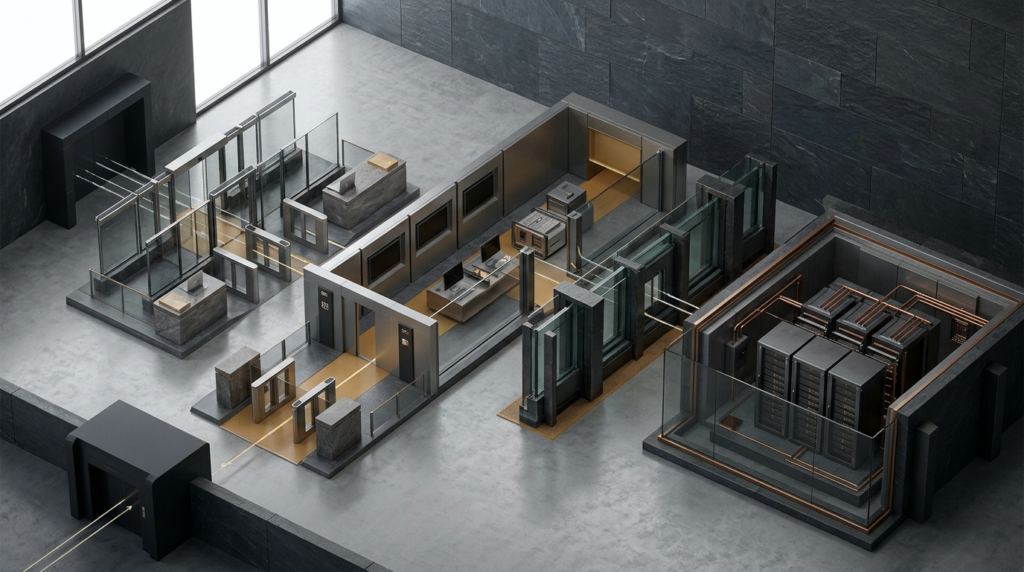
- Service isolation limits failure domains, preventing one crashing application from taking down the entire system.
- Shifting from large virtual machines to lightweight LXC containers drastically improves hardware efficiency and failover speed.
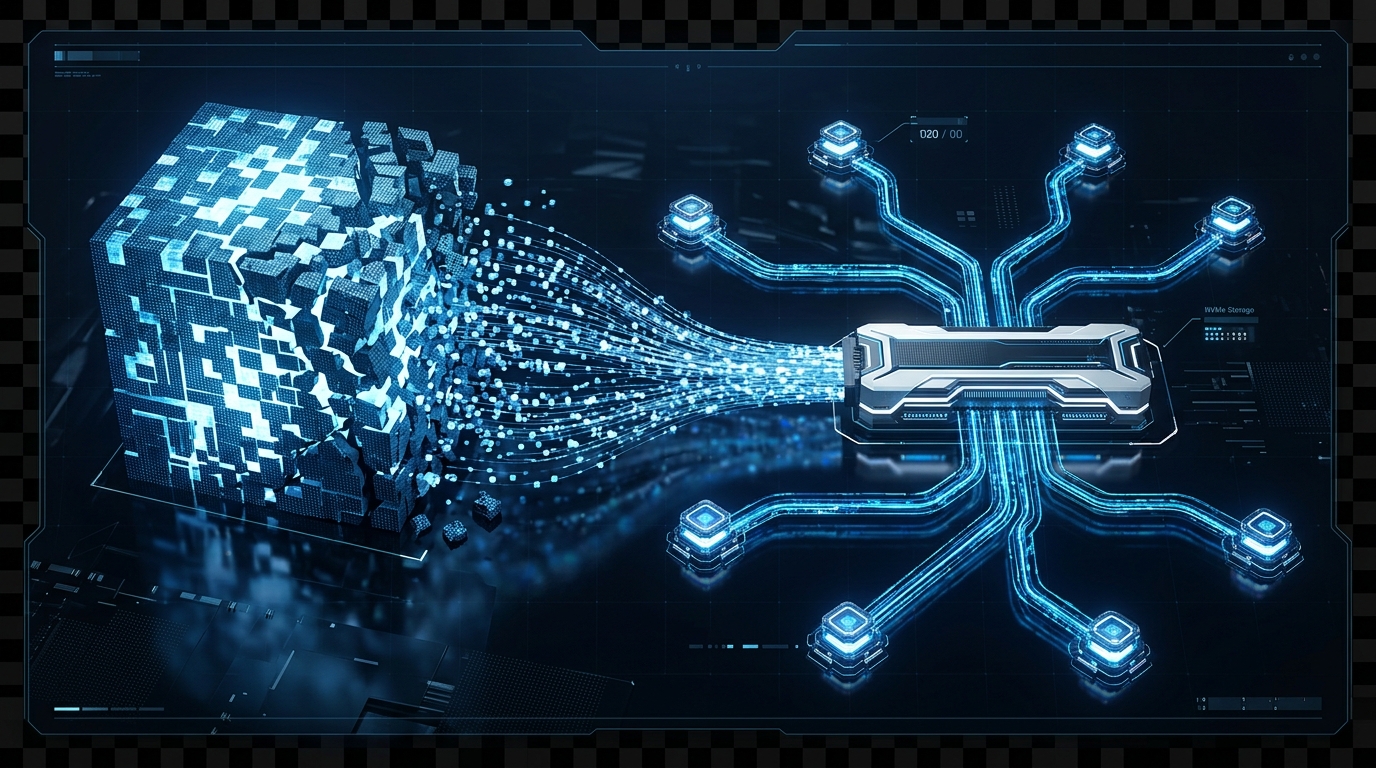
- Decoupling application state from the compute container via shared NVMe storage enables seamless cross-node migrations.
- Modern container architectures allow GPU resources to be dynamically shared across multiple isolated services.
The Architectural Reality of Service Isolation
For engineers managing modern infrastructure, mastering service isolation is no longer optional. Service isolation refers to the degree to which components of an application operate independently without sharing resources, state, or failure domains. In a traditional monolithic architecture, components are tightly coupled within a single codebase and shared database, resulting in a low level of isolation. This monolithic approach is often preferred for smaller teams, startups, or simple applications where the overhead of managing distributed systems outweighs the benefits.
However, as applications scale, the monolithic approach presents significant risks. In monolithic applications, a bug in one module can crash the entire application due to low fault tolerance. Moving away from this model often leads teams to Enterprise IT best practices, emphasizing distributed systems and microservices. Microservices are designed as autonomous units with private data and unique runtimes, offering a high degree of isolation.
Yet, microservices do not automatically provide fault isolation; failures frequently leak across boundaries due to complex dependencies. A common pitfall is creating a “distributed monolith,” where services are deployed separately but remain tightly coupled through shared databases or synchronous cross-service calls. If services are tightly coupled, a slowdown in a downstream service cascades upstream because of synchronous dependencies.
True isolation in microservices prevents a failure or “fire” in one service from spreading to its neighboring services. By defining a failure domain—a logical or physical boundary that contains the impact of a failure—architects can effectively limit the blast radius of any single outage and maintain system integrity.
Market Impact & Deployment

Deploying effective service isolation strategies drastically impacts the Total Cost of Ownership (TCO) and operational overhead for businesses. Moving from a model of “one giant virtual machine” to lightweight, purpose-built LXC (Linux Containers) on platforms like Proxmox VE allows organizations to maximize their Hardware & Silicon investments. LXC containers share the host kernel instead of virtualizing their own, which means they are lighter, faster to start, and easier to migrate than traditional VMs.
Furthermore, deploying hardware accelerators like GPUs becomes significantly more flexible. In a standard VM deployment with PCI passthrough, a GPU is locked exclusively to that VM, preventing live migrations and resource sharing. With LXC containers and cgroup rule configurations, a single GPU can be dynamically shared across multiple containers on the same host. This reduces the need for redundant hardware purchases and prevents idle GPU cycles.
Failures in poorly isolated systems can lead to catastrophic business downtime. Cascading failures occur in distributed systems when a failure in one service triggers a chain reaction of failures in dependent services. Missing or long timeouts can cause threads and connection pools to become depleted, leading to resource exhaustion and system-wide hanging. Aggressive and uncoordinated retry policies can overwhelm an already struggling service, creating a “retry storm.” By adopting patterns like Circuit Breakers—which prevent further requests to an unhealthy service by opening the circuit—and Bulkheads (partitioning system resources such as thread pools), enterprises ensure a failure in one component doesn’t consume all system resources.
The Consumer Translation
For the end-consumer, the transition to robust service isolation is largely invisible but fundamentally improves digital experiences. When streaming platforms, smart home networks, or financial applications utilize robust Networking & Cloud isolation, it means that a failure in one specific feature (like a recommendation engine) doesn’t bring down the core functionality (like video playback or transaction processing).
Think of this architectural shift like a modern electrical grid. In a poorly isolated system, a single short circuit in one neighborhood could trigger a city-wide blackout. With proper service isolation and failure domains, a blown transformer only affects a single block, while the rest of the city remains illuminated. For everyday users relying on self-hosted tools like Plex or massive cloud applications, this means higher uptime, faster app loading, and seamless feature updates that occur in the background without requiring full system reboots.
Frequently Asked Questions
What is service isolation in system architecture?
Service isolation is the degree to which application components operate independently without sharing resources, state, or failure domains. It limits the blast radius so that a bug in one service does not crash the entire application.
Why do distributed monoliths fail?
Distributed monoliths fail because services, despite being deployed separately, remain tightly coupled through shared databases or synchronous calls. This tight coupling causes failures or latency in a downstream service to cascade upstream.
How do LXC containers improve over traditional VMs?
LXC containers share the host kernel rather than virtualizing their own, making them significantly lighter and faster to deploy. This architecture also allows critical hardware, such as GPUs, to be shared across multiple containers rather than locked to a single guest VM.
What is a cascading failure?
A cascading failure occurs in distributed systems when an initial failure in one service triggers a chain reaction of failures across dependent services, often exacerbated by resource exhaustion or retry storms.
TechNode HQ Verdict: Pros, Cons & Usability
- Pro (Engineering): Eliminates fatal cascading failures by enforcing strict physical and logical failure domains.
- Pro (Consumer): Ensures maximum application uptime and seamless, localized background updates.
- Con: Increased initial architectural complexity and operational overhead to orchestrate distributed storage.
- Con: Requires meticulous configuration of timeouts, circuit breakers, and retry policies to prevent creating a distributed monolith.
Enterprise Usability: CTOs and infrastructure leads must adopt lightweight containers and shared storage backends to maximize hardware efficiency, particularly for expensive GPU instances. The transition demands strict enforcement of circuit breaker and bulkhead patterns to ensure real-world resilience.
Everyday Usability: For homelab enthusiasts and independent developers, migrating from single monolithic VMs to individualized LXC containers with decoupled NVMe storage fundamentally solves the “2 AM crash” problem, offering enterprise-grade resilience on consumer hardware.