The Architectural Shift
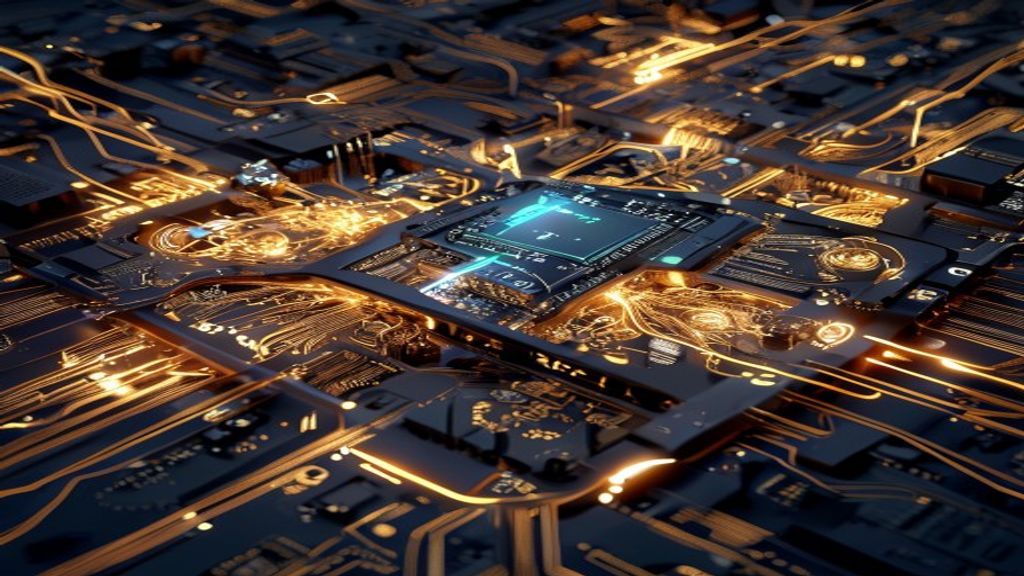
At the heart of Nuro’s latest regulatory milestone lies a fundamental reengineering of autonomous vehicle architecture—one that moves decisively away from retrofitting and toward purpose-built, silicon-optimized autonomy. The Lucid Gravity SUVs now cleared for driverless testing in California are not modified consumer vehicles; they are rolling data centers, architected from the ground up to host Nuro’s full-stack autonomous system, powered by Nvidia’s Drive AGX Thor superchip. This isn’t just an upgrade—it’s a paradigm shift in how AI processes the chaos of real-world driving.
The Nvidia Drive AGX Thor, operating at up to 2,000 trillion operations per second (TOPS), serves as the central nervous system. Unlike earlier AV platforms that relied on distributed computing across multiple ECUs, Thor consolidates perception, planning, mapping, and vehicle control into a single system-on-a-chip (SoC). This integration drastically reduces latency and power consumption—critical for maintaining real-time responsiveness in dynamic urban environments. The chip’s dual-core Grace CPU and Ada Lovelace GPU architecture enable concurrent execution of deep learning models and deterministic safety-critical tasks, ensuring that while one core runs neural networks for pedestrian detection, another handles emergency braking protocols with guaranteed timing.
Sensor fusion is where the engineering sophistication becomes tangible. The Lucid Gravity is outfitted with a multi-modal array: high-resolution CMOS cameras (likely 8MP or higher) provide wide dynamic range imaging, capturing everything from sun-drenched intersections to pitch-black alleys. These are complemented by solid-state lidar units—likely from a partner such as Aeva or Innoviz—which offer 200-meter range with no moving parts, eliminating the mechanical failure points that plagued earlier spinning lidar systems. Millimeter-wave radar, operating in the 77GHz band, penetrates fog, rain, and dust, ensuring all-weather reliability. All three sensor streams feed into Thor’s optical flow engine, where data is time-synchronized at the microsecond level and processed through a hierarchical neural network stack.
Perception begins with raw sensor ingestion, where convolutional neural networks (CNNs) identify objects—vehicles, cyclists, traffic cones—with bounding boxes and semantic labels. Next, temporal models like recurrent neural networks (RNNs) and transformers predict trajectory intent, estimating whether a jaywalking pedestrian will stop or continue into traffic. This fused understanding is then passed to the motion planning module, which runs on a separate, isolated domain within Thor to meet ISO 26262 ASIL-D safety standards. Here, the system evaluates millions of potential trajectories per second, weighing risk, comfort, and traffic law compliance before issuing actuator commands via the vehicle’s drive-by-wire interface.
Crucially, the entire stack is designed for over-the-air (OTA) evolution. Nuro’s software employs a modular, containerized architecture—likely Kubernetes-based—allowing individual components (e.g., intersection negotiation logic) to be updated without full system revalidation. This enables continuous learning from fleet-wide data: every Lucid robotaxi becomes a sensor node, uploading anonymized edge cases (e.g., a child chasing a ball into the street) to a centralized data lake. There, reinforcement learning models refine decision policies before being redeployed across the fleet. This closed-loop learning system is what separates Nuro’s approach from legacy AV players stuck in static validation cycles.
Enterprise Market Impact & TCO
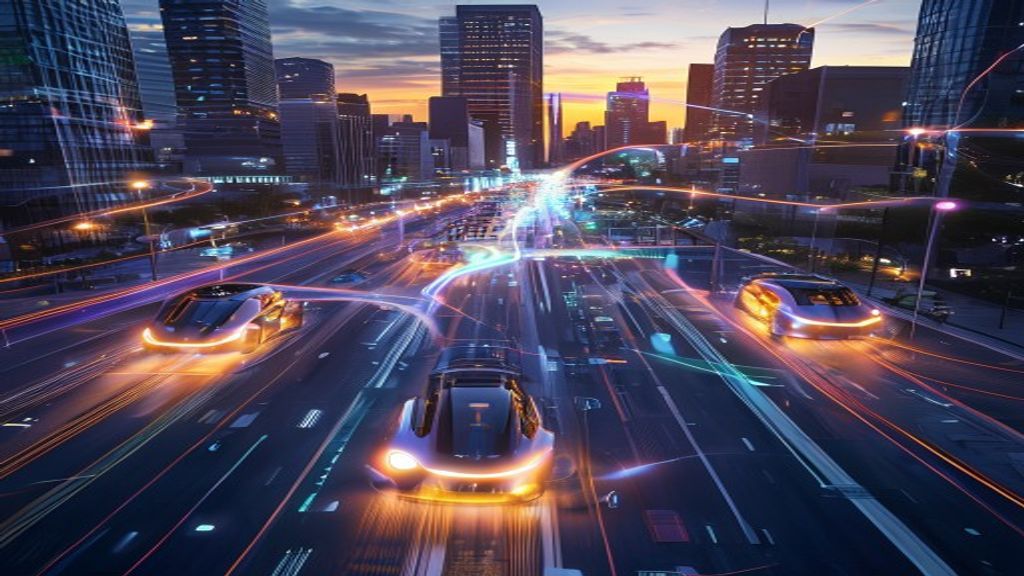
For enterprise infrastructure leaders, the Nuro-Lucid-Uber alliance represents more than a mobility play—it’s a blueprint for scalable, AI-driven logistics with profound implications for total cost of ownership (TCO), data center load, and urban infrastructure planning. The deployment of 35,000 robotaxis, each generating terabytes of sensor data daily, demands a rethinking of edge-to-cloud data pipelines, cybersecurity postures, and fleet management systems.
From a TCO perspective, the elimination of human drivers—typically 60-70% of ride-hailing operating costs—promises dramatic savings. But the real enterprise value lies in utilization efficiency. Unlike human drivers who work limited shifts and require rest, robotaxis can operate nearly 24/7, increasing vehicle uptime from ~12 hours/day to over 20. Lucid’s Gravity, with its industry-leading 0.21 drag coefficient and 516-mile EPA range, further reduces energy costs. At $0.12/kWh, a full charge costs approximately $15, enabling over 500 miles of autonomous service per dollar—nearly half the energy cost per mile of a Tesla Model Y.
However, the backend infrastructure required to support such a fleet is non-trivial. Each robotaxi generates ~5 TB of raw sensor data per day. Transmitting all of it to the cloud is impractical; instead, Nuro likely employs edge filtering, where only anomalous or high-value clips (e.g., near-misses, new construction zones) are uploaded via 5G or private LTE networks. This reduces bandwidth needs from petabytes per city per day to manageable terabytes. Still, Uber will need to invest in regional edge data centers—possibly co-located with Lucid service hubs—to run real-time fleet coordination, dynamic routing, and predictive maintenance models.
Cybersecurity becomes a mission-critical concern. A compromised robotaxi could be weaponized or used for data exfiltration. Nuro’s system must implement zero-trust architecture: hardware root-of-trust via Trusted Platform Modules (TPMs), end-to-end encryption of sensor and control data, and runtime integrity checks. The Nvidia Thor chip includes built-in security enclaves, but enterprise deployment requires additional layers—network segmentation, intrusion detection, and automated incident response. Regulatory compliance (e.g., CPUC data reporting) will necessitate immutable logging and audit trails, likely stored on a permissioned blockchain for tamper-proof verification.
From a fleet management standpoint, Uber gains unprecedented operational visibility. AI models can predict battery degradation, tire wear, and sensor contamination (e.g., dust on lidar lenses) using telemetry and environmental data. This enables just-in-time maintenance, minimizing downtime. Moreover, the vehicles can autonomously reposition during off-peak hours to high-demand zones, reducing customer wait times and maximizing revenue per unit. For enterprise clients, this level of automation could extend beyond ride-hailing to last-mile delivery, mobile workspaces, or even pop-up retail—transforming the robotaxi into a modular service platform.
The Consumer Reality: What This Means for You
For the average consumer, the arrival of Uber’s driverless Lucid SUVs isn’t just a novelty—it’s a potential reset of urban mobility. Imagine summoning a sleek, silent electric SUV via your Uber app, stepping into a cabin without a steering wheel or pedals, and being transported safely, efficiently, and likely at a lower cost than today’s rides. This isn’t science fiction; it’s the near-term future promised by Nuro’s latest permit breakthrough.
Cost reduction is the most immediate benefit. With no driver to pay, robotaxi fares could drop by 40-60%, making car-free urban living more viable. Early adopters in cities like San Francisco, Los Angeles, and Austin—where testing is already underway—may see sub-$10 rides for short trips, undercutting both traditional taxis and personal car ownership. For low-income communities or those with limited transit access, this could mean newfound mobility independence, especially during off-hours when human drivers are scarce.
Safety is another major selling point. Human error accounts for over 94% of traffic accidents. Nuro’s AI, trained on billions of simulated and real-world miles, doesn’t get tired, distracted, or impaired. Its 360-degree perception and sub-100-millisecond reaction time could drastically reduce collisions—particularly in high-risk scenarios like left turns or pedestrian crossings. However, public trust remains fragile. The memory of past AV incidents—Cruise’s sidewalk entanglements, Waymo’s traffic disruptions—looms large. Nuro and Uber will need transparent safety reporting, third-party audits, and gradual rollout to build confidence.
Privacy concerns are equally pressing. A robotaxi cabin is a sensor-rich environment: microphones for voice commands, cameras for occupancy detection, and biometric systems for user identification. Who owns this data? How is it stored and used? Uber’s history with data privacy will be scrutinized. Consumers may demand opt-in policies, local data processing, and clear deletion protocols—especially as regulators like the CPUC begin drafting AV-specific privacy rules.
Accessibility is where the technology shines brightest. For seniors, people with disabilities, or those unable to drive, a fully autonomous vehicle offers dignity and freedom. The Lucid Gravity’s spacious interior and low step-in height could be adapted for wheelchair access, while voice-first interfaces accommodate visually impaired users. Yet, the initial rollout will be limited—geofenced to well-mapped urban cores, operating only in daylight and fair weather. Rural areas and complex environments (e.g., unmarked construction zones) will remain out of reach for years.
In the long term, widespread robotaxi adoption could reshape cities. Parking lots may give way to green spaces as fewer people own cars. Traffic congestion could ease as AI-optimized routing reduces idle cruising. But job displacement is inevitable: over 1 million Uber and Lyft drivers in the U.S. face an uncertain future. While Uber claims robotaxis will “augment” human drivers, the trajectory points toward replacement. The social and economic fallout will require policy intervention—retraining programs, universal basic income pilots, or mobility stipends.
The Industry Ripple Effect
Nuro’s driverless permit isn’t just a win for one startup—it’s a seismic event that forces every major player in autonomous mobility to recalibrate. Waymo, once the undisputed leader, now faces a well-funded, vertically integrated challenger with a clear path to mass deployment. Unlike Waymo’s bespoke Jaguar I-Pace fleet, the Nuro-Lucid-Uber alliance leverages economies of scale: 35,000 vehicles built on a single platform, with shared R&D and infrastructure. This could accelerate the timeline for profitability in an industry long criticized for burning cash.
Tesla, despite its Full Self-Driving (FSD) ambitions, lacks a regulatory-approved driverless program in California. Its reliance on vision-only systems puts it at a disadvantage in edge cases where lidar provides critical depth data. The Lucid Gravity’s sensor suite—cameras, lidar, radar—represents a more robust, sensor-fused approach that regulators may favor. Moreover, Tesla’s robotaxi plans remain vague, with no confirmed manufacturing or partnership commitments. In contrast, Nuro has concrete delivery timelines, engineering vehicles on the road, and a ride-hailing partner with 100 million active users.
Legacy automakers like GM (Cruise) and Ford (Argo AI, now defunct) are in retreat. Cruise’s regulatory setbacks in 2023-2024 have delayed its expansion, while Ford abandoned its AV unit entirely. The Nuro-Uber deal signals that success in autonomy may no longer lie with carmakers, but with tech-driven partnerships between AI firms, EV specialists, and mobility platforms. Lucid, once a niche luxury brand, is now positioned as a core enabler of the robotaxi economy—a role more valuable than selling cars to consumers.
For suppliers, the stakes are equally high. Solid-state lidar companies like Luminar, Aeva, and Innoviz stand to benefit as Nuro scales. Similarly, Nvidia’s dominance in AV silicon is reinforced—Thor’s adoption by a major fleet operator validates its architecture over competitors like Qualcomm’s Snapdragon Ride or Intel’s Mobileye. Cloud providers like AWS and Google Cloud will compete to host the massive data pipelines, while cybersecurity firms will rush to offer AV-specific threat detection.
Globally, this move pressures regulators in Europe, China, and the Middle East to accelerate their own AV frameworks. Dubai and Singapore, already testing robotaxis, may fast-track approvals to avoid falling behind. In China, Baidu’s Apollo and Pony.ai will face renewed pressure to match Uber’s scale. The race is no longer about who has the best AI—it’s about who can integrate hardware, software, regulation, and business model into a deployable system. Nuro, with its $500 million Uber-Lucid war chest, may have just taken the lead.
TechNode HQ Verdict: Pros, Cons & Usability
- Pro (Engineering): Centralized AI compute via Nvidia Thor enables real-time, fused sensor processing with deterministic safety guarantees.
- Pro (Consumer): Potential for significantly cheaper, safer, and more accessible urban transportation, especially for underserved populations.
- Con: Massive data infrastructure and cybersecurity demands could delay widespread deployment and increase operational risk.
- Con: Regulatory uncertainty and public trust gaps remain significant barriers, especially after past AV incidents.
Enterprise Usability: CTOs in mobility or logistics should monitor Nuro’s safety and scalability metrics closely. Early integration via API partnerships or pilot programs is advisable, but full fleet adoption should wait for proven regulatory clearance and incident-free operation.
Everyday Usability: The general public should view this as a promising but still-evolving technology. Early riders in test cities can participate cautiously, but widespread, reliable service is likely 2-3 years away. Wait for independent safety ratings before fully trusting driverless rides.
Sources & Citations:
Original Technical Breakdown via: techcrunch
Official Handle: @TechCrunch
Topics Explored: autonomous vehicles, Nvidia Drive Thor, Lucid Gravity, robotaxi, Uber AV partnership