The Architectural Reality: Shrinking the Quantum Footprint

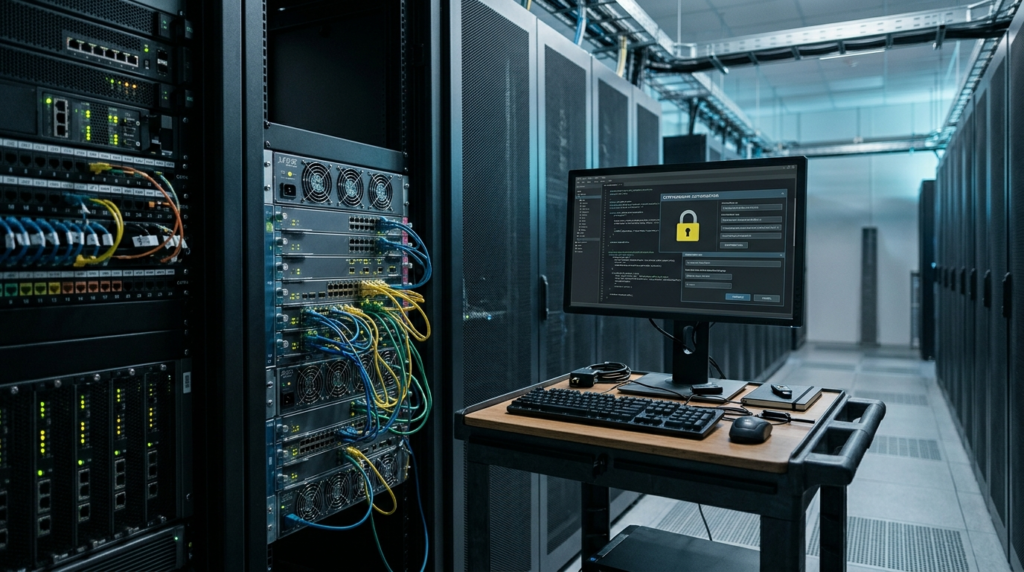
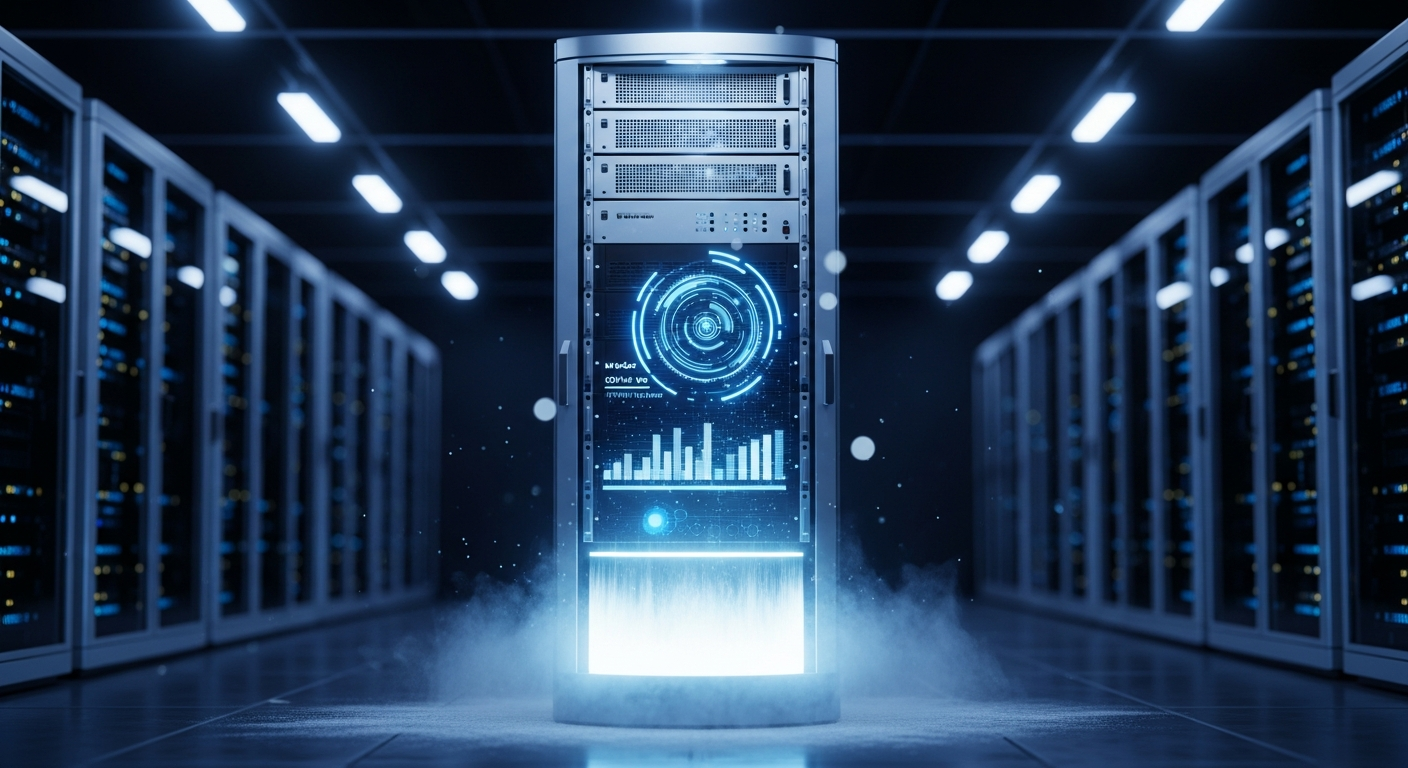
For the better part of a decade, the visual lexicon of Quantum Computing has been dominated by massive, room-sized dilution refrigerators. From the sprawling, multi-story cooling plants required by early D-Wave systems to the intricate, chandelier-like cryostats favored by IBM, quantum hardware has historically demanded bespoke, highly specialized facilities. At Dell Tech World 2026, Equal1 shattered this paradigm, showcasing a fully operational quantum computer integrated entirely into a standard 19-inch, 42U data center rack [1, 6].
The system, known as the Equal1 RacQ (an evolution of their earlier Bell-1 server), represents a watershed moment in enterprise infrastructure [1, 3]. By successfully miniaturizing the quantum stack, Equal1 has transitioned the technology from an isolated laboratory experiment into a deployable, peer-level compute resource. The architectural foundation of this breakthrough lies in Equal1’s UnityQ Quantum System-on-Chip (SoC) [1, 4]. Unlike superconducting qubits, which require exotic materials and highly specialized fabrication, Equal1 utilizes silicon spin qubits [1, 6]. These qubits are fabricated using standard CMOS semiconductor processes [1, 4]. This is a massive supply chain victory; it means the quantum processing unit (QPU) can be manufactured in the exact same global foundries that produce traditional CPUs and GPUs, ensuring long-term scalability and upgradeability [2, 4].
However, the most impressive engineering feat on display is the thermal management system. Quantum chips must operate at temperatures close to absolute zero to maintain qubit coherence and prevent thermal noise from destroying delicate quantum states. Deep space hovers around 2.7 Kelvin; the Equal1 RacQ operates at a staggering 0.3 Kelvin (300 millikelvin) [1, 6]. To achieve this within a standard server rack, Equal1 engineered a self-contained, closed-cycle cryocooler [1, 3]. This eliminates the need for external liquid cryogenics, specialized plumbing, or the massive external cooling plants that have historically bottlenecked quantum adoption [1, 3]. The entire 400 kg system operates on a standard single-phase electrical socket, drawing a mere 1600 Watts of power—roughly equivalent to a high-end consumer hair dryer or a single high-density GPU server [1, 4].
The Networking and Orchestration Stack
A quantum computer is only as useful as its ability to interface with classical data. The Equal1 RacQ is explicitly designed for Hybrid Quantum-Classical Computing (HQCC) [1, 3]. In this architecture, the quantum processor does not replace classical servers; rather, it acts as a highly specialized accelerator, much like a GPU or an ASIC. Complex computational subroutines—such as molecular simulation, combinatorial optimization, or cryptographic factoring—are offloaded to the QPU, while pre-processing, post-processing, and general workload management remain on classical hardware [1, 3].
At the Dell Tech World 2026 showcase, this hybrid reality was on full display. The Equal1 quantum cylinder was racked directly alongside Dell PowerEdge R770 servers, which provided the classical compute backbone [1, 3]. The orchestration of these heterogeneous workloads was managed by the Dell Quantum Intelligent Orchestrator, a software layer designed to seamlessly route tasks between the x86 CPUs and the silicon spin qubits [1, 3].
Networking this hybrid stack requires robust, low-latency infrastructure. Observers at the event noted the presence of a MikroTik CRS518-16XS-2XQ-RM switch at the top of the rack, alongside Dell PowerSwitch gear [1, 6]. The inclusion of high-throughput 25GbE/100GbE networking is critical. The RF control systems that manipulate the spin qubits generate massive amounts of telemetry and error-correction data that must be shuttled to the classical servers in real-time. By utilizing standard, off-the-shelf networking gear, Equal1 proves that quantum nodes can be integrated into existing Top-of-Rack (ToR) switching topologies without requiring proprietary interconnects.
Market Impact & Deployment: The Logistical Reality

While the engineering specifications of the Equal1 RacQ are undeniably impressive, a rigorous Red Team audit reveals the logistical hurdles that still plague the quantum industry. The most telling detail from the Dell Tech World showcase was a seemingly innocuous “fun fact”: the Equal1 rack had to be shipped to the event powered on [6].
This is not a trivial detail; it is a glaring indicator of the fragility of current Cryogenic Cooling systems. Bringing a closed-cycle cryocooler down from room temperature to 0.3 Kelvin is a highly complex, time-consuming thermal cycle that can take days, if not weeks, to stabilize. If the system were to lose power during transit, the thermal shock and subsequent cool-down period would have rendered the machine inoperable for the duration of the trade show. For enterprise CTOs, this “shipped powered on” reality highlights a significant deployment bottleneck. While the system fits in a standard 42U rack and draws only 1600W, it is not yet a true “plug-and-play” appliance. It requires uninterrupted power supplies (UPS) of the highest tier, not just during operation, but during physical relocation.
Furthermore, while Equal1 has successfully miniaturized the form factor, the industry remains firmly in the Noisy Intermediate-Scale Quantum (NISQ) era. The current generation of silicon spin qubits, while highly scalable in theory due to CMOS manufacturing, still faces significant challenges regarding qubit fidelity and error rates. The RacQ is currently positioned as a peer-level resource for research, optimization testing, and algorithmic development, rather than a silver bullet for immediate, fault-tolerant enterprise production workloads [1, 3]. ServeTheHome accurately categorized the showcase as a “lab project” readying for the enterprise, rather than a system ready for unsupervised mass deployment [6].
Despite these hurdles, the Total Cost of Ownership (TCO) implications are staggering. By eliminating the need for multi-million-dollar facility retrofits, specialized cryogenic plumbing, and dedicated quantum physicists on staff just to maintain the hardware, Equal1 is drastically lowering the barrier to entry. Enterprises that previously relegated quantum computing to a “2035 roadmap” can now begin integrating hybrid quantum nodes into their existing high-performance computing (HPC) clusters today [1, 3].
The Consumer Translation: Why This Matters to the Public
For the average consumer, the intricacies of silicon spin qubits and 300-millikelvin cryocoolers can feel entirely disconnected from daily life. However, the transition of quantum computing from bespoke laboratories to standard data centers is a catalyst that will accelerate breakthroughs across multiple consumer-facing industries.
Consider the pharmaceutical industry. Currently, discovering a new drug involves simulating molecular interactions using classical supercomputers—a process that is incredibly slow and often relies on approximations because classical bits cannot accurately model the quantum mechanics of complex molecules. A deployable quantum computer can simulate these molecular structures natively. By placing quantum racks directly into the data centers of pharmaceutical companies, the timeline for discovering life-saving medications, personalized treatments, and advanced vaccines could be reduced from decades to months.
Similarly, the logistics and supply chain sectors stand to be revolutionized. The global supply chain is a massive combinatorial optimization problem—routing thousands of ships, trucks, and planes through changing weather patterns and fluctuating fuel costs. Classical computers struggle to find the absolute optimal routes, settling for “good enough” approximations. Quantum algorithms excel at these exact types of optimization problems. As hybrid quantum-classical racks become standard in enterprise data centers, consumers will see the downstream effects: faster shipping times, lower costs for goods, and a massive reduction in the carbon footprint of global logistics.
Finally, in the realm of Artificial Intelligence, the integration of quantum nodes alongside traditional GPU clusters opens the door to Quantum Machine Learning (QML). While still in its infancy, QML has the potential to train AI models exponentially faster than classical hardware, leading to smarter, more intuitive consumer AI assistants, vastly improved autonomous driving systems, and hyper-personalized digital experiences.
TechNode HQ Verdict: Pros, Cons & Usability
- Pro (Engineering): The utilization of standard CMOS foundries for the UnityQ SoC ensures that quantum processor manufacturing can scale seamlessly alongside traditional silicon, bypassing the bespoke fabrication bottlenecks of superconducting qubits.
- Pro (Consumer): Democratizing quantum access by lowering the infrastructure barrier means faster advancements in consumer-facing sectors like pharmaceuticals, logistics, and next-generation AI.
- Con: The logistical fragility of the thermal management system—evidenced by the necessity to ship the 400kg rack powered on—indicates that physical deployment and disaster recovery protocols will be highly complex and unforgiving.
- Con: Despite the enterprise-ready form factor, the underlying qubit fidelity remains in the NISQ era, meaning organizations will still face significant software-level error correction overhead before achieving true quantum advantage.
Enterprise Usability: For forward-thinking CTOs operating in finance, materials science, or logistics, the Equal1 RacQ represents the most viable entry point into on-premises quantum computing to date. It should be deployed immediately as a research and development node within existing HPC clusters to begin training internal teams on Hybrid Quantum-Classical Computing (HQCC) orchestration, preparing the enterprise for the fault-tolerant quantum era.
Everyday Usability: The public cannot and should not buy this hardware. However, consumers should expect the downstream benefits of this technology—such as optimized supply chains and accelerated medical research—to begin impacting their daily lives within the next 3 to 5 years as enterprise adoption scales.
Sources & Citations:
Original Claim via: servethehome [6]
Official Handle: @servethehome
Topics Explored: Quantum Computing, Equal1, Dell Tech World, Silicon Spin Qubits, Data Center Infrastructure