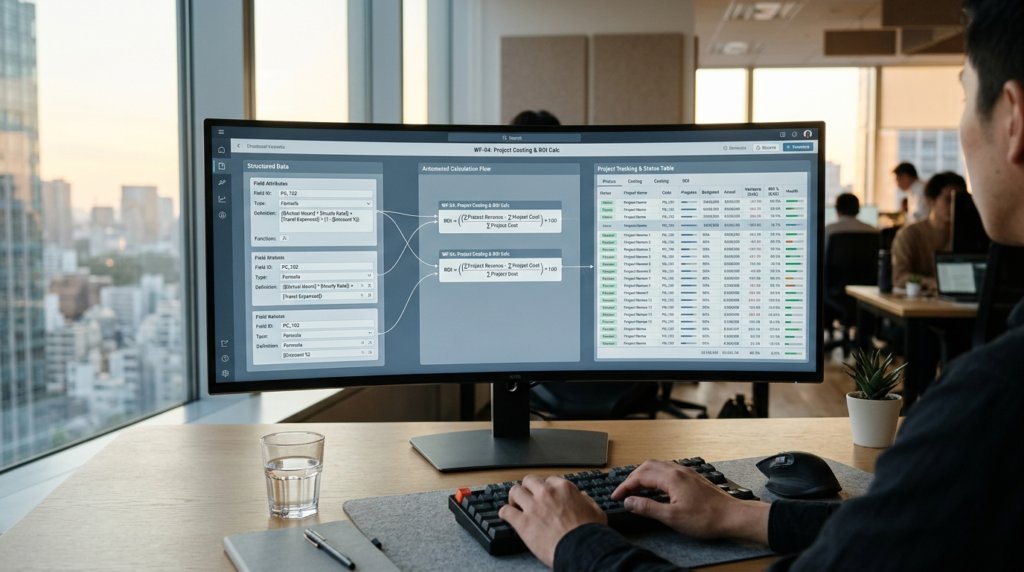
The Boardroom Ultimatum: From Experimentation to Execution
The era of generative AI as a mere novelty—a parlor trick for drafting emails or generating stock imagery—is officially over. As we navigate through 2026, the enterprise landscape is undergoing a seismic architectural shift. Organizations are no longer looking to purchase standalone AI tools; they are actively deploying integrated “digital workforces.” This transition from static software to autonomous, Agentic AI is forcing a complete overhaul of corporate leadership, IT infrastructure, and vendor-client relationships.
The pressure is mounting from the top down. As Lisa Caswell, partner at Spencer Stuart & Associates, noted during the recent Google Cloud Next 2026 broadcast, the C-suite is facing an unprecedented balancing act. “Every board is asking every management team, ‘What have you done for me lately when it comes to AI? Show up at the board meeting and tell me what you’re doing,'” Caswell explained. This boardroom ultimatum is forcing executives to move fast enough to capture immense operational value, but not so fast that enterprise risk spirals out of control.
The result is a market reality where AI fundamentally changes how vendors and customers interact. According to Jim Anderson, vice president of the North American partner ecosystem and channels at Google Cloud, the focus has moved entirely away from one-time software transactions. Instead, the industry is pivoting toward delivering ongoing value through deep integration, continuous adoption, and relentless optimization. Partners are no longer just resellers; they are the fundamental infrastructure required to de-risk the deployment of digital workforces and drive tangible business outcomes.
The Architectural Reality: Building the Agentic Infrastructure
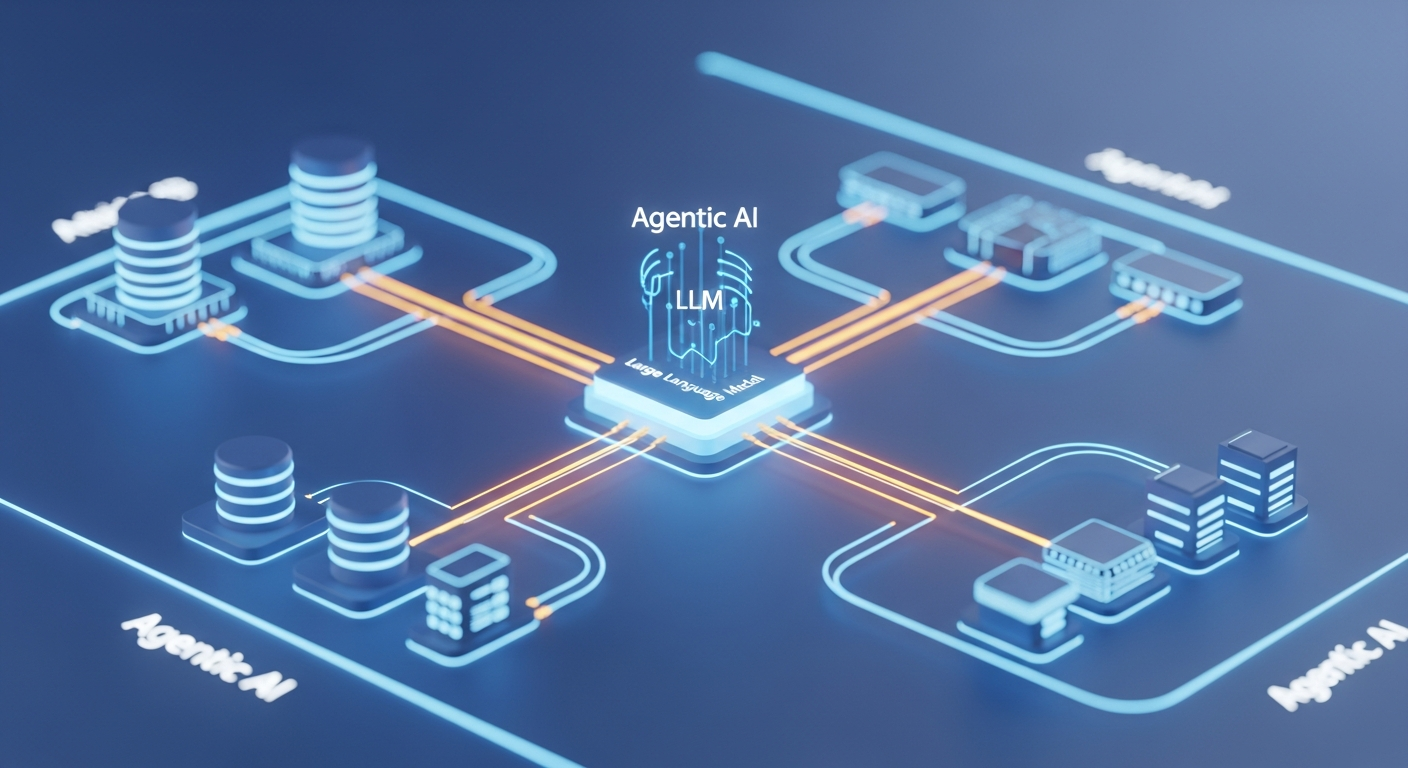
To understand the magnitude of this shift, one must look under the hood of what actually constitutes a “digital workforce.” We are moving rapidly away from the era of the conversational chatbot—a system that relies on a human prompt to generate a static text response. The new paradigm is Agentic AI, a framework where large language models are equipped with read/write access to enterprise systems, autonomous reasoning capabilities, and the authority to execute multi-step workflows without human intervention.
This requires a fundamental reimagining of enterprise architecture. Traditional software deployment was deterministic; you wrote a script, and it executed the exact same way every time. Agentic AI, by contrast, is probabilistic. To make it reliable enough for mission-critical enterprise deployment, organizations are investing heavily in advanced LLM Infrastructure. This includes high-performance vector databases for Retrieval-Augmented Generation (RAG), sophisticated orchestration layers that manage agent memory and state, and highly complex Identity and Access Management (IAM) frameworks designed specifically for non-human actors.
When an AI agent is tasked with resolving a network outage or processing a procurement invoice, it must authenticate itself across multiple secure environments, query databases, make a decision based on real-time context, and execute a command. This requires a Zero Trust architecture that treats AI agents with the same—if not greater—scrutiny as human employees. The infrastructure required to support this is immense, and it is driving one of the largest capital expenditure cycles in the history of the technology sector.
Market Impact & Deployment: The $6.7 Trillion Infrastructure Boom

The financial implications of this architectural shift are staggering. The transition from selling static software licenses to deploying continuous, outcomes-based digital workforces is driving a massive wave of consolidation and investment in the IT services sector. The underlying hardware and managed services required to support these agents are becoming the most valuable commodities in the enterprise market.
A prime example of this occurred in late April 2026, when Cognizant announced its definitive agreement to acquire Astreya, an AI-first IT managed services provider, for approximately $600 million. This was not a standard consultancy acquisition; it was a targeted land-grab for AI infrastructure capabilities. Astreya brings to the table its proprietary AI OpsHub platform—featuring modules for agentic automation, signal intelligence, and readiness assessment—along with a decade of experience managing data center infrastructure for six of the “Magnificent Seven” hyperscalers.
Cognizant’s CEO, Ravi Kumar S., justified the acquisition by pointing to a projected $6.7 trillion AI data center infrastructure buildout expected between 2025 and 2030. With global data center capacity expected to double in just five years, and the five largest hyperscalers projected to spend nearly $700 billion on infrastructure in 2026 alone, the race is on to build the physical and operational foundation for the digital workforce. Effective and credible scaling of Enterprise AI requires deep context and specialized builder expertise—something that traditional IT service models simply cannot provide.
Software as a Coworker: Salesforce and Auvik Enter the Fray
While the infrastructure is being laid at the data center level, the application layer is seeing an explosion of purpose-built AI agents designed to act as digital coworkers. These are not generic assistants; they are highly specialized, domain-specific agents that integrate directly into existing enterprise workflows.
Salesforce’s recent launch of Agentforce Operations perfectly encapsulates this trend. Built on technology acquired from Regrello, Agentforce Operations is designed to automate complex, outdated back-office tasks across supply chain, finance, procurement, and IT operations. Unlike traditional workflow tools that merely route tasks between human workers, Agentforce agents actually do the work. They autonomously extract data from unstructured documents, chase down approvals, verify compliance, and synchronize data across disconnected systems like ERPs and email clients. With “Instant Blueprints,” businesses can turn process documents into structured digital workflows in minutes, allowing business users to update processes in plain language without needing a developer.
Similarly, in the networking space, Auvik has launched Aurora AI agents. Purpose-built for network and infrastructure management, Aurora leverages Auvik’s 15 years of SaaS-based network data to proactively manage, troubleshoot, and optimize network environments. These agents work out of the box, delivering actionable guidance based on real-time network context—including topology, device relationships, and security vulnerabilities. By prioritizing alerts based on actual business impact, Aurora aims to speed up ticket resolution and prevent outages before they happen, effectively acting as a Tier-1 support engineer that never sleeps.
The Leadership Overhaul: Navigating the C-Suite Dilemma
This shift in mindset is forcing a harder question about whether today’s leaders and organizational structures are actually built for what comes next. According to Caswell, the field of enterprise leadership is currently splitting in two. On one side are executives treating AI as a faster version of every previous technology wave—a tool to be deployed within existing silos. On the other side are leaders using this moment to tear up the playbook entirely, rebuilding their organizations around agility and first principles.
The deployment of a digital workforce requires a profound commitment to change management. “No longer is it simply, ‘Hey, how do we go in, provide this technology and move on?'” Anderson explained. “It is more, ‘How do we help you as an organization reach the outcomes?’ and then actually continually improve from those outcomes moving forward.”
This means that organizations need to treat AI as a long-term journey anchored in clear outcomes, not a one-time deployment. The C-suite must now manage a hybrid workforce of humans and agents, requiring new KPIs, new management structures, and a deep cultural shift to ensure that human employees view these agents as collaborators rather than competitors.
The Consumer Translation: Amplification vs. Replacement
For the everyday knowledge worker, the translation of this highly technical shift is both exciting and daunting. The prevailing corporate narrative is one of amplification. “My personal assistant has actually made me more efficient and hasn’t replaced me,” Anderson noted. “I think that’s how you have to take a look at it.”
The goal is to offload the drudgery of modern work—the endless data entry, the routing of IT tickets, the cross-referencing of compliance documents—so that human workers can focus on high-level strategy, creative problem-solving, and relationship building. We are seeing this amplification extend into real-time communication as well. Deepgram recently announced the general availability of Flux Multilingual, expanding its conversational speech recognition model to 10 languages with real-time language detection and the ability to switch languages mid-call. This allows voice agents in contact centers to seamlessly interact with a diverse global customer base, augmenting human customer service representatives and handling Tier-1 support with unprecedented fluidity.
However, the dialogue remains tense. “Are these agents a workforce or are they enablers to make every single one of my employees superpowered?” Caswell asked. While the two aren’t mutually exclusive, the reality is that as digital workforces become more capable of autonomous end-to-end task execution, the nature of entry-level and mid-level knowledge work will be fundamentally altered.
Red Team Audit: Shadow AI and the Integration Mirage
While the narrative pushed by hyperscalers and their partner ecosystems is one of seamless integration and human amplification, a Red Team audit of the current enterprise landscape reveals significant hidden bottlenecks and unaddressed risks.
First is the rapidly escalating issue of “Shadow AI.” Just as Shadow IT plagued the early days of cloud migration, employees are now bypassing official corporate channels to use unsanctioned AI tools and coding agents to get their work done faster. Cybersecurity firm Lookout recently launched a mobile-native tool specifically designed to expose shadow AI on enterprise devices, highlighting the severe visibility gaps that currently exist in corporate security postures. When employees grant third-party AI agents access to corporate data on their mobile devices, they bypass the very IAM frameworks designed to protect the organization, creating massive vectors for data exfiltration and compliance violations.
Furthermore, the marketing fluff surrounding “instant blueprints” and “out-of-the-box” AI agents often glosses over the brutal reality of enterprise technical debt. Integrating an autonomous agent into a pristine, modern cloud environment is one thing; integrating it into a 20-year-old on-premise ERP system held together by custom scripts is another entirely. The cost of cleaning, structuring, and securing enterprise data so that an AI agent can actually use it without hallucinating or breaking compliance is often exponentially higher than the cost of the AI software itself. The “amplification” of humans is a noble goal, but in back-office operations, the unspoken ROI calculation for many of these deployments is ultimately rooted in long-term headcount reduction.
TechNode HQ Verdict: Pros, Cons & Usability
- Pro (Engineering): Agentic AI systems like Auvik Aurora and Salesforce Agentforce transition enterprise architecture from reactive monitoring to proactive, autonomous remediation, drastically reducing mean time to resolution (MTTR) for complex system errors.
- Pro (Consumer): Everyday knowledge workers are freed from the drudgery of repetitive data entry, compliance checking, and ticket routing, allowing them to act as managers of AI workflows rather than manual task executors.
- Con: The rise of “Shadow AI” on mobile and endpoint devices creates unprecedented security vulnerabilities, as employees grant unsanctioned agents access to proprietary corporate data.
- Con: The integration mirage. Deploying these agents requires massive, costly overhauls of legacy data infrastructure and Identity and Access Management (IAM) systems to prevent autonomous agents from executing destructive actions.
Enterprise Usability: CTOs and CIOs must deploy Agentic AI immediately to remain competitive, but they must do so through a Zero Trust lens. Begin with domain-specific, tightly scoped agents (like Auvik for network management) before attempting broad, cross-departmental back-office automation. Prioritize investments in data structuring and IAM for non-human actors before purchasing the AI application layer.
Everyday Usability: For the public and everyday knowledge workers, the time to adapt is now. Embrace AI agents as digital coworkers. The most valuable skill in the modern enterprise is no longer the ability to execute a routine task, but the ability to orchestrate, audit, and optimize the output of autonomous digital workforces.