
Key takeaways
- OpenAI acquired cloud execution startup Ona to power Codex.
- Codex weekly active users surged 400% to over 5 million in 2026.
- Ona provides secure, persistent cloud sandboxes for autonomous AI agents.
- The acquisition bolsters OpenAI’s narrative ahead of its $850B IPO.
- This marks a definitive industry shift from AI copilots to AI engineers.
The Architectural Reality: Why OpenAI Acquires Ona
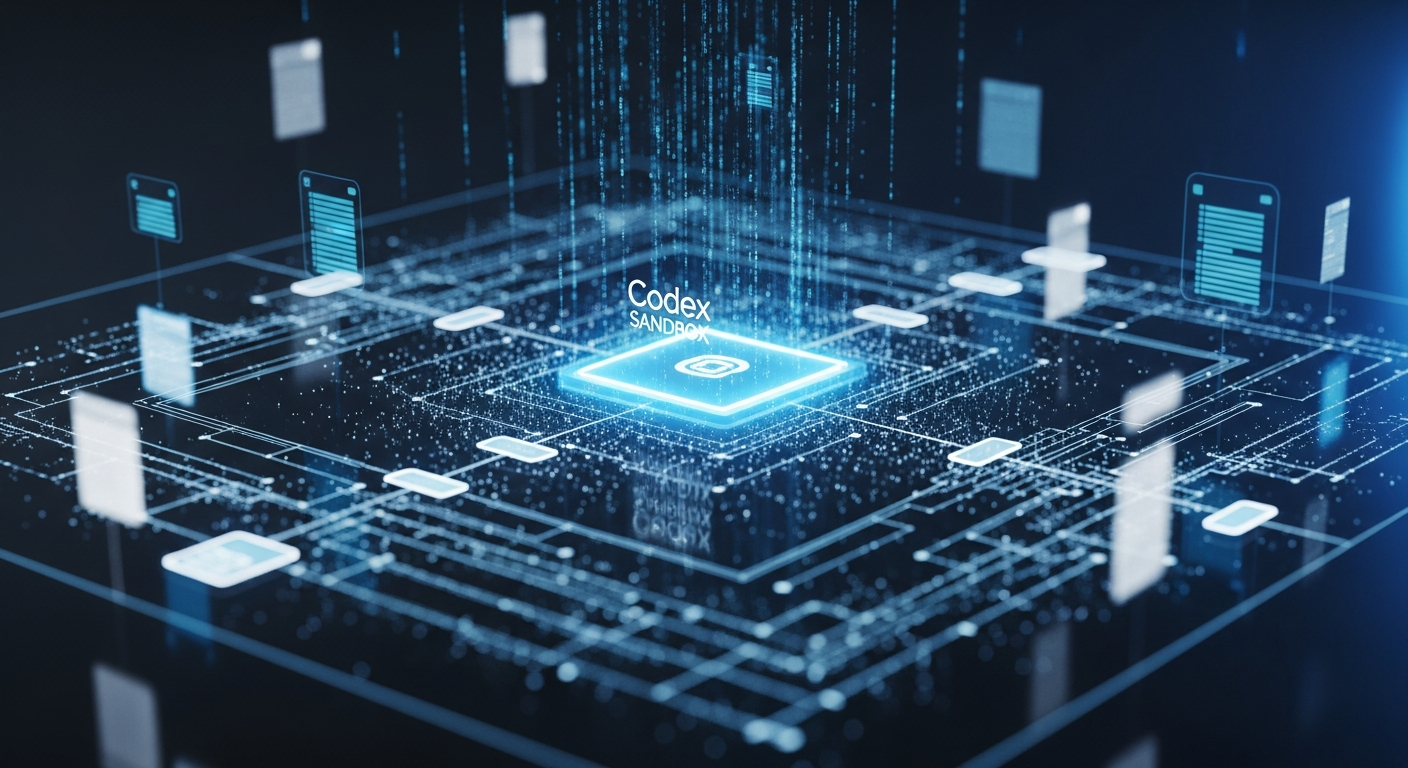
On June 11, 2026, the artificial intelligence landscape experienced a seismic structural shift as OpenAI acquires Ona, the cloud execution startup formerly known as Gitpod. This acquisition is not merely a routine expansion of OpenAI’s product portfolio; it represents the critical missing link in the evolution of artificial intelligence. For years, the industry has been constrained by a fundamental bottleneck: Large Language Models (LLMs) are inherently stateless. They are exceptional at generating text and predicting the next line of code, but they lack a native environment to execute, test, and iterate upon that code. By absorbing Ona and its CEO Johannes Landgraf into the Codex division, OpenAI is fundamentally transforming its architecture from a reactive text generator into a proactive, stateful software engineering engine.
To understand the magnitude of this acquisition, one must examine the underlying infrastructure that Ona brings to the table. Prior to the acquisition, Ona had already established itself as a powerhouse in cloud-based development, providing environments to over 2 million developers. Following its strategic rebrand from Gitpod in September 2025, the company pivoted aggressively away from traditional browser-based Integrated Development Environments (IDEs) to become the “mission control” for autonomous AI agents. Ona’s architecture is built upon OS-level isolation and highly secure sandboxing, ensuring that every task assigned to an AI agent runs inside its own isolated, ephemeral cloud container.
This API-first architecture relies heavily on standard configurations like devcontainer.json. When a user prompts OpenAI’s Codex to build a new application, Codex no longer just spits out a block of Python or JavaScript for the user to copy and paste. Instead, it interfaces directly with Ona’s infrastructure to instantly provision a virtual machine, preconfigured with all necessary dependencies, libraries, and environmental variables. The AI agent can then write the code, execute it, read the error logs, debug the application, and run unit tests—all within a secure, isolated sandbox that prevents cross-environment interference. This is the definitive shift from “AI that writes code” to “AI that builds software.”
Furthermore, the integration of Ona solves a massive security headache for Chief Information Security Officers (CISOs). Enterprise guardrails are paramount when deploying autonomous agents. Ona brings fine-grained access control, comprehensive audit trails, credential scoping, and Virtual Private Cloud (VPC) security. This allows organizations to run complex AI workloads within their own sovereign cloud infrastructure, ensuring that proprietary source code and sensitive data never leak into the broader public models. It is this enterprise-grade security that makes the Ona acquisition a masterstroke in OpenAI’s B2B strategy.
From Stateless Chat to Persistent Cloud Environments
The true magic of the Ona acquisition lies in the concept of persistent cloud environments. Historically, interacting with an AI coding assistant was a synchronous, session-bound activity. If you closed your browser or your local IDE, the AI stopped working. It required constant human supervision, prompting, and hand-holding. Ona shatters this limitation by providing continuous, persistent runtimes that exist independently of the user’s local hardware.
Imagine a scenario where a lead engineer assigns a complex refactoring task to Codex at 5:00 PM on a Friday. Because Codex is now powered by Ona’s persistent cloud infrastructure, the engineer can close their laptop and go home. In the background, the Codex agent continues to operate continuously across sessions. It compiles the code, runs extensive integration tests, analyzes the data, and even pushes the finalized, bug-free code to a staging branch by Saturday morning. This asynchronous, long-running capability is what defines the new “agentic era” that OpenAI is aggressively championing.
The productivity metrics backing this shift are staggering. Prior to the acquisition, Ona’s enterprise customers reported up to a 4x increase in development throughput by utilizing these agentic workflows. When AI agents are no longer bottlenecked by human reaction times or local compute constraints, the velocity of software development scales exponentially. This also explains the explosive growth of OpenAI’s Codex platform, which now boasts over 5 million weekly active users—a massive 400% increase since early 2026, up from just 3 million users in April. Developers are flocking to Codex not just for code completion, but for end-to-end software orchestration.
This acquisition also highlights a broader ecosystem consolidation strategy by OpenAI. Earlier in 2026, OpenAI acquired Astral, the creators of lightning-fast Python tooling like Ruff and uv. By combining Astral’s high-performance development tools with Ona’s persistent cloud runtimes and Codex’s reasoning capabilities, OpenAI is vertically integrating the entire AI developer stack. They are building a closed-loop ecosystem where the AI is the developer, the toolchain, and the deployment environment all at once.
Market Impact & Deployment: The IPO Context

While the technical merits of the Ona acquisition are profound, the timing reveals a much larger financial narrative. This deal was announced just days after OpenAI confidentially filed for an Initial Public Offering (IPO) with the Securities and Exchange Commission between June 7 and June 9, 2026. OpenAI is currently racing to the public markets alongside its chief rival, Anthropic, and Elon Musk’s SpaceX, creating a historic, potential $3.6 trillion mega-cap IPO pipeline for the fall of 2026.
OpenAI’s last private funding round valued the company at an astronomical $840 to $852 billion. As of March 2026, the company was generating $2 billion in monthly revenue. However, to justify a near-trillion-dollar valuation on the public markets, OpenAI must prove to institutional investors that its revenue is not just consumer subscription churn, but highly sticky, high-margin enterprise B2B revenue. Acquiring Ona is the ultimate S-1 narrative booster.
By offering secure, production-grade AI deployments that integrate directly into enterprise VPCs, OpenAI is positioning Codex as an indispensable, enterprise-grade infrastructure layer rather than a mere productivity tool. When Fortune 500 companies integrate Ona-powered Codex agents into their CI/CD pipelines, the switching costs become impossibly high. This guarantees the long-term, recurring revenue streams that Wall Street demands. The acquisition proves that OpenAI is not just an AI research lab; it is a mature enterprise software vendor capable of dominating the B2B landscape.
However, this massive scale comes with significant deployment challenges. Hosting persistent cloud environments for 5 million weekly active users requires an unfathomable amount of compute and storage. The Total Cost of Ownership (TCO) for OpenAI will skyrocket as they absorb Ona’s infrastructure costs. Every autonomous agent running a continuous loop in a cloud sandbox consumes CPU, RAM, and network bandwidth. OpenAI will need to heavily leverage its partnership with Microsoft Azure to ensure that the underlying hardware can support this unprecedented level of concurrent, stateful AI execution without eroding their profit margins.
The Anthropic Threat and Ecosystem Consolidation
No acquisition happens in a vacuum, and OpenAI’s purchase of Ona is as much a defensive maneuver as it is an offensive one. The primary catalyst for this aggressive roll-up strategy is Anthropic. Over the past year, Anthropic has been relentlessly targeting the developer market with its Claude Code platform. Anthropic recently launched an agentic coding system that lives directly in the developer’s terminal, offering deep contextual understanding and autonomous execution capabilities that temporarily eclipsed Codex’s feature set.
Anthropic’s approach proved that developers do not want a separate chat window; they want an agent that lives where the code lives and has the authority to execute commands. OpenAI recognized that building a secure, scalable cloud execution environment from scratch to rival Claude Code would take years—time they do not have with an IPO looming. The acquisition of Ona was a classic “buy versus build” decision. By acquiring the best-in-class infrastructure provider, OpenAI instantly neutralized Anthropic’s architectural advantage.
This move forces a broader consolidation in the AI developer tooling ecosystem. Startups that were building wrapper applications around OpenAI’s APIs to provide agentic workflows are now facing an existential threat. OpenAI is signaling that it intends to own the entire value chain, from the foundational model down to the runtime environment. Competitors will now have to scramble to find their own infrastructure partners, likely sparking a wave of M&A activity across the cloud computing and AI sectors as companies race to match OpenAI’s vertically integrated stack.
The Consumer Translation: AI Software Engineers
Beyond the enterprise boardrooms and Wall Street trading floors, the acquisition of Ona has profound implications for the everyday consumer and the broader tech workforce. We are witnessing the democratization of software engineering on an unprecedented scale. Historically, building a functional application required deep knowledge of environment configuration, dependency management, and deployment pipelines—often referred to as “dependency hell.”
With Ona powering Codex, these barriers to entry are obliterated. A non-technical founder with a vision can now prompt Codex to build an e-commerce platform. Codex will autonomously spin up the Ona sandbox, install the necessary frameworks, write the backend logic, design the frontend, and deploy a live prototype. The user never has to open a terminal, configure a local server, or understand what a devcontainer.json file is. The AI handles the entire lifecycle in the cloud.
This shift will inevitably disrupt the traditional software engineering job market. While senior architects and systems designers will become more productive, acting as managers of AI agent fleets, entry-level coding tasks and QA testing will be entirely automated. The role of the human developer is evolving from “writing code” to “orchestrating AI.” As these persistent cloud environments become more accessible, we will see a massive explosion in micro-SaaS applications, hyper-personalized software, and rapid prototyping, fundamentally altering how digital products are conceived and delivered to the world.
TechNode HQ Verdict: Pros, Cons & Usability
- Pro (Engineering): OS-level isolation and VPC integration allow for secure, multi-tenant agentic workflows without risking cross-environment contamination or data leaks.
- Pro (Consumer): Eliminates “dependency hell” by allowing non-technical users to build and deploy software entirely in the cloud without local environment setup.
- Con: The compute overhead required to maintain persistent cloud sandboxes for 5 million active users will result in astronomical infrastructure costs for OpenAI.
- Con: Vendor lock-in becomes a severe risk for enterprises, as migrating away from a vertically integrated Codex/Ona ecosystem will be technically complex.
Enterprise Usability: For CTOs and enterprise IT leaders, deploying the Ona-powered Codex is a mandatory upgrade. The 4x increase in development throughput and the robust security guardrails make it the most compelling AI infrastructure investment of 2026. Organizations should immediately begin auditing their CI/CD pipelines to integrate these autonomous agent workflows.
Everyday Usability: For independent developers and non-technical founders, this platform is ready for immediate adoption. The ability to have an AI agent work asynchronously in the cloud while you focus on high-level design is a game-changer. If you are building software today, transitioning to this stateful, agentic workflow is essential to remain competitive.