
Key takeaways
- The ADA ejected five leading scientists for distributing an editorial criticizing NIH budget cuts.
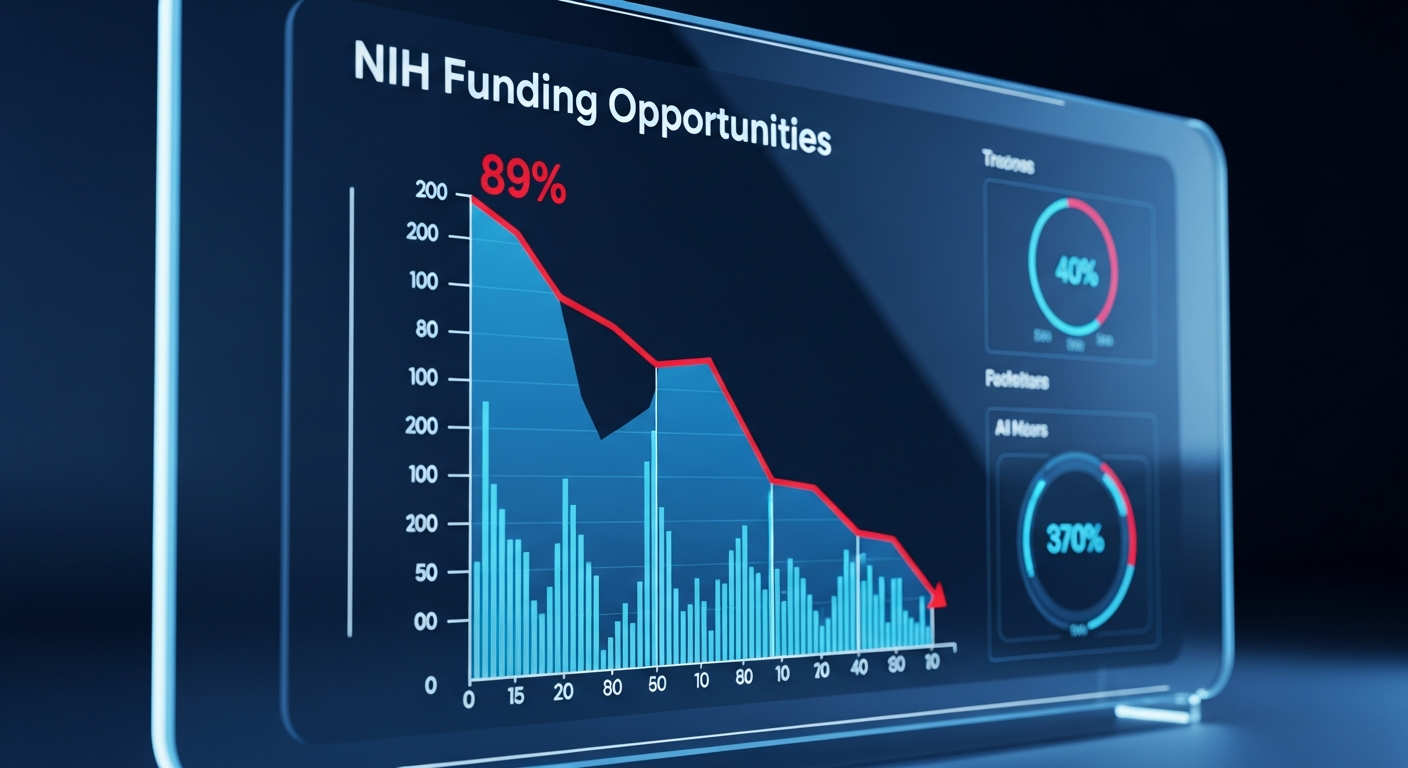
- The distributed data revealed an 89% drop in NIH Notices of Funding Opportunities (NOFOs).
- NIH grant awards plummeted by 66%, erasing $1.3 billion in critical biomedical research capital.
- ADA CEO Charles Henderson issued a public apology following massive industry backlash and resignations.
- The funding freeze threatens the development pipeline for next-gen medical AI and hardware.
The intersection of scientific research, federal funding, and institutional politics reached a boiling point last week at the Ernest N. Morial Convention Center in New Orleans. What was supposed to be a premier gathering of the world’s top medical minds at the 2026 Scientific Sessions was entirely overshadowed by the unprecedented ADA conference expulsions. Five prominent diabetes researchers were forcibly escorted out of the venue by security and Louisiana State Police, an event that has since sent shockwaves through the global biomedical and enterprise technology sectors.
The scientists—dubbed the “New Orleans Five”—were not ejected for a conventional security breach. They were removed for distributing printed copies of a peer-reviewed editorial published in the American Diabetes Association’s (ADA) own flagship journal, Diabetes Care. The editorial, titled “Misguided Brushes of a Pen Continue to Dismantle and Destroy Biomedical Research in the United States,” contained devastating, hard data regarding the Trump administration’s dismantling of the National Institutes of Health (NIH) funding pipeline. The physical removal of these scientists occurred just minutes before a keynote address originally scheduled to be delivered by Trump-appointed NIH Director Dr. Jay Bhattacharya, who canceled at the last minute and was replaced by senior NIH advisor Richard Woychik [1, 2, 8].
While ADA CEO Charles Henderson has since issued a public apology, the incident has ripped the veil off a much larger, systemic crisis. The data the scientists were attempting to share highlights a catastrophic supply chain shock to the U.S. biomedical apparatus—a freeze in capital that threatens to stall a decade of technological advancement in healthcare.
The Architectural Reality of the ADA Conference Expulsions
To understand the gravity of the ADA conference expulsions, one must understand the underlying mechanics of how biomedical innovation is funded in the United States. The NIH is not merely a government agency; it is the foundational enterprise research infrastructure that acts as the seed capital and server backbone for the entire U.S. biotech industry. When the NIH functions correctly, it issues Notices of Funding Opportunities (NOFOs)—the scientific equivalent of Requests for Proposals (RFPs) or open APIs through which research institutions and startups interact with federal capital.
The editorial distributed by Dr. Steven E. Kahn (Editor-in-Chief of Diabetes Care) and his colleagues exposed a staggering system failure. According to the data, over the first 13 months of the current administration, the NIH issued only 84 NOFOs, compared to 787 in the prior year. This represents an 89% drop in funding opportunities. Furthermore, from October 2025 to February 2026, the number of actual grant awards fell from nearly 3,000 to under 1,000—a 66% collapse.
In hard currency, this equates to a 54% drop in research dollars, erasing $1.3 billion from the innovation pipeline. In the enterprise technology sector, a sudden 89% drop in venture capital or a 66% reduction in cloud infrastructure provisioning would trigger an immediate market panic. In the biomedical sector, the reaction is the same, but the stakes are human lives. The researchers who were ejected were attempting to sound the alarm on a denial-of-service attack on the nation’s R&D capabilities.
Market Impact & Deployment of Research Capital

The fallout from this funding freeze extends far beyond academic laboratories. The modern healthcare ecosystem relies heavily on advanced biomedical hardware and sophisticated software architectures. Startups and established medical device manufacturers alike depend on NIH-funded foundational research to de-risk early-stage technologies before they reach the commercial market.
For the diabetes sector specifically, this capital drought is devastating. The development of next-generation Continuous Glucose Monitors (CGMs), closed-loop automated insulin delivery systems (often referred to as artificial pancreases), and novel GLP-1 receptor agonist therapies require massive, sustained capital for multi-year, multi-phase clinical trials. When the NIH chokes off the NOFO pipeline, the deployment of these technologies is delayed by years. Smaller biotech firms, unable to secure bridge funding in a tight macroeconomic environment, are forced to shelve promising prototypes or sell their intellectual property at a loss to overseas competitors.
The ADA’s initial reaction to the distribution of this data—ejecting the scientists and confiscating their badges—was widely viewed as a capitulation to political pressure. The organization initially cited a “code of conduct” violation regarding the unauthorized distribution of materials, and later invoked federal regulations for 501(c)(3) nonprofits, claiming the need to maintain a “strictly nonpartisan environment.” However, as legal experts quickly pointed out, 501(c)(3) regulations do not prohibit organizational leaders or members from sharing political views in a personal capacity or speaking out on public policy issues that directly impact their mission.
The market impact of the ADA’s misstep was immediate. A fiery open letter titled “Shame on You” gathered over 6,500 signatures from industry professionals, and more than 40 ADA officials resigned in protest, calling the organization’s justifications “fatuous nonsense.” The sheer scale of the backlash forced ADA CEO Charles Henderson to issue a video apology on June 10, 2026, stating, “What transpired is not reflective of who I am, the values I hold, or the way I was raised,” and promising a thorough independent review.
The Consumer Translation: Stalled Innovation
For the everyday consumer and patient, the bureaucratic mechanics of NIH grants and the drama of the ADA conference expulsions might seem distant, but the downstream effects are profoundly personal. The technologies that manage chronic diseases are born from the very grants that have just been slashed by 66%.
Consider the integration of medical AI models in endocrinology. Researchers have been utilizing NIH funding to train complex machine learning algorithms on massive datasets of continuous glucose readings, dietary habits, and biometric data to predict hypoglycemic events hours before they occur. These predictive models are the difference between a patient safely adjusting their insulin intake and ending up in an emergency room. With the funding pipeline severed, the computing power, data orchestration, and clinical validation required to bring these AI models to consumer smartphones are effectively halted.
Furthermore, the chilling effect on scientific discourse cannot be overstated. When the premier advocacy organization for a disease forcibly removes its own leading scientists for criticizing government funding cuts, it signals to the broader research community that speaking truth to power carries severe professional risks. This environment fosters a brain drain, where top-tier engineering and medical talent migrate away from public health research and into private, less regulated sectors, or leave the United States entirely for countries with more stable R&D investments.
The Future of Biomedical Infrastructure
The events in New Orleans serve as a grim case study in what happens when critical enterprise infrastructure—in this case, federal research capital—is politicized and abruptly throttled. The apology from the ADA, while necessary, does not restore the $1.3 billion in lost research funding, nor does it immediately repair the fractured trust between the organization and the scientific community it represents.
As the NIH under Director Jay Bhattacharya and Senior Advisor Richard Woychik pivots toward new administrative priorities, the broader technology and medical sectors must brace for a prolonged period of capital scarcity [2, 14]. The burden of funding early-stage, high-risk biomedical innovation will increasingly fall on private venture capital, philanthropic organizations, and public-private partnerships. However, without the foundational bedrock of the NIH, the architecture of American medical innovation remains fundamentally compromised.
TechNode HQ Verdict: Pros, Cons & Usability
- Pro (Engineering): The crisis is forcing biotech startups to optimize their R&D pipelines, leaning heavily into computational modeling and digital twins to reduce the physical costs of early-stage clinical trials.
- Pro (Consumer): The massive public backlash demonstrates a highly engaged, resilient scientific community that is willing to aggressively defend the integrity of medical research.
- Con: The 89% drop in NOFOs creates an insurmountable bottleneck for early-stage medical hardware and AI diagnostics, delaying consumer availability by an estimated 3 to 5 years.
- Con: The politicization of 501(c)(3) compliance creates a chilling effect, discouraging scientific organizations from advocating for necessary infrastructure funding.
Enterprise Usability: CTOs and research directors in the health-tech sector must immediately diversify their funding architectures. Relying on NIH grants as a primary capital source is currently a high-risk strategy. Enterprises should pivot toward private equity, international grants, and strategic corporate partnerships to maintain R&D momentum.
Everyday Usability: Consumers relying on the imminent release of next-generation medical devices (such as fully closed-loop AI insulin pumps) should adjust their expectations. The underlying science is sound, but the capital required to push these devices through final FDA validation has been severely restricted. Patients should maximize the utility of currently available tech while the industry navigates this funding winter.