Key takeaways
- MAVEN’s fatal 2.7 rpm spin drained its batteries, ending an 11-year mission.
- The spacecraft’s loss eliminates 18% of NASA’s Mars-to-Earth data bandwidth.
- Aging orbiters like MRO and Odyssey now bear the brunt of rover communications.
- NASA issued a May 2026 RFP for a commercial Mars Telecommunications Network.
- The shift mirrors Earth’s transition to commercialized, scalable cloud infrastructure.
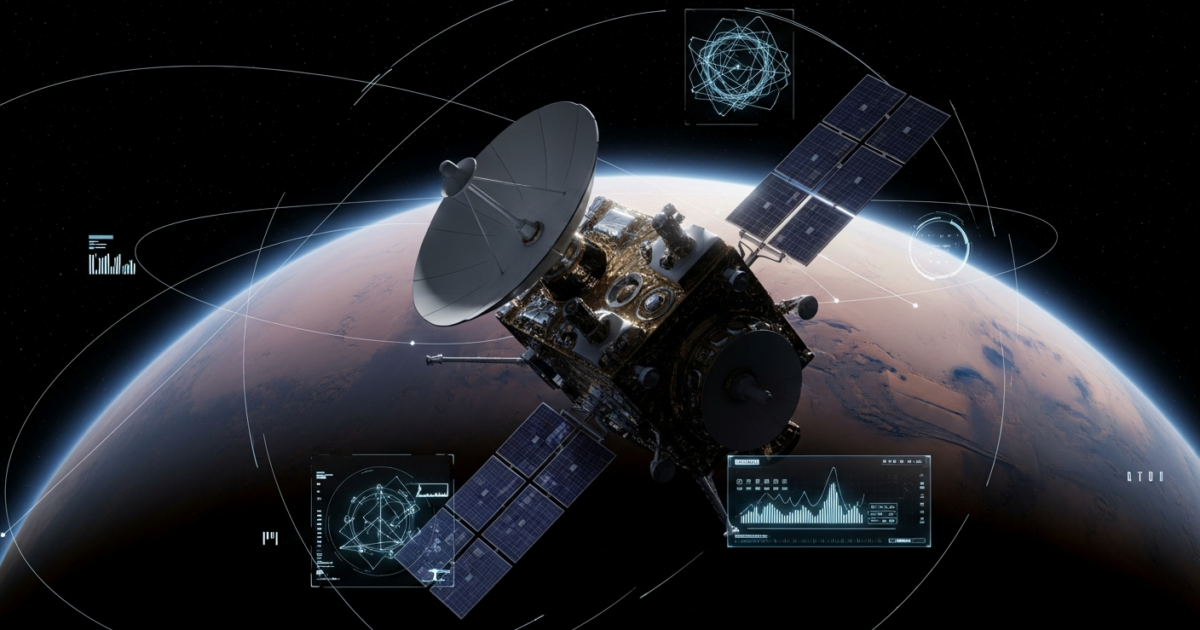
On December 6, 2025, NASA’s Mars Atmosphere and Volatile Evolution (MAVEN) spacecraft slipped behind the Red Planet for a routine communications blackout known as an occultation. It was supposed to emerge less than an hour later. It never did. After months of listening for faint signals in the dark, NASA officially declared the 11-year mission over on June 3, 2026. But the loss of this single, highly successful orbiter is more than just a scientific tragedy; it has accelerated a looming Mars infrastructure crisis that threatens the operational bandwidth of every rover currently exploring the Martian surface.
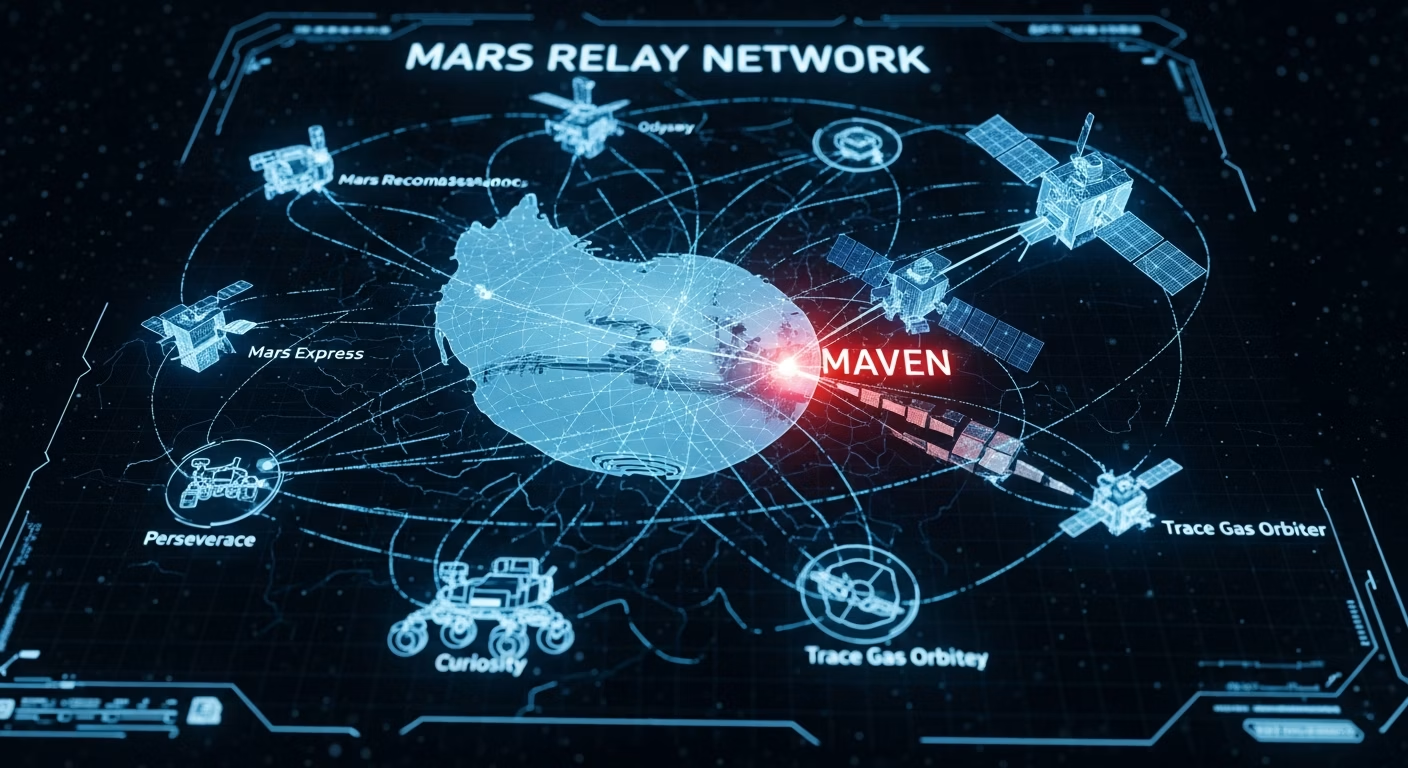
For over a decade, MAVEN served a dual purpose. While its primary mission was to study the stripping of the Martian atmosphere by solar winds, it quietly functioned as a critical node in the Mars Relay Network (MRN)—the interplanetary internet backbone that connects surface assets like the Perseverance and Curiosity rovers to Earth. With MAVEN now tumbling dead in orbit, NASA is facing a severe bottleneck in deep space data orchestration, forcing the agency to rapidly rethink how it handles off-world communications.
The Architectural Reality of the Mars Infrastructure Crisis
To understand the severity of this failure, one must look at the underlying Hardware & Silicon that powers deep space exploration. According to Mike Moreau, MAVEN’s project manager at NASA’s Goddard Space Flight Center, the spacecraft suffered a catastrophic anomaly while out of contact with Earth. Engineers at the Jet Propulsion Laboratory (JPL) managed to extract fragments of telemetry and Doppler shift data from recorded signals gathered by a separate science campaign. The data painted a grim picture: MAVEN was spinning at 2.7 revolutions per minute.
In the vacuum of space, a 2.7 rpm spin is a death sentence for a three-axis stabilized spacecraft. This uncommanded rotation indicates a critical failure in the spacecraft’s attitude control system—likely a faulted reaction wheel or a corrupted inertial measurement unit (IMU). Unable to point its solar arrays toward the Sun, MAVEN entered a power-negative state. Its onboard batteries would have drained within hours, leaving the spacecraft frozen and unable to reboot its primary transmitters.
The architectural fallout of this failure is immense. The Mars Relay Network operates much like a legacy mesh network, relying on a handful of orbiters passing overhead to catch UHF radio signals from the rovers and relay them back to Earth via high-gain X-band antennas. MAVEN’s highly elliptical orbit—ranging from 110 miles to 2,500 miles above the surface—gave it incredibly long visibility windows over the rovers. While it only supported 8% of the total relay sessions, its extended overhead time allowed it to account for nearly 18% of all data returned from the Martian surface.
With MAVEN gone, the burden falls on the remaining four orbiters. The problem? Three of them are ancient. The Mars Odyssey orbiter launched in 2001, the European Space Agency’s Mars Express launched in 2003, and the Mars Reconnaissance Orbiter (MRO) launched in 2005. Relying on two-decade-old hardware to transmit gigabytes of high-resolution scientific data is a precarious strategy, highlighting a massive technical debt in NASA’s interplanetary Enterprise IT infrastructure.
The Science Legacy: Sputtering and Solar Winds
Before examining the future of Martian telecommunications, it is vital to acknowledge MAVEN’s unqualified scientific success. Proposed in 2006 and launched in 2013, MAVEN was built to solve one of planetary science’s greatest mysteries: How did Mars transition from a warm, wet world with a thick atmosphere billions of years ago to the freezing, barren desert it is today?
MAVEN provided the definitive answer. The spacecraft’s suite of instruments observed a process known as “sputtering.” As Shannon Curry, MAVEN’s principal investigator at the University of Colorado Boulder, explained, sputtering occurs when charged particles from the solar wind crash into the upper Martian atmosphere, splashing neutral atmospheric molecules out into deep space—”much like doing a cannonball in a pool.”
By analyzing noble gas isotopes, the MAVEN team confirmed that this solar-driven atmospheric escape has been the dominant mechanism for atmospheric loss over billions of years. The spacecraft’s durability allowed it to witness extreme solar events, including a massive solar storm in 2024 that triggered orders of magnitude more atmospheric escape and painted the Martian globe in glowing auroras. MAVEN leaves behind a legacy as the best observer of atmospheric escape anywhere in the Solar System, fundamentally altering our understanding of planetary evolution.
Market Impact & Deployment
The loss of MAVEN is forcing a paradigm shift in how space agencies approach off-world infrastructure. Tiffany Morgan, director of NASA’s Mars Exploration Program, noted that while the current Mars Relay Network is “resilient enough” to accommodate the loss with added delays, the clock is ticking. The rovers are already adjusting their operational planning, throttling back the amount of data they attempt to return during limited overhead passes.
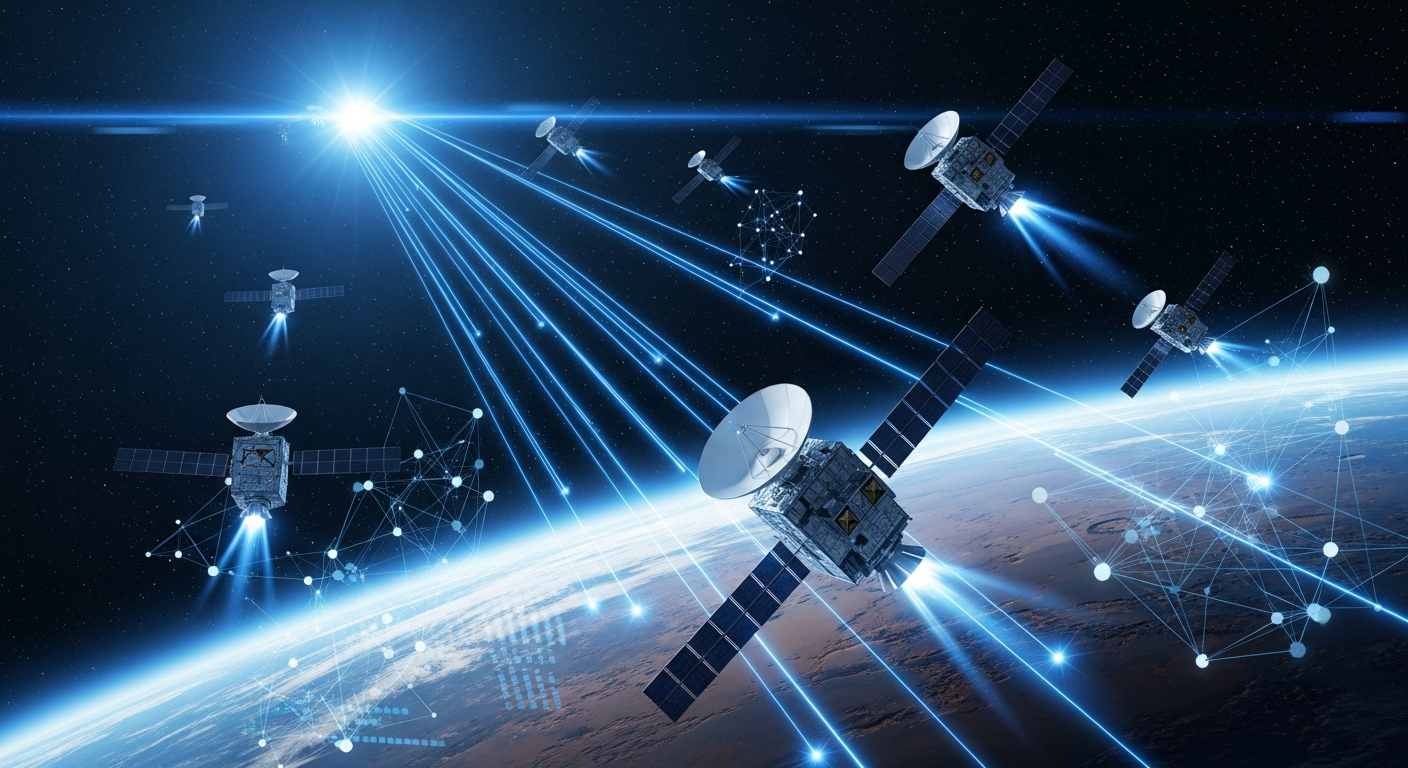
This bottleneck has catalyzed a massive commercial opportunity. In May 2026, NASA released a Request for Proposals (RFP) for the Mars Telecommunications Network—a commercial replacement for the bespoke, government-built relay orbiters. Instead of relying on science missions to moonlight as telecom relays, NASA wants private industry to build a dedicated, scalable architecture designed specifically for high-throughput Martian communications.
This transition mirrors the evolution of terrestrial Networking & Cloud computing. Just as federal agencies shifted from on-premise, bespoke server rooms to commercial cloud providers like AWS and Azure, NASA is looking to outsource its deep space data pipelines. Greg Heckler, deputy program manager at NASA’s Space Communications and Navigation office, emphasized the urgency of this shift. The goal is to have a robust, commercially operated Mars Telecommunications Network operational by the 2030s, well in advance of crewed missions to the Red Planet.
The Total Cost of Ownership (TCO) for deep space networks is staggering, but by opening the floor to commercial aerospace giants—likely drawing bids from the likes of Lockheed Martin, SpaceX, and Blue Origin—NASA hopes to drive down costs while exponentially increasing bandwidth. The new network will likely utilize optical (laser) communications, edge computing nodes in orbit to pre-process rover data, and standardized protocols that allow any future international or commercial mission to seamlessly plug into the Martian internet.
The Consumer Translation
For the average consumer and space enthusiast, the immediate impact of MAVEN’s death will be subtle but noticeable. The 18% drop in data throughput means that the breathtaking, gigapixel panoramas and high-definition videos captured by Perseverance will take longer to reach Earth. Scientists will have to prioritize operational telemetry over raw scientific data during constrained transmission windows, potentially delaying the analysis of rock samples that could hold signs of ancient microbial life.
However, the long-term consumer translation is profoundly exciting. The crisis triggered by MAVEN’s loss is the catalyst for the industrialization of Mars. When the commercial Mars Telecommunications Network comes online in the 2030s, it will provide the broadband infrastructure necessary for human exploration. Astronauts on Mars will require real-time (accounting for light-speed delays), high-bandwidth connections to Earth for telemedicine, software updates, and public relations broadcasts.
MAVEN, a spacecraft about the size of a small car, will remain in its silent, elliptical orbit for another 50 to 100 years before its orbit decays and it burns up in the thin Martian atmosphere it spent over a decade studying. By the time it finally falls from the sky, the network it helped pioneer will likely have evolved into a bustling, commercialized web of data connecting two inhabited planets.
TechNode HQ Verdict: Pros, Cons & Usability
- Pro (Engineering): MAVEN’s highly elliptical orbit proved that variable-altitude relay nodes can efficiently maximize data return (handling 18% of data on only 8% of passes), providing a blueprint for future commercial satellite constellations.
- Pro (Consumer): The failure has accelerated NASA’s timeline for commercializing deep space communications, paving the way for high-bandwidth, optical “interplanetary internet” by the 2030s.
- Con: The fatal 2.7 rpm spin highlights the vulnerability of single-point hardware failures (like IMUs or reaction wheels) during critical occultation blackouts where ground control cannot intervene.
- Con: The immediate loss of 18% of Mars-to-Earth bandwidth places dangerous stress on legacy orbiters from the early 2000s, risking a total data bottleneck for surface rovers.
Enterprise Usability: For aerospace CTOs and defense contractors, NASA’s May 2026 RFP for the Mars Telecommunications Network represents a generational contract opportunity. Firms that can deliver radiation-hardened, optical-relay edge computing nodes with autonomous fault-recovery systems will dominate the next era of off-world infrastructure.
Everyday Usability: While the public cannot “buy” into this network today, the shift ensures that when human missions to Mars begin, the public will experience the journey through high-definition, commercial-grade data streams rather than the fragmented, low-bandwidth telemetry of the past.