
Key takeaways
- Coordinated May 26 takedown neutralized GlassWorm’s four resilient C2 channels.
- Malware compromised over 9 million downstream consumer and enterprise installations.
- Attackers weaponized Solana, BitTorrent, and Google Calendar as C2 dead drops.
- 72 active and 73 sleeper VS Code extensions were used as primary infection vectors.
- Suspected Russian operators geofenced the malware to avoid infecting CIS countries.
On May 26, 2026, at exactly 14:00 UTC, a coordinated coalition executed the GlassWorm Malware Takedown, neutralizing one of the most sophisticated software supply chain threats in modern computing history. Led by CrowdStrike’s Counter Adversary Operations team, in direct partnership with Google and the Shadowserver Foundation, the operation simultaneously severed all command-and-control (C2) channels of a botnet that had systematically compromised the global developer ecosystem. First identified in late 2025 by Koi Security, GlassWorm represents an evolutionary leap in self-propagating malware, weaponizing the very tools engineers use to build the modern web.
Unlike traditional malware that targets end-users directly, GlassWorm operators aimed higher up the chain. By targeting software developers—individuals with privileged access to source code repositories, cloud platforms, CI/CD pipelines, and package registries—the attackers achieved a terrifying economy of scale. A single compromised developer workstation served as a skeleton key, allowing the malware to cascade into downstream networks. The resulting blast radius is staggering: over 9 million downstream consumer and enterprise installations were compromised globally before the coalition pulled the plug.
The operation highlights a critical vulnerability in the modern software development lifecycle. As organizations race to deploy code faster, the barrier to poisoning a package or extension remains dangerously low. The GlassWorm takedown is not just a victory for threat intelligence; it is a stark warning about the fragility of the open-source dependencies that power the digital economy.
GlassWorm Malware Takedown: The Architectural Reality
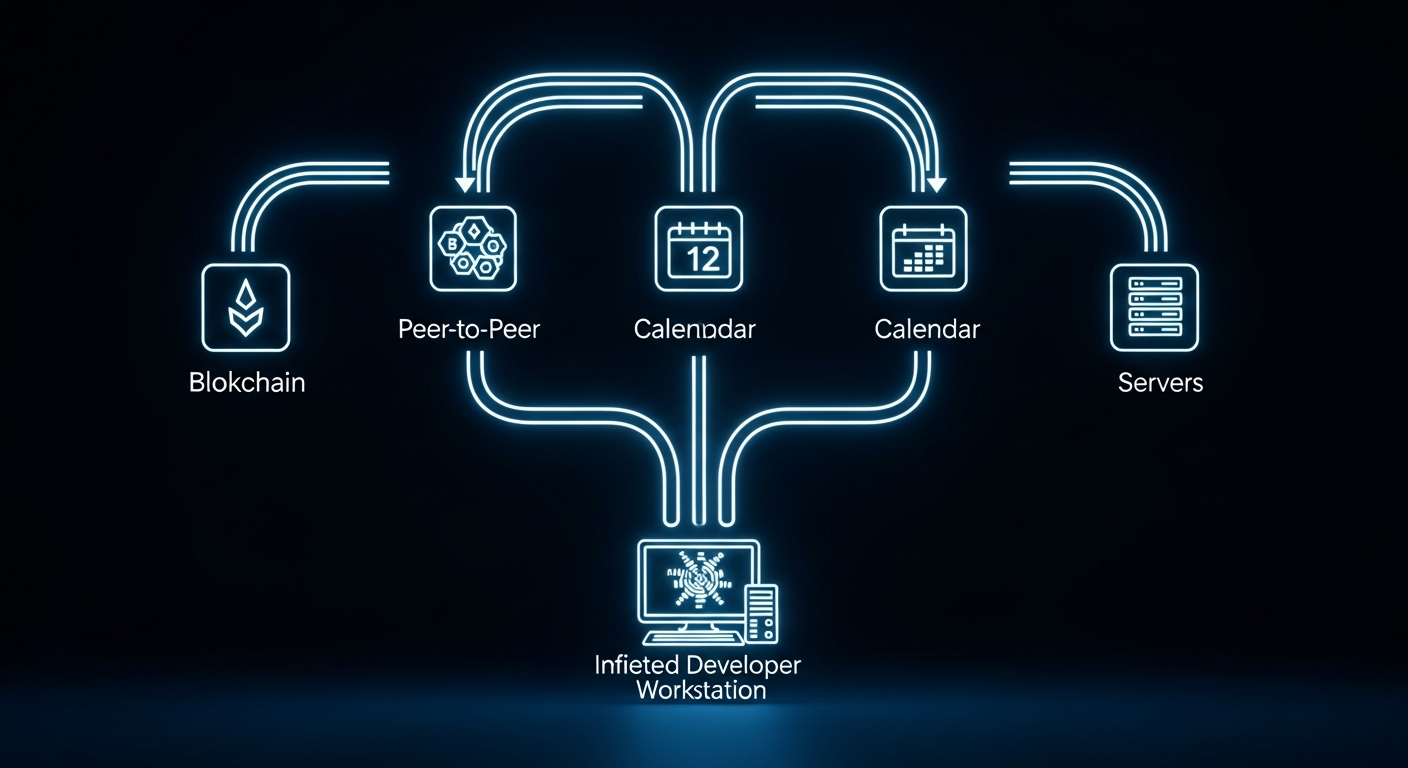
To understand the magnitude of the GlassWorm Malware Takedown, one must dissect the highly resilient, multi-layered architecture the threat actors engineered. The campaign was multi-pronged, utilizing trojanized extensions published on both the Microsoft VS Code Marketplace and Open VSX. This broad distribution strategy allowed the malware to infect not just standard VS Code users, but also developers utilizing popular forks like Cursor, Positron, Windsurf, and VSCodium. Furthermore, the campaign introduced malicious code through compromised npm and Python packages, casting a wide net across the developer ecosystem.
Once a developer inadvertently installed a poisoned extension or package, the malware deployed its primary payload: a Websocket-based JavaScript Remote Access Trojan (RAT) dubbed GlassWormRAT. This payload was designed for total environment domination. It systematically searched the host for developer credentials, including GitHub tokens, NPM publish tokens, OpenVSX credentials, and cryptocurrency wallets. However, data theft was only the first phase.
The true ingenuity of GlassWorm lay in its ability to convert infected developer hosts into covert infrastructure. Compromised machines were silently transformed into SOCKS proxies, hidden VNC (HVNC) servers, and remote execution nodes utilizing WebRTC or spawned Node.js processes. This granted the attackers anonymized, peer-to-peer network access deep inside corporate and personal networks, creating a self-sustaining platform for further propagation.
The Four-Layer C2 Resilience Model
What made GlassWorm exceptionally difficult to eradicate—and what makes the simultaneous takedown so impressive—was its decentralized Command-and-Control (C2) architecture. The operators, described by CrowdStrike as “well-resourced and persistent,” utilized four distinct channels as dead drop resolvers to ensure the botnet could survive traditional domain sinkholing:
- The Solana Blockchain: Attackers stored encrypted C2 server IP addresses within the memo fields of legitimate Solana blockchain transactions. Because the blockchain is immutable and decentralized, security vendors could not simply “take down” the ledger.
- BitTorrent DHT Networks: The malware queried the BitTorrent Distributed Hash Table (DHT) peer-to-peer network to retrieve dynamic configuration data, blending its C2 traffic with legitimate file-sharing noise.
- Google Calendar Dead Drops: In a brazen abuse of legitimate web services, the malware fetched C2 addresses hidden within the event titles of public Google Calendars.
- Commercial VPS Fallback: As a last resort, the malware maintained direct connections to traditional C2 infrastructure hosted on bulletproof commercial Virtual Private Server (VPS) providers.
By layering blockchain, peer-to-peer, and legitimate web services, the attackers created a dynamic front that protected the actual C2 servers behind multiple layers of indirection. The May 26 operation succeeded only because the coalition managed to neutralize all four channels at the exact same moment, preventing the malware from falling back to a secondary communication method.
Market Impact & Deployment: The DevSecOps Reckoning
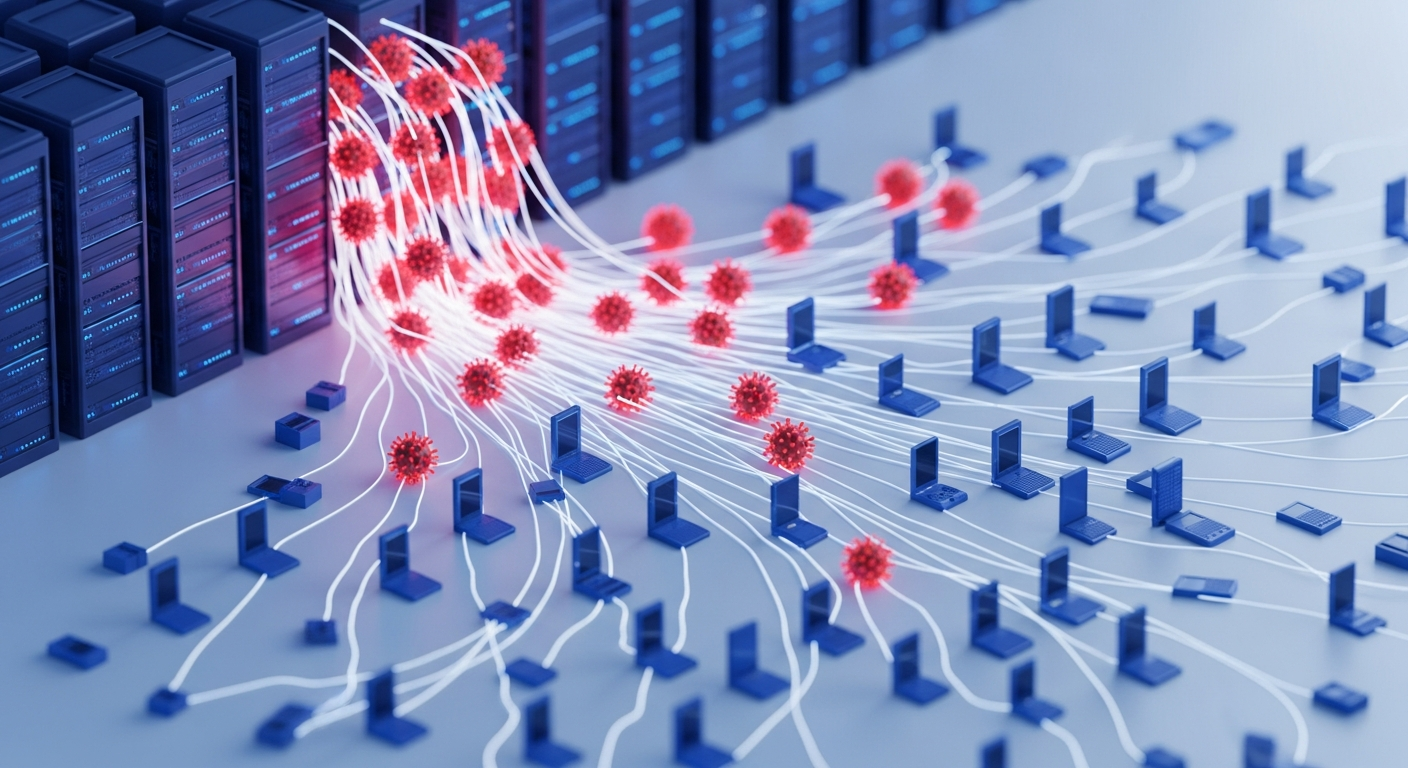
The fallout from Operation GlassWorm is forcing a massive reckoning within enterprise IT and DevSecOps teams worldwide. The hard data extracted from the takedown reveals a systemic failure in how organizations secure their development environments. Cumulatively, the malicious activity poisoned more than 300 highly trafficked GitHub repositories. Threat intelligence identified 72 active malicious VS Code extensions and an additional 73 “sleeper” extensions designed to activate only if the primary vectors were discovered.
The financial motive behind the attack was also laid bare during the investigation. GlassWorm actively targeted and drained 49 different cryptocurrency wallet extensions found on developer machines. However, the theft of cryptocurrency was likely a secondary revenue stream. The primary value of the botnet was the access it provided to proprietary corporate source code and the ability to inject malicious payloads into downstream enterprise software.
Attribution efforts strongly point to Russia-based cybercriminals. Forensic analysis of the GlassWormRAT revealed that the malware terminates execution immediately if it detects the host system is located within a Commonwealth of Independent States (CIS) country—a common tactic used by Russian threat actors to avoid domestic prosecution. Additionally, reverse-engineering efforts uncovered extensive Russian-language comments within the malware’s source code.
For Chief Information Security Officers (CISOs), the GlassWorm incident demonstrates that traditional endpoint detection is insufficient when the user is a highly privileged developer. Developers inherently require the ability to execute unverified code, compile binaries, and interact with external package registries. When these environments remain under-protected, every organization that consumes the resulting software inherits the risk of the compromised developer.
The Consumer Translation: The Invisible Blast Radius
While the technical mechanics of GlassWorm involve VS Code forks, npm registries, and blockchain dead drops, the ultimate victims of this campaign are everyday consumers. The concept of a “supply chain attack” can be abstract, but its real-world implications are deeply personal.
Imagine a city’s water supply. If a criminal wants to poison a specific neighborhood, they could try to break into individual homes to tamper with the tap water. This is difficult, risky, and scales poorly. However, if the criminal manages to infiltrate the central water treatment plant, they can poison the entire city at once. In the digital realm, software developers are the water treatment plants. Consumers are the homes.
Because GlassWorm successfully compromised developers, the malware was inadvertently baked into legitimate software updates, applications, and browser extensions. When consumers downloaded these trusted updates, they unknowingly installed the attackers’ payloads. This resulted in over 9 million downstream compromised installations. These end-users did nothing wrong; they didn’t click a phishing link or download a shady file. They simply updated an app built by a developer whose VS Code environment had been silently hijacked.
The payloads delivered to these 9 million consumer devices included aggressive data-theft frameworks. The malware installed hidden Google Chrome extensions capable of capturing screenshots, logging keystrokes, and exfiltrating clipboard content. For the average consumer, this means passwords, banking details, and private communications were harvested en masse, all stemming from a single compromised developer workstation months prior.
The Future of Supply Chain Security
The GlassWorm Malware Takedown is a monumental achievement, but it is a reactive measure. The infected machines can no longer receive new instructions, but the 9 million downstream installs remain vulnerable until patched by the respective software vendors. The industry must shift from reactive takedowns to proactive architectural resilience.
Moving forward, the integration of machine learning anomaly detection within the CI/CD pipeline will become mandatory. Enterprises must adopt Zero Trust architectures specifically tailored for developer environments. This includes the use of ephemeral, cloud-based development environments that are destroyed and rebuilt daily, severely limiting the dwell time of any persistent threat like GlassWorm.
Furthermore, package registries like npm, PyPI, and the VS Code Marketplace must implement stricter, AI-driven code analysis to detect trojanized extensions before they are published. The barrier to entry for publishing code that reaches millions of developers is currently too low, and threat actors are exploiting this trust at an industrial scale.
TechNode HQ Verdict: Pros, Cons & Usability
- Pro (Engineering): The simultaneous disruption of four decentralized C2 channels (including blockchain and DHT) proves that coordinated coalition takedowns can defeat highly resilient, modern botnet architectures.
- Pro (Consumer): The takedown immediately halted the active exfiltration of keystrokes, screenshots, and clipboard data from over 9 million downstream consumer devices.
- Con: The discovery of 73 “sleeper” extensions highlights the persistent, deeply embedded nature of supply chain threats; neutralizing the C2 does not automatically uninstall the malware from downstream hosts.
- Con: The reliance on legitimate services (Google Calendar, Solana) for C2 resolution makes automated blocking incredibly difficult without disrupting legitimate enterprise workflows.
Enterprise Usability: CTOs and CISOs must immediately audit their developer environments. Relying on standard EDR is insufficient. Enterprises should enforce hardware-backed MFA for all code commits, transition to ephemeral cloud development environments, and implement strict egress filtering to detect anomalous Websocket or WebRTC traffic originating from developer workstations.
Everyday Usability: For the general public, there is no direct action to take against GlassWorm itself, as the threat is embedded in downstream software. However, consumers should enforce strict permission models on their browser extensions, utilize dedicated password managers (rather than browser-based saving), and monitor cryptocurrency wallets for unauthorized transactions. The era of blindly trusting software updates is over.