Key takeaways
- The Commodore Callback 8020 utilizes a patent-pending system-level block on all social media and browsers.
- Powered by Jolla’s Linux-based Sailfish OS, it runs 99% of Android apps via sandboxed LXC containers.
- The device features a MediaTek Helio G81, 48MP camera, and an audiophile-grade DAC for $499.
- Enterprise IT leaders can leverage the device as a zero-trust, distraction-free corporate communication terminal.
- The T9 keyboard and dynamic touchscreen introduce intentional psychological friction to combat doomscrolling.
The global smartphone industry has reached a terminal velocity of diminishing returns, characterized by iterative silicon upgrades, bloated software ecosystems, and an escalating war for user attention. Enter the Commodore Callback 8020, a device that fundamentally rejects the prevailing logic of the mobile hardware market. Announced on June 16, 2026, by the newly reformed Commodore International Corporation—now helmed by CEO Christian “Peri Fractic” Simpson—the Callback 8020 is not merely a nostalgic cash grab capitalizing on the legacy of the legendary Commodore 64. It is a highly engineered, $499 piece of hardware designed to enforce a strict digital detox through immutable, system-level software restrictions.
By intentionally stripping away web browsers, email clients, and social media applications, while retaining critical modern utilities via a sandboxed Android compatibility layer, Commodore is pioneering what it calls the “not dumb dumbphone” category. This is a deliberate architectural pivot away from the attention economy. For enterprise IT leaders, it represents a zero-trust communication terminal; for consumers, it is a psychological firewall against doomscrolling. This deep-dive analysis explores the silicon, the software stack, and the market implications of the most contrarian mobile device of the year.
The Architectural Reality of the Commodore Callback 8020
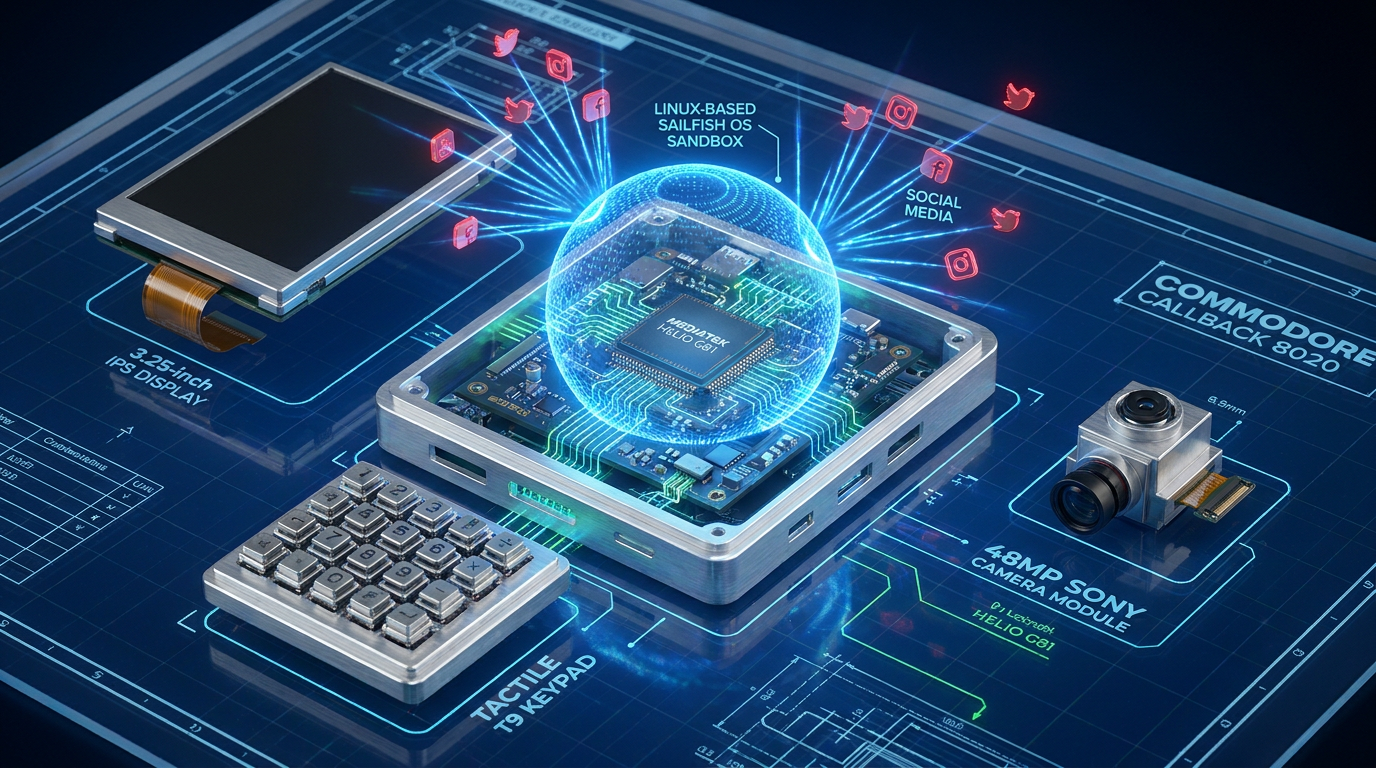
When evaluating the Commodore Callback 8020, the immediate focus must be on its silicon and software stack, which presents a stark contrast to the bloated architectures of modern flagships. At its core, the device is powered by the MediaTek Helio G81 processor. While traditionally categorized as an entry-level System-on-Chip (SoC) in the broader smartphone market, deploying an octa-core chip in a device with a 3.25-inch, 480 x 640 IPS internal display is an exercise in massive computational overhead. Paired with 4GB of RAM and 64GB of internal storage, the hardware is vastly over-provisioned for its restricted use case. This over-provisioning translates directly into zero-latency execution for permitted applications and exceptional power efficiency, maximizing the lifespan of its 1,550 mAh user-replaceable battery.
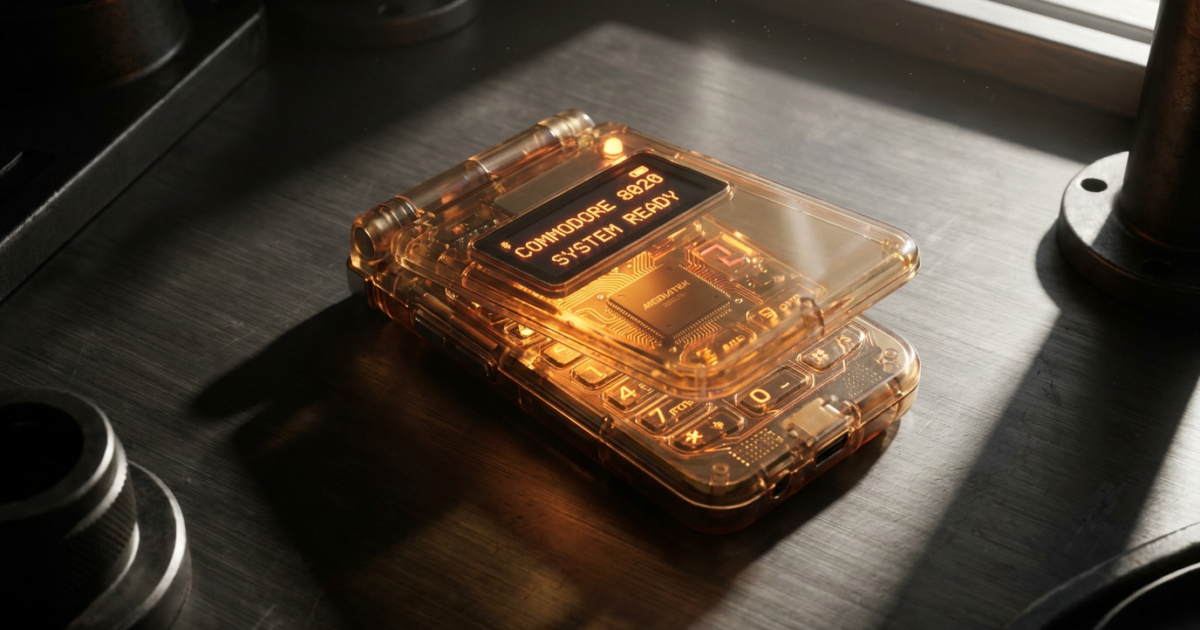
The physical interface is a masterclass in tactile engineering. The device features a classic T9 keypad with predictive text input, a 1.77-inch VFD-style external display for at-a-glance information, and a dome LED light that replaces intrusive on-screen pop-ups with subtle, ambient notifications. For optics, Commodore has integrated a 48-megapixel Sony rear sensor and a dedicated autofocus front camera. Crucially, the inclusion of an audiophile-grade DAC (Digital-to-Analog Converter) and a 3.5mm headphone jack—shipping with included HD in-ear monitors—signals a commitment to high-fidelity utility over wireless-only, compressed audio ecosystems. It even includes a built-in FM radio tuner.
However, the true engineering marvel lies in the operating system. The device runs on Sailfish OS, a Linux-based operating system developed by Jolla, a firm founded by former Nokia engineers. Sailfish OS provides a completely de-Googled environment. To bridge the app gap, it utilizes a sophisticated runtime compatibility layer based on Linux Containers (LXC), allowing it to run 99% of Android applications at near-native speeds without the heavy compute overhead of a traditional virtual machine.
But Commodore’s defining feature is its “patent-pending” system-level blacklist. The OS is hard-coded to reject the installation and execution of social media applications, web browsers, and corporate communication tools like Slack or Teams. The touchscreen itself is dynamically disabled, only activating when a permitted application (like Spotify or Google Maps) explicitly requires touch input. Furthermore, the device intentionally omits 5G connectivity, relying instead on 4G VoLTE and Wi-Fi. This is not a cost-saving measure; it is a deliberate throttling of bandwidth to discourage media streaming and reinforce the device’s role as a tool for intentional communication rather than passive consumption.
Market Impact & Deployment
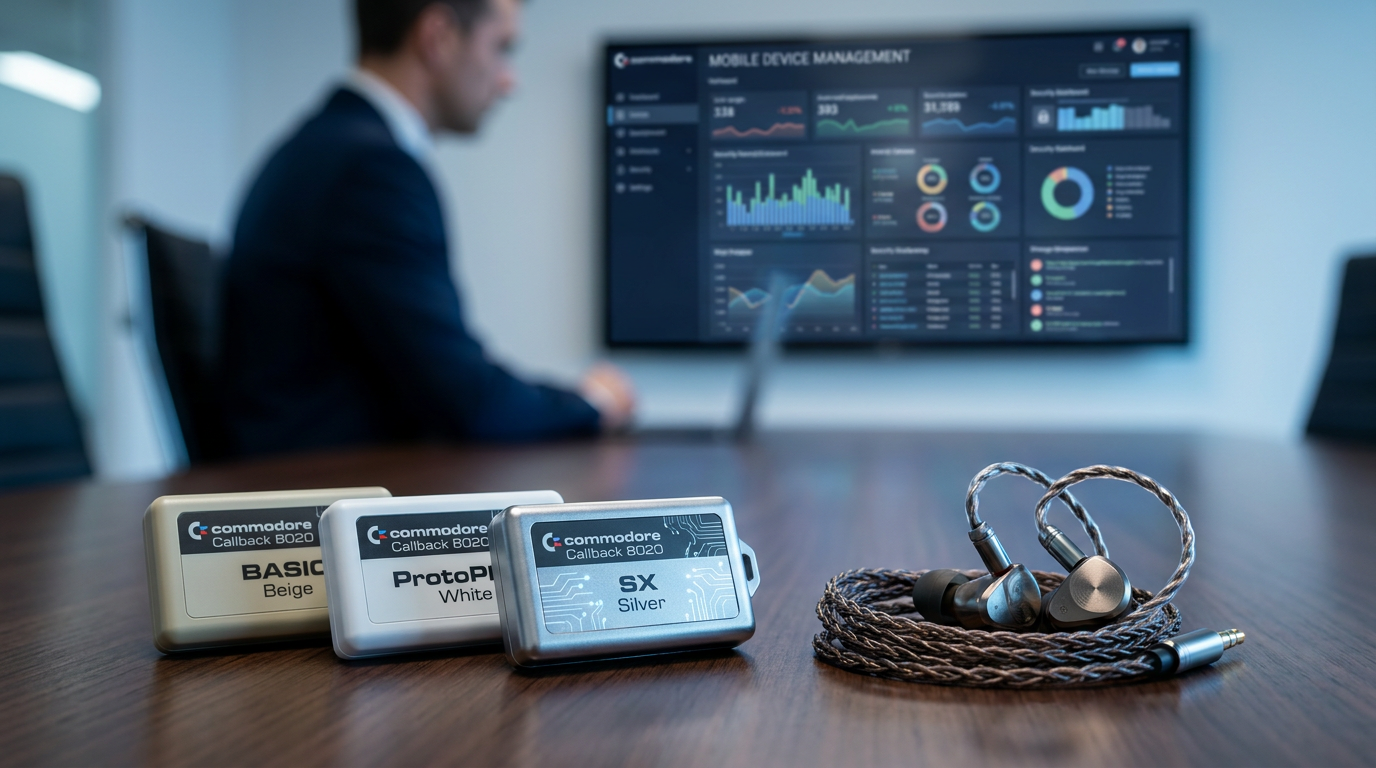
From an enterprise perspective, the Commodore Callback 8020 introduces a disruptive paradigm for corporate fleet management and mobile device management (MDM). The standard corporate smartphone is a liability, fraught with vectors for data exfiltration, malware injection via web browsers, and productivity loss through social media usage. By deploying a device that physically cannot run a web browser or social media apps, Chief Information Security Officers (CISOs) can achieve a level of endpoint security that software-based MDM profiles struggle to guarantee.
The Total Cost of Ownership (TCO) equation here is unique. At $499 for the standard models (BASIC Beige, ProtoPET White, SX Silver), $549 for the translucent Starlight Edition, and $640 for the 24k gold-plated Founders Edition, the upfront capital expenditure is significantly higher than traditional feature phones like the $59 Nokia 2760 Flip. However, the ROI is realized through risk mitigation and reclaimed productivity. In highly regulated sectors—such as healthcare, finance, and defense—where employees require secure communication (via Signal or WhatsApp, which are permitted) and navigation, but must be restricted from open web access, the Callback 8020 serves as an off-the-shelf secure terminal.
Furthermore, the de-Googled nature of Sailfish OS eliminates the telemetry and data harvesting inherent in standard Android deployments. Commodore’s explicit privacy policy—stating they do not collect personal data without consent, monetize data, or track cookies—aligns perfectly with stringent European GDPR requirements and zero-trust enterprise architectures. Your personal information remains siloed on the device.
Competitively, Commodore is carving out a lucrative niche. While Apple and Samsung dominate the premium tier, and Motorola fights for the budget segment, the “premium digital detox” market is largely untapped, previously occupied only by niche players like the Light Phone III or the Punkt MP02. The Callback 8020 bridges the gap, offering the high-end camera, audiophile audio, and essential app compatibility that users demand, without the algorithmic manipulation they are trying to escape.
The Consumer Translation
For the general public, the transition to a digital detox device represents a profound psychological shift. The modern smartphone is engineered using behavioral psychology principles—variable rewards, infinite scrolling, and frictionless interfaces—designed to maximize screen time. The Commodore Callback 8020 employs these same principles in reverse, utilizing “intentional friction” to break the cycle of addiction.
Consider the T9 keyboard. In an era of swipe-typing and voice dictation, T9 requires deliberate, physical effort. This friction forces the user to consider whether a message is truly necessary, elevating the quality of communication while reducing its frequency. Similarly, the dynamic touchscreen—which remains dormant during basic navigation and only activates when an app demands it—prevents the mindless swiping that characterizes modern idle time. The dome LED notification light leverages the Zeigarnik effect (the psychological tension of uncompleted tasks) but softens it; instead of a blaring screen demanding immediate attention, it offers a polite, ambient pulse.
The psychological concept of “Activation Energy” is highly relevant here. By completely removing the browser and social media apps, the activation energy required to check Instagram or TikTok goes from a simple thumb tap to requiring a completely different device, such as a laptop. This physical separation of utilities is the core of the digital detox philosophy. It allows users to be present in their physical environments—capturing moments with the 48MP camera or listening to music via the audiophile DAC—without the immediate compulsion to broadcast those moments to a digital audience.
CEO Christian Simpson noted that the device was inspired by his own need to be present for his daughter’s early years, a sentiment that resonates deeply with a growing demographic of millennials and Gen Z users experiencing severe tech burnout. The inclusion of nostalgic elements, such as Commodore SID ringtones and pre-loaded retro games like Snake, serves as a comforting anchor, reminding users of an era when technology was a tool rather than a master.
Frequently Asked Questions
Q1: What operating system does the Commodore Callback 8020 use?
A1: The device runs on Sailfish OS, a completely de-Googled, Linux-based operating system developed by Jolla. It utilizes a sandboxed compatibility layer to run 99% of standard Android applications without native Google Mobile Services.
Q2: Can I use WhatsApp or Spotify on the Commodore Callback 8020?
A2: Yes. While the phone blocks social media feeds and web browsers, it fully supports utility and messaging apps like WhatsApp, Signal, Google Maps, and Spotify through its Android compatibility layer.
Q3: How much does the Commodore Callback 8020 cost?
A3: The standard models (BASIC Beige, ProtoPET White, SX Silver) cost $499.99. A translucent Starlight Edition is available for $549.99, and a 24k gold-plated Founders Edition retails for $640.
Q4: Does the phone have a touchscreen?
A4: Yes, it features a 3.25-inch IPS internal display with dynamic touch capabilities. The touch interface remains dormant during basic navigation via the T9 keypad and only activates when a specific application requires it.
Q5: Is the battery removable?
A5: Yes, the device features a user-replaceable 1,550 mAh battery, a rarity in modern mobile hardware that significantly extends the physical lifespan of the device.
TechNode HQ Verdict: Pros, Cons & Usability
- Pro (Engineering): The Sailfish OS LXC containerization allows for near-native Android app execution without the telemetry and bloat of Google Mobile Services.
- Pro (Consumer): The inclusion of an audiophile-grade DAC, 3.5mm jack, and a 48MP Sony sensor ensures users don’t sacrifice premium media capabilities for their digital detox.
- Con: The $499 starting price is exceptionally steep for a device intentionally lacking a web browser, making it a hard sell against budget Androids.
- Con: Navigating complex Android applications via a dynamic touchscreen and T9 keypad combination may introduce too much friction for users accustomed to fluid, gesture-based UIs.
Enterprise Usability: For CISOs and IT fleet managers, the Callback 8020 is a highly deployable asset. It serves as an out-of-the-box secure communication terminal for environments where data exfiltration via social media or web browsers is a critical threat vector. The lack of Google telemetry is a massive compliance advantage.
Everyday Usability: For the general public, this is not a primary device for the hyper-connected professional. However, for users suffering from severe screen fatigue, or parents looking for a safe, distraction-free phone for teenagers that still supports WhatsApp and Maps, the Callback 8020 is the most elegantly engineered solution on the market today.