Key takeaways
- 60Hz remains sufficient for casual viewing and basic budget smart TVs.
- 120Hz is the definitive premium standard for sports, movies, and current-gen console gaming.
- 165Hz serves a niche market of hardcore PC gamers needing ultra-smooth variable refresh rates.
- Variable Refresh Rate (VRR) technology prevents screen tearing by matching panel output to GPU frames.
The Architectural Reality of TV Refresh Rate

When engineering the modern living room ecosystem, understanding the core TV refresh rate is crucial. A refresh rate, fundamentally known as the frame rate, represents the exact number of times a screen updates its image per second, quantified in Hertz (Hz) [Paragraph 9]. For instance, a baseline specification of 60Hz translates directly to 60 frames generated per second [Paragraph 10]. As hardware silicon and LED panel technologies have advanced, these rates have aggressively scaled to match high-end professional PC monitors [Paragraph 10].
At the architectural level, pushing these boundaries requires profound bandwidth and processing capability. The global high refresh rate display market reflects this massive engineering pivot, representing a multi-billion dollar segment driven largely by gaming enthusiasts. Manufacturers are embedding Variable Refresh Rate (VRR) technologies from AMD and Nvidia to dynamically synchronize the TV’s output with incoming GPU frames, eliminating screen tearing and mitigating latency [Paragraph 26].
Market Impact & Deployment
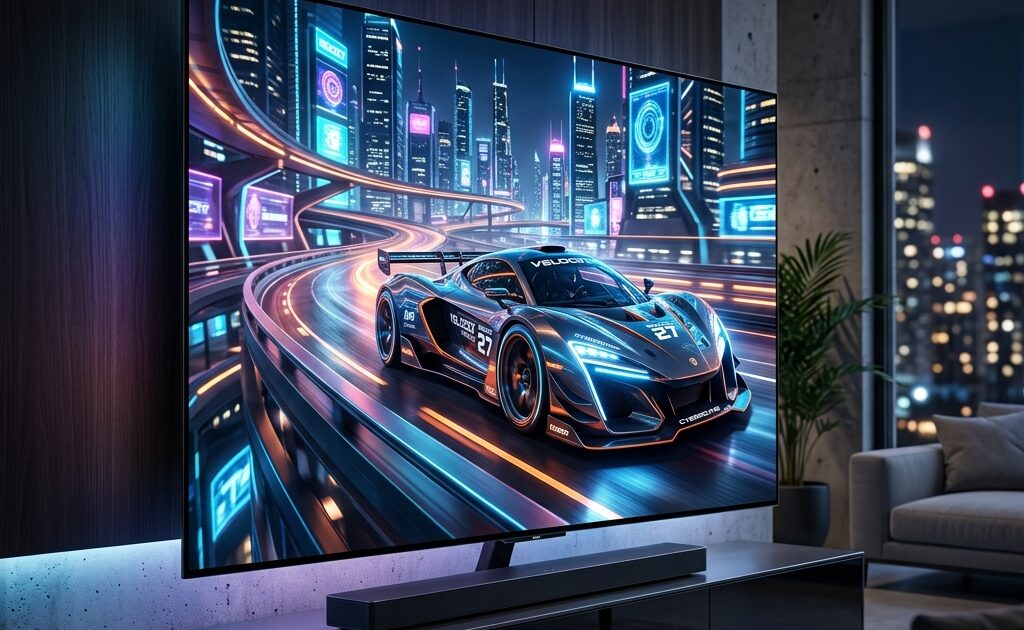
Deploying these advanced panels across the consumer landscape reveals clear segmentation. While a standard 60Hz panel remains ubiquitous and highly capable for general broadcasting, casual gaming, and older standard definitions [Paragraph 14], the deployment of 120Hz displays has become the undeniable premium standard [Paragraph 17]. High-end OLED deployments, such as the LG C5, utilize this 120Hz ceiling to dramatically enhance motion clarity while maintaining near-perfect black levels and exceptional color accuracy [Paragraph 20]. For enterprise IT buyers outfitting creative studios, or consumers bridging the gap between televisions and monitors, this tier is where reviews comparisons heavily focus.
Conversely, pushing the deployment ceiling to 165Hz, seen in models like the Hisense U8QG, serves an ultra-niche enthusiast bracket [Paragraph 22]. These premium deployments are primarily adopted for action-packed PC gaming and demanding workstation environments rather than traditional streaming [Paragraph 25].
Evaluating Refresh Rate Tiers
When conducting hardware evaluations, the performance delta between these tiers varies drastically by the intended use case. Standard 60Hz panels like the Toshiba C350 integrate automated software compensations, including auto low-latency modes and Dolby Vision HDR, to artificially mitigate hardware limitations during gameplay and cinematic viewing [Paragraph 15]. However, migrating to a native 120Hz architecture significantly increases the physical frame density, yielding drastically smoother motion without relying on software artifacts or interpolation [Paragraph 18].
The monumental leap to 165Hz offers diminishing returns for standard media consumption, given that most broadcast and cinematic content is strictly mastered at 24 to 60 frames per second. Thus, these extreme refresh tiers shine almost exclusively within high-end gaming and localized creative professional workloads where the source rendering hardware can continuously match the ambitious 165Hz panel [Paragraph 27].
The Consumer Translation
What does this mean for everyday users navigating a crowded market? If you are a casual viewer upgrading a basic living room setup, 60Hz provides a decent, cost-effective picture that easily handles weekend gaming and standard streaming [Paragraph 14]. But if you have transitioned entirely to high-bandwidth platforms or demand absolute clarity during fast-paced live sports, investing in a 120Hz television is the optimal, modern sweet spot [Paragraph 19].
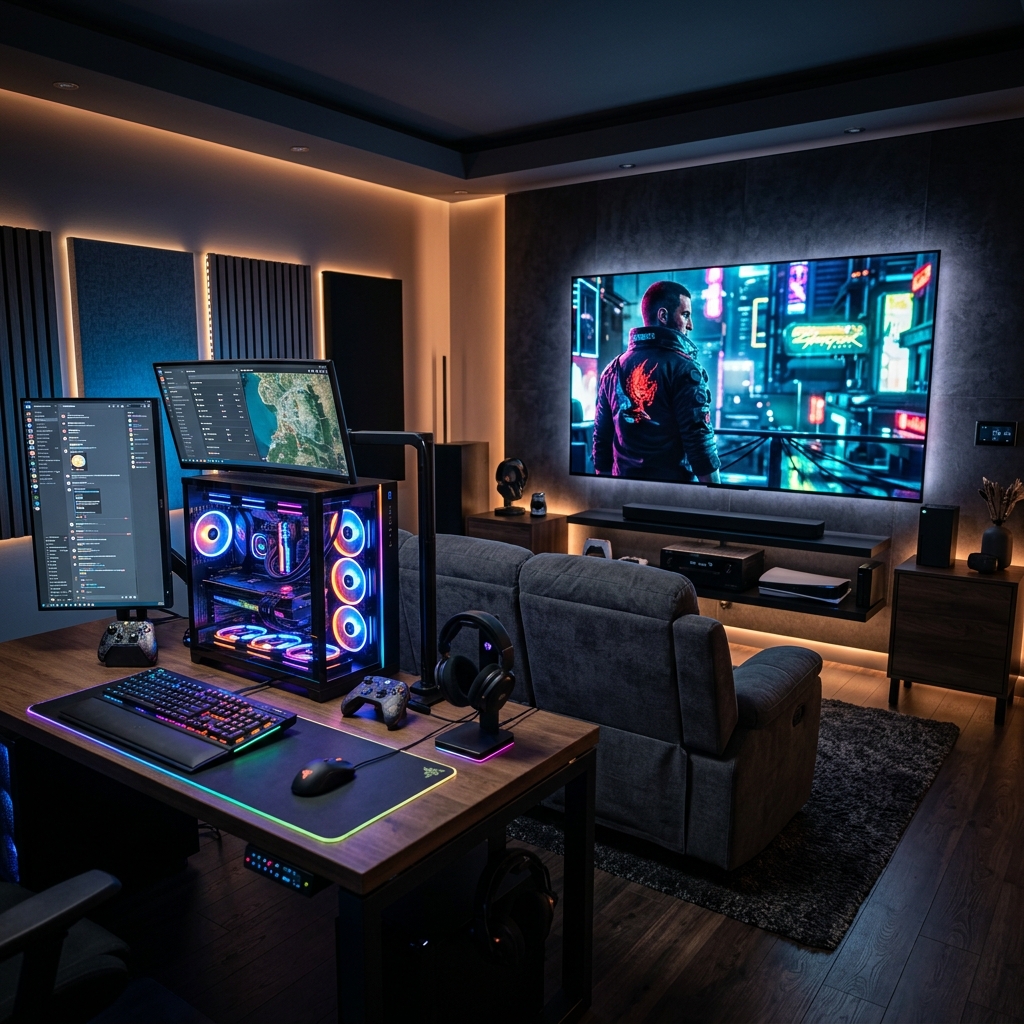
For those configuring a hybrid workspace or dedicated gaming enclave, investing in a 165Hz screen effectively transforms the television into an oversized, high-precision PC monitor [Paragraph 27]. As consumer tech continues to merge home theaters with high-performance computing ecosystems, selecting the proper refresh rate dictates the fundamental smoothness and longevity of the digital experience [Paragraph 30].
TechNode HQ Verdict: Pros, Cons & Usability
- Pro (Engineering): Native 165Hz Variable Refresh Rate (VRR) eliminates screen tearing by directly synchronizing the display with AMD or Nvidia GPUs [Paragraph 26].
- Pro (Consumer): 120Hz panels completely eradicate motion blur during live sports and high-action streaming, packing double the frames per second [Paragraph 18].
- Con: Severe diminishing returns; 165Hz panels provide virtually zero benefit for standard 24fps cinematic movies or traditional broadcast television [Paragraph 25].
- Con: Substantial hardware costs and premium pricing tiers are required to properly secure authentic 120Hz or 165Hz OLED models.
Enterprise Usability: High-refresh 165Hz models with deep VRR support are highly recommended for creative studios working in fluid animation or competitive eSports setups requiring absolute visual precision [Paragraph 27].
Everyday Usability: Most consumers should comfortably purchase a 120Hz TV for future-proofing their premium home theaters, while budget-conscious buyers will still find 60Hz perfectly adequate [Paragraph 30].