
Key takeaways
- Elastic’s Q4 2026 CRPO hit $1.2 billion, driven by surging enterprise demand for its AI infrastructure.
- Elastic Cloud Hosted achieved FedRAMP High authorization in March 2026, unlocking sensitive government workloads.
- 76% of tech workers leave due to career stagnation; Elastic counters this with aggressive internal mobility.
- Retaining institutional knowledge enabled Elastic’s complex vector database and RAG architecture deployments.
- The 80/20 Pareto principle, while marketed as a culture perk, highlights the grueling reality of enterprise sprint cycles.
In the hyper-competitive landscape of 2026, the deployment of Elastic Search AI has fundamentally altered the trajectory of enterprise data orchestration. While the broader technology industry grapples with severe developer burnout and AI-driven job anxiety, Elastic (NYSE: ESTC) has quietly weaponized its internal engineering culture to drive aggressive market expansion. A foundational internal report—publicly framed as a culture blog post detailing how three engineers advanced their careers—reveals the sophisticated talent retention strategy underpinning the company’s recent technical breakthroughs. By solving the industry-wide crisis of engineering career stagnation, Elastic has secured the veteran talent necessary to deploy bleeding-edge AI infrastructure, secure stringent federal authorizations, and push its financial backlog past historic milestones.
The tech labor market is currently facing a massive flight risk. According to industry data cited by Elastic, only 48% of tech employees feel they have a clear path for advancement, and a staggering 76% of job seekers cite dissatisfaction with career progression as the primary trigger for leaving their roles. In an era where building complex AI systems requires deep, multi-year institutional knowledge, high developer turnover is a death knell for enterprise roadmaps. Elastic’s counter-strategy—fostering aggressive internal mobility and cross-functional mentorship—has directly translated into hard technical specs, market dominance, and competitor panic.
The Architectural Reality of Elastic Search AI
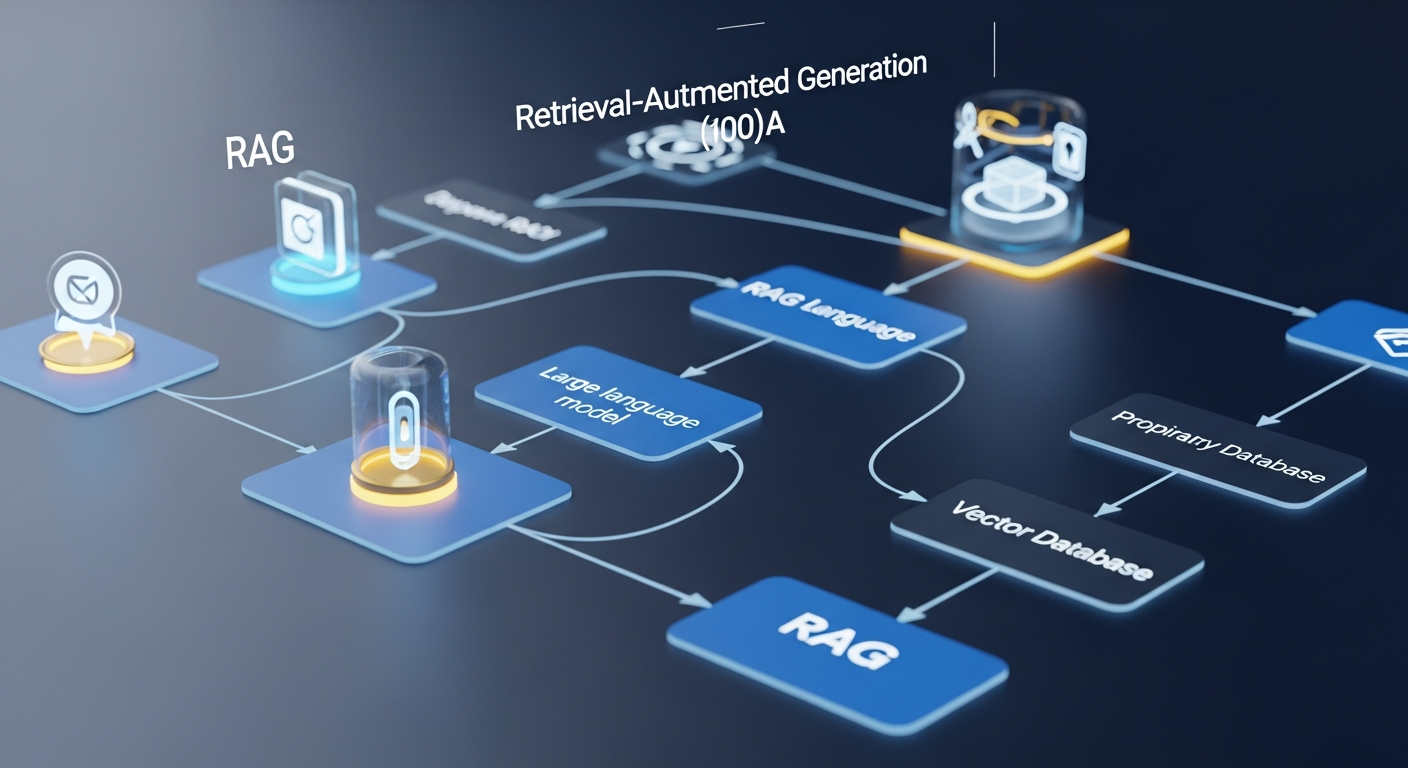
To understand the financial surge of Elastic, one must first deconstruct the architectural reality of the Elastic Search AI platform. As generative AI transitions from experimental chatbots to mission-critical enterprise deployments, the primary bottleneck has shifted from model intelligence to data relevance. Large Language Models (LLMs) are notoriously prone to hallucinations when operating outside their training data. Elastic solved this by transforming its core search engine into a highly scalable vector database, enabling Retrieval-Augmented Generation (RAG).
This architecture allows enterprises to ground public or private LLMs in their own proprietary data. When a user queries an enterprise AI agent, the system first performs a semantic search across billions of internal documents using Elastic’s vector search capabilities. The highly relevant, context-rich results are then fed into the LLM, ensuring the final output is accurate, secure, and hallucination-free. Building this infrastructure—specifically the Search AI Lake, which decouples compute from storage for low-latency querying—is an engineering gauntlet. It requires a stable, veteran engineering workforce that understands the intricacies of distributed systems.
This is where Elastic’s cultural strategy pays dividends. The internal mobility of engineers like Jen Huang, who successfully transitioned from an individual contributor (IC) to a senior software engineering manager, ensures that the institutional knowledge required to maintain and scale these complex systems remains in-house. By encouraging engineers to express interest in leadership and side projects, Elastic prevents the “brain drain” that plagues legacy software vendors. When a principal engineer like Yuliia Naumenko transitions to a team lead role, she carries years of architectural context with her, enabling her team to ship robust AI features faster than competitors who rely on a revolving door of new hires.
Market Impact & Deployment

The direct result of this stable engineering foundation is visible in Elastic’s explosive Q4 FY2026 financial results. The company reported total revenue of $451 million, representing a 16% year-over-year growth, while maintaining a formidable 76% gross margin,. However, the most critical metric for enterprise IT analysts is the Current Remaining Performance Obligations (CRPO)—a leading indicator of future revenue representing contracted backlog to be recognized within 12 months.
In Q4 2026, Elastic’s CRPO surged to $1.2 billion, a 20% year-over-year increase, while total Remaining Performance Obligations (RPO) accelerated to $1.98 billion (28% YoY growth),. This signals a massive shift in market deployment: enterprises are no longer just experimenting with Elastic; they are signing massive, multi-year commitments to make it their foundational AI and security infrastructure. Legacy Security Information and Event Management (SIEM) providers and standalone vector database startups are rapidly losing ground to Elastic’s unified platform approach.
The Red Team Audit: Deconstructing the 80/20 Rule
While Elastic’s corporate blog paints a rosy picture of career advancement, a rigorous Red Team audit of the cited engineering practices reveals the intense pressure of modern enterprise software development. Najwa Harif, a product manager who advanced from support engineering, highlighted the use of the 80/20 Pareto principle—focusing on the 20% of tasks that drive 80% of the outcomes. In marketing materials, this is framed as a clever productivity hack. In the trenches of enterprise IT, it is a survival mechanism.
Maintaining a 76% gross margin while scaling a global cloud infrastructure requires ruthless prioritization. The 80/20 rule often masks the reality of technical debt and under-resourced sprint cycles. Engineers are frequently forced to abandon 80% of potential optimizations, edge-case testing, and feature polish just to ship the critical 20% that keeps the platform stable and meets quarterly revenue targets. The seamless transitions from IC to management touted in the culture blog are, in reality, trials by fire where only those who can navigate extreme workloads and aggressive deployment schedules survive.
FedRAMP High and the Public Sector Surge
Perhaps the most undeniable proof of Elastic’s engineering execution is its recent conquest of the public sector. On March 31, 2026, Elastic announced that Elastic Cloud Hosted achieved FedRAMP High authorization on AWS GovCloud (US). This is not a mere paperwork exercise; it is the U.S. government’s most rigorous cloud security baseline, designed to protect the nation’s most sensitive, unclassified data—including Controlled Unclassified Information (CUI).
Achieving FedRAMP High requires the implementation and continuous monitoring of over 400 stringent security controls. This includes FIPS 140-2 validated encryption for data at rest and in transit, zero-trust architecture integration, and isolated deployment environments. You cannot achieve this level of compliance with a fragmented or inexperienced engineering team. It requires the deep, systemic understanding of the codebase that only comes from long-term employee retention.
With this authorization, federal agencies responsible for law enforcement, emergency response, public health, and national security can now deploy Elastic’s AI-powered mission applications and SIEM solutions,. This unlocks a massive, highly lucrative revenue stream that is effectively walled off from newer, less mature AI startups that lack the engineering discipline to pass federal audits.
The Consumer Translation
For the everyday consumer, the backend machinations of enterprise data orchestration and federal compliance can seem abstract. However, the deployment of Elastic Search AI has profound, tangible impacts on the worldwide public. As consumers increasingly interact with AI-driven applications—from customer service chatbots to healthcare portals and e-commerce search engines—the accuracy of those interactions is paramount.
By utilizing Elastic’s vector database to ground LLMs in factual, proprietary data, companies drastically reduce the rate of AI hallucinations. When a consumer asks a banking AI about their mortgage terms, or a patient queries a healthcare portal about their medication, Elastic’s infrastructure ensures the AI retrieves the exact, correct document before generating an answer. This transforms generative AI from a creative novelty into a reliable utility.
Furthermore, the FedRAMP High authorization directly impacts citizen privacy. As government agencies modernize their infrastructure using AI, the data they process—tax records, emergency response logs, and public health data—must be protected against increasingly sophisticated cyber threats. Elastic’s ability to provide AI-driven threat detection and zero-trust security at the highest federal standards ensures that citizen data remains secure while still benefiting from the speed and efficiency of modern cloud computing.
TechNode HQ Verdict: Pros, Cons & Usability
- Pro (Engineering): The unified architecture of the Search AI Lake eliminates the need to stitch together disparate vector databases, legacy search engines, and SIEM tools, drastically reducing architectural complexity.
- Pro (Consumer): RAG-enabled search significantly reduces AI hallucinations, resulting in highly accurate, trustworthy interactions with consumer-facing AI applications.
- Con: The reliance on the 80/20 Pareto principle in engineering cycles suggests a high-pressure environment where technical debt may accumulate in the 80% of deprioritized tasks.
- Con: Transitioning legacy on-premise data silos to a fully optimized, cloud-hosted vector database requires significant upfront data mapping and migration overhead.
Enterprise Usability: For CTOs and enterprise architects, Elastic Search AI is a mandatory evaluation in 2026. If your organization is struggling with LLM hallucinations or attempting to build a secure, compliant AI infrastructure from scratch, Elastic’s unified platform and recent FedRAMP High authorization make it a highly compelling, future-proof investment. The $1.2 billion CRPO backlog indicates that your peers are already locking in multi-year commitments.
Everyday Usability: While consumers cannot “buy” Elastic directly, they should actively favor platforms, retailers, and services that utilize RAG-backed AI architectures. If an application provides fast, context-aware, and hallucination-free responses, it is highly likely running on an enterprise-grade search backend like Elastic.