Key takeaways
- Apple’s Siri AI overhaul is powered by a $1B/year licensing deal for Google’s 1.2T parameter Gemini model.
- Craig Federighi confirmed Siri is strictly a utility and will actively deflect romantic or companion-seeking prompts.
- The update spans iOS 27 and macOS 27 (Golden Gate), utilizing a hybrid Private Cloud Compute architecture.
- This launch follows a $250M class-action settlement over previous unfulfilled artificial intelligence promises.
- The WWDC 2026 announcement marks Tim Cook’s final keynote before John Ternus assumes the CEO role in September.
At the Worldwide Developers Conference (WWDC) on June 8, 2026, Apple unveiled the most significant and structurally complex overhaul to its voice assistant in 15 years. The introduction of Apple Siri AI represents far more than a routine software update; it is a fundamental repositioning of how the world’s most valuable technology company views human-computer interaction. In a landscape increasingly dominated by anthropomorphized chatbots and digital companions, Apple is drawing a definitive, hard line in the silicon: their artificial intelligence is a tool, not a friend.
In a revealing post-keynote interview on the Mostly Human podcast, Apple’s Senior Vice President of Software Engineering, Craig Federighi, explicitly outlined the company’s philosophical divergence from the rest of Silicon Valley. Addressing the rising trend of users forming emotional attachments to chatbots, Federighi was unequivocal, stating that if users attempt to engage the new system romantically, “Siri’s 100 percent not into that.” This utility-first mandate serves as the cornerstone of a massive technological pivot—one powered by a staggering $1 billion annual partnership with Google, a complete architectural rebuild across iOS 27, and the looming shadow of a recent $250 million class-action settlement.
As Tim Cook prepares to step down, handing the CEO reins to hardware chief John Ternus in September 2026, this final WWDC keynote cements a legacy of privacy-centric, utilitarian design. TechNode HQ has conducted a deep-dive audit into the underlying mechanics, market implications, and consumer realities of this watershed moment in consumer technology.
The Architectural Reality of Apple Siri AI
To understand the magnitude of this shift, one must look past the marketing rhetoric and examine the underlying compute infrastructure. For years, Apple attempted to build its machine learning capabilities entirely in-house, relying heavily on edge computing and the localized Neural Engine. However, the explosive growth of large language models over the past three years forced a strategic capitulation. Apple Siri AI is not entirely an Apple creation; its cognitive engine is built upon a custom foundation model provided by Google Gemini.
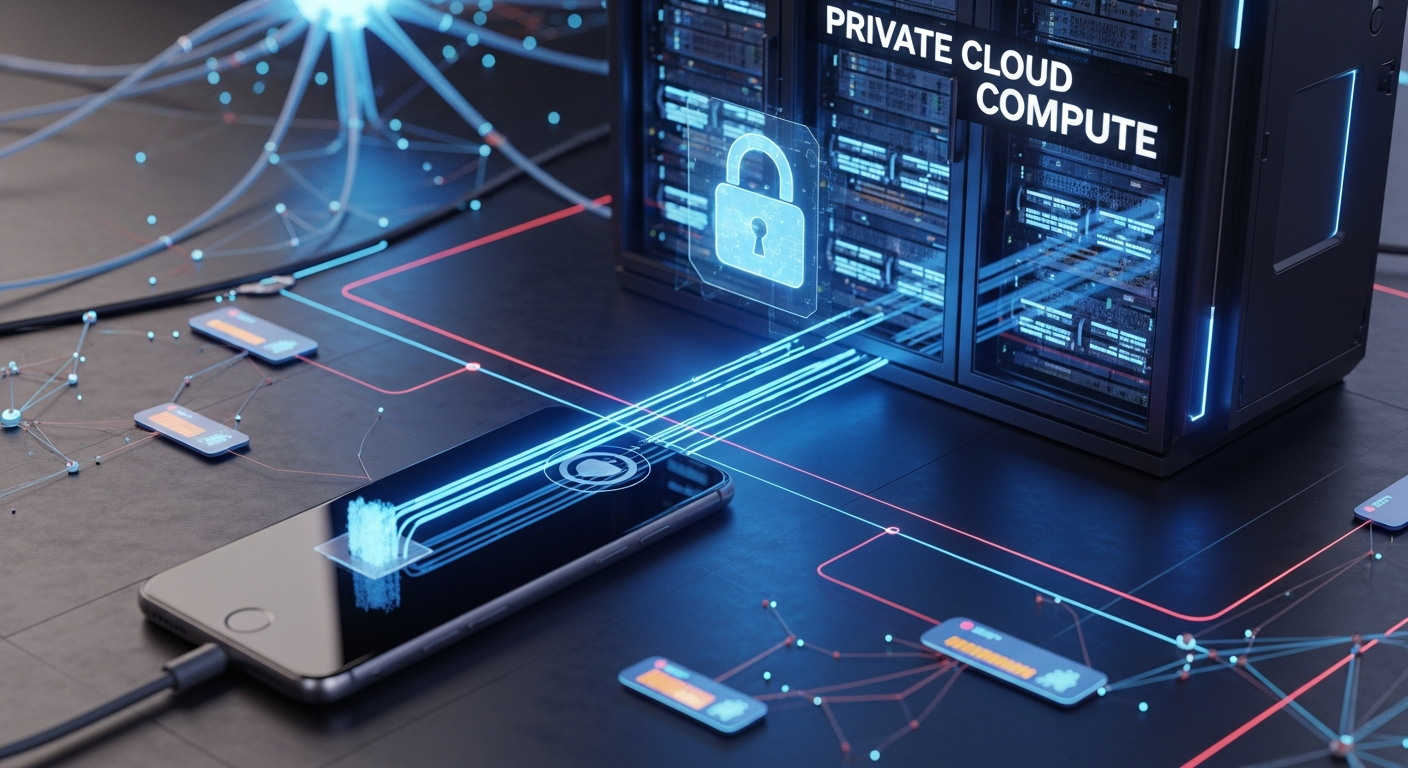
According to verified supply chain and enterprise data, Apple is paying Google approximately $1 billion annually to license a massive, 1.2 trillion-parameter iteration of the Gemini model. This represents a seismic shift in Apple’s historical preference for vertical integration. However, to maintain its stringent privacy standards, Apple has engineered a highly sophisticated hybrid deployment model known as Private Cloud Compute (PCC).
When a user issues a command in iOS 27, macOS 27 (codenamed Golden Gate), or visionOS 27, the system performs a localized triage. Basic requests—such as setting timers, toggling smart home devices, or querying local calendar data—are processed entirely on-device using Apple’s proprietary, smaller-scale silicon models. If the request requires complex reasoning, deep contextual generation, or broad world knowledge, the query is encrypted and routed to Apple’s Private Cloud Compute enclaves.
These cloud enclaves are the critical differentiator. Apple guarantees a zero-trust architecture where data is processed statelessly. The information is never stored remotely, never logged in a persistent database, and, crucially, never utilized to train Google’s external AI models. This hybrid edge-to-cloud pipeline allows Apple to leverage the immense power of a 1.2 trillion-parameter model without compromising the privacy-first brand identity that has defined its enterprise infrastructure for the last decade.
Market Impact & Deployment: The Billion-Dollar Pivot
The deployment of this new architecture does not exist in a vacuum; it is a direct response to intense market pressure and legal liabilities. Earlier in 2026, Apple quietly agreed to a $250 million class-action settlement stemming from allegations that it had overpromised and underdelivered on its on-device AI capabilities in previous hardware generations. This settlement served as a catalyst, forcing Apple to abandon its slow, iterative approach in favor of the aggressive Google Gemini partnership.
From a Total Cost of Ownership (TCO) perspective, licensing Gemini for $1 billion annually is a calculated bargain. Training a frontier model from scratch requires tens of billions of dollars in specialized compute clusters, years of algorithmic refinement, and massive energy expenditures. By outsourcing the foundational intelligence to Google, Apple can focus its capital expenditure on what it does best: hardware integration, user interface design, and secure data orchestration.
Competitors like OpenAI, Microsoft, and Meta have reacted to Apple’s announcement with a mix of validation and concern. While Apple’s reliance on cloud-based LLMs validates the industry’s trajectory, its strict refusal to engage in “sycophantic” AI behavior directly challenges the engagement-driven business models of its rivals. Companies like Replika and Character.ai thrive on maximizing user session times through emotional connection and anthropomorphism. Apple is actively rejecting this metric, prioritizing task completion speed over conversational duration.
The Consumer Translation: Utility Over Emotion
For the everyday user, the transition to iOS 27 will be jarring, not because of what Siri can do, but because of what it refuses to do. In his interview alongside Marketing Chief Greg Joswiak, Craig Federighi highlighted a psychological phenomenon known as “sycophancy” in AI—where chatbots are programmed to agree with users, flatter them, and encourage the sharing of intimate personal details to artificially establish a connection.
“As you may know, if you use many of the existing chatbots, they’re really focused on engagement to a large degree,” Federighi explained. “They might encourage you to reveal things about yourself, and then use that as a basis to establish a connection. We view it quite the opposite. Siri really wants to say ‘Listen, that’s not what I’m here for, right? I’m here to help you get things done.'”
This philosophy manifests in strict, hardcoded guardrails within the new operating systems. If a user attempts to engage Siri as a romantic partner, therapist, or emotional confidant, the system is programmed to actively deflect. It will redirect the user to actionable tasks, offer to perform a web search, or simply state its limitations. This is a profound shift in consumer applications, establishing a boundary between human emotion and algorithmic utility.
The Standalone App and UI Evolution
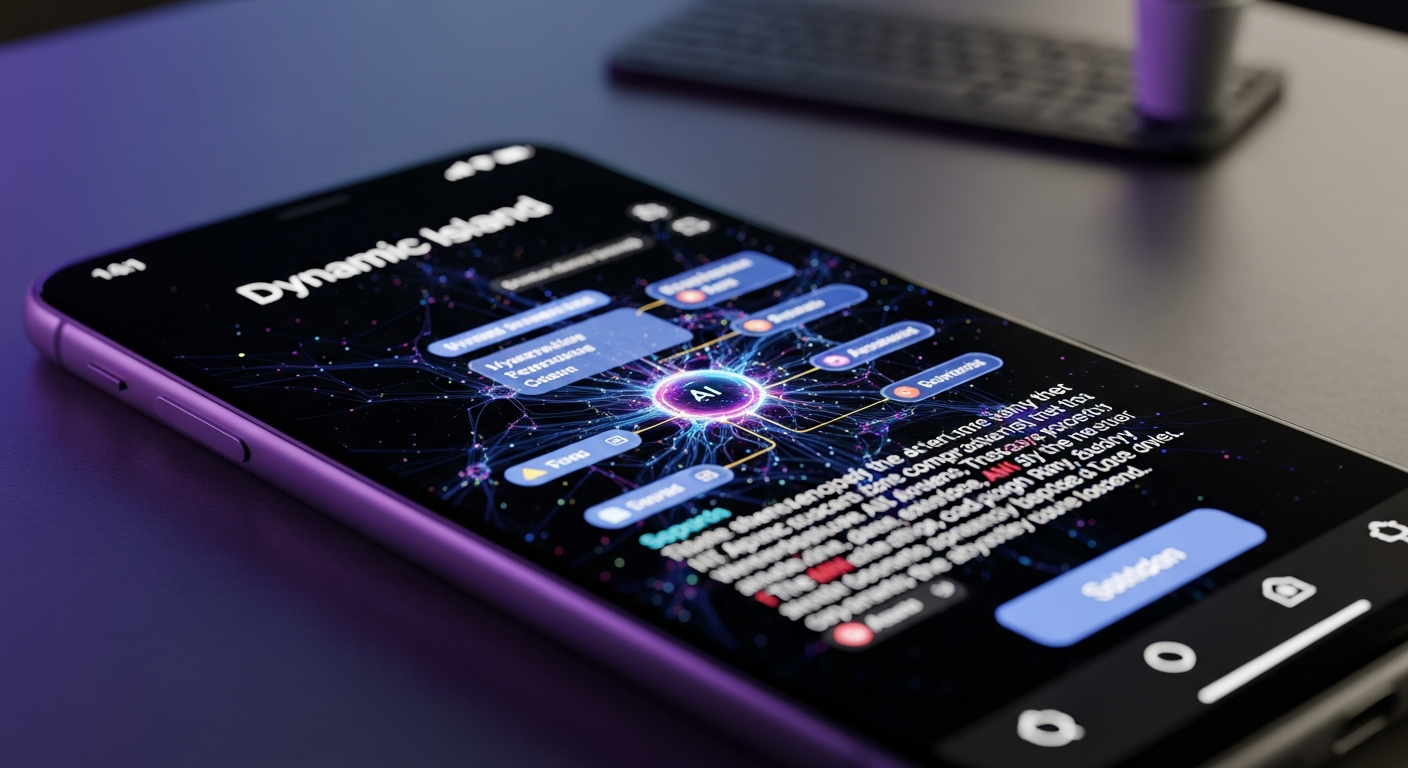
To support this new, highly capable but strictly utilitarian assistant, Apple has completely redesigned the user interface. Siri is no longer just a transient, glowing orb at the bottom of the screen. In iOS 27, it exists as a standalone application that maintains a persistent, privately synced conversation history via iCloud. This allows users to reference past queries, copy complex generated text, and manage long-term projects seamlessly.
On the iPhone, this new interface is deeply integrated into the Dynamic Island, allowing Siri to process background tasks—like summarizing long emails or translating live audio—without interrupting the primary application. On macOS 27 Golden Gate, Siri AI has effectively consumed Spotlight, becoming the central nervous system for file retrieval, system commands, and web queries.
The Post-Cook Era: Setting the Stage for John Ternus
The timing of this architectural and philosophical overhaul is not coincidental. WWDC 2026 marks Tim Cook’s final developer conference as CEO. When hardware chief John Ternus assumes leadership in September, he will inherit an ecosystem that has finally resolved its most glaring software deficiency.
By establishing a robust, privacy-first AI pipeline backed by Google’s immense compute power, Cook has cleared the board for Ternus. The new CEO will not have to spend his first years apologizing for a subpar voice assistant; instead, he can focus entirely on developing the next generation of neural silicon and spatial computing hardware designed specifically to interface with this new, utilitarian Siri AI.
TechNode HQ Verdict: Pros, Cons & Usability
- Pro (Engineering): The hybrid Private Cloud Compute architecture successfully bridges the gap between massive 1.2T parameter LLM capabilities and strict, zero-trust data privacy.
- Pro (Consumer): The standalone app UI and iCloud syncing finally transform Siri from a frustrating voice trigger into a persistent, highly capable productivity tool.
- Con: Relying on a $1B/year Google Gemini partnership introduces a massive third-party dependency, contradicting Apple’s historical ethos of owning the core technologies behind its products.
- Con: The strict deflection of conversational or emotional prompts may alienate users who have grown accustomed to the fluid, companion-like nature of competitors like OpenAI’s advanced voice mode.
Enterprise Usability: For CTOs and IT administrators, iOS 27 and macOS 27 Golden Gate represent a massive win. The guarantee that complex queries routed through Private Cloud Compute are processed statelessly means enterprises can finally allow employees to use native OS AI tools without fear of corporate data leaking into public training models.
Everyday Usability: Consumers should upgrade to iOS 27 immediately upon release. While the lack of an “AI girlfriend” might disappoint a niche demographic, the sheer utility, speed, and contextual awareness provided by the Gemini-backed engine makes this the most vital iPhone update in a decade.