The Dawn of Hardware-Agnostic Autonomy
For the better part of a decade, the autonomous vehicle (AV) industry has been locked in a philosophical and financial arms race. On one side, companies like Waymo have championed hyper-expensive, sensor-heavy, geofenced modular stacks. On the other, Tesla has pushed a vision-only, vertically integrated approach. But on May 21, 2026, at the Stellantis Investor Day in Auburn Hills, Michigan, a third paradigm officially entered the mass market. Stellantis, the Franco-Italian-American automotive juggernaut behind Jeep, Ram, Dodge, and Chrysler, announced a landmark strategic partnership with London-based AI startup Wayve. The objective? To deploy hands-free, supervised autonomous driving across North American consumer vehicles by 2028.
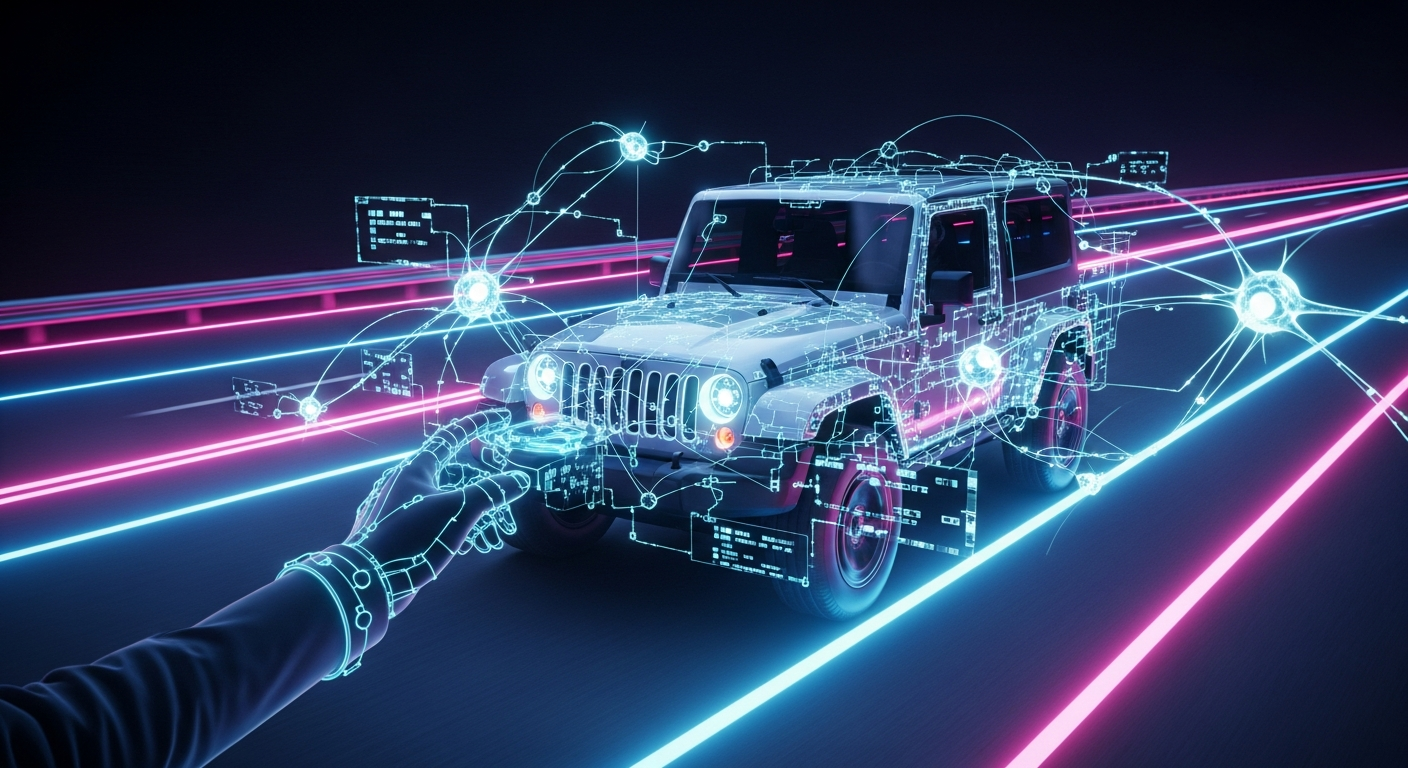
This is not merely another corporate memorandum of understanding. It is a tectonic shift in how automotive giants view the future of vehicle intelligence. Wayve, fresh off a staggering $1.2 billion Series D funding round—bolstered by an additional $60 million extension from silicon heavyweights AMD, Arm, and Qualcomm—has achieved what legacy automakers once thought impossible. They have built an End-to-End Neural Network capable of driving a car without relying on high-definition (HD) maps, bespoke LiDAR arrays, or rigid, rule-based coding. By integrating Wayve’s AI Driver into the STLA AutoDrive platform, Stellantis CEO Antonio Filosa is making a calculated, multi-billion-dollar bet that software flexibility will ultimately triumph over hardware exclusivity.
The Architectural Reality: End-to-End AI vs. The Modular Stack
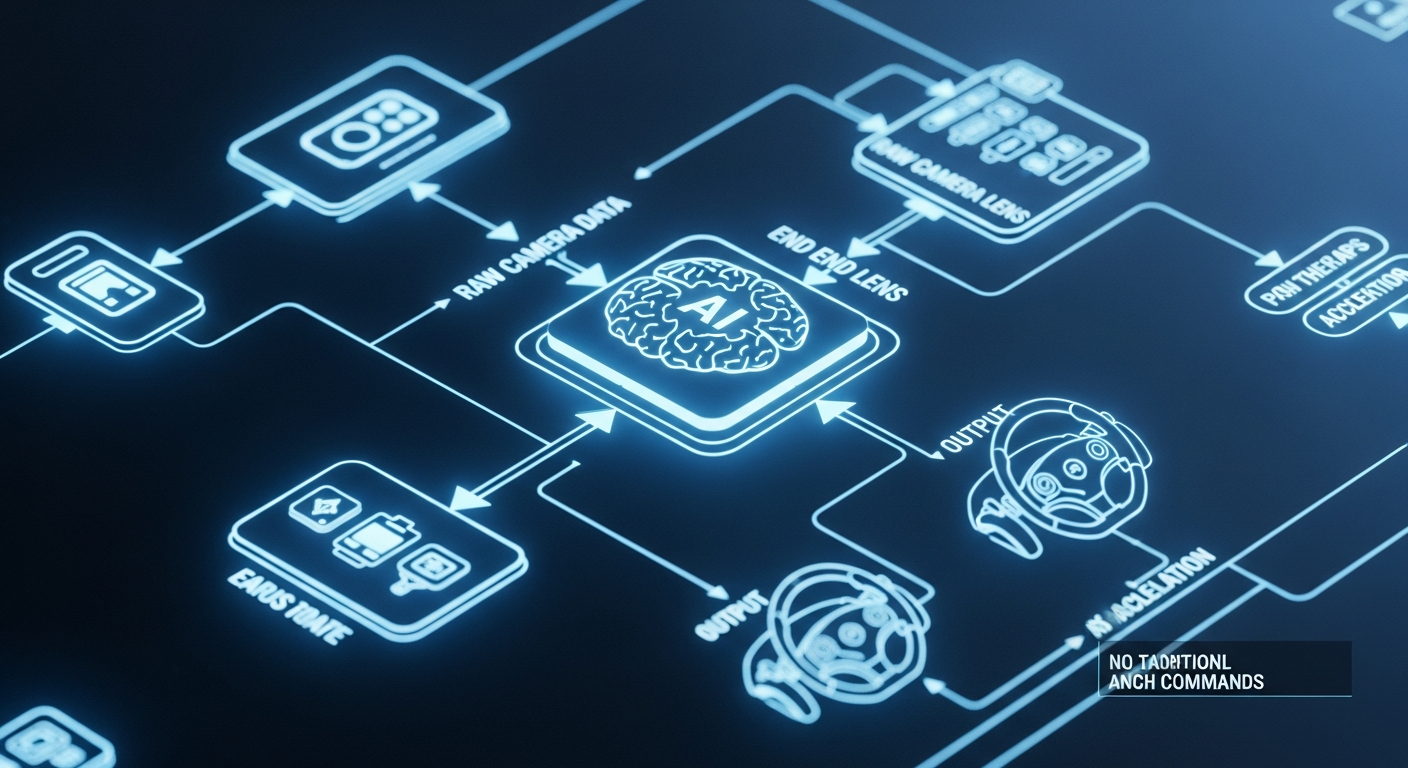
To understand the magnitude of the Stellantis-Wayve pact, one must dissect the underlying engineering. Historically, autonomous driving software has been built using a “modular stack.” In this architecture, different sub-systems handle specific tasks: one module for perception (identifying a pedestrian), another for prediction (guessing where the pedestrian will walk), a third for planning (calculating the vehicle’s path), and a final module for control (actuating the steering and brakes). This approach requires millions of lines of hand-written code, exhaustive HD mapping of specific cities, and constant fine-tuning. If a vehicle encounters a scenario not explicitly coded by an engineer—an “edge case”—the system fails.
Wayve’s architecture obliterates this paradigm. Instead of a modular stack, Wayve utilizes an end-to-end embodied AI model. Raw data from the vehicle’s existing sensors (cameras, radar) is fed directly into a massive neural network. The network processes this data and outputs driving commands—steering, accelerating, braking—in real-time. The AI learns to drive much like a human does: through observation, experience, and massive data ingestion, rather than by following a rigid set of pre-programmed rules. Because it does not rely on geofenced HD maps, a Wayve-equipped vehicle can theoretically navigate a dirt road in rural Montana just as effectively as a bustling intersection in downtown Manhattan.
For an Original Equipment Manufacturer (OEM) like Stellantis, which operates 14 distinct brands globally, this adaptability is the holy grail. Wayve CEO Alex Kendall noted that his team was able to integrate their AI into a Stellantis vehicle prototype and have it driving autonomously in less than two months. This unprecedented speed of deployment is only possible because Wayve’s software is fundamentally hardware-agnostic. It does not demand a specific sensor suite or a proprietary chipset. Whether a vehicle is utilizing Nvidia’s DRIVE platform, Qualcomm’s Snapdragon Ride, or custom silicon, Wayve’s neural network can scale to fit the available compute.
Market Impact & Deployment: Democratizing the AI Driver
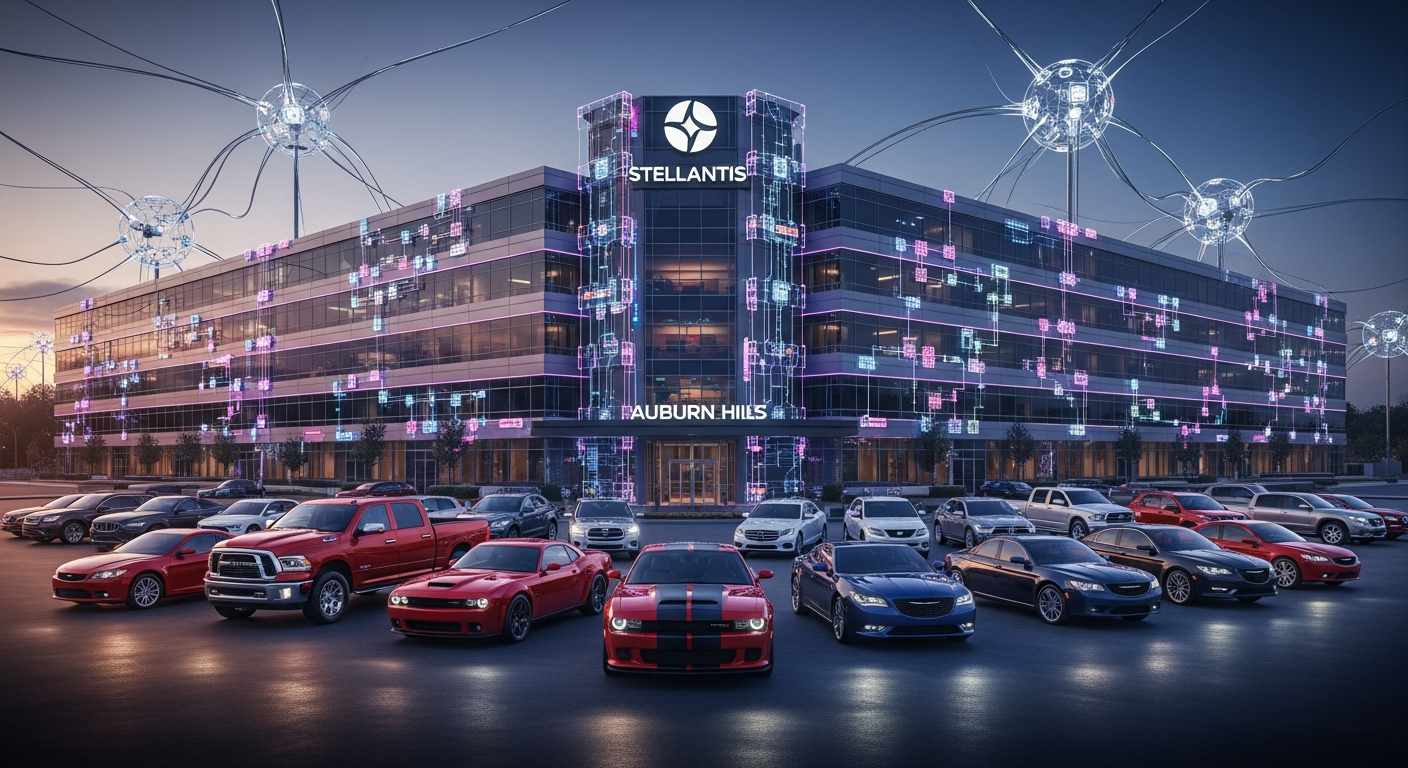
The enterprise implications of this partnership extend far beyond the engineering lab. Stellantis is currently executing a massive $70 billion turnaround plan, aiming to launch 11 new vehicles in North America by 2030. Crucially, the automaker is aggressively targeting the middle and lower tiers of the market, promising seven vehicles priced under $40,000 and two under $30,000.
Historically, Advanced Driver Assistance Systems (ADAS) of this caliber have been reserved for luxury vehicles with six-figure price tags. Tesla’s Full Self-Driving (FSD) package alone costs thousands of dollars on top of the vehicle’s base price. By leveraging Wayve’s hardware-agnostic software, Stellantis can bypass the need for expensive, specialized sensor suites. If Wayve’s efficiency claims hold true, Stellantis could realistically offer Level 2++ hands-free driving in a $30,000 Jeep Renegade or a base-model Dodge Hornet. This represents a massive democratization of autonomous technology, shifting it from a luxury novelty to a standard consumer expectation.
Furthermore, this deal acts as a powerful commercial validation for Wayve. While the startup is also working with Nissan and Uber on Level 4 robotaxi deployments in Japan and the UK, the Stellantis contract is a volume play. It proves that legacy automakers—who compete fiercely on margin, cost, and global scale—view end-to-end AI as industrially viable. The backing of Microsoft, Nvidia, SoftBank, and a consortium of chipmakers ensures that Wayve has the capital and the compute resources to support Stellantis’ massive manufacturing footprint.
The Consumer Translation: What Level 2++ Actually Means
While the underlying technology is revolutionary, it is vital to translate what this means for the everyday driver in 2028. The Stellantis-Wayve integration is targeting “Level 2++” autonomy. In the rigid taxonomy of the Society of Automotive Engineers (SAE), Level 2 is defined as partial driving automation. The vehicle can control steering and acceleration simultaneously, but the human driver must remain fully engaged and monitor the environment at all times.
Level 2++ is an industry colloquialism for a “hands-off, eyes-on” system. Similar to Ford’s BlueCruise or GM’s Super Cruise, the Wayve-powered STLA AutoDrive platform will allow drivers to take their hands off the steering wheel during highway commutes and certain urban scenarios. The AI will handle lane changes, traffic navigation, and speed regulation. However, the driver is still legally responsible for the vehicle. If the AI encounters a situation it cannot resolve, it will hand control back to the human. Internal cabin cameras will likely monitor the driver’s gaze to ensure they are paying attention to the road, rather than scrolling on their smartphone.
For the consumer, this represents a massive reduction in the cognitive fatigue associated with daily commuting or long road trips. The psychological shift of trusting a neural network to pilot a 5,000-pound Ram truck at 70 miles per hour is significant, but the seamless, naturalistic driving style promised by end-to-end AI aims to build that trust faster than the jerky, robotic movements of older, rule-based ADAS systems.
Red Team Audit: The Hidden Bottlenecks
Despite the soaring rhetoric from Auburn Hills, a rigorous audit of the Stellantis-Wayve pact reveals several friction points. First is the reality of “hardware agnosticism.” While Wayve’s software can technically run on various chipsets, end-to-end neural networks are notoriously compute-hungry. They require massive amounts of Tera Operations Per Second (TOPS) at the edge to process video feeds in real-time. Stellantis will still need to equip its 2028 fleet with robust, expensive silicon—likely from Qualcomm or Nvidia—to run the STLA Brain architecture effectively. The cost of this edge compute could threaten the margins on those promised sub-$30,000 vehicles.
Secondly, the 2028 timeline is highly ambitious. The automotive industry is infamous for software delays—a reality Stellantis’ European rivals like Volkswagen have learned the hard way. Moving a prototype from a two-month proof-of-concept to a fully validated, safety-certified, mass-produced system across 14 different vehicle brands involves a labyrinth of regulatory approvals and rigorous quality assurance testing.
Finally, there is the inherent “black box” nature of end-to-end AI. Because the neural network learns on its own, it can be incredibly difficult for engineers to pinpoint exactly *why* the AI made a specific driving decision. If a Wayve-powered Stellantis vehicle is involved in an accident, auditing the neural network’s decision-making process for legal and insurance purposes will present a novel challenge for regulators.
TechNode HQ Verdict: Pros, Cons & Usability
- Pro (Engineering): Wayve’s end-to-end AI eliminates the need for brittle, geofenced HD maps and millions of lines of manual code, allowing for rapid deployment across diverse vehicle form factors.
- Pro (Consumer): The partnership promises to democratize hands-free driving, potentially bringing premium ADAS features to sub-$40,000 mass-market vehicles by 2028.
- Con: The “black box” nature of end-to-end neural networks makes post-incident debugging and regulatory auditing highly complex compared to traditional modular software.
- Con: Despite being hardware-agnostic, the massive edge-compute requirements (TOPS) needed to run the AI locally could squeeze profit margins on Stellantis’ budget-friendly models.
Enterprise Usability: For automotive CTOs and Tier-1 suppliers, the Stellantis-Wayve deal is a massive wake-up call. The era of building proprietary, map-dependent modular stacks is ending. Enterprises should immediately evaluate end-to-end AI partnerships and ensure their next-generation vehicle architectures (like STLA Brain) have the flexible, high-TOPS compute necessary to support third-party neural networks.
Everyday Usability: Should the public wait for 2028 to buy a car? Not necessarily. While the promise of a hands-free Jeep or Ram is enticing, Level 2++ technology is already available in various forms today (e.g., Tesla FSD, Ford BlueCruise). However, if you are a consumer who has been priced out of the luxury EV market, Stellantis’ 2028 lineup will likely be the first true opportunity to experience next-generation AI driving at an accessible price point.
Sources & Citations:
Original Claim via: techcrunch
Official Handle: @TechCrunch
Topics Explored: Autonomous Vehicles, Stellantis, Wayve, End-to-End AI, ADAS