The Architectural Shift
The global semiconductor landscape is undergoing a seismic, multi-polar realignment, and the epicenter has just shifted to Dholera, Gujarat. The memorandum of understanding between Dutch lithography titan ASML and India’s Tata Electronics marks a definitive end to India’s status as a mere spectator in front-end semiconductor manufacturing. Backed by a staggering $11 billion investment and the technological stewardship of Taiwan’s Powerchip Semiconductor Manufacturing Corporation (PSMC), this 300mm fabrication facility is not just a national milestone; it is a critical architectural pivot for the global silicon supply chain.
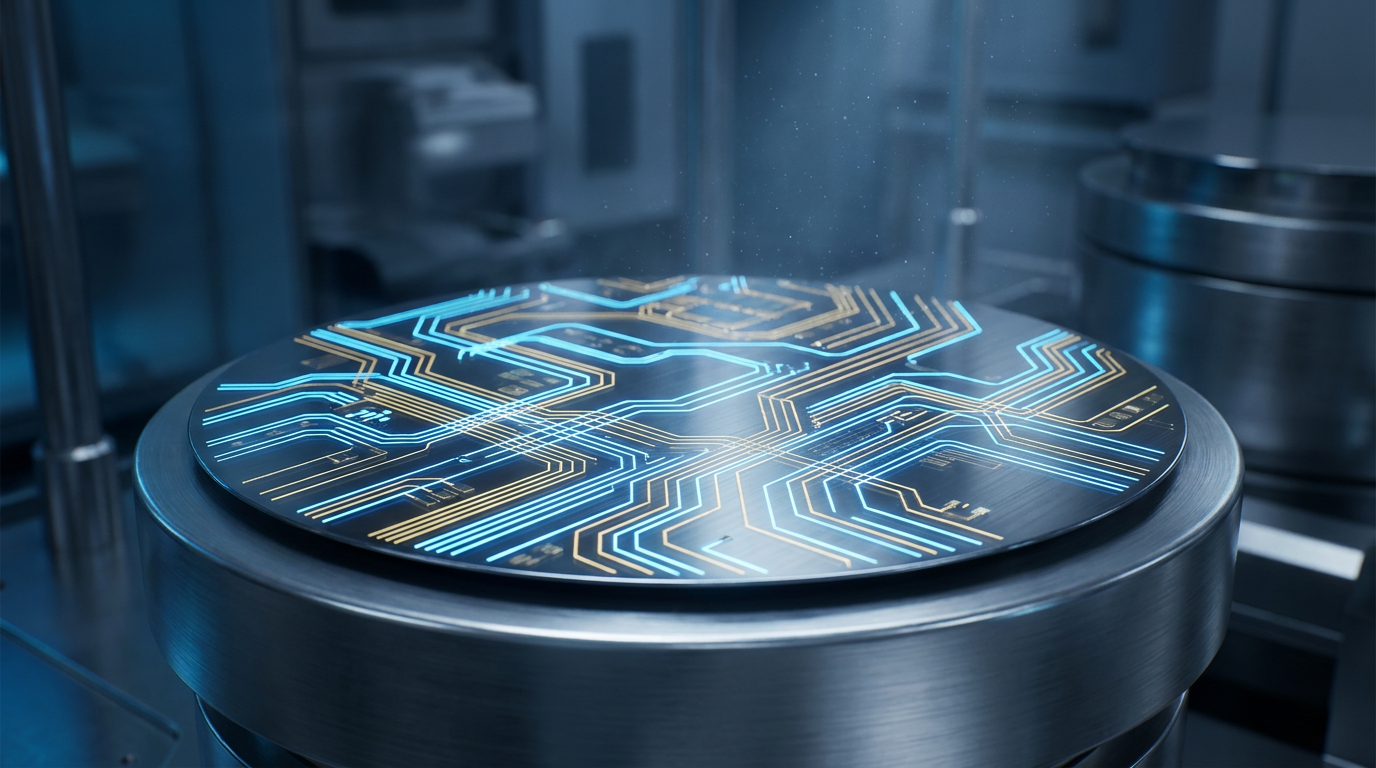
To understand the gravity of this development, we must strip away the marketing veneer and examine the underlying silicon architecture. The Dholera fab is targeting the 28nm, 40nm, 55nm, 90nm, and 110nm process nodes. In an era where tech media is hyper-fixated on 3nm Extreme Ultraviolet (EUV) lithography powering the latest smartphones and AI accelerators, the 28nm to 110nm range might seem antiquated to the untrained eye. However, from an enterprise engineering perspective, this is the absolute bedrock of modern industrial civilization. The 28nm node, in particular, represents the ultimate “sweet spot” in semiconductor manufacturing. It is the final planar CMOS (Complementary Metal-Oxide-Semiconductor) node before the industry was forced to adopt highly complex, expensive FinFET (Fin Field-Effect Transistor) architectures to combat quantum tunneling and current leakage. By utilizing High-K Metal Gate (HKMG) technology at 28nm, manufacturers achieve an unparalleled balance of low power consumption, high performance, and minimal defect density.
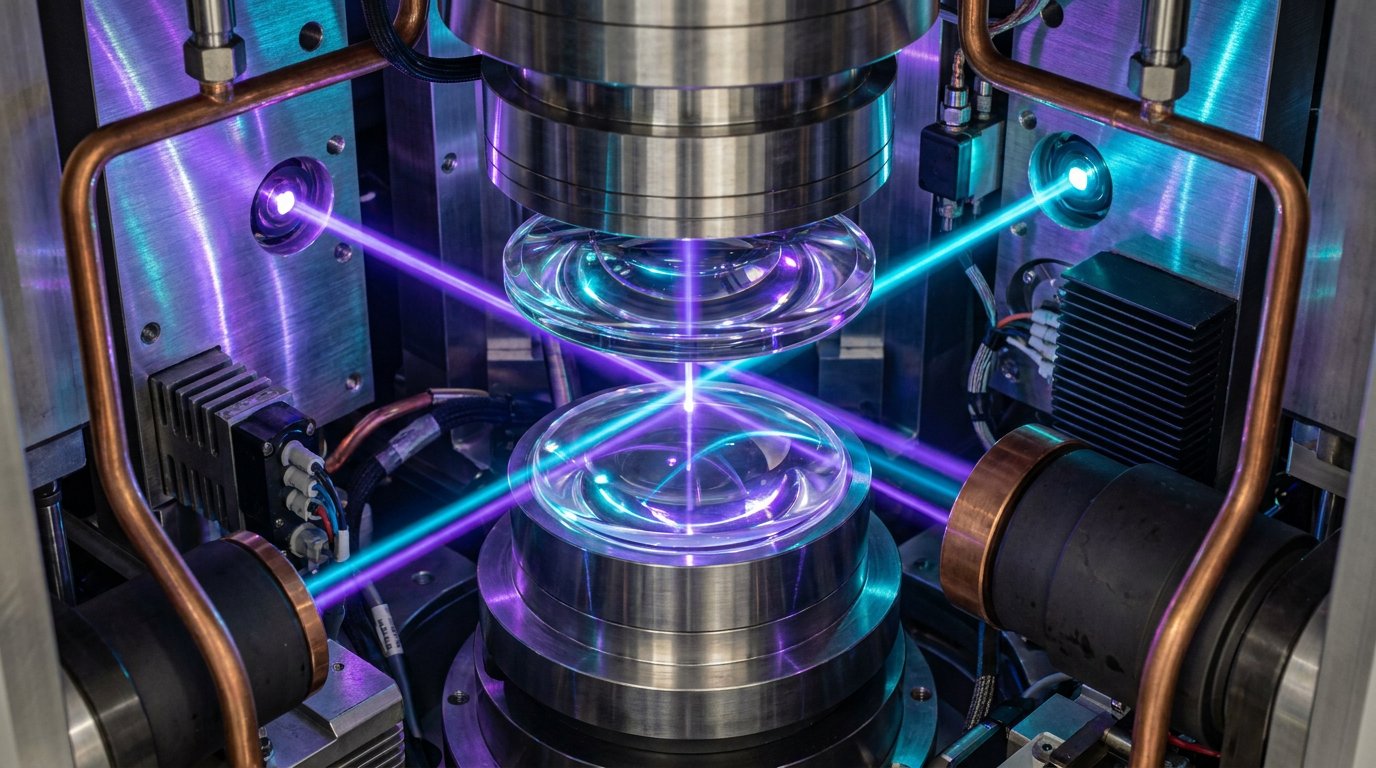
Equipping this facility falls to ASML, the undisputed monopoly in advanced lithography. For these specific legacy and mature nodes, ASML will be deploying its highly refined Deep Ultraviolet (DUV) immersion lithography systems. Unlike EUV, which requires vaporizing tin droplets with high-power lasers in a vacuum, DUV utilizes argon fluoride (ArF) excimer lasers operating at a 193nm wavelength. By passing this light through a layer of purified water (immersion), the numerical aperture of the lens is increased, allowing the system to pattern features as small as 28nm with exceptional throughput and reliability. The deployment of these ASML machines in India represents a massive technology transfer and requires the establishment of an entirely new ecosystem of ultra-pure chemical suppliers, specialized gas vendors, and highly trained lithography engineers.
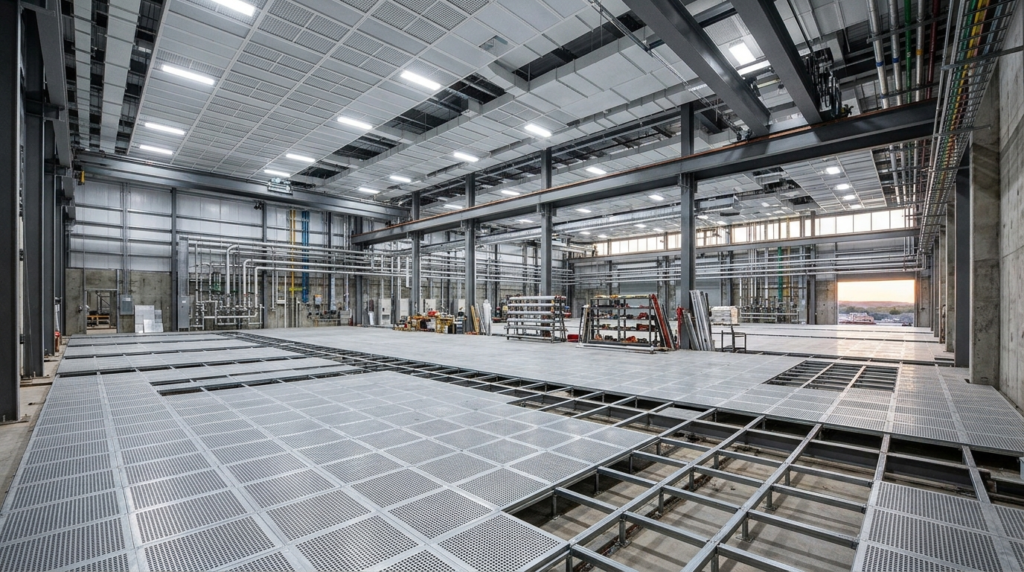
However, the architectural shift is not just about the silicon; it is about the physical infrastructure required to house it. Semiconductor fabrication plants are arguably the most complex structures built by human hands. The source material notes a critical engineering hurdle: the Dholera project required a major structural redesign late last year after soil testing revealed the ground was too soft and saline. In the context of a semiconductor fab, this is a monumental challenge. Lithography machines operate at nanometer tolerances. A passing truck miles away, or the micro-vibrations of the facility’s own HVAC systems, can blur the lithographic exposure, ruining millions of dollars worth of wafers. To combat this, fabs are built on massive, independent concrete “waffle slabs” that isolate the cleanroom floor from the surrounding earth. Soft, saline soil means that standard foundation techniques are entirely insufficient. The engineering teams would have been forced to drive hundreds of deep friction piles down to bedrock, heavily treating the concrete to resist saline corrosion. While the official PR states this will not delay the timeline, enterprise infrastructure analysts know that overcoming such geotechnical hurdles requires massive capital expenditure and introduces severe complexities into the critical path of construction.
Despite these physical challenges, the architectural blueprint is sound. By targeting 50,000 300mm wafers per month, Tata Electronics is building a facility with serious economies of scale. A single 300mm wafer has more than double the surface area of older 200mm wafers, allowing for significantly higher chip yields per run. At full capacity, this fab will be churning out hundreds of millions of individual dies annually, fundamentally altering the geographic concentration of mature node production.
Enterprise Market Impact & TCO

For Chief Technology Officers, procurement heads, and enterprise supply chain architects, the Dholera fab represents a massive shift in Total Cost of Ownership (TCO) and risk mitigation. Over the past decade, the enterprise sector has learned a brutal lesson regarding supply chain fragility. The hyper-concentration of semiconductor manufacturing in Taiwan, South Korea, and increasingly China, created a single point of failure for the global economy. The “China Plus One” strategy—where enterprises diversify their manufacturing and sourcing outside of China to mitigate geopolitical and logistical risks—has now officially reached the silicon wafer level.
The economics of this $11 billion facility are heavily subsidized, which will directly impact the pricing models available to enterprise clients. The Indian government, through the India Semiconductor Mission (ISM), is covering 50% of the eligible project costs. Furthermore, the Gujarat state government is layering on additional incentives, including subsidized land in the Dholera Special Investment Region, drastically reduced power tariffs, and stamp duty exemptions. Power is a massive component of a fab’s operating expenditure (OpEx); a modern 300mm fab can consume upwards of 100 megawatts of continuous power to run cleanroom filtration, water purification, and the lithography tools themselves. By securing subsidized, reliable power and having half of the capital expenditure (CapEx) absorbed by the state, Tata Electronics can theoretically offer highly competitive wafer pricing to global Original Equipment Manufacturers (OEMs).
Let us break down the enterprise impact by sector. The 28nm to 110nm nodes are the lifeblood of the automotive, industrial IoT, and telecommunications sectors. An electric vehicle (EV) today contains thousands of individual chips. The vast majority of these are not cutting-edge 3nm AI processors; they are 55nm microcontrollers managing the battery management system (BMS), 90nm power management ICs (PMICs) regulating voltage to the infotainment screen, and 40nm display drivers. When an enterprise automotive manufacturer like Ford, Volkswagen, or Tata Motors plans their supply chain for the next decade, the ability to dual-source these critical components from a politically stable, democratic ally like India drastically reduces their risk profile.
Furthermore, the Total Cost of Ownership for enterprise hardware deployment is heavily influenced by component availability. During the 2020-2022 chip shortage, enterprise networking giants like Cisco and Juniper faced lead times of over 50 weeks for basic routing and switching hardware, largely due to a lack of mature node PMICs and PHY transceivers. By bringing 50,000 wafers a month online, Tata Electronics is injecting a massive buffer into the global supply chain. For enterprise IT buyers, this translates to more predictable hardware refresh cycles, stabilized pricing for edge computing devices, and a reduction in the massive premiums paid on the gray market during shortage periods.
However, enterprise buyers must also audit the risks. Tata Electronics is a newcomer to front-end fabrication. While PSMC is providing the process technology and ASML is providing the tools, the actual execution—achieving high yield rates, maintaining ultra-pure environments, and managing a highly complex supply chain of raw materials—is incredibly difficult. Initial yields during the trial production phase later this year will likely be low. Enterprises looking to source from Dholera will need to factor in a multi-year ramp-up period before the facility achieves the “six sigma” reliability expected from established foundries in Hsinchu or Dresden.
The Consumer Reality: What This Means for You
It is easy to view an $11 billion semiconductor fab as an abstract, hyper-industrial concept disconnected from daily life. However, the reality is that the silicon produced in Dholera will dictate the availability, pricing, and functionality of almost every consumer product you interact with over the next decade. To understand the consumer impact, we must translate the highly technical jargon of “28nm nodes” and “50,000 wafers a month” into everyday reality.
Think back to the height of the pandemic. Consumers trying to buy a new car were met with empty dealership lots. Those who could find a car often had to pay thousands of dollars over the sticker price, and in many cases, the cars were delivered with features missing—such as heated seats or advanced driver-assistance systems (ADAS). This was not because the automakers forgot how to build cars; it was because they were missing $2 microcontrollers. These microcontrollers, built on the exact 40nm, 55nm, and 90nm nodes that the Dholera fab will produce, are the invisible brains behind modern convenience. They roll down your windows, deploy your airbags, and manage your engine’s fuel injection.
By establishing a massive, commercial foundry in India, the global supply chain is building a shock absorber. For the everyday consumer, this means a drastic reduction in the likelihood of future product shortages. Whether you are trying to purchase a new smart refrigerator, a next-generation gaming console, or a simple Wi-Fi router, the availability of these products relies entirely on the steady flow of mature node silicon. When Tata Electronics ramps up to full capacity, producing millions of chips annually, it ensures that the consumer electronics market remains flooded with the necessary foundational components, keeping prices stable and shelves stocked.
Furthermore, this development has massive implications for the democratization of technology, particularly in emerging markets. India is not just manufacturing these chips for export; it is building a domestic ecosystem to feed its own rapidly expanding middle class. As local manufacturing of smartphones, smart home devices, and electric two-wheelers scales up within India, having a domestic supply of critical silicon will drive down the cost of these devices. Consumers in India and surrounding regions will see more affordable, feature-rich electronics as the cost of importing silicon from Taiwan or China is eliminated.
However, consumers should be wary of the marketing fluff surrounding this announcement. The joint statement mentions that the chip portfolio will cover “AI” applications. While it is true that a 28nm chip can run basic, edge-AI inference models—such as a smart doorbell recognizing a face or a washing machine optimizing its water usage based on load weight—this fab is not producing the chips that power ChatGPT, Midjourney, or advanced autonomous driving neural networks. Those applications require cutting-edge 3nm and 4nm silicon produced exclusively by TSMC, Samsung, and Intel. The Dholera fab is about building the essential, everyday infrastructure of the digital world, not pushing the bleeding edge of artificial intelligence.
The Industry Ripple Effect
The establishment of India’s first commercial fab is not happening in a vacuum; it is a calculated move on the grand chessboard of global geopolitics and industrial strategy. The ripple effects of this $11 billion investment will force immediate reactions from established semiconductor titans and rival nations alike.
First, we must look at the U.S.-led Pax Silica initiative, which India joined earlier this year. This alliance is a direct, coordinated effort by Western democracies and their allies to secure critical supply chains—spanning semiconductors, AI infrastructure, and critical minerals—away from the sphere of Chinese influence. For decades, China has been aggressively subsidizing its domestic foundry, SMIC, to dominate the mature node market. By flooding the world with cheap 28nm and 40nm chips, China aimed to make the global automotive and industrial sectors entirely dependent on its silicon. The Dholera fab is the Pax Silica alliance’s counter-punch. By standing up a massive, state-subsidized foundry in India, the alliance is creating a viable, democratic alternative for legacy node production, directly threatening China’s strategy of market monopolization.
For established foundries like Taiwan’s TSMC, UMC, and the US-based GlobalFoundries, the Tata-PSMC partnership is a double-edged sword. On one hand, TSMC is actively trying to shed its lower-margin legacy node business to focus its capital expenditure on hyper-profitable 3nm and 2nm EUV nodes. In this sense, India taking over the “grunt work” of 28nm production is beneficial. However, for foundries like UMC and GlobalFoundries, whose entire business models rely heavily on mature nodes, Tata Electronics represents a formidable new competitor. With 50% of its CapEx subsidized by the Indian government and access to cheap labor and power, Tata could potentially undercut established players on wafer pricing, forcing a race to the bottom in mature node margins.
Finally, the partnership with ASML is a critical signal to the rest of the industry. ASML is the ultimate gatekeeper of semiconductor manufacturing. By committing to equip the Dholera fab and, more importantly, to help “nurture talent in India,” ASML is validating India’s semiconductor ambitions. This will trigger a gold rush of secondary suppliers. Companies that manufacture photoresists, etching gases, chemical mechanical polishing (CMP) slurries, and automated material handling systems (AMHS) will now view India as a tier-one market, accelerating the development of a holistic semiconductor ecosystem on the subcontinent.
TechNode HQ Verdict: Pros, Cons & Usability
- Pro (Engineering): The utilization of ASML’s proven DUV immersion lithography at the 28nm node provides an optimal balance of high yield, low defect density, and excellent power-to-performance ratios for embedded systems.
- Pro (Consumer): Massive injection of mature node capacity into the global market will stabilize the supply chain for automobiles, smart home appliances, and everyday consumer electronics, preventing future price gouging and shortages.
- Con: The severe geotechnical challenges (soft, saline soil) requiring major structural redesigns introduce significant risks of hidden micro-vibration issues, which could severely impact initial lithographic yields.
- Con: India is entirely reliant on Taiwan’s PSMC for process IP and ASML for hardware; this is a licensing and assembly play, meaning India is not yet developing indigenous, sovereign semiconductor architecture.
Enterprise Usability: For CTOs and supply chain architects in the automotive, industrial IoT, and telecommunications sectors, the Dholera fab should be immediately integrated into long-term “China Plus One” procurement strategies. While initial yields in 2025 may be volatile, securing early wafer allocation contracts now will guarantee diversified, subsidized silicon supply for critical 28nm-110nm components by 2026.
Everyday Usability: Consumers cannot buy wafers directly, but the downstream effects are highly beneficial. If you are planning major purchases of vehicles or smart appliances in the latter half of the decade, this facility’s output ensures a highly competitive, well-stocked market. However, do not expect this fab to lower the price of your next high-end smartphone or AI-powered PC, as those rely on cutting-edge nodes manufactured elsewhere.
Sources & Citations:
Original Technical Breakdown via: tomshardware
Official Handle: @tomshardware
Topics Explored: ASML Lithography, Tata Electronics, Semiconductor Manufacturing, Global Supply Chain, 28nm Process Node