The Architectural Shift: From Passive Fencing to Active Animatronic Deterrence
The boundary between human infrastructure and untamed wilderness is collapsing. In Japan, a perfect storm of rural depopulation, climate change, and shifting ecological food webs has driven wild bears out of the mountains and directly into human-habituated zones. The statistics are grim and escalating: last year, bears killed 13 people in Japan—more than double the fatality rate of the previous year. With over 50,000 nationwide sightings, bears are no longer just a remote wilderness hazard; they are breaching schools, hot spring resorts, and even supermarkets. In response to this biological crisis, Japanese municipalities are turning to a decidedly hardware-centric solution: the “Monster Wolf.”
Developed by Hokkaido-based engineering firm Ohta Seiki, the Monster Wolf is a $4,000-plus animatronic deterrent designed to militarize the perimeter of rural towns and agricultural zones. But to dismiss this as a mere robotic scarecrow is to fundamentally misunderstand the architectural shift occurring in smart city wildlife management. We are witnessing the birth of Automated Ecological Defense Systems (AEDS), a new sub-sector of enterprise hardware where robotics, acoustic engineering, and edge computing intersect to manage biological threats.
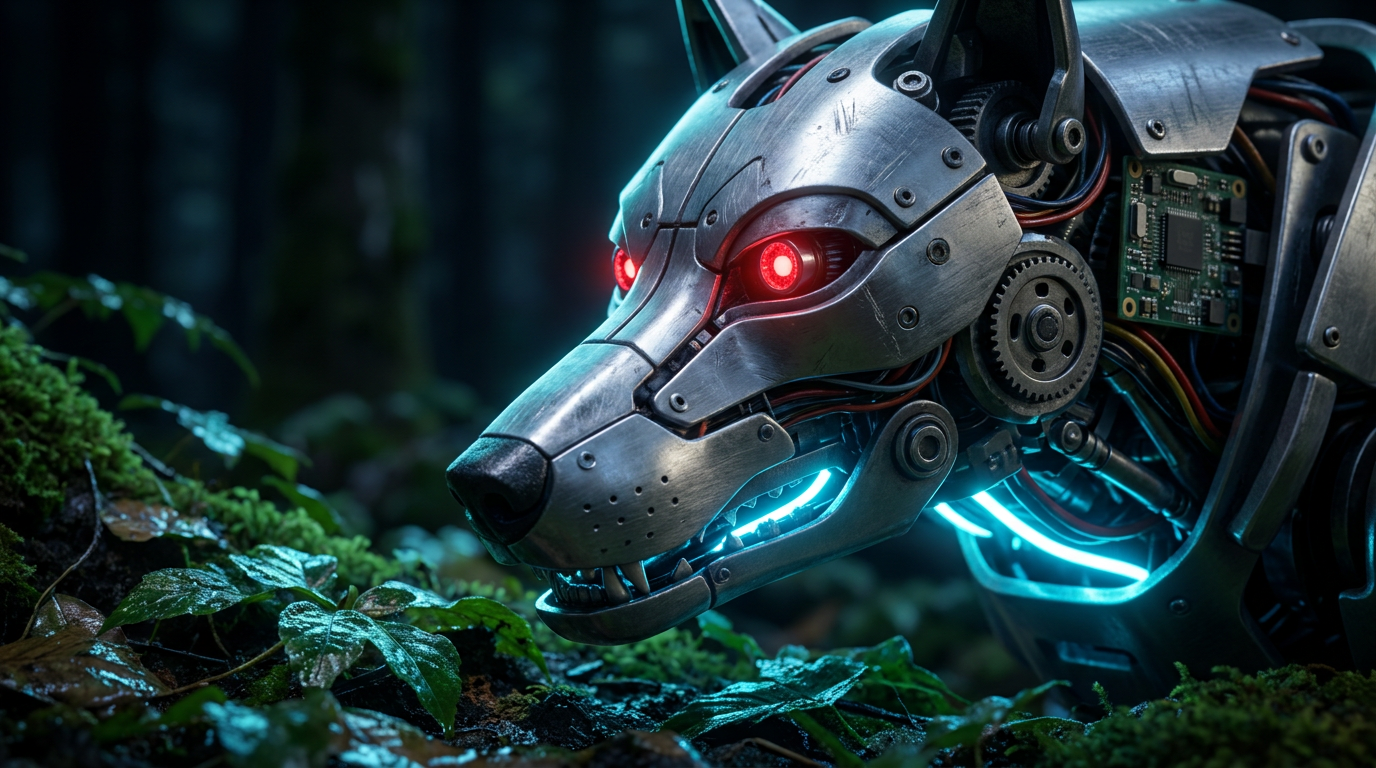
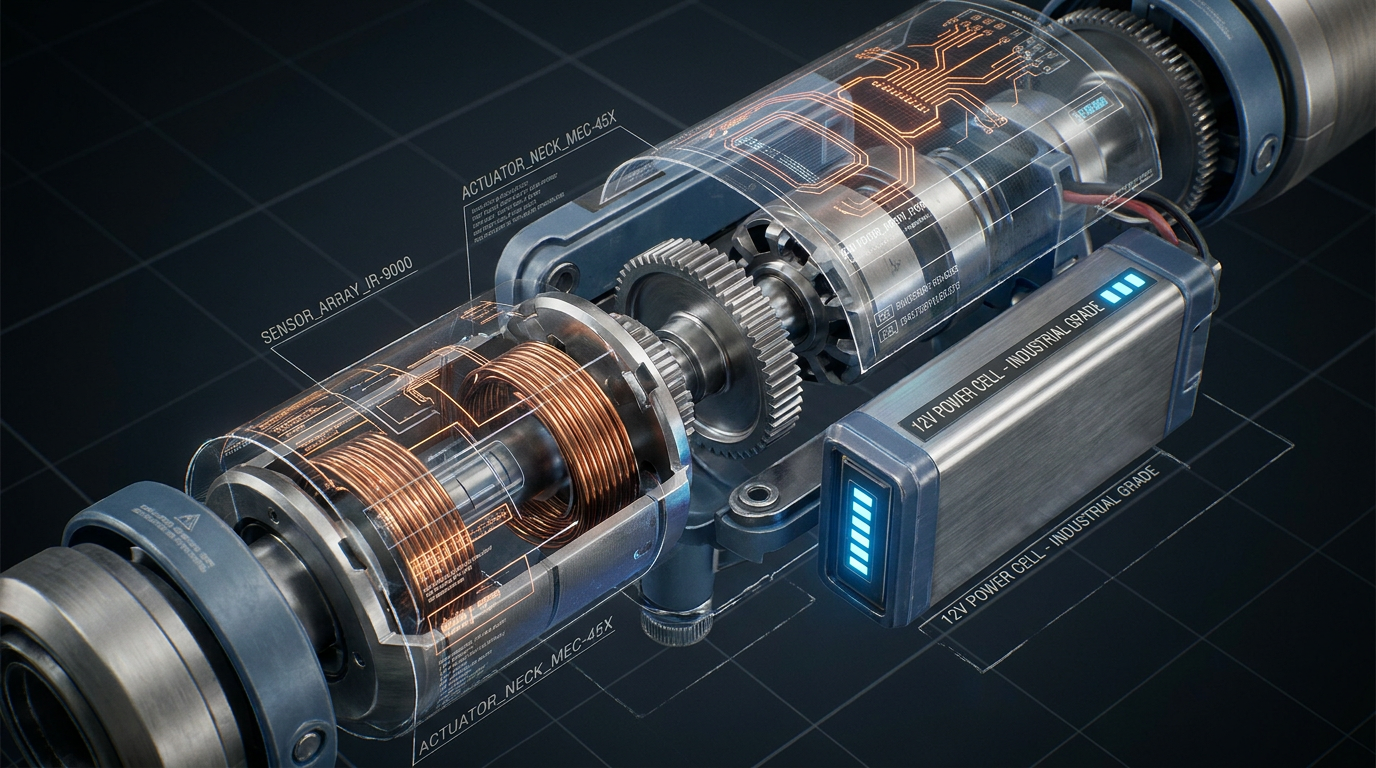
At its core, the current iteration of the Monster Wolf operates on a relatively straightforward, yet highly ruggedized, hardware architecture. The primary trigger mechanism relies on a Passive Infrared (PIR) sensor array. When the thermal signature of a large mammal breaches the sensor’s field of view, it initiates a cascading hardware response. The system activates high-lumen, intense red LED optical arrays and a neon blue under-lighting system designed to maximize visual disruption in low-light forest environments. Simultaneously, mechanical servos actuate the chassis, causing the wolf’s head to swing aggressively from side to side, mimicking the predatory tracking movements of a natural apex predator.
However, the true engineering marvel of the Monster Wolf lies in its acoustic payload. The system is programmed with 50 distinct, high-decibel audio tracks. This is not a superficial feature; it is a critical countermeasure against “acoustic habituation.” In behavioral ecology, animals quickly learn to ignore static, repetitive deterrents—a phenomenon that renders traditional gas cannons and alarms useless over time. By utilizing a randomized algorithmic selection of 50 different sounds—ranging from wolf howls and gunshot simulations to human voices and metallic clanging—the Monster Wolf prevents bears from mapping the audio to a non-lethal source. The acoustic drivers require significant power to project sound through dense, acoustically dampening foliage, which dictates the robot’s power architecture.
Power delivery is handled by a heavy-duty 12V car battery. While consumer tech enthusiasts might wonder why Ohta Seiki hasn’t opted for modern, lightweight lithium-ion cells, the choice of a 12V lead-acid architecture is a calculated enterprise engineering decision. Hokkaido winters are notoriously brutal, with temperatures routinely plunging well below freezing. Lithium-ion batteries suffer severe voltage drops and capacity degradation in sub-zero environments, whereas traditional 12V car batteries offer superior thermal resilience and the high-amperage burst capacity required to simultaneously drive mechanical servos, LED arrays, and high-wattage audio amplifiers. To ensure continuous uptime in remote deployments, the system is augmented with an optional solar charging panel, providing a steady trickle charge to maintain the 12V cell during extended winter months.
Yet, the current architecture is reaching its operational limits. Ohta Seiki has announced plans to integrate AI cameras into future iterations, marking a critical evolution from analog triggering to Edge AI computing. A standard PIR sensor is “dumb”—it cannot differentiate between a 500-pound brown bear, a harmless deer, a falling branch, or a human hiker. This leads to false positives, wasted battery life, and unnecessary noise pollution. By integrating AI cameras, the Monster Wolf will require onboard Neural Processing Units (NPUs) or lightweight microcontrollers capable of running computer vision models (such as YOLOv8) at the edge. This will allow the system to positively identify the species in real-time, escalating its deterrent response only when a verified apex predator is detected. This shift from passive thermal detection to active algorithmic identification is what elevates the Monster Wolf from a novelty to an enterprise-grade security appliance.
Enterprise Market Impact & Total Cost of Ownership (TCO)

For municipal governments, agricultural cooperatives, and private resort operators in Japan, the bear crisis is not just a safety issue; it is a massive financial liability. Traditional methods of wildlife management—such as erecting miles of electrified fencing, deploying human wildlife control officers, or organizing lethal culling patrols—are prohibitively expensive and logistically unscalable. Against this backdrop, the Monster Wolf’s $4,000 base price tag represents a highly disruptive value proposition.
When evaluating the Total Cost of Ownership (TCO) of the Monster Wolf, enterprise buyers must look beyond the initial capital expenditure (CapEx). A single human wildlife patrol officer in Japan can cost a municipality upwards of $40,000 to $50,000 annually in salary, benefits, and equipment. Electrified fencing costs thousands of dollars per mile to install, requires constant clearing of vegetation to prevent grounding, and is frequently destroyed by heavy snowfall or falling trees. In contrast, a $4,000 Monster Wolf node can secure a critical chokepoint—such as a valley entrance, a school perimeter, or a crop field—with minimal ongoing operational expenditure (OpEx).
The primary OpEx factors for the Monster Wolf involve routine maintenance: replacing the 12V battery every three to five years, lubricating the mechanical servos to prevent weather-induced seizing, and cleaning the solar panels and optical sensors. Even factoring in a generous $500 annual maintenance budget per unit, the ROI (Return on Investment) for a municipality is achieved within the first few months of deployment. This overwhelming economic advantage is precisely why Ohta Seiki’s order book has exploded.
However, this surge in demand has exposed a critical bottleneck in the boutique robotics supply chain. Company president Yuji Ohta recently admitted to AFP, “We cannot make them fast enough.” The company has received orders for 50 units this year—a figure that exceeds their typical annual manufacturing capacity. A backlog of 50 units may sound trivial to consumer electronics giants like Apple or Samsung, but in the realm of specialized, hand-assembled animatronics, it represents a severe scaling crisis. Customers are currently facing a two-to-three-month wait time for fulfillment.
This bottleneck highlights the growing pains of transitioning from a niche maker to an enterprise Original Equipment Manufacturer (OEM). Ohta Seiki is currently operating on an artisanal manufacturing model. To meet the escalating nationwide demand, the company will need to overhaul its supply chain, standardize its chassis components for mass injection molding, and likely partner with larger contract manufacturers. The integration of the upcoming AI camera systems will further complicate the supply chain, requiring the procurement of semiconductor chips, specialized optics, and software engineering talent to maintain the computer vision models.
Furthermore, as municipalities begin deploying these units in larger numbers, they will require centralized fleet management software. A town deploying 20 Monster Wolves across a 50-square-mile radius cannot rely on manual, physical inspections to check battery levels or sensor health. Ohta Seiki—or a third-party enterprise software vendor—will need to develop a cloud-based dashboard utilizing IoT (Internet of Things) protocols like LoRaWAN or cellular LTE-M. This would allow municipal IT departments to monitor the uptime, battery health, and trigger logs of their entire automated defense perimeter from a single pane of glass. The hardware is only the first step; the enterprise software ecosystem is the inevitable next phase of this market.
The Consumer Reality: What This Means for You
While the enterprise deployment of Monster Wolves reshapes municipal budgets, the consumer reality of living alongside these machines is profoundly surreal. For the residents of rural Japanese towns, the daily commute or the walk to the local supermarket is now punctuated by the sudden, aggressive activation of robotic apex predators. The psychological impact of this cannot be understated. We are witnessing the normalization of “fortress cities,” where the perimeter of human civilization is actively guarded by autonomous, glowing, howling machines.
For the average citizen, the presence of a Monster Wolf is a stark, visceral reminder of the collapsing ecological boundary. While the robots are designed to induce fear in bears, their intense LED eyes and sudden, 120-decibel shrieks are equally jarring to humans. Municipalities are having to carefully calibrate the placement of these units to avoid noise pollution complaints and the accidental traumatization of local residents. The challenge is finding the delicate balance between a deterrent that is terrifying enough to repel a 500-pound bear, yet socially acceptable enough to be placed near a primary school.
Recognizing the need for a more personalized approach to wildlife defense, Ohta Seiki is actively developing a consumer-grade, handheld version of the Monster Wolf. Aimed at hikers, anglers, and schoolchildren, this upcoming product represents a fascinating challenge in hardware miniaturization. Shrinking the psychological impact of a stationary, 12V-powered animatronic into a portable, battery-operated device requires significant engineering compromises.
A handheld unit cannot rely on heavy mechanical servos or massive acoustic drivers. Instead, it will likely function as a highly advanced, smart bear horn. We can expect this consumer device to utilize high-density lithium-ion batteries (similar to those found in premium flashlights), paired with piezoelectric speakers capable of emitting piercing, high-frequency directional sound waves. The integration of ultra-bright, strobing LEDs will serve as the visual deterrent. If Ohta Seiki can successfully miniaturize their randomized acoustic algorithms into a ruggedized, IP68-rated handheld device, they will effectively create a new category of active personal safety gear, rendering traditional chemical bear spray obsolete.
For the global consumer, the developments in Japan serve as a preview of the future. As climate change continues to disrupt habitats worldwide, human-wildlife conflicts will inevitably rise in North America, Europe, and beyond. The automated defense technologies being beta-tested in the snowy mountains of Hokkaido today will eventually find their way into the hiking backpacks and suburban backyards of consumers globally.
The Industry Ripple Effect
Ohta Seiki’s success with the Monster Wolf is sending shockwaves through the broader robotics and smart city infrastructure industries. It has proven that there is a highly lucrative, untapped market for Automated Ecological Defense Systems (AEDS). Where there is proven demand, competition inevitably follows, and the industry ripple effect is already beginning to manifest.
We are already seeing the deployment of complementary technologies. Earlier this year, officials in Ishinomaki City, Miyagi Prefecture, began deploying bear-repelling drones to address their own wildlife infestations. These drones, equipped with thermal cameras and sirens, represent the aerial counterpart to the Monster Wolf’s ground-based defense. The logical next step for the industry is the integration of these systems. Imagine a mesh network where a stationary Monster Wolf detects a bear via its Edge AI camera, triggers its local deterrents, and simultaneously pings an autonomous drone hive. The drone then launches, tracks the bear’s thermal signature, and herds it back into the deep forest using directional acoustics. This level of automated, multi-domain wildlife management is no longer science fiction; the hardware prerequisites already exist.
Furthermore, the success of the Monster Wolf is likely to attract the attention of heavyweights in the robotics sector, most notably Boston Dynamics. Boston Dynamics’ quadruped robot, “Spot,” is already being utilized for enterprise security patrols, industrial inspections, and even law enforcement. Spot possesses the mobility, the payload capacity, and the advanced computer vision necessary to serve as a mobile, autonomous wildlife deterrent. While a $4,000 stationary Monster Wolf is currently more cost-effective than a $75,000 Spot robot, the cost of quadruped robotics is steadily decreasing. If major robotics firms decide to enter the AEDS market, they could introduce highly mobile, AI-driven predator drones that actively patrol municipal borders, rather than waiting passively at chokepoints.
Ultimately, the Monster Wolf forces the tech industry to look beyond the sterile environments of warehouses and data centers. It proves that enterprise hardware must be rugged enough to survive the wilderness, smart enough to understand biology, and scalable enough to protect human lives. The bear crisis in Japan is a tragedy, but it is also the catalyst for a radical leap forward in how technology mediates the boundary between humanity and nature.
TechNode HQ Verdict: Pros, Cons & Usability
- Pro (Engineering): The utilization of a 12V lead-acid power architecture combined with solar trickle charging ensures exceptional thermal resilience and high-amperage uptime in sub-zero, off-grid environments where lithium-ion would fail.
- Pro (Consumer): Provides a non-lethal, highly effective perimeter defense that drastically reduces the likelihood of fatal human-wildlife encounters in mundane civilian settings like schools and residential neighborhoods.
- Con: The current reliance on basic Passive Infrared (PIR) sensors results in a high rate of false positives, triggering the system for non-threats and causing unnecessary noise pollution and battery drain.
- Con: Ohta Seiki’s boutique manufacturing scale (maxing out at ~50 units annually) creates a severe supply chain bottleneck, resulting in multi-month deployment delays for enterprise clients.
Enterprise Usability: For municipal CTOs, agricultural co-op managers, and rural infrastructure planners, the Monster Wolf is a mandatory deployment. Despite the supply chain delays, the TCO is vastly superior to human patrols or electrified fencing. Buyers should immediately place orders to secure a place in the backlog, but must also allocate internal IT resources to establish a manual maintenance schedule until Ohta Seiki rolls out centralized, cloud-based IoT fleet management software.
Everyday Usability: For the general public, the current $4,000+ stationary unit is not a viable consumer purchase; it is municipal infrastructure. However, outdoor enthusiasts, hikers, and rural residents should closely monitor Ohta Seiki’s development of the upcoming handheld variant. Once released, this miniaturized, active acoustic/optical deterrent will likely become an essential piece of everyday carry (EDC) safety gear, rivaling traditional chemical bear deterrents.
Sources & Citations:
Original Technical Breakdown via: tomshardware
Official Handle: @tomshardware
Topics Explored: Robotics, Edge AI, Smart City Infrastructure, Automated Defense, Ohta Seiki