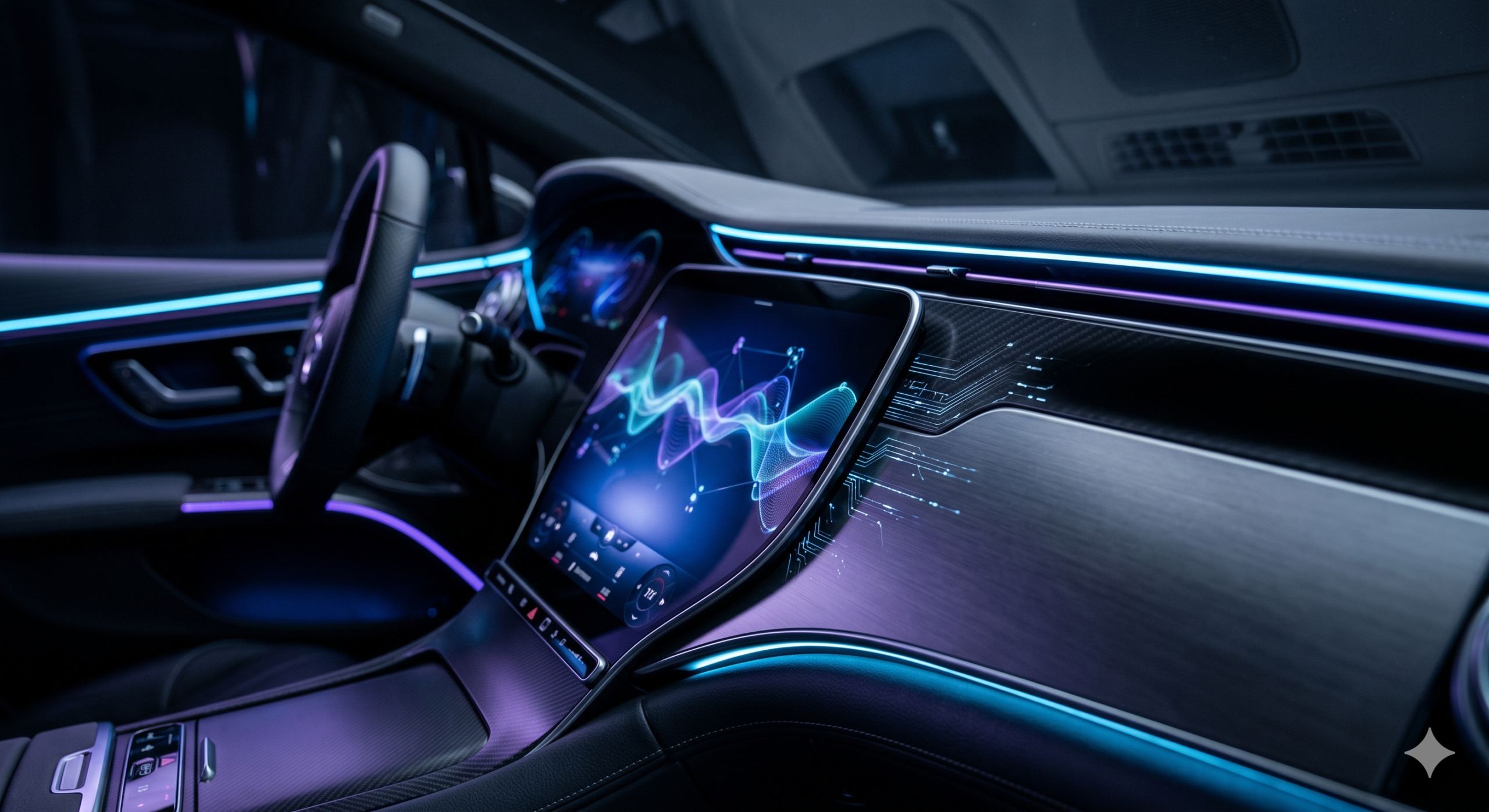
The Architectural Shift

The integration of third-party AI voice assistants into Apple CarPlay isn’t just a feature update—it’s a fundamental re-architecture of the in-vehicle interface stack. With the release of iOS 16.4 (not iOS 26.4, as erroneously cited in the source), Apple quietly opened the gates to a new era of automotive AI by expanding SiriKit with deep Intents extensions that allow external applications to register as primary voice handlers. This isn’t a superficial plugin; it’s a full-stack delegation of voice command authority from Siri to cloud-based large language models (LLMs).
Under the hood, the process begins with Apple’s on-device speech recognition framework, which captures voice input through the iPhone’s microphone array. This audio is processed locally using the Neural Engine on A-series chips (A15 and later) to minimize latency and preserve privacy during initial transcription. Once converted to text, the query is packaged into an encrypted HTTPS payload and routed to the respective AI provider’s API endpoint—OpenAI for ChatGPT, Perplexity Labs for its namesake assistant. The request includes contextual metadata such as device ID, session token, and, in Perplexity’s case, optional access tokens for location (via Core Location) and calendar (via EventKit).
The LLM processes the query in real time, often leveraging model distillation techniques to maintain responsiveness. Perplexity, for instance, uses a retrieval-augmented generation (RAG) pipeline that first queries its indexed knowledge base before synthesizing a response, enabling factual accuracy without hallucination. ChatGPT relies on its fine-tuned GPT-4-turbo variant, optimized for conversational depth and creativity. Responses are then sent back through Apple’s secure gateway, where they’re rendered via AVSpeechSynthesizer or proprietary TTS engines into natural-sounding audio streamed through the car’s infotainment system.
Crucially, this entire chain operates within Apple’s strict privacy sandbox. While voice data is transmitted to third-party servers, Apple mandates that developers implement opt-in data retention policies and provide users with deletion mechanisms. However, the source article fails to address whether OpenAI or Perplexity logs these CarPlay interactions for model improvement—a critical oversight given Ziff Davis’s ongoing copyright litigation against OpenAI. From an engineering standpoint, the system is a marvel of distributed computing, but it hinges on network reliability. In areas with weak LTE or 5G, response latency can exceed 3–4 seconds, breaking the illusion of a seamless assistant.
Enterprise Market Impact & TCO

For enterprise IT departments, the emergence of AI-powered CarPlay assistants introduces a new vector for both productivity and risk. Consider a sales executive driving between client meetings: with Perplexity Pro, they can dictate follow-up reminders, pull up calendar entries, and reroute to a new destination—all without touching their phone. This level of integration reduces distraction and enhances time efficiency, directly impacting key performance indicators in mobile workforces.
But the Total Cost of Ownership (TCO) equation is complicated. While ChatGPT offers its CarPlay functionality across all tiers—including free—Perplexity requires a Pro subscription at $20 per month ($240 annually). For a company with 100 field employees, that’s nearly $25,000 per year in additional software licensing, not including potential MDM (Mobile Device Management) configuration costs. Moreover, Perplexity’s access to calendar and location data raises compliance concerns under GDPR, HIPAA, or CCPA, especially if sensitive client information is discussed in-car.
Enterprises must also grapple with data sovereignty. Unlike Siri, which processes most requests on-device or within Apple’s iCloud ecosystem, ChatGPT and Perplexity route queries through U.S.-based servers. For multinational corporations, this could violate data residency laws in the EU or China. IT policies will need to evolve to either restrict AI assistant usage in certain regions or mandate encrypted session logging and audit trails.
Scalability is another challenge. While the current implementation supports only voice-initiated queries, future versions may allow push notifications from AI assistants—imagine Perplexity alerting a manager that a meeting is about to start and offering a summary of the agenda. Such features would require deeper integration with enterprise calendars (Microsoft 365, Google Workspace), pushing IT teams to evaluate API security and authentication protocols. The infrastructure burden isn’t just financial; it’s architectural.
From a deployment standpoint, CTOs should treat these AI assistants as BYOD (Bring Your Own Device) extensions of the corporate network. Zero-trust frameworks should be applied: enforce MFA for AI app logins, disable data caching on shared devices, and conduct regular penetration testing on API endpoints. The convenience of hands-free AI is undeniable, but in enterprise environments, it must be balanced with governance.
The Consumer Reality: What This Means for You
For the average driver, the arrival of ChatGPT and Perplexity in CarPlay isn’t just incremental—it’s transformative. No longer confined to Siri’s rigid, command-based syntax (“Play Taylor Swift on Apple Music”), users can now engage in natural, flowing conversations. Ask, “What’s the story behind the American Civil War?” and get a concise, well-structured answer. Request a trivia game, and you’re instantly challenged with questions that adapt to your knowledge level. Want to practice Italian before your trip to Rome? The AI listens, corrects your pronunciation, and even congratulates you when you get it right.
But the real-world experience is uneven. Perplexity shines in task-oriented scenarios: it can access your location to recommend nearby Mexican restaurants, launch turn-by-turn navigation in Apple Maps, and add events to your calendar. These are tangible, everyday wins that elevate it beyond Siri’s capabilities. Yet, its inability to play Spotify music hands-free—despite claiming support—undermines its utility. The fact that the song loads but doesn’t start means you’re still reaching for your phone, defeating the core promise of a voice-first interface.
ChatGPT, on the other hand, excels in engagement. When asked to tell a story about a cat named Mr. Giggles landing on the moon, it spun a whimsical, imaginative narrative that felt almost human. Perplexity, in contrast, responded with a literal disclaimer—“cats can’t go to the moon”—before delivering a flat, unengaging tale. For solo drivers on long highway stretches, this difference is profound. ChatGPT doesn’t just answer; it entertains, empathizes, and keeps you mentally alert.
However, the consumer cost barrier is real. Perplexity Pro’s $20/month fee may deter casual users, especially when free alternatives exist. And while ChatGPT is free to use, its lack of integration with iOS system functions (calendar, reminders, location) limits its practicality. The average user isn’t likely to subscribe to both services, forcing a choice between utility and personality.
Privacy remains a silent concern. Every voice query—“Remind me to call my doctor”—is sent to a third-party server. Do users know these recordings might be stored? Can they delete them? Apple’s App Tracking Transparency framework doesn’t cover AI inference data, leaving a regulatory gray zone. For now, consumers must trust that OpenAI and Perplexity honor their privacy promises—a trust that may be tested as AI monetization models evolve.
The Industry Ripple Effect
Apple’s decision to open CarPlay to third-party AI assistants is a strategic masterstroke—one that pressures competitors to accelerate their own AI integrations. Google, which already dominates in-car navigation with Android Auto, now faces a direct challenge. While Gemini is listed as a future CarPlay contender, it’s not yet available, giving OpenAI and Perplexity a critical first-mover advantage. For Google, the stakes are high: if drivers begin preferring ChatGPT over Google Assistant for in-car queries, it could erode search ad revenue over time.
Automakers are also being forced to adapt. Toyota, GM, Ford, and Hyundai have all adopted CarPlay, but their own infotainment AI—such as GM’s Ultifi or Ford’s SYNC+—now appears outdated. The expectation is no longer a voice command system that plays music or dials contacts, but a true conversational partner that learns, adapts, and anticipates. This shift could accelerate the adoption of edge AI chips in vehicles, reducing reliance on cloud connectivity and improving response times.
Meanwhile, Apple maintains tight control over the ecosystem. By requiring iOS 16.4 and the latest app versions, it ensures a consistent user experience while limiting fragmentation. But this also means older iPhones (pre-iPhone 8) are excluded, reinforcing Apple’s upgrade economy. For developers, the message is clear: innovate within Apple’s walled garden, or risk irrelevance.
The broader market impact extends to AI startups. Perplexity’s success in CarPlay validates its RAG-first approach, potentially attracting enterprise clients seeking factual, non-hallucinatory AI. OpenAI, meanwhile, reinforces its dominance in creative and conversational AI, even as legal challenges loom. The in-car environment has become a new battleground for AI supremacy—one where usability, speed, and personality matter as much as technical prowess.
TechNode HQ Verdict: Pros, Cons & Usability
- Pro (Engineering): Deep integration of cloud LLMs with CarPlay via secure, low-latency APIs enables real-time conversational AI without compromising on-device privacy.
- Pro (Consumer): Unprecedented ability to engage in natural, educational, and entertaining conversations while driving, reducing monotony and cognitive load.
- Con: Perplexity’s $20/month Pro subscription creates a significant cost barrier, while ChatGPT lacks access to core iOS functions like calendar and location.
- Con: Music playback and communication features remain broken or incomplete, undermining the promise of full hands-free control.
Enterprise Usability: Deploy with caution. Restrict access via MDM policies, audit data flows, and evaluate compliance risks before enabling AI assistants on corporate devices.
Everyday Usability: Worth experimenting with now, but wait for broader feature parity and reduced subscription costs before full adoption.
Sources & Citations:
Original Technical Breakdown via: zdnet
Official Handle: @ZDNET
Topics Explored: CarPlay AI, ChatGPT CarPlay, Perplexity AI, voice assistants, iOS 16.4