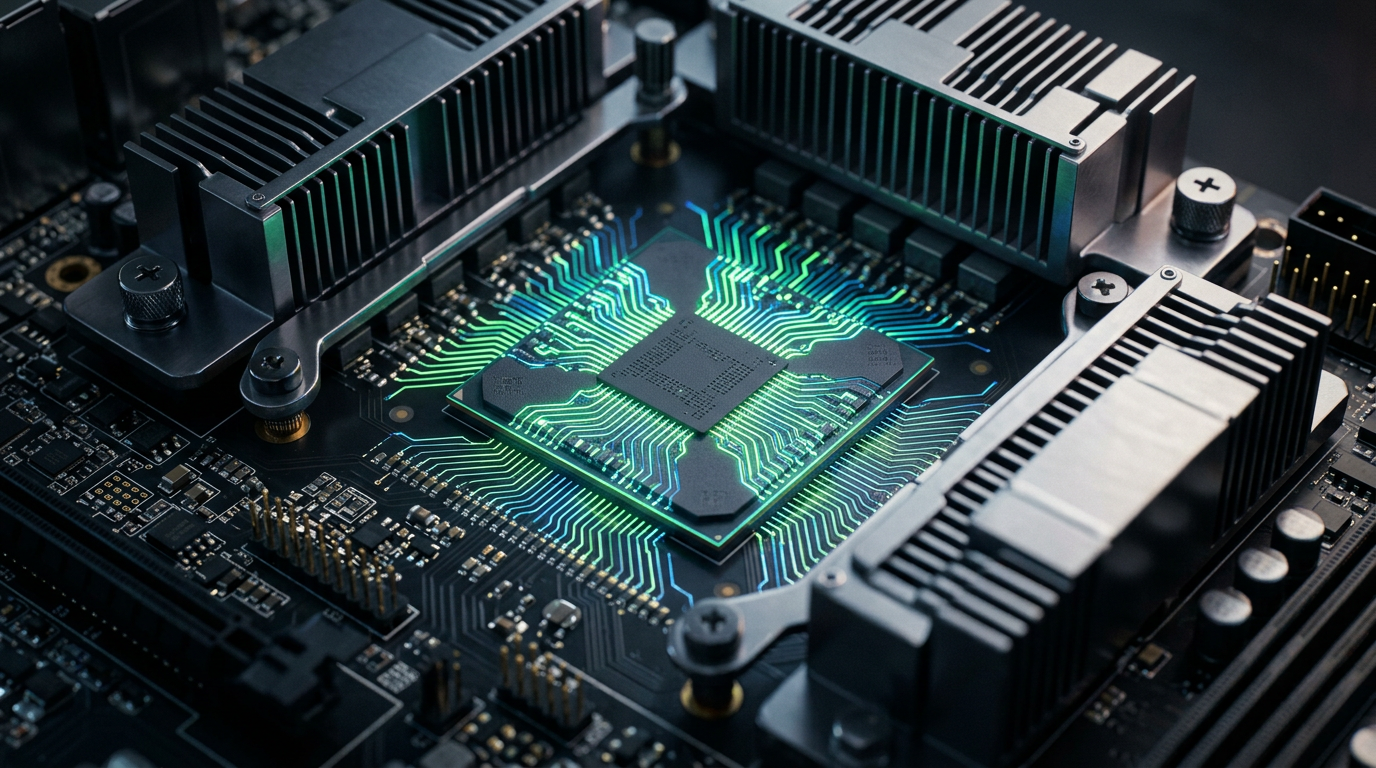
The artificial intelligence hype cycle has officially collided with the uncompromising physics of gaming hardware. In a sweeping, ruthless, and highly calculated maneuver, newly appointed Xbox CEO Asha Sharma has officially terminated the development of Microsoft’s Xbox Copilot AI for consoles and initiated the wind-down of its mobile counterpart. This decision, announced in May 2026, marks a profound architectural and strategic pivot for Microsoft’s gaming division, effectively ending the dream of a ubiquitous, conversational AI assistant living inside your console dashboard.
Taking the reins from Phil Spencer in February 2026, Sharma—a veteran of Microsoft’s CoreAI team—has wasted no time dismantling the bloated initiatives of the previous regime. From scrapping the overarching “Microsoft Gaming” brand to aggressively cutting the price of Xbox Game Pass, Sharma’s mandate is clear: optimize the infrastructure, reduce operational friction, and stop burning enterprise compute on consumer gimmicks. The death of Xbox Copilot is not merely a shift in product strategy; it is a masterclass in enterprise resource allocation and a stark admission of the technical limitations inherent in modern gaming silicon.
To understand why Microsoft pulled the plug on a feature they heavily hyped just one year prior, we must look beyond the PR statements about “deepening community connections.” We must look at the silicon, the server racks, and the astronomical Total Cost of Ownership (TCO) associated with running Large Language Models (LLMs) at scale. This is the definitive enterprise architecture breakdown of why Xbox Copilot had to die.
The Architectural Shift

The fundamental problem with integrating a generative AI assistant into a gaming console lies in the strict, unforgiving nature of hardware resource allocation. The current generation of Xbox consoles (the Series X and Series S) operate on a highly customized AMD APU architecture, combining Zen 2 CPU cores with RDNA 2 graphics, sharing a unified pool of GDDR6 memory. In the Series X, developers have access to 16GB of unified memory, of which approximately 13.5GB is strictly reserved for games, leaving a meager 2.5GB for the underlying operating system and hypervisor.
Large Language Models are notoriously memory-hungry. Even if Microsoft attempted to run a highly quantized, small-parameter model (such as a 4-bit quantized 7B parameter model) locally on the console to power Copilot, it would require an absolute minimum of 4GB to 6GB of VRAM just to hold the model weights in memory. This introduces an insurmountable architectural bottleneck. You cannot dynamically steal 4GB of memory from a AAA game rendering at 4K resolution without causing catastrophic frame drops, texture pop-ins, and system crashes. The console’s hypervisor architecture is designed to isolate the game environment from the OS to guarantee performance; introducing a local LLM would shatter this delicate equilibrium.
The alternative to local execution is cloud offloading—processing the user’s voice commands and generating responses via Microsoft’s Azure cloud infrastructure. However, this introduces a different, equally fatal architectural flaw: latency. Real-time gaming operates on strict latency budgets. A game running at 60 frames per second requires a new frame to be rendered every 16.67 milliseconds. If a player asks Copilot for real-time tactical advice or inventory management, the audio must be captured, sent to Azure, transcribed via Speech-to-Text, processed by an LLM, converted back to audio via Text-to-Speech, and streamed back to the console. Even with Microsoft’s edge nodes, the Time To First Token (TTFT) for cloud-based LLMs often hovers between 200 to 500 milliseconds. In the context of a fast-paced multiplayer shooter or a demanding action RPG, a half-second delay renders the AI assistant entirely useless.
Furthermore, Sharma’s decision to move executives from the CoreAI team into the Xbox platform team signals a massive shift in how AI will be utilized. Rather than forcing an AI overlay onto the consumer operating system, Microsoft is moving AI down the stack. The architectural focus is shifting toward developer-side integration. By providing game studios with backend AI tools—such as procedural asset generation, automated Quality Assurance testing, and dynamic NPC logic baked directly into the game engine—Microsoft can leverage AI to make games cheaper and faster to produce, without taxing the end-user’s hardware.
Enterprise Market Impact & TCO

While the hardware limitations are severe, the financial realities of cloud-based AI inference are what truly killed Xbox Copilot. From an enterprise IT perspective, the Total Cost of Ownership (TCO) for deploying a consumer-facing LLM to tens of millions of gamers is staggering. Microsoft Azure is currently one of the most powerful and lucrative cloud platforms on the planet, driven largely by enterprise clients willing to pay premium rates for access to Nvidia H100 and AMD MI300X GPU clusters.
Consider the math: Xbox Game Pass has tens of millions of active subscribers. If even 20% of the user base actively engaged with a cloud-based Xbox Copilot for just 30 minutes a day, the volume of API calls would be astronomical. Generating tokens for conversational AI requires immense computational power. Every query processed for a gamer asking “Where is the hidden key in this dungeon?” consumes GPU cycles that could otherwise be sold to a Fortune 500 company running high-margin financial models or medical research simulations.
The Return on Investment (ROI) for consumer gaming AI is effectively zero. Gamers were not going to pay an additional monthly subscription fee specifically for an AI assistant, and the presence of Copilot was not a strong enough system-seller to drive new hardware adoption. Therefore, Microsoft was facing a scenario where they would be subsidizing millions of dollars in daily Azure compute costs purely to maintain a gimmick. Asha Sharma, looking at the balance sheet, made the only logical enterprise decision: halt the bleeding.
This ruthless cost-cutting extends beyond just the AI division. Sharma’s recent moves—including the scrapping of the overarching “Microsoft Gaming” brand and the surprising price cut to Xbox Game Pass—indicate a broader strategy of consolidation and market penetration. By lowering the price of Game Pass, Microsoft is sacrificing short-term margins to aggressively acquire market share and lock users into their ecosystem. To afford this price cut, operational bloat had to be eliminated. Xbox Copilot was the most expensive, least necessary item on the ledger.
Furthermore, the sidebar news of Microsoft canceling Claude Code licenses internally points to a broader corporate tightening. Microsoft is consolidating its AI dependencies, relying strictly on its proprietary, highly optimized internal models and its partnership with OpenAI, rather than paying licensing fees to competitors like Anthropic. Every move Sharma is making is designed to streamline the enterprise architecture, reduce third-party dependencies, and maximize the profitability of the core gaming infrastructure.
The Consumer Reality: What This Means for You
For the everyday gamer, the cancellation of Xbox Copilot might initially sound like a loss of a futuristic feature, but in reality, it is a massive victory for user experience and system performance. The consumer reality of AI in gaming has, thus far, been fraught with friction. Gamers seek immersion, responsiveness, and seamless performance. The prospect of an AI assistant popping up on screen—a modern-day, voice-activated equivalent of Microsoft Office’s infamous “Clippy”—was widely viewed with skepticism by the core gaming community.
By killing Copilot on the console, Microsoft is ensuring that 100% of the Xbox Series X/S hardware capabilities remain dedicated to what actually matters: rendering high-fidelity graphics and maintaining stable frame rates. You will not have to worry about a background AI process eating up your system memory or causing micro-stutters during a critical boss fight. The dashboard will remain a lightweight, fast, and unobtrusive launcher rather than a bloated AI hub.
Moreover, the death of Copilot is directly tied to the financial benefits consumers are now seeing. The resources and server costs saved by abandoning this project have given Sharma the financial runway to cut the price of Xbox Game Pass. Consumers are trading a gimmicky, latency-prone voice assistant for a cheaper monthly subscription and a more focused gaming ecosystem. It is a pragmatic trade-off that benefits the player’s wallet and the console’s performance.
This does not mean AI is disappearing from your games; it simply means it will be invisible. With CoreAI executives now embedded in the Xbox platform team, the future of AI in gaming will be experienced through the games themselves. You will see the impact in the form of non-playable characters (NPCs) that have unscripted, dynamic conversations powered by lightweight models embedded in the game engine. You will see it in vastly larger, procedurally generated worlds that feel hand-crafted. The AI revolution in gaming is moving behind the curtain, where it belongs, rather than sitting on your dashboard demanding your attention.
The Industry Ripple Effect
Asha Sharma’s decision to abandon console-level AI will send shockwaves through the broader technology and gaming industries, forcing competitors to reevaluate their own AI roadmaps. For the past two years, the tech industry has operated under the assumption that generative AI must be integrated into every consumer touchpoint. Microsoft’s pivot is the first major admission by a trillion-dollar tech giant that consumer-facing AI is not a one-size-fits-all solution, particularly in resource-constrained, latency-sensitive environments.
Sony, currently developing the architecture for the inevitable PlayStation 6, will undoubtedly take note. While Sony has historically focused on raw hardware performance and bespoke, single-player experiences, they too have been exploring AI-driven upscaling (like PlayStation Spectral Super Resolution) and predictive UI elements. Microsoft’s public withdrawal from the AI assistant race gives Sony the cover to avoid wasting R&D budget on a PlayStation equivalent of Copilot. Instead, both console manufacturers will likely double down on silicon-level AI accelerators (NPUs) designed strictly for image upscaling, ray-tracing denoising, and physics calculations, rather than natural language processing.
Nintendo, historically the most conservative of the big three regarding bleeding-edge tech, will feel vindicated. Their focus has always been on lateral thinking with withered technology—prioritizing gameplay innovation over brute-force compute. Microsoft’s realization that gameplay trumps AI gimmicks aligns perfectly with Nintendo’s decades-old philosophy.
The most significant ripple effect, however, will be felt by game engine developers like Epic Games (Unreal Engine) and Unity. With the console operating systems stepping back from AI integration, the burden and opportunity now fall on the game engines. We will see a massive surge in middleware solutions offering “AI-in-a-box” plugins for developers. If a studio wants an AI-driven companion character, they will license a specialized, highly optimized local model that runs within the Unreal Engine environment, carefully budgeted within the game’s memory constraints, rather than relying on a system-level OS feature.
TechNode HQ Verdict: Pros, Cons & Usability
- Pro (Engineering): Eliminates severe memory bandwidth bottlenecks and hypervisor overhead, ensuring 100% of the APU’s resources are dedicated to game rendering and physics calculations.
- Pro (Consumer): Removes UI friction and bloatware from the console dashboard, directly contributing to the financial viability of the recent Xbox Game Pass price reduction.
- Con: Abandons the potential for universal, system-level accessibility features that a deeply integrated AI could have provided for disabled gamers (e.g., real-time complex audio descriptions or dynamic control remapping).
- Con: Forces game developers to build and optimize their own bespoke AI solutions within their game engines, increasing development complexity for studios that were hoping to rely on a standardized Microsoft API.
Enterprise Usability: For CTOs and enterprise architects in the gaming and cloud sectors, Microsoft’s pivot is a textbook example of cutting losses on high-TCO, low-ROI deployments. The immediate takeaway is to halt any consumer-facing LLM integrations that rely on expensive cloud inference unless there is a direct, monetizable path. Compute resources should be reallocated to B2B tools, automated QA, and developer-side pipeline optimizations where the ROI is measurable in reduced labor costs and faster time-to-market.
Everyday Usability: For the consumer, this is a massive win. You should absolutely buy into the Xbox ecosystem now if you were previously hesitant about AI bloatware or rising subscription costs. Asha Sharma is streamlining the platform to focus purely on gaming performance and affordability. The console is returning to its roots as a dedicated gaming machine, free from the intrusive, latency-heavy AI experiments of the past year.
Sources & Citations:
Original Technical Breakdown via: theverge
Official Handle: @theverge
Topics Explored: Microsoft Xbox, Copilot AI, Cloud Infrastructure, Asha Sharma, Gaming Architecture