Key takeaways
- AI agent sandboxes are a foundational requirement to prevent catastrophic infrastructure damage.
- Prompt-level guardrails fail; security must be enforced using MicroVMs or gVisor.
- Sandboxes limit the blast radius of prompt injections and agent hallucinations.
- Ephemeral execution prevents runaway processes and resource exhaustion attacks.
- Credentials must be handled via capability injection, avoiding static files.
The Architectural Reality of AI Agent Sandboxes

As autonomous agents evolve from mere autocomplete assistants into proactive entities capable of executing code, installing packages, and interacting with core infrastructure, the threat model shifts dramatically. Relying on prompt-level instructions to restrain an agent is a critical vulnerability. Current security models cannot fully prevent prompt injection attacks, and when an agent’s reasoning fails, text-based guardrails evaporate. This necessitates a transition to infrastructure-level isolation through the deployment of AI agent sandboxes. These sandboxes are a foundational requirement for AI agents.
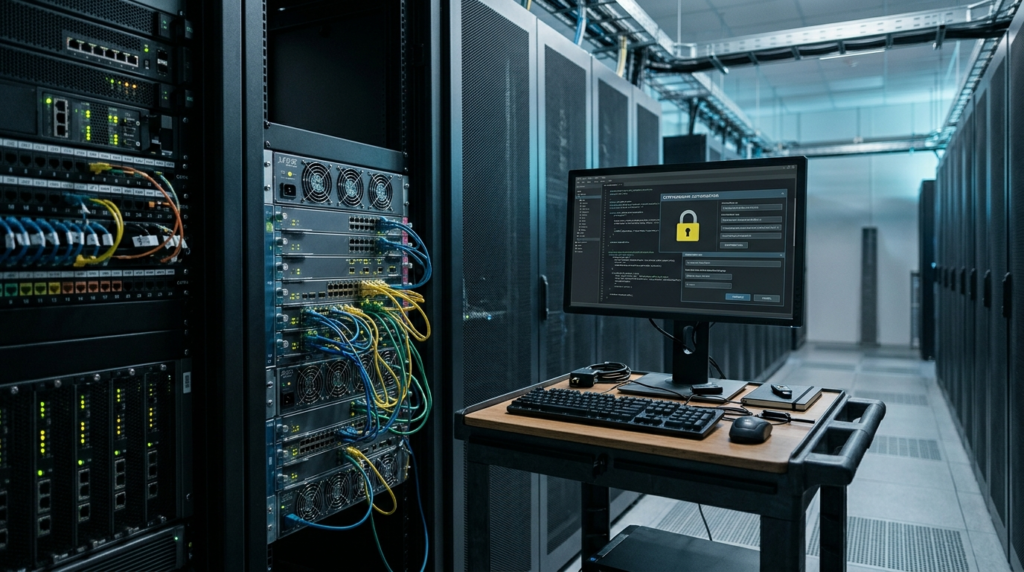
The primary purpose of a sandbox is to create a hard security boundary. Modern agent sandboxes typically utilize technologies like MicroVMs (e.g., Firecracker) or gVisor containers. These technologies provide kernel-level isolation, ensuring that the host machine remains completely insulated from the actions taken by the autonomous agent. Docker Sandboxes provide microVM-based isolation, allowing agents to install packages and run services safely. Without a sandbox, an agent with write access can inadvertently delete files (such as executing a devastating rm -rf command), modify system configurations, or compromise sensitive data.
Furthermore, agent autonomy must be constrained by an infrastructure that treats the agent as an untrusted process. Tools like E2B, Modal, Northflank, and Firecrawl provide secure, scalable environments for AI agent runtimes. By enforcing isolation at the runtime level, these platforms guarantee that even if an agent is subjected to a sophisticated prompt injection attack, the blast radius remains strictly confined to the disposable virtual environment. When an agent’s reasoning fails or it hallucinates a harmful task, a sandbox acts as a critical safety net.
Market Impact & Deployment Strategies
For Enterprise IT leaders, the financial and operational implications of unconstrained agents are staggering. A sandbox allows the agent to fail without causing real-world damage like wrecking production databases. Autonomous agents generating code at high speeds can overwhelm shared infrastructure, leading to severe resource exhaustion attacks and system downtime. By implementing ephemeral, disposable sandboxes, organizations ensure that agent workloads remain contained and do not interfere with neighboring sessions.
Deploying these sandboxes requires a fundamental shift in how organizations handle credentials and authentication. The traditional approach of storing long-lived API keys or SSH tokens in configuration files within the developer’s workspace is fundamentally incompatible with autonomous agents. Instead, developers must adopt a “capability over custody” model. Instead of giving agents permanent access, developers inject short-lived, task-specific tokens via a secure proxy. Network egress filtering restricts the agent’s ability to communicate externally and prevents the exfiltration of sensitive data to unauthorized third-party servers.
The integration of these sandboxes into existing workflows is gaining momentum across the industry. The Agent Sandbox project under Kubernetes SIG Apps provides a declarative API for managing stateful workloads at scale, integrating seamlessly into massive cloud infrastructure deployments. Sandboxes are designed to be spun up for a specific task and destroyed immediately afterward, ensuring a clean state for every execution and completely eliminating configuration drift.
The Consumer Translation
While the architectural details of MicroVMs and network egress filtering are highly technical, the consumer impact is straightforward and profound: absolute privacy and safety. As AI agents begin managing personal tasks—from analyzing local documents to booking travel and reading emails—they operate in close proximity to sensitive personal data, financial information, and private browser states. A single hallucination or malicious prompt injection could lead to a wiped hard drive or a stolen identity.
By confining these digital assistants within secure, ephemeral sandboxes, everyday users gain the benefits of extreme AI-driven productivity without facing existential digital risk. Think of it as giving a contractor a highly secure, self-contained workshop with only the specific tools they need for the day’s job, and a chaperone for any external deliveries. You would never hand a stranger the master keys to your entire home, and you should not grant an autonomous agent unrestricted access to your entire personal computer.
Frequently Asked Questions
Q1: Why are prompt-level guardrails insufficient for AI agents?
A1: Current security models cannot fully prevent prompt injection attacks or hallucinations. When an agent’s reasoning fails, prompt instructions are easily bypassed, making infrastructure-level hard boundaries essential.
Q2: What happens if an autonomous agent is not sandboxed?
A2: Without a sandbox, an agent with write access can inadvertently delete critical files, modify system configurations, compromise sensitive data, or overwhelm shared infrastructure.
Q3: How do modern AI agent sandboxes work?
A3: Modern sandboxes typically utilize MicroVMs like Firecracker or gVisor containers to create isolated, disposable environments with network egress filtering and resource constraints.
Q4: What is the “capability over custody” model for credentials?
A4: Instead of giving agents permanent access or storing secrets in readable files, developers inject short-lived, task-specific tokens via security proxies so the agent can act without possessing the actual credentials.
TechNode HQ Verdict: Pros, Cons & Usability
- Pro (Engineering): Ephemeral microVM isolation completely nullifies the local blast radius of prompt injections and hallucinated destructive commands, safeguarding production infrastructure.
- Pro (Consumer): Enables powerful local AI automation and delegation without risking personal data exfiltration or catastrophic file deletion.
- Con: Designing seamless, low-latency developer experiences within highly constrained sandboxes adds significant architectural overhead and complexity.
- Con: Sandboxes do not solve application-level governance; an agent with valid SaaS API permissions can still wreak havoc externally if business logic is flawed.
Enterprise Usability: CTOs and engineering directors must immediately mandate microVM or gVisor-backed sandboxes for all autonomous agent deployments. Relying on conversational prompt guardrails for security is organizational negligence.
Everyday Usability: Consumers and independent developers should demand strict sandbox guarantees from any local AI coding tool or autonomous agent before granting it execution rights on their personal machines.