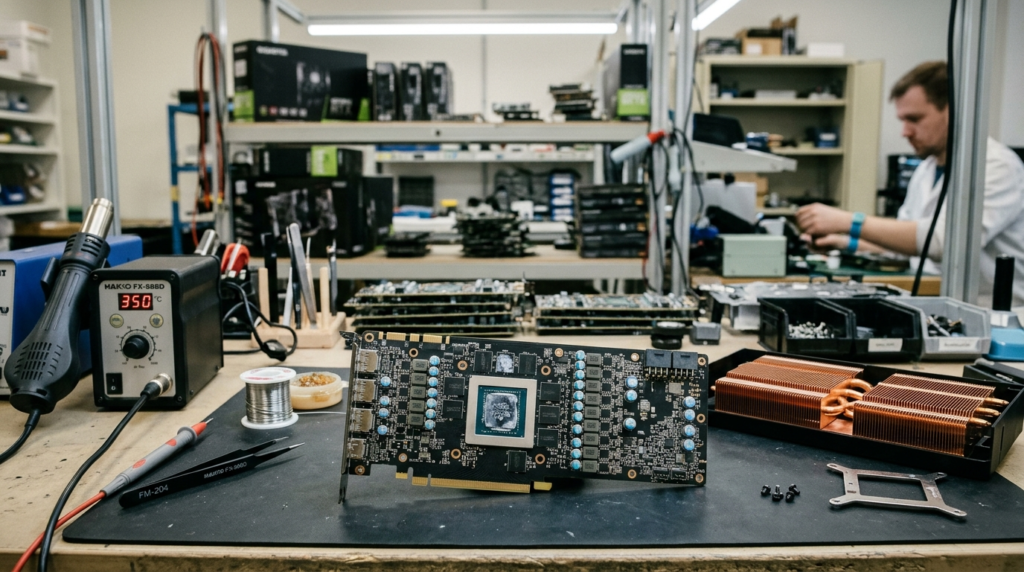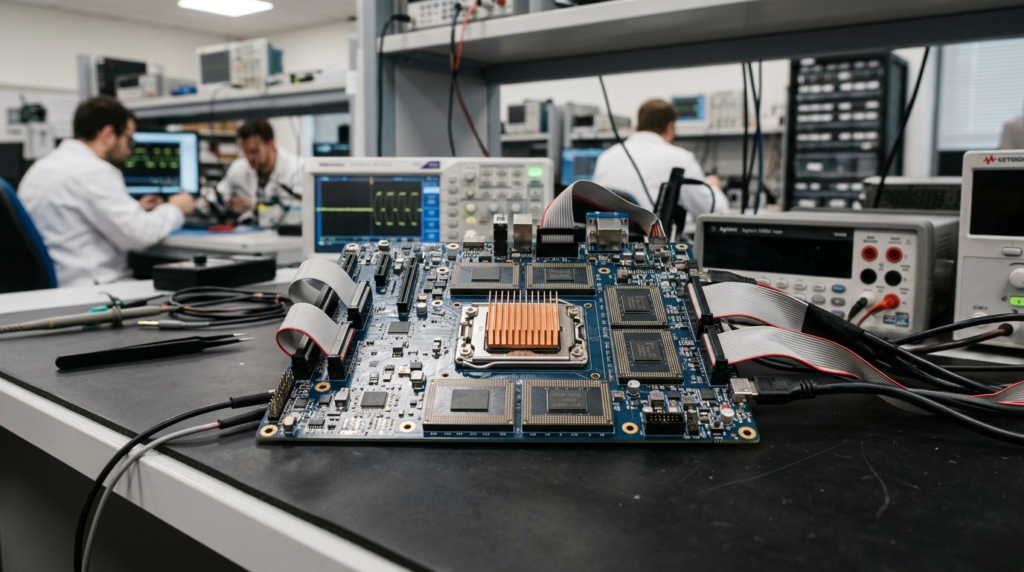
The artificial intelligence revolution is currently colliding with a fundamental law of physics and electrical engineering: the Memory Wall. For the past decade, the sheer computational horsepower of CPUs and GPUs has scaled at a blistering, exponential rate, vastly outpacing the speed at which data can be fed into those processors. You can build the most powerful AI accelerator on the planet, but if it spends the majority of its clock cycles idling—waiting for data to arrive from system memory—you are burning millions of dollars in electricity and infrastructure for zero tangible output. In the hyperscale data center industry, memory bandwidth and capacity have become the ultimate bottlenecks dictating the future of Large Language Models (LLMs), real-time inference, and Agentic AI.
Enter Micron Technology. In a watershed announcement that fundamentally rewrites the economics of enterprise infrastructure, Micron has officially begun sampling its monolithic 256GB DDR5 Registered Dual In-Line Memory Module (RDIMM) to key server ecosystem partners. Built on the bleeding-edge 1γ (1-gamma) DRAM technology node and utilizing advanced 3D Stacking (3DS) with Through-Silicon Vias (TSV), this module achieves a staggering 9,200 Megatransfers per second (MT/s). To put this into perspective, this represents a massive 40 percent performance leap over the 6,400 MT/s modules currently dominating mass production.
But raw speed is only half the equation. The true engineering marvel lies in its power efficiency. By consolidating capacity into a single 256GB module, Micron has reduced the operating power to 11.1 watts. Compared to running two 128GB modules at 9.7 watts each (19.4 watts total), this delivers a greater than 40 percent reduction in power consumption per 256GB of capacity. In an era where data centers are facing severe thermal constraints and power grid limitations, this is not just a marginal upgrade; it is a critical lifeline for the future of AI scalability. As Senior Enterprise Infrastructure Analysts, we must dissect exactly how Micron achieved this, what it means for Total Cost of Ownership (TCO), and how this silicon breakthrough will eventually ripple down to the everyday consumer.
The Architectural Shift
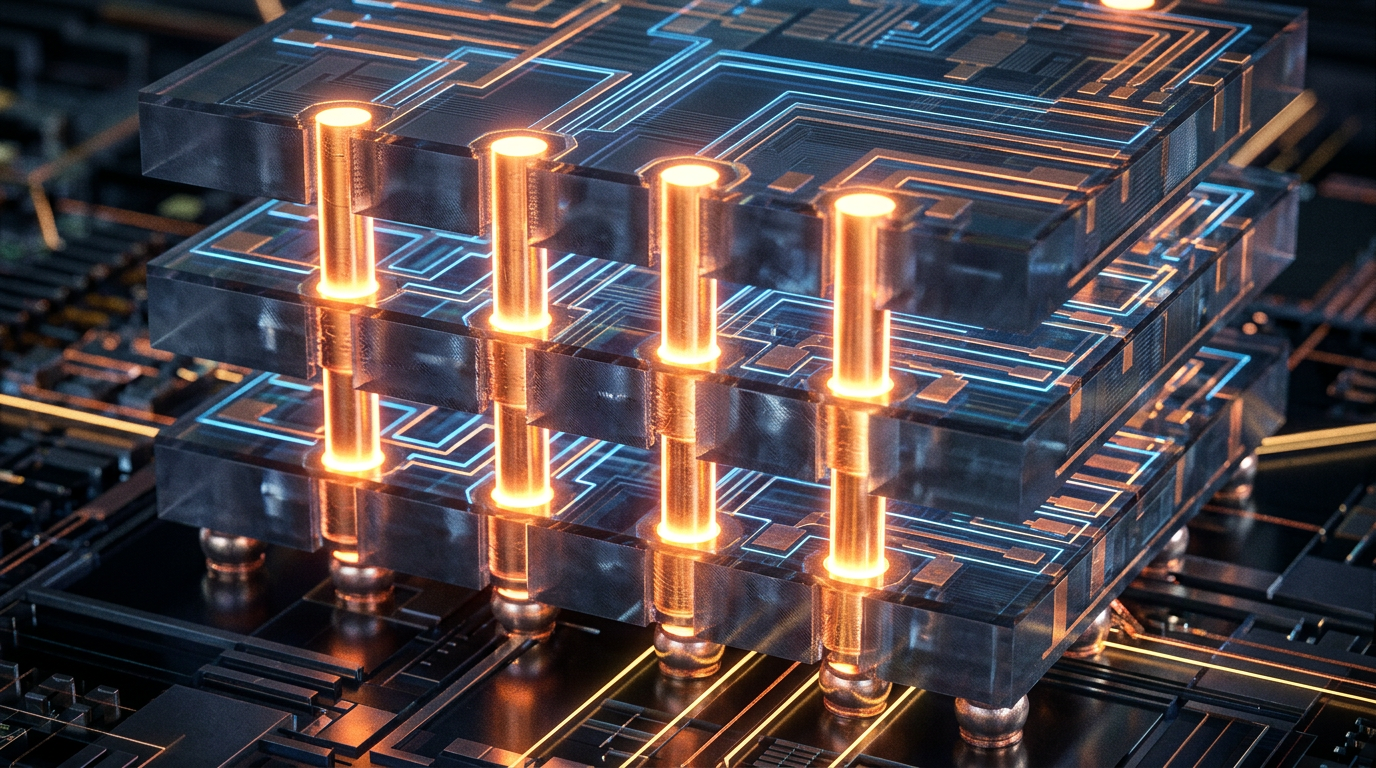
To truly understand the magnitude of Micron’s 256GB DDR5 RDIMM, we must look under the microscopic hood at the 1-gamma (1γ) manufacturing node. The DRAM industry has been fighting a grueling war against the laws of physics. As memory cells shrink, they become increasingly difficult to manufacture without severe electrical leakage and signal interference. The 1-gamma node represents Micron’s aggressive integration of Extreme Ultraviolet (EUV) lithography into DRAM production. EUV allows for incredibly precise patterning of silicon wafers, enabling Micron to pack more memory cells into a smaller physical footprint without compromising the structural integrity of the silicon. This density is the foundational bedrock that makes a 256GB module possible.
However, simply printing smaller transistors is not enough to hit 9,200 MT/s. At these extreme frequencies, signal integrity becomes a nightmare. Traditional memory manufacturing relies on wire bonding, where microscopic wires connect the memory dies to the substrate. At 9.2 Gigatransfers per second, these wires act like tiny antennas, creating parasitic capacitance, signal degradation, and cross-talk. The electrical signals literally begin to interfere with one another, causing data corruption and forcing the system to slow down to maintain stability.
Micron’s solution is the implementation of 3D Stacking (3DS) combined with Through-Silicon Vias (TSV). Instead of laying memory dies side-by-side or using long wire bonds, Micron stacks the silicon dies vertically. They then use lasers to drill microscopic holes directly through the silicon layers, filling them with conductive copper pillars (the TSVs). This creates the shortest possible electrical path between the memory cells and the controller. By drastically reducing the physical distance the data must travel, TSV technology minimizes electrical resistance and capacitance. This is the secret sauce that allows the module to sustain 9,200 MT/s without melting down or corrupting the data stream.
Furthermore, the architectural shift from a 2DPC (Two DIMMs Per Channel) configuration to a 1DPC (One DIMM Per Channel) configuration is a massive win for server motherboards. Modern server CPUs feature complex memory controllers that must manage the flow of data across multiple channels. When you populate a server with two 128GB sticks per channel to reach 256GB, you place an immense electrical load on the CPU’s memory controller. Often, to maintain stability under this heavy capacitive load, the server will automatically downclock the memory speed. By achieving 256GB on a single stick, Micron allows enterprise architects to populate servers in a 1DPC configuration. This relieves the electrical stress on the CPU, allowing the memory controller to run at its maximum rated speed, ensuring that the 9,200 MT/s bandwidth is actually realized in a production environment, rather than just existing on a spec sheet.
Enterprise Market Impact & TCO

For Chief Technology Officers (CTOs) and hyperscale data center architects at companies like AWS, Google Cloud, and Microsoft Azure, hardware procurement is dictated by a single, ruthless metric: Total Cost of Ownership (TCO). TCO encompasses not just the upfront capital expenditure (CapEx) of buying the hardware, but the operational expenditure (OpEx) of powering, cooling, and maintaining that hardware over a three to five-year lifecycle. Micron’s 256GB DDR5 RDIMM fundamentally alters the TCO math for AI infrastructure.
Let us run a hypothetical, yet highly realistic, enterprise calculation. Consider a hyperscale data center deploying 50,000 AI inference servers. Each server requires 3 Terabytes of system memory to hold massive Large Language Models entirely in RAM, preventing the system from having to fetch data from slower NVMe storage (a process that introduces crippling latency).
Using previous-generation technology, achieving 3TB requires twenty-four 128GB modules per server. At 9.7 watts per module, the memory alone consumes 232.8 watts per server. Across 50,000 servers, that is 11.64 Megawatts of power dedicated purely to system memory.
Now, let us deploy Micron’s new 256GB modules. To achieve the same 3TB capacity, the server only needs twelve 256GB modules. At 11.1 watts per module, the memory power draw drops to 133.2 watts per server. Across 50,000 servers, the total memory power draw plummets to 6.66 Megawatts. This represents a raw power saving of nearly 5 Megawatts.
But the savings do not stop at the wall socket. Data centers operate on a metric called Power Usage Effectiveness (PUE), which measures how much power is used for cooling and overhead versus actual computing. A typical modern data center has a PUE of around 1.3, meaning for every 1 watt of power consumed by the server, another 0.3 watts is required to cool it. By removing 5 Megawatts of heat from the server racks, the data center also saves 1.5 Megawatts in cooling costs. Over a four-year lifecycle, assuming an industrial electricity rate of $0.08 per kWh, this single architectural shift saves the hyperscaler tens of millions of dollars in operational costs, while simultaneously freeing up power grid capacity to install more GPUs.
Beyond power, the 40 percent increase in bandwidth (from 6,400 MT/s to 9,200 MT/s) directly impacts AI inference economics. In AI workloads, particularly LLMs, the speed at which the model generates text (tokens per second) is heavily bottlenecked by memory bandwidth. By increasing the bandwidth by 40 percent, the server can process more user queries per second. This means a cloud provider can serve more customers using the exact same number of servers, drastically increasing their revenue per square foot of data center space. The 256GB DDR5 RDIMM allows enterprises to maximize the utilization of their incredibly expensive high-core-count CPUs, ensuring that no compute cycle goes to waste.
The Consumer Reality: What This Means for You
It is easy to look at enterprise server hardware, buried in windowless data centers, and assume it has no bearing on the daily life of the average consumer. You will never buy a 256GB DDR5 RDIMM for your home PC. However, in the era of cloud computing and AI, enterprise infrastructure is the invisible engine that powers your digital existence. The breakthroughs achieved by Micron will have a profound, trickle-down impact on the technology you use every single day.
The most immediate consumer impact will be felt in the realm of AI responsiveness. When you type a prompt into ChatGPT, Claude, or a generative AI image creator, you are experiencing a metric known as Time-to-First-Token (TTFT). This is the agonizing pause between hitting “enter” and the AI beginning to type its response. That pause is largely dictated by the time it takes the data center to load the massive neural network weights from storage into system memory, and then push that data through the processors. By increasing memory bandwidth to 9,200 MT/s and doubling the capacity per slot, Micron is effectively widening the highway. For the consumer, this translates to near-instantaneous AI responses. The “thinking” pause will vanish, making interactions with AI feel as fluid and immediate as talking to a human being.
Furthermore, this hardware enables the rise of “Agentic AI.” Current AI models are largely reactive; you ask a question, they answer. Agentic AI refers to autonomous digital agents that run continuously in the background, managing your schedule, booking flights, filtering emails, and executing complex, multi-step tasks without constant prompting. Because Agentic AI requires continuous, real-time inference, it is incredibly computationally expensive. If cloud providers had to run Agentic AI on older, power-hungry memory, the subscription costs for consumers would be astronomical—potentially hundreds of dollars a month. Micron’s massive reduction in power consumption and increase in server density drives down the cost of compute. This democratization of AI infrastructure means that highly advanced, personalized AI agents will become affordable for the general public, bundled into standard smartphone or software subscriptions rather than reserved for elite enterprise clients.
Finally, this technology impacts real-time translation and augmented reality. Imagine wearing smart glasses that translate spoken language in real-time, overlaying subtitles onto your vision. For this to work without inducing motion sickness or cognitive dissonance, the latency must be virtually zero. The heavy lifting for these tasks is often offloaded to edge servers and cloud infrastructure. The 9,200 MT/s bandwidth ensures that the massive datasets required for real-time, context-aware translation can be processed without bottlenecking, seamlessly bridging language barriers for travelers and global businesses.
The Industry Ripple Effect
Micron’s announcement is a shot across the bow of the entire semiconductor industry, forcing immediate strategic pivots from its primary rivals, Samsung and SK Hynix. The memory market is a brutal, high-stakes oligopoly, and Micron has just set a new benchmark that competitors must now scramble to match or exceed.
Historically, the industry assumed that pushing DDR5 beyond 7,200 or 8,000 MT/s would be too electrically unstable, and that the market would need to wait for the DDR6 standard to achieve speeds approaching 9,000 MT/s. By proving that 9,200 MT/s is viable on the DDR5 standard using 1-gamma EUV and 3DS TSV packaging, Micron has extended the lifecycle of the DDR5 generation. This forces motherboard manufacturers, CPU designers (like AMD with their EPYC line and Intel with their Xeon line), and rival memory makers to recalibrate their roadmaps. Competitors must now accelerate their own EUV integration and 3D stacking technologies just to maintain parity, likely triggering a price war in the enterprise memory sector over the next 24 months.
Additionally, this development reshapes the dynamic between High Bandwidth Memory (HBM) and standard DDR5. Currently, AI training is entirely dominated by GPUs utilizing ultra-expensive, on-package HBM (like HBM3e). However, AI inference—the act of running the model after it has been trained—does not always require the extreme cost and complexity of HBM. As DDR5 speeds approach 10,000 MT/s and capacities hit 256GB per stick, it becomes increasingly viable to run massive AI inference workloads directly on high-core-count CPUs rather than expensive GPUs. This gives hyperscalers more architectural flexibility. They can reserve their precious, supply-constrained GPUs for training new models, while offloading the daily, consumer-facing inference tasks to CPU clusters armed with Micron’s ultra-fast DDR5. This shift could alleviate some of the current GPU supply chain bottlenecks that are strangling the AI industry.
TechNode HQ Verdict: Pros, Cons & Usability
- Pro (Engineering): The integration of 3DS and TSV packaging on the 1-gamma node successfully mitigates parasitic capacitance, allowing an unprecedented 9,200 MT/s on the DDR5 standard, effectively extending the lifecycle of current server architectures.
- Pro (Consumer): Drastically reduces Time-to-First-Token (TTFT) latency in cloud-based AI applications, paving the way for affordable, real-time Agentic AI and instantaneous voice assistants.
- Con: While 11.1 watts is a 40% improvement in power efficiency per gigabyte, a fully populated 1DPC server will still generate immense localized heat, necessitating advanced cold-plate liquid cooling infrastructure that many legacy data centers lack.
- Con: As a “sampling” product, volume manufacturing yields on the 1-gamma EUV node remain unproven at scale, potentially leading to severe supply constraints and high initial CapEx premiums upon general availability.
Enterprise Usability: For CTOs and data center architects, this is a mandatory roadmap inclusion. If you are currently designing infrastructure for deployment in late 2026 or 2027, you must design your thermal and power envelopes around 256GB 1DPC configurations. The TCO benefits in power reduction and the 40% bandwidth uplift for LLM inference make legacy 128GB 2DPC deployments economically obsolete for high-performance AI clusters. Begin platform validation with your OEM partners immediately.
Everyday Usability: The general public cannot and should not attempt to purchase this hardware. It is strictly designed for enterprise server motherboards. However, consumers should expect to see the benefits of this technology within 12 to 18 months of its mass deployment, manifesting as cheaper AI subscription tiers, smarter smartphone assistants, and the elimination of wait times in generative AI applications.
Sources & Citations:
Original Technical Breakdown via: investors
Official Handle: @investors
Topics Explored: Micron 256GB DDR5, 1-Gamma DRAM, AI Data Centers, TSV Packaging, Enterprise Server RAM