The Architectural Shift: Solving the “AI Paradox”
The enterprise technology sector is currently wrestling with a multi-billion-dollar dilemma known as the “AI Paradox.” Organizations are pouring unprecedented capital into acquiring massive clusters of high-performance GPUs, only to watch these silicon behemoths sit idle, starved for data. As artificial intelligence initiatives scale from experimental pilots to full-blown production environments, a harsh reality has emerged: the primary bottleneck in modern AI is no longer compute power. It is the network.
In scale-out AI architectures, training a Large Language Model (LLM) requires tens of thousands of GPUs to work in perfect, synchronized harmony. During a single training iteration, GPUs must share their calculated weights and gradients across the network in a process known as “All-Reduce.” If the underlying network fabric cannot keep pace with the massive, bursty demands of these synchronized data transfers, the GPUs stall. This idle time causes Job Completion Time (JCT) to spike, effectively burning millions of dollars in wasted compute cycles and electricity.
To combat this, Cisco and AMD have forged a strategic alliance, engineering a validated, end-to-end AI infrastructure designed to eliminate network bottlenecks and transform the fabric into a high-performance engine. This architecture represents a masterclass in deterministic networking, moving away from proprietary interconnects and pushing the boundaries of what Ethernet can achieve in high-performance computing (HPC).
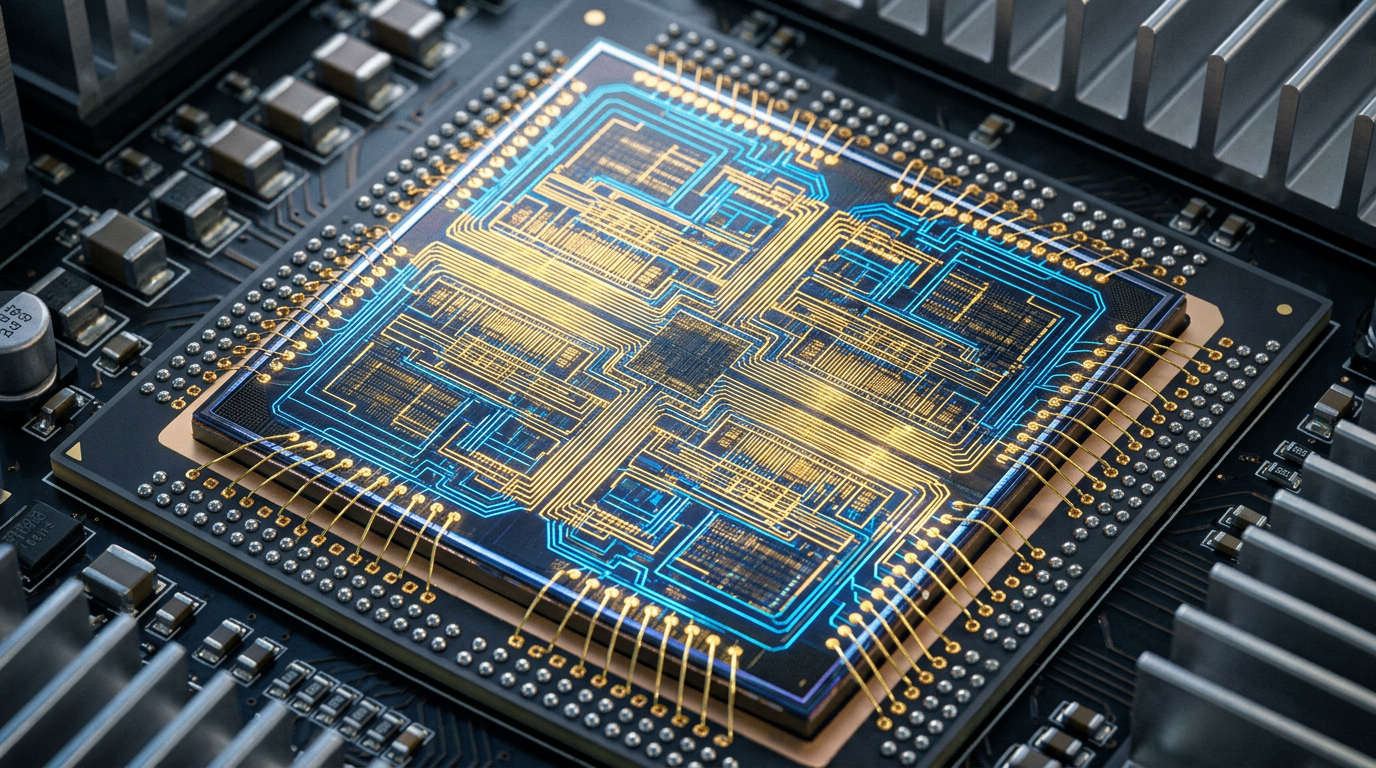
At the heart of this reference architecture lies a formidable hardware stack. The compute layer is powered by AMD Instinct™ MI300X Series GPUs, paired with AMD Pensando™ Pollara 400 Network Interface Cards (NICs). The networking layer is driven by Cisco N9000 Series Switches—specifically the N9364E-SG2, powered by the Cisco Silicon One G200 ASIC. This switch delivers a staggering 51.2 Terabits per second (Tbps) of throughput, featuring 64 ports of 800 Gigabit Ethernet (GbE), connected via Cisco 800G OSFP optics. Tying it all together is the AMD ROCm™ software ecosystem and Cisco Nexus Dashboard, providing granular, real-time visibility for Day-0 through Day-N operations.
To prove the efficacy of this stack, Cisco and AMD subjected it to rigorous benchmarking using two distinct Clos network topologies. The first, a 2×2 Clos topology (2 leaf switches, 2 spine switches), was designed to fully subscribe each leaf switch, forcing the hardware into high-congestion states to test sheer fabric resilience. The second, a 4×2 Clos topology (4 leaf switches, 2 spine switches), focused on evaluating advanced load-balancing techniques and efficient load distribution during synchronous bursts across the scale-out fabric. Both setups utilized 128 AMD MI300X GPUs and 128 AMD Pensando Pollara 400G NICs.
The benchmarking relied heavily on IBPerf to measure Remote Direct Memory Access (RDMA) performance. In AI workloads, traditional TCP/IP networking introduces far too much CPU overhead and latency. RDMA over Converged Ethernet (RoCE) allows GPUs to bypass the CPU and write data directly to the memory of a remote GPU. However, RoCE is highly sensitive to packet loss. Therefore, the critical metrics in these tests were the P01 (1st percentile) and P99 (99th percentile) bandwidths.
P01 represents the throughput of the slowest session, while P99 represents the fastest. Because AI training is synchronous, the entire cluster can only move as fast as the slowest packet—a phenomenon known as tail latency. In single-hop, bisectional, and extreme 31:1 incast congestion tests (where 31 GPUs simultaneously blast data to a single GPU), the Cisco-AMD architecture maintained a remarkably tight delta between P01 and P99. Both metrics hovered near the theoretical link limit of 400 Gbps. This proves that the Cisco Silicon One G200’s buffer management and the Pollara NIC’s congestion control algorithms (like Explicit Congestion Notification and Data Center Quantized Congestion Notification) can handle the worst-case communication patterns of modern AI without dropping packets.
Enterprise Market Impact & TCO

For Chief Information Officers (CIOs) and enterprise infrastructure architects, the implications of these benchmarks extend far beyond technical bragging rights; they fundamentally alter the Total Cost of Ownership (TCO) equations for AI deployments. The financial stakes in AI infrastructure are astronomical. A cluster of 10,000 GPUs can easily cost hundreds of millions of dollars in hardware alone, not factoring in the massive power and cooling requirements.
When a network fabric is inefficient, it directly impacts Job Completion Time (JCT). If network congestion causes a 15% stall rate across a GPU cluster, that equates to a 15% loss on a multi-hundred-million-dollar investment. Furthermore, it means data science teams are waiting longer to iterate on models, delaying time-to-market for critical AI products. By delivering deterministic, near-line-rate performance under heavy incast congestion, the Cisco-AMD architecture ensures that GPUs are constantly fed with data, maximizing utilization rates and driving down the effective cost per training run.
The validation of this architecture is further cemented by industry-standard MLPerf benchmarks. MLPerf, governed by MLCommons, provides a level playing field for evaluating AI infrastructure by enforcing strict guidelines on models and datasets. In these tests, the Cisco-AMD stack demonstrated exceptional throughput scaling for Llama 2 70B inference workloads as the configuration expanded from two to four nodes. Furthermore, training benchmarks for Llama 2 70B and Llama 3.1 8B showcased the architecture’s ability to handle the rigorous demands of modern generative AI models.
Deploying such complex infrastructure is only half the battle; operating it at scale is where many enterprises falter. This is where Cisco’s Nexus Dashboard becomes a critical component of the TCO narrative. In a scale-out fabric with thousands of 800G optical links, a single degraded optic or misconfigured queue pair can silently bottleneck an entire training job. Nexus Dashboard provides the real-time telemetry and granular visibility required to identify and remediate these micro-bursts and congestion events before they impact JCT. This operational intelligence reduces the burden on IT staff and minimizes downtime.
The real-world viability of this architecture is already being proven in the field. G42, a leading AI and cloud computing company, has deployed this exact end-to-end solution—integrating AMD GPUs, Cisco UCS servers, N9000 800G switches, and Nexus Dashboard—to power its large-scale AI clusters. As Yousuf Khan, Corporate Vice President of the Networking Technology and Solutions Group at AMD, noted, the fully programmable, fault-resilient design of the Pensando Pollara 400 AI NIC is advancing Ethernet to the next level, maximizing GPU utilization in production environments.
The Consumer Reality: What This Means for You
To the average consumer, discussions about 800G OSFP optics, Clos topologies, and RDMA incast congestion sound like an alien language. However, the downstream effects of this enterprise infrastructure war directly dictate the future of the technology you use every day. The smartphone in your pocket, the autonomous features in your car, and the generative AI tools you use for work are all inextricably linked to the efficiency of these massive data center fabrics.
Consider the rapid evolution of generative AI. When OpenAI, Google, or Meta train their next-generation frontier models—models that will eventually power the next iteration of ChatGPT, Gemini, or Meta AI—they require months of continuous compute time on clusters of tens of thousands of GPUs. If the network fabric connecting those GPUs is inefficient, the training process takes longer and costs exponentially more. These exorbitant training costs are eventually passed down to the consumer in the form of higher subscription fees for premium AI tiers, or stricter rate limits on free tiers.
By solving the AI network bottleneck, Cisco and AMD are effectively lowering the barrier to entry for AI development. When training becomes faster and cheaper, AI companies can iterate more rapidly. This means consumers will see faster rollouts of smarter, more capable AI models. It accelerates the development of multimodal AI—systems that can seamlessly understand and generate text, audio, and high-definition video in real-time. Real-time video generation, for instance, requires massive backend inference scaling. The MLPerf inference results demonstrating linear scaling on the Cisco-AMD stack directly translate to lower latency when you ask an AI to generate a video or analyze a live camera feed.
Furthermore, driving down the cost of AI compute allows open-source communities to thrive. As the infrastructure becomes more efficient, smaller research labs and open-source developers can afford to train highly capable models. This democratization of AI ensures that consumers aren’t locked into a single ecosystem, fostering competition that leads to better, more privacy-focused, and highly personalized AI assistants running locally on consumer hardware.
The Industry Ripple Effect
The publication of these benchmarks by Cisco and AMD is not just a technical showcase; it is a highly calculated shot across the bow of Nvidia. For the past several years, Nvidia has maintained a near-monopoly on AI infrastructure, not just through its dominant GPUs, but through its proprietary InfiniBand networking fabric. InfiniBand has long been the gold standard for high-performance, low-latency GPU interconnects, creating a walled garden that forces enterprises to buy the entire Nvidia stack.
Cisco and AMD are championing a different path: the democratization of AI networking through Ethernet. Historically, Ethernet was viewed as too “lossy” and high-latency for synchronous AI training. However, with the advent of 800G switches powered by massive ASICs like the Silicon One G200, and intelligent endpoints like the Pensando Pollara NIC, Ethernet has evolved. It can now deliver the deterministic, lossless performance previously reserved for InfiniBand, but with the added benefits of Ethernet’s ubiquity, massive vendor ecosystem, and familiar operational tooling.
This shift is part of a broader industry movement, heavily aligned with the goals of the Ultra Ethernet Consortium (UEC), which seeks to optimize Ethernet specifically for AI and HPC workloads. By proving that an open ecosystem—combining AMD compute, Cisco networking, and standard Ethernet protocols—can deliver top-tier MLPerf results and handle extreme 31:1 incast congestion, the alliance is giving enterprise CIOs a viable alternative to vendor lock-in.
This forces competitors to react. Nvidia is already pushing its own Ethernet solution, Spectrum-X, to hedge against the industry’s desire for open standards. Meanwhile, other silicon giants like Broadcom are accelerating their own switch ASIC roadmaps (like the Tomahawk 5) to compete with Cisco’s Silicon One. The ultimate winner of this infrastructure war will be the enterprise, as fierce competition drives rapid innovation in bandwidth, power efficiency, and cost reduction across the entire AI hardware stack.
TechNode HQ Verdict: Pros, Cons & Usability
- Pro (Engineering): The architecture delivers exceptionally tight deltas between P01 and P99 bandwidth under extreme 31:1 incast congestion, proving that Cisco’s Silicon One G200 and AMD’s Pollara NIC can maintain deterministic, near-400Gbps line-rate performance without the packet loss that traditionally plagues Ethernet in AI workloads.
- Pro (Consumer): By drastically reducing Job Completion Time (JCT) and maximizing GPU utilization, this infrastructure lowers the cost of training and running AI models, paving the way for cheaper, faster, and more advanced consumer AI applications and real-time multimodal tools.
- Con: The benchmarking data presented focuses on a relatively small cluster of 128 GPUs. Scaling this architecture to the 32,000+ GPU clusters required by modern hyperscalers introduces exponential complexities in optics management, power draw, and multi-tier spine congestion that a 4×2 Clos topology does not fully capture.
- Con: Deploying 800G OSFP optics and high-density MI300X servers requires massive overhauls to data center power and liquid cooling infrastructure, presenting a severe CapEx hurdle for enterprises attempting to retrofit legacy facilities.
Enterprise Usability: For CTOs and infrastructure architects looking to break free from proprietary InfiniBand lock-in, the Cisco-AMD validated design is a highly viable, production-ready blueprint. Organizations should leverage Cisco Nexus Dashboard immediately to ensure Day-2 operational visibility, as the sensitivity of RoCEv2 demands flawless configuration of queue pairs and congestion control parameters.
Everyday Usability: While consumers cannot purchase this enterprise hardware, they should actively monitor the downstream effects. As hyperscalers and cloud providers adopt these efficient Ethernet fabrics, expect to see a drop in API pricing for developers and an increase in the speed and capabilities of consumer-facing AI applications over the next 12 to 18 months.
Sources & Citations:
Original Technical Breakdown via: blogs
Official Handle: @blogs
Topics Explored: AI Networking, Cisco N9000, AMD MI300X, GPU Clusters, Scale-Out Fabric