The Architectural Shift: Engineering the $119 Billion Terafab
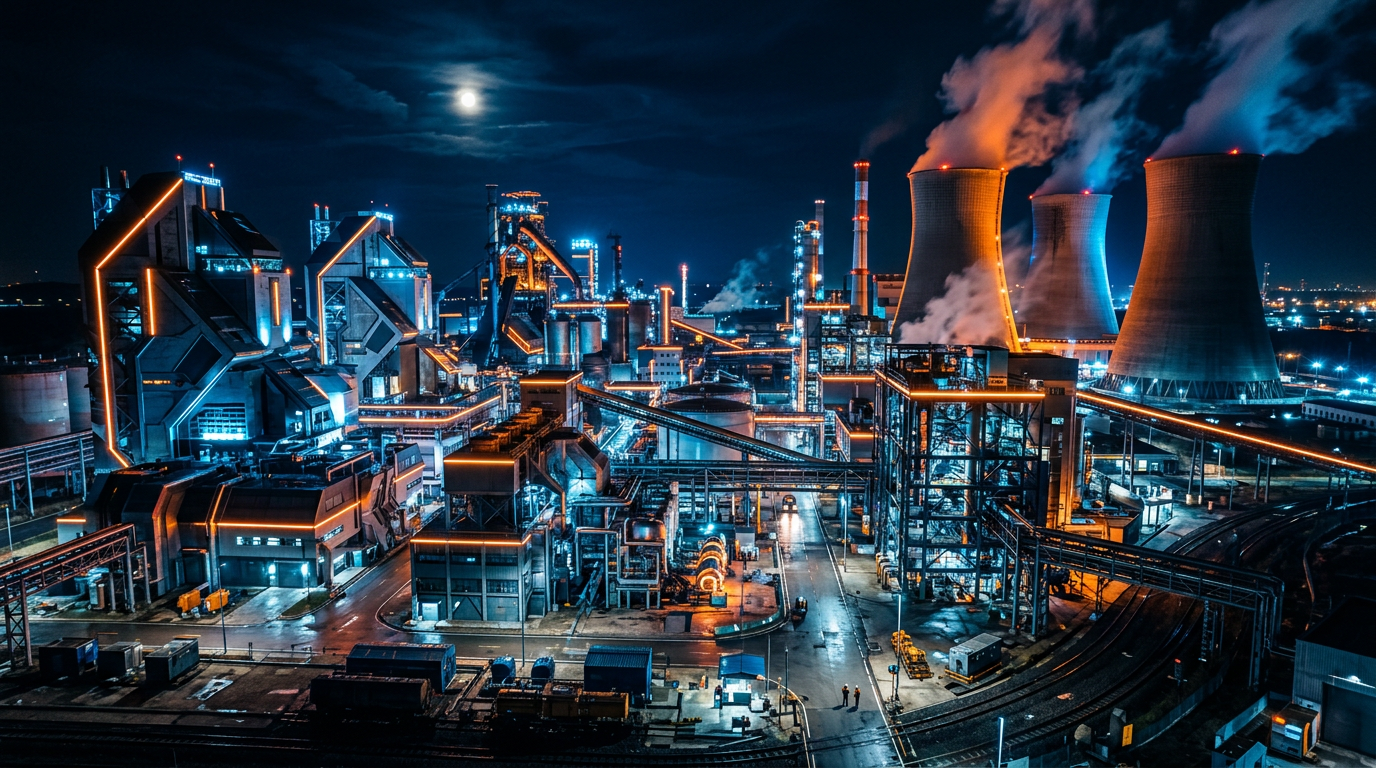
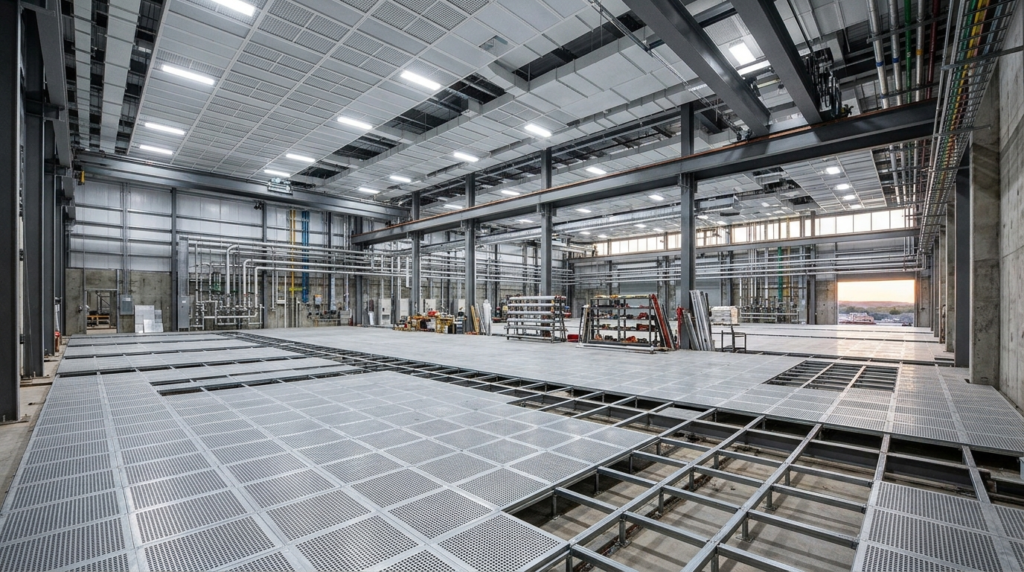
The semiconductor industry is no stranger to astronomical capital expenditures, but the latest proposal from the newly merged SpaceX and xAI conglomerate threatens to rewrite the fundamental economics of silicon fabrication. Valued at a staggering $1.25 trillion ahead of its highly anticipated June 2026 IPO, the combined entity is preparing to break ground on “Terafab,” a multi-phase, vertically integrated semiconductor manufacturing facility in Grimes County, Texas. With an initial commitment of $55 billion and a projected total expenditure of $119 billion, Terafab is not merely a factory; it is a declaration of independence from the terrestrial supply chains that have bottlenecked the artificial intelligence revolution.
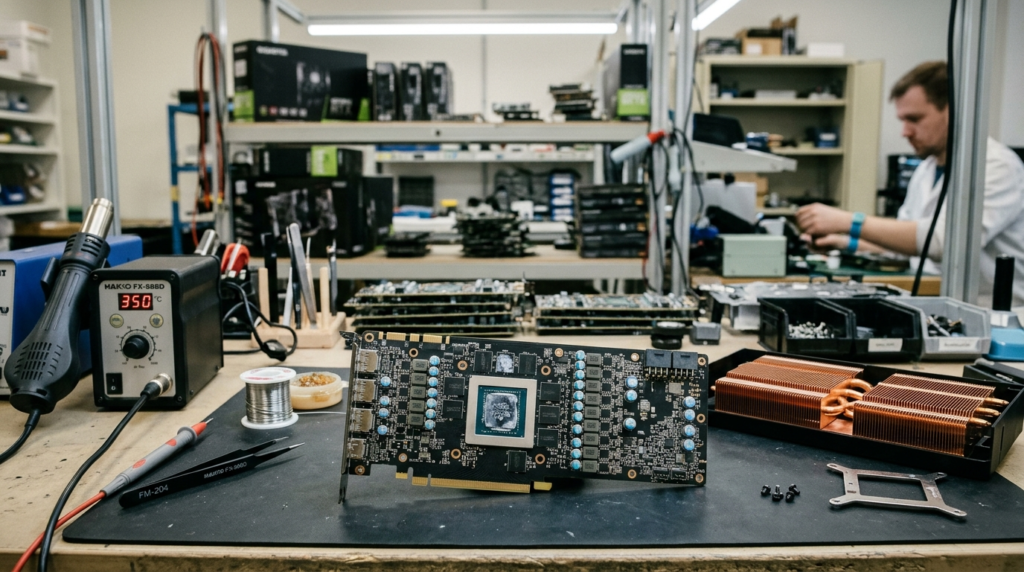
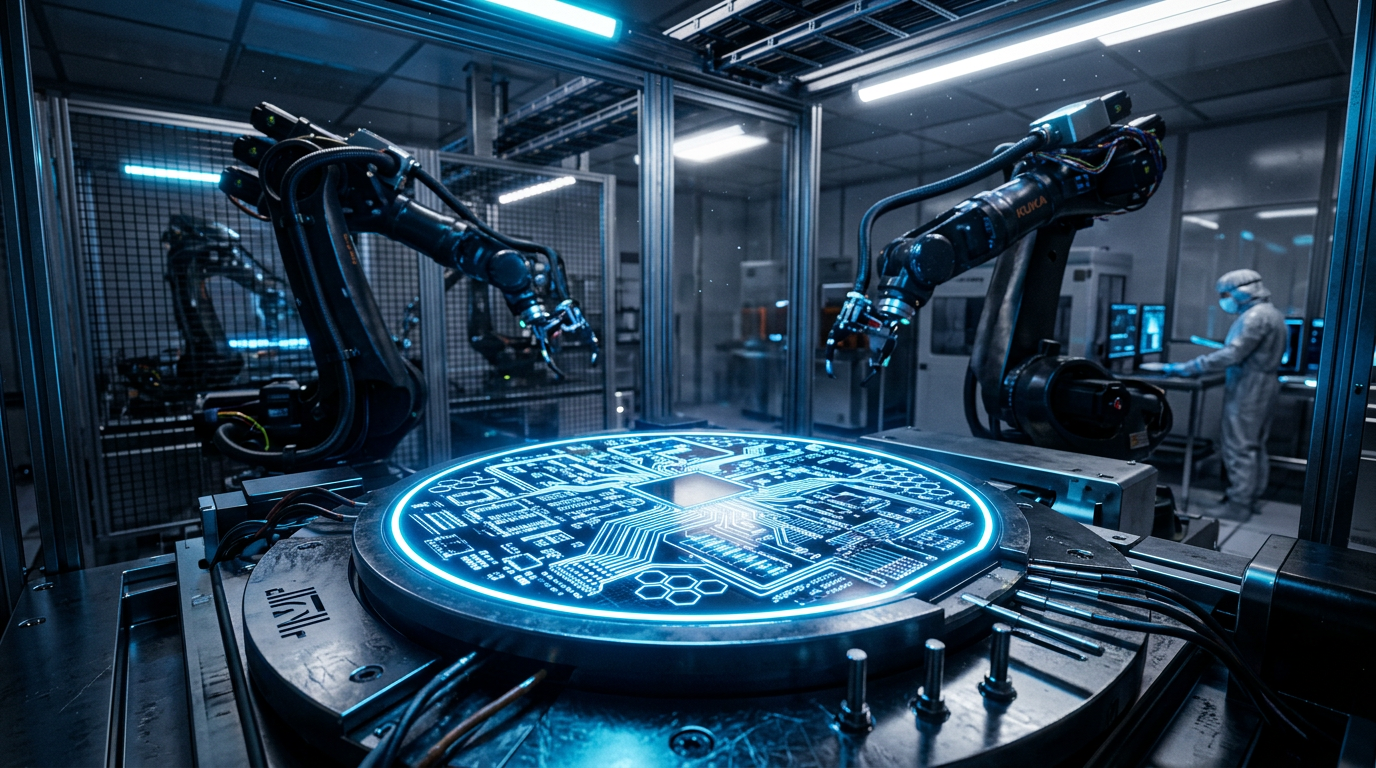
To understand the architectural magnitude of Terafab, one must look past the sheer dollar amount and examine the proposed technological stack. A $119 billion investment dwarfs the capital expenditures of traditional fabrication giants. For context, TSMC’s landmark investments in Arizona hovered around the $40 billion mark for two fabs. Terafab’s budget implies a sprawling, multi-node mega-campus equipped with dozens of ASML’s next-generation High-NA (High Numerical Aperture) Extreme Ultraviolet (EUV) lithography machines. These machines, which cost upwards of $350 million each, are required to print the sub-2-nanometer transistors necessary for the next generation of AI compute.
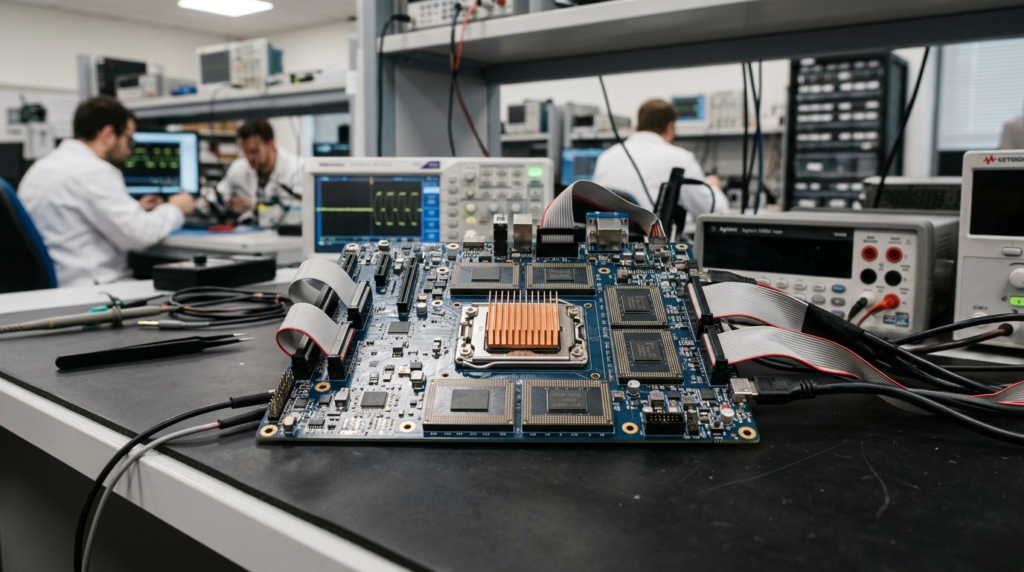
However, SpaceX is not undertaking this monumental task in isolation. The strategic inclusion of Intel into the Terafab consortium is a masterstroke of risk mitigation. Intel, leveraging its Intel Foundry Services (IFS) division, brings decades of yield-management expertise, advanced packaging technologies like Foveros and EMIB (Embedded Multi-die Interconnect Bridge), and crucial intellectual property regarding high-performance logic nodes. By roping in Intel, Musk is effectively bypassing the steepest parts of the semiconductor learning curve. Intel provides the foundational lithography and packaging expertise, while Tesla and xAI provide the bespoke silicon architectures optimized specifically for autonomous robotics and large language model (LLM) training.
The most radical architectural shift, however, lies in the facility’s ultimate deployment target: space. Terafab is explicitly designed to manufacture chips for SpaceX’s proposed orbital data centers. Terrestrial silicon is not built to survive the harsh realities of Low Earth Orbit (LEO). Chips operating outside the protection of Earth’s atmosphere are subjected to intense cosmic radiation, leading to Single Event Upsets (SEUs)—bit flips that can crash servers or corrupt AI training runs. Terafab will likely pioneer mass-produced, radiation-hardened (rad-hard) AI accelerators. This requires specialized silicon-on-insulator (SOI) wafers, redundant logic gates, and advanced Error Correcting Code (ECC) memory architectures integrated directly into the silicon die. Furthermore, thermal dissipation in the vacuum of space cannot rely on traditional evaporative cooling or forced air. Terafab’s chips will require novel packaging solutions designed to interface directly with massive, liquid-cooled radiative panels deployed via Starship.
Musk’s assertion that the facility will eventually manufacture enough chips to “provide 1 terawatt of power per year” is a metric that demands intense scrutiny. While ambiguously phrased, in the context of semiconductor manufacturing, this likely refers to the total power consumption footprint or the equivalent compute capacity of the chips produced annually. To put 1 terawatt (1,000 gigawatts) into perspective, it is roughly equivalent to the total electricity generation capacity of the entire United States. If Terafab is producing enough AI accelerators to draw 1 terawatt of power, we are looking at the deployment of exascale and zettascale compute clusters on a scale that terrestrial energy grids simply cannot support. This necessitates the move to space, where orbital data centers can harvest unmitigated solar energy 24/7, bypassing the crippling energy constraints currently plaguing Silicon Valley.
Enterprise Market Impact & Total Cost of Ownership (TCO)
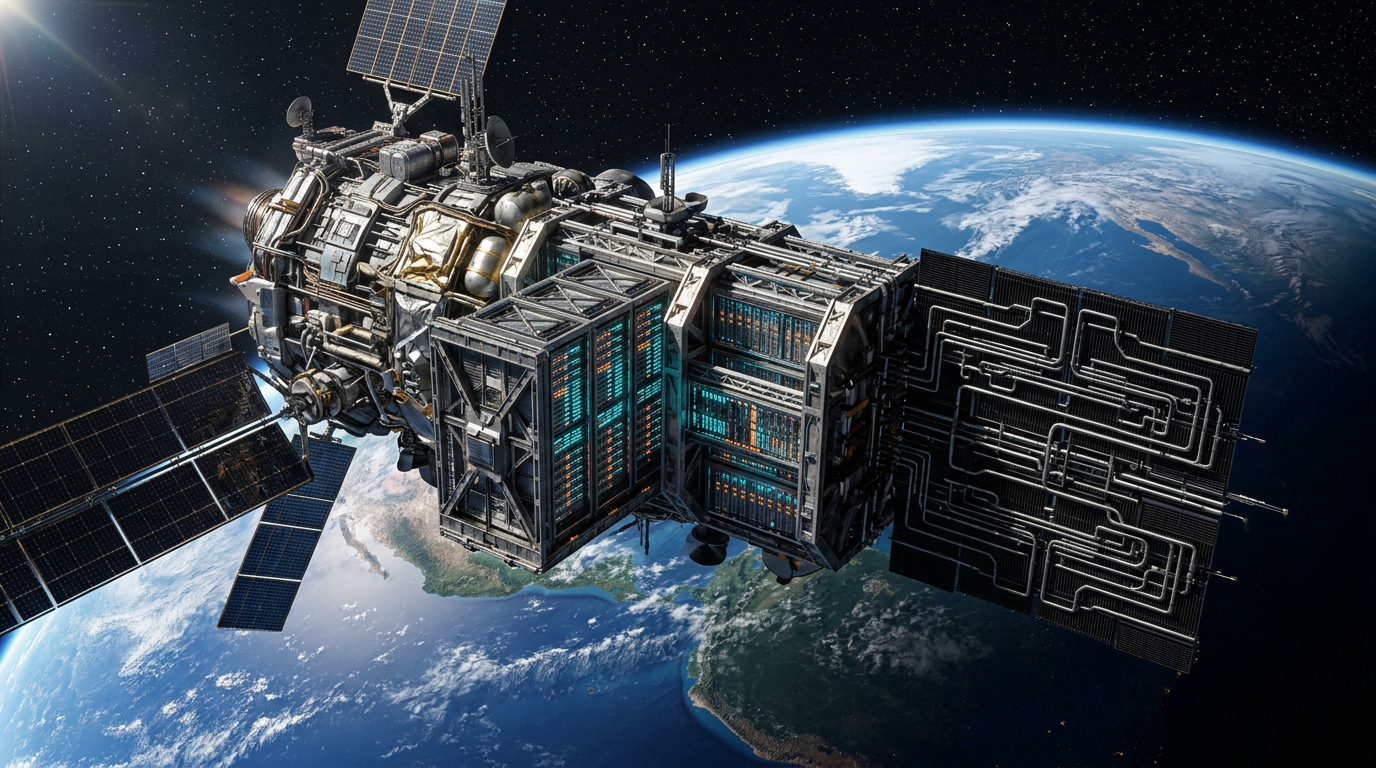
For Chief Technology Officers, enterprise infrastructure analysts, and hyperscale cloud providers, the Terafab initiative represents a seismic disruption to the established Total Cost of Ownership (TCO) models. For the past decade, the enterprise AI market has been held hostage by a rigid duopoly: Nvidia designs the chips, and TSMC manufactures them. This bottleneck has resulted in exorbitant hardware costs, massive lead times, and a complete lack of leverage for enterprise buyers. SpaceX’s $119 billion vertical integration strategy is a direct assault on this paradigm.
By bringing design, fabrication, and deployment under a single corporate umbrella, the SpaceX/xAI/Tesla triad is creating a closed-loop silicon ecosystem. Tesla contributes its Dojo supercomputing architecture and autonomous vehicle inference needs; xAI drives the demand for massive, parallelized training clusters for its Grok models; and SpaceX provides the launch logistics and orbital infrastructure. This vertical integration drastically reduces the TCO for Musk’s companies. They no longer have to pay Nvidia’s staggering 70% gross margins, nor do they have to compete with Apple and AMD for TSMC’s limited wafer allocations.
The enterprise market impact extends far beyond Musk’s internal ecosystem. The recent $5.5 billion IPO of Cerebras Systems—a company famous for its wafer-scale AI engines—proves that the broader market is desperately hungry for viable alternatives to the Nvidia standard. If Terafab achieves its production goals, it could eventually open its foundry services or sell its bespoke AI accelerators to third-party enterprise clients. A sudden influx of high-performance, competitively priced AI compute could crash the inflated prices of current-generation GPUs, forcing a massive market correction.
Furthermore, the concept of space-based data centers fundamentally alters the OPEX (Operating Expenses) calculations for enterprise IT. Currently, terrestrial data centers are facing an existential energy crisis. As noted in recent industry reports, Silicon Valley and other major tech hubs are struggling to secure enough power from local grids to support the next generation of AI supercomputers. The cost of electricity, coupled with the millions of gallons of water required for cooling, is driving terrestrial TCO to unsustainable heights.
SpaceX’s orbital data centers offer a radical alternative. While the initial CAPEX (Capital Expenditure) of launching server racks into orbit via Starship is high, the long-term OPEX is theoretically much lower. In orbit, solar energy is abundant, continuous, and free. Cooling, while engineering-intensive, relies on passive radiation into the infinite heat sink of space rather than expensive, resource-heavy terrestrial HVAC systems. If SpaceX can successfully commercialize orbital compute, enterprise clients could lease space-based AI clusters, entirely bypassing terrestrial energy grid limitations, local zoning laws, and environmental regulations regarding water usage. This creates a bifurcated market: traditional, latency-sensitive edge compute on Earth, and massive, asynchronous AI training workloads processed in the silent vacuum of orbit.
The Consumer Reality: What This Means for You
While $119 billion mega-fabs and orbital server clusters sound like the domain of science fiction, the downstream effects of Terafab will fundamentally alter the daily lives of everyday consumers. The primary bottleneck to achieving Artificial General Intelligence (AGI) and ubiquitous, seamless automation is no longer software; it is raw, unadulterated compute power. Terafab is the brute-force solution to this bottleneck.
For the average consumer, the most immediate impact will be felt through the evolution of xAI’s Grok. Currently, large language models are constrained by the inference costs associated with terrestrial data centers. Every query you send to an AI requires a fraction of a highly expensive GPU’s time. By manufacturing its own silicon at an unprecedented scale, xAI can drive the cost of inference down to near zero. This means Grok will transition from a chatbot accessed via a screen into an ambient, omnipresent intelligence integrated into every digital interaction. Imagine a personal AI assistant that doesn’t just answer questions, but actively processes your entire digital life in real-time, unconstrained by server limits or subscription tiers.
Furthermore, Terafab is the missing link for Tesla’s autonomous ambitions. Full Self-Driving (FSD) and the Optimus humanoid robot require massive amounts of edge compute—processing power located directly on the device. However, there is a limit to how much silicon you can pack into a car or a robot before power consumption and heat become unmanageable. Terafab’s advanced packaging and Intel-backed node shrinks will allow Tesla to deploy exponentially more powerful inference chips into their vehicles and robots without draining the battery.
More importantly, the integration of space data centers with the Starlink satellite network will create a global, low-latency compute mesh. A Tesla Optimus robot operating in a remote location won’t need to rely solely on its internal “brain.” It can offload complex, heavy-compute tasks—like navigating an unpredictable environment or learning a new physical skill—to an orbital supercomputer via a high-bandwidth Starlink connection. This means consumer robotics will become lighter, cheaper, and vastly more intelligent, as the heavy lifting is done by Terafab silicon floating hundreds of miles above the Earth.
Finally, this shift democratizes high-level compute. If SpaceX succeeds in deploying a 1-terawatt orbital compute infrastructure, the cost of accessing AI will plummet globally. Consumers in developing nations, who may lack reliable local power grids or terrestrial broadband, will have access to world-class AI processing via satellite. The digital divide will no longer be dictated by local infrastructure, but by access to the sky.
The Industry Ripple Effect
The announcement of Terafab has sent shockwaves through the global technology sector, forcing competitors, regulators, and geopolitical rivals to rapidly reassess their strategies. The most immediate ripple effect is being felt in the boardroom of OpenAI. As their trial wraps up and the company navigates internal restructuring, OpenAI remains heavily reliant on Microsoft’s Azure infrastructure and Nvidia’s hardware. SpaceX’s move to vertically integrate puts immense pressure on OpenAI to secure its own proprietary silicon supply chain, lest they be out-computed by a self-sufficient xAI.
Geopolitically, the selection of Grimes County, Texas, as the initial site for Terafab is a massive shift in the global semiconductor balance of power. For decades, the world has relied precariously on Taiwan and TSMC for cutting-edge silicon. The concentration of manufacturing in a geopolitically volatile region has been a major national security concern for the United States. A $119 billion facility in Texas not only repatriates critical manufacturing capabilities but establishes the U.S. as the undisputed leader in next-generation AI hardware. However, this brings its own set of domestic challenges. The Texas power grid, managed by ERCOT, is notoriously fragile. Powering a facility of this magnitude—even if it is just the manufacturing side, with the compute happening in space—will require massive investments in local energy infrastructure, likely accelerating the deployment of localized nuclear microreactors or massive solar-plus-storage farms in the region.
Competitors in the hardware space are also being forced to react. The Cerebras IPO, which raised $5.5 billion and saw its stock pop 108%, indicates that investors are eager to fund Nvidia challengers. However, Cerebras, AMD, and Intel (in its capacity as a chip designer, rather than a foundry) must now contend with a competitor that possesses unlimited capital, a captive customer base (Tesla/xAI), and its own launch vehicles. Traditional chipmakers will need to form deeper alliances with hyperscalers—such as the ongoing partnerships between AMD and Microsoft, or Broadcom and Google—to survive the impending silicon flood from Terafab.
Lastly, the environmental ripple effect cannot be ignored. While moving data centers to space alleviates the terrestrial energy and water burden, the manufacturing process on Earth remains highly resource-intensive. Semiconductor fabrication requires vast amounts of ultra-pure water and toxic chemicals. The environmental impact on Grimes County will be a major point of contention, requiring SpaceX to pioneer new methods of water recycling and sustainable manufacturing if they hope to avoid crippling regulatory delays.
TechNode HQ Verdict: Pros, Cons & Usability
- Pro (Engineering): Vertical integration eliminates reliance on the TSMC/Nvidia supply chain, allowing for bespoke, radiation-hardened silicon architectures specifically optimized for orbital deployment and zero-gravity thermal dynamics.
- Pro (Consumer): Drastically lowers the cost of AI inference, paving the way for ubiquitous, ambient AI assistants and highly capable, affordable autonomous robotics (like Tesla Optimus) that offload heavy compute to space.
- Con: The sheer scale of the project ($119 billion) and the reliance on unproven orbital data center logistics present a massive financial and engineering risk, with a high probability of severe timeline delays.
- Con: The terrestrial manufacturing footprint in Texas will place unprecedented strain on the local ERCOT power grid and water resources, potentially leading to regulatory battles and environmental pushback.
Enterprise Usability: For CTOs and enterprise infrastructure leaders, Terafab is a “wait and see” paradigm shift. You cannot deploy this today. However, you must immediately factor this into your 5-year TCO projections. If SpaceX successfully commercializes orbital compute, it will crash the cost of asynchronous AI training. Enterprises should avoid locking into decade-long terrestrial data center leases and maintain flexible, hybrid-cloud architectures that can easily pivot to space-based compute APIs once they become available.
Everyday Usability: For the general public, there is no direct product to buy today. However, consumers should view this as the foundational infrastructure that will make the next generation of Tesla vehicles and xAI software possible. If you are investing in the tech ecosystem, recognize that the hardware bottleneck is being violently dismantled. Prepare for a near-future where AI is no longer a premium cloud service, but a standard, invisible utility powered by the stars.
Sources & Citations:
Original Technical Breakdown via: techcrunch
Official Handle: @TechCrunch
Topics Explored: SpaceX Terafab, AI Semiconductors, Space Data Centers, Intel Foundry, xAI Grok