The Architectural Reality
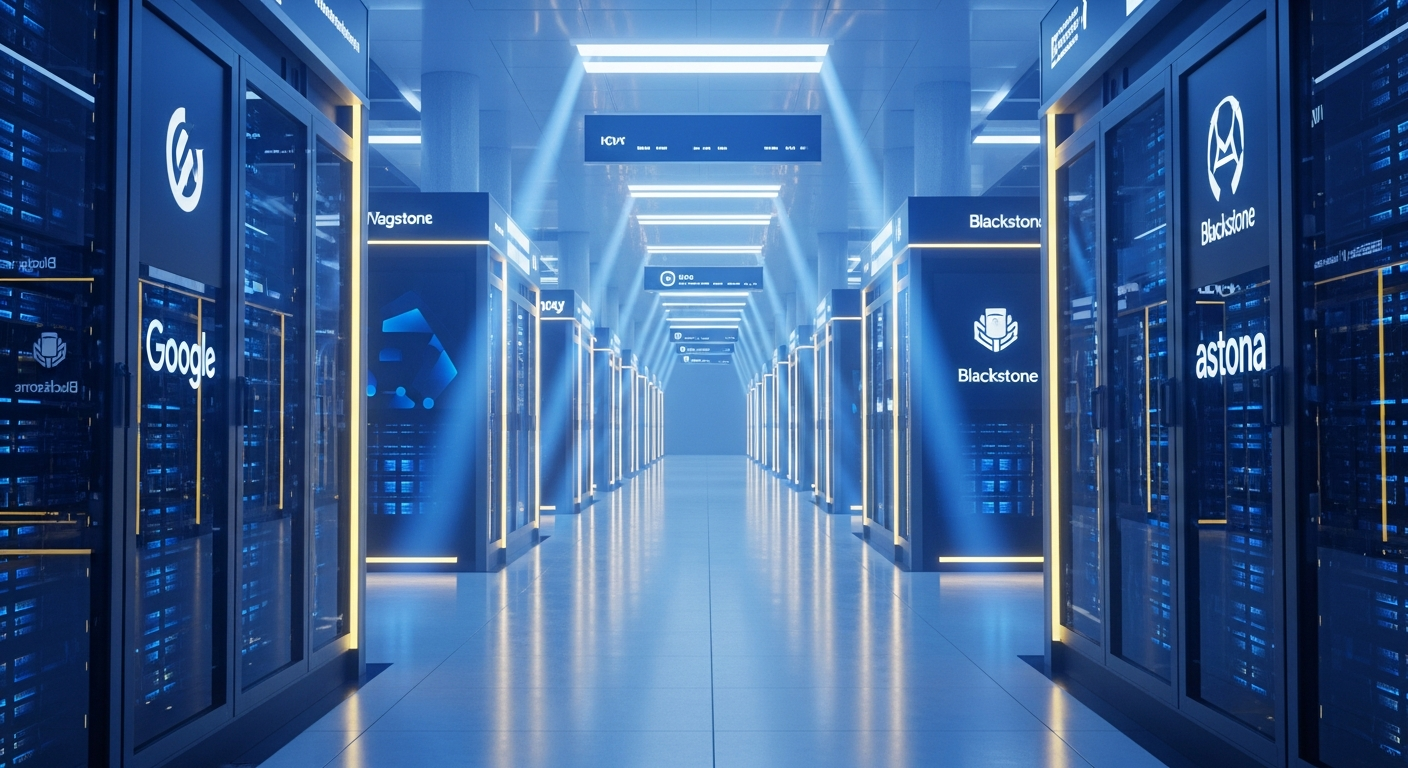
The artificial intelligence arms race has officially transitioned from a silicon sprint into a sprawling, capital-intensive infrastructure war. Google LLC and private equity behemoth Blackstone Inc. have fundamentally altered the battlefield with the launch of a $25 billion joint venture. Designed to deliver a “compute-as-a-service” platform, this newly formed, yet-unnamed entity will be helmed by Benjamin Treynor Sloss, Google’s veteran Chief Programs Officer. But beneath the staggering financial figures—anchored by a $5 billion equity injection from Blackstone—lies a profound architectural pivot that challenges the monolithic dominance of Nvidia.
To understand the magnitude of this joint venture, one must look directly at the silicon powering it: Google’s eighth-generation Tensor Processing Unit (TPU). For the first time, Google has completely bifurcated its AI hardware stack, acknowledging that the operational requirements for training a frontier model and serving a real-time AI agent have diverged too sharply for a one-size-fits-all chip.
The venture will deploy two distinct, purpose-built architectures. The first is the TPU 8t, a pre-training powerhouse co-designed with Broadcom. Engineered for massive-scale pre-training and embedding-heavy workloads, the TPU 8t utilizes a proven 3D torus network topology. It scales to an astonishing 9,600 chips in a single superpod, sharing 2 petabytes of unified high-bandwidth memory (HBM). To keep the matrix units saturated during massive multimodal training runs, the 8t integrates a SparseCore block dedicated to embedding lookups and utilizes TPUDirect RDMA to bypass host CPU bottlenecks. While its raw single-socket compute (12.6 FP4 PFLOPs) may trail Nvidia’s Vera Rubin R200, its near-linear scaling capabilities make it a formidable engine for foundational model development.
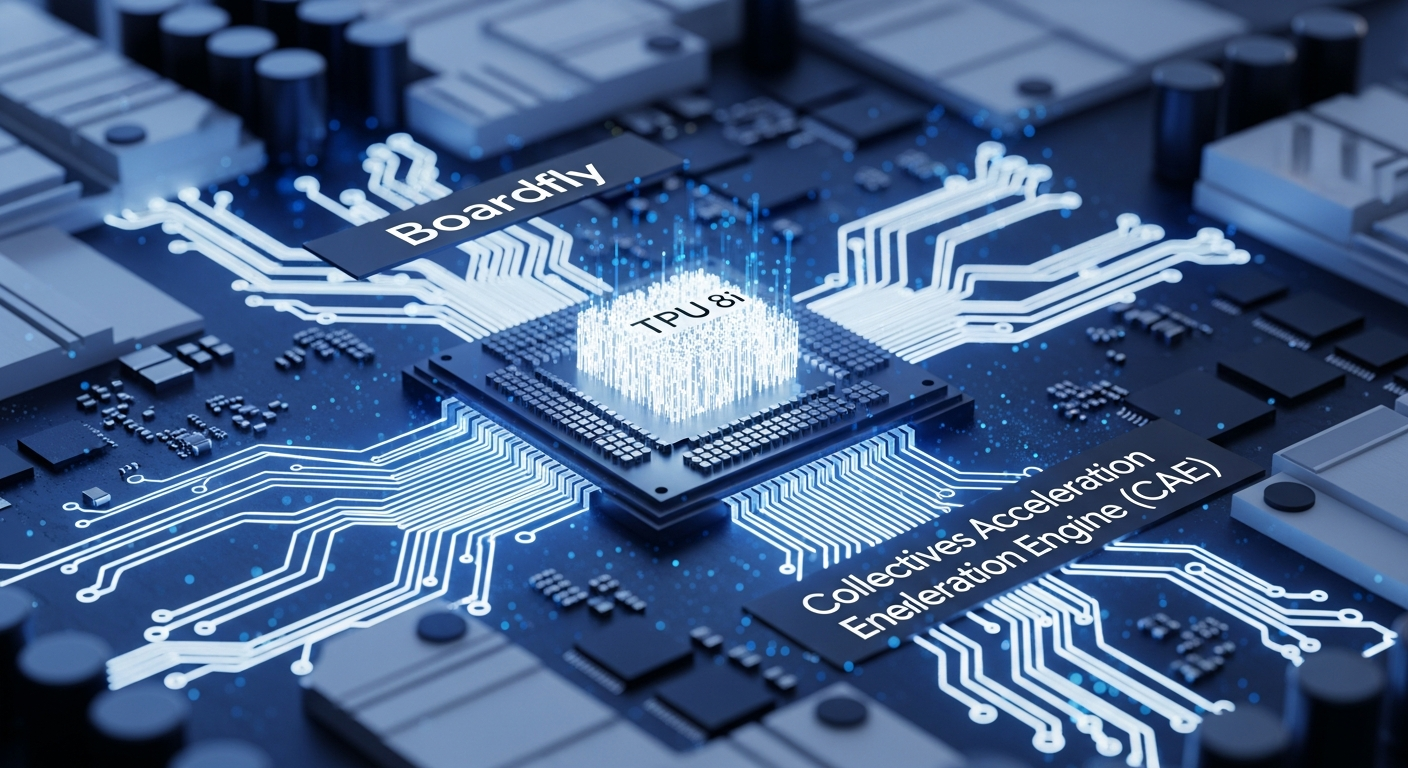
However, the true crown jewel of this infrastructure play is the TPU 8i, an inference-specific chip co-designed with MediaTek. As the industry shifts toward complex Mixture-of-Experts (MoE) models, the physical distance a data packet travels has become a critical bottleneck. To solve this, Google abandoned the traditional 3D torus in favor of a radical new Boardfly topology. Inspired by high-radix network designs, Boardfly cuts the maximum network diameter of a 1,024-chip configuration from 16 hops down to just seven—a 56% reduction.
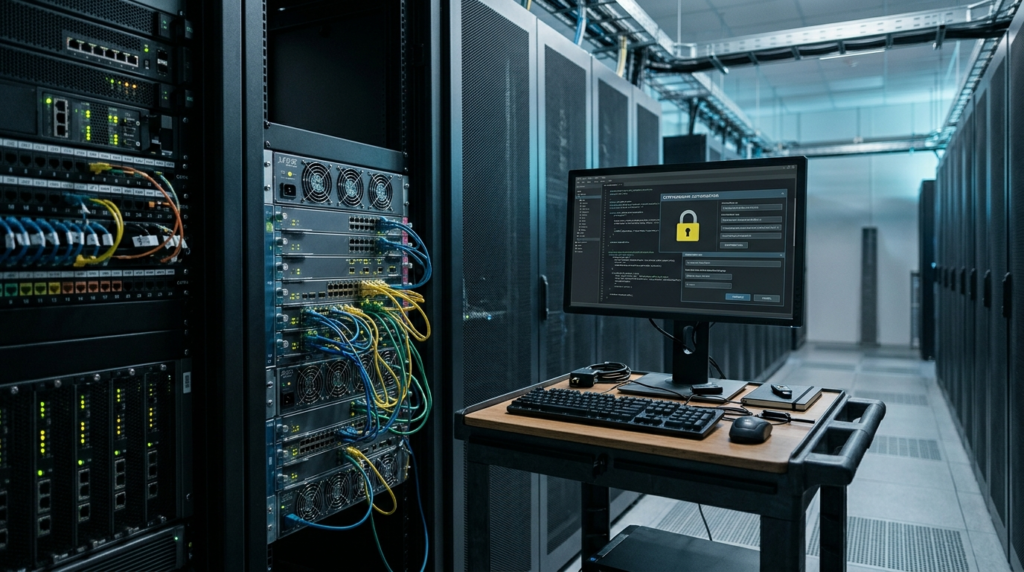
Coupled with a new Collectives Acceleration Engine (CAE) that offloads global operations, the TPU 8i reduces on-chip latency by a factor of five. By pairing 288 GB of HBM3e with a massive 384 MB of on-chip SRAM, the 8i keeps a model’s active working set entirely on-chip, effectively shattering the “memory wall” that plagues agentic AI workflows. Both chips are hosted entirely on Google’s custom Axion ARM-based CPUs, creating a tightly integrated, highly efficient ecosystem that the Blackstone joint venture will now deploy at an unprecedented scale.
Market Impact & Deployment
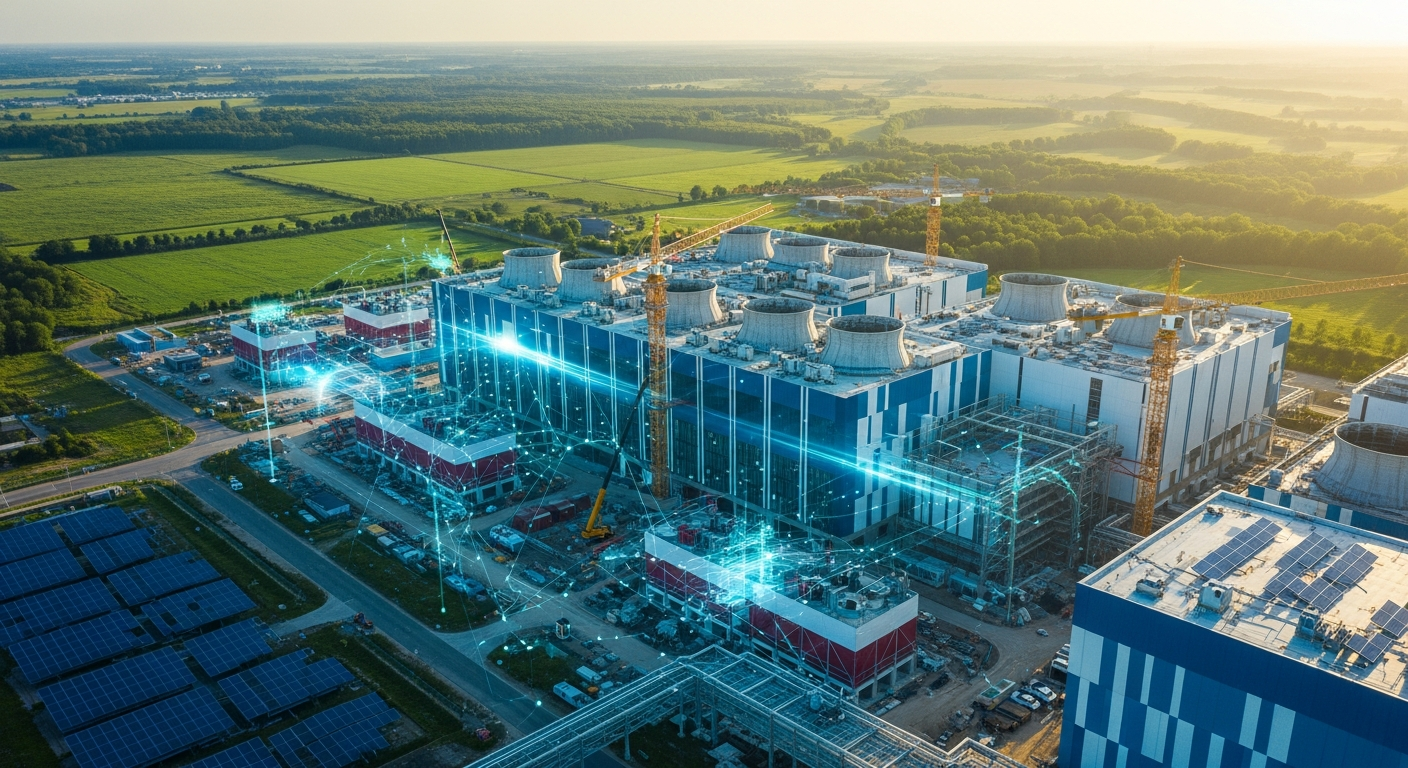
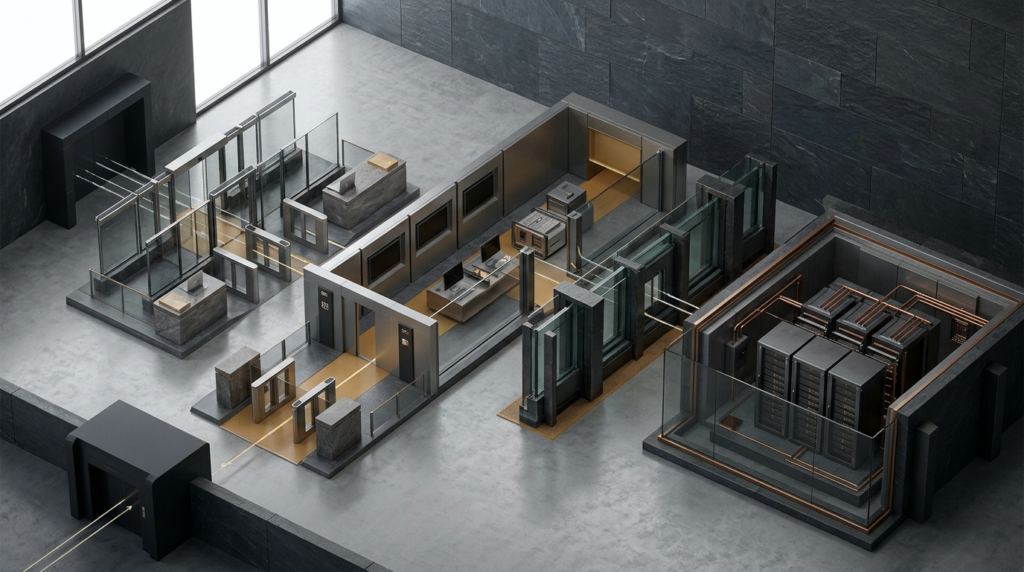
The financial engineering behind this joint venture is just as sophisticated as the silicon. While the phrase “compute-as-a-service” evokes images of seamless cloud APIs, the reality is that AI requires massive, physical data centers with insatiable power and cooling demands. By partnering with Blackstone, Google is executing a masterstroke in capital allocation.
Blackstone is the world’s largest private owner of data centers, boasting over $150 billion in digital infrastructure assets, including its $16.1 billion acquisition of Airtrunk and its $10 billion buyout of QTS Realty Trust. Through this joint venture, Google effectively offloads the crushing Capital Expenditure (CapEx) of real estate acquisition, power procurement, and facility construction to Blackstone. In return, Blackstone secures a guaranteed, high-margin tenant and a direct pipeline to the world’s most advanced AI hardware.
The venture plans to bring 500 megawatts of compute capacity online by 2027. To put that into perspective, 500 MW is enough to power a mid-sized city, and in the realm of AI, it represents a staggering concentration of processing power. This deployment is specifically targeting “capital markets firms” and enterprise giants who require dedicated, on-premises or single-tenant cloud environments for data security and regulatory compliance.
For the broader market, this is a direct assault on Nvidia’s margins. Nvidia’s Vera Rubin NVL72 racks are engineering marvels, but they come with a premium price tag and immense power requirements. By offering a vertically integrated stack—from the Axion ARM CPUs to the Boardfly-networked TPUs—Google and Blackstone are promising enterprises up to an 80% improvement in performance-per-dollar for inference workloads. This aggressive pricing strategy, backed by $20 billion in leverage, is designed to commoditize the infrastructure layer and lock enterprises into Google’s software ecosystem (JAX, PyTorch, and Pathways).
The Consumer Translation
While the intricacies of high-radix network topologies and debt financing may seem far removed from the average consumer, the downstream effects of this $25 billion venture will fundamentally reshape how the public interacts with technology.
We are currently entering the era of “Agentic AI”—systems that do not just generate text, but actively reason, plan, and execute multi-step workflows across various applications. Today, these agents are often bottlenecked by latency. If you ask an AI to analyze your inbox, cross-reference it with your calendar, and book a flight, the system has to route tokens across thousands of chips. In older architectures, this routing creates a “latency tax,” resulting in the spinning loading wheels we frequently encounter.
The deployment of the TPU 8i at a 500-megawatt scale directly eliminates this friction. The 5x reduction in latency means that AI agents will begin to operate in true real-time. Voice assistants will converse without awkward pauses; video generation models will render frames on the fly; and complex, multi-agent “swarms” will solve problems instantaneously.
Furthermore, the sheer scale of this infrastructure will drive down the cost of AI inference. As models grow larger, the compute required to run them threatens to make consumer AI subscriptions prohibitively expensive. By achieving an 80% better performance-per-dollar ratio, the Google-Blackstone venture ensures that advanced AI capabilities can be integrated into everyday applications—from Google Workspace to third-party consumer apps—without passing exorbitant costs onto the user.
TechNode HQ Verdict: Pros, Cons & Usability
- Pro (Engineering): The introduction of the Boardfly topology in the TPU 8i is a breakthrough for MoE models, cutting network hops by 56% and drastically reducing the latency tax of token routing.
- Pro (Consumer): Massive scale and cost-optimized inference chips (co-designed with MediaTek) will democratize real-time, agentic AI, keeping consumer subscription costs low while performance skyrockets.
- Con: The $25 billion investment is heavily leveraged. In a fluctuating macroeconomic environment, servicing $20 billion in debt could force the joint venture to maintain high compute-leasing prices, squeezing early adopters.
- Con: Raw single-socket compute on the TPU 8t still lags behind Nvidia’s Vera Rubin and AMD’s MI455X, forcing developers to rely heavily on Google’s specific networking and software stack to achieve parity.
Enterprise Usability: For CTOs at capital markets firms, healthcare organizations, and large-scale SaaS providers, this joint venture offers a highly compelling alternative to the Nvidia ecosystem. If your primary bottleneck is inference latency and MoE serving costs, transitioning workloads to the TPU 8i via this compute-as-a-service model should be a top priority for 2027 planning. However, teams must be prepared to optimize their models for Google’s specific hardware stack to realize the promised 80% cost savings.
Everyday Usability: The public cannot buy a TPU, but they will buy the software it powers. Consumers should expect a massive leap in the responsiveness of AI tools over the next 12 to 18 months. As this 500 MW capacity comes online, the era of waiting for an AI to “think” will end, replaced by instantaneous, real-time digital assistants.
Sources & Citations:
Original Claim via: siliconangle
Official Handle: @siliconangle
Topics Explored: AI Infrastructure, Google Cloud, Blackstone, TPU 8t, Compute-as-a-Service